Home Blog Page 145

2026 World Cup: Celebrations In South Africa, Gloom In Nigeria

0

Wild celebrations erupted in South Africa Tuesday evening following the convincing 3-0 victory of the Bafana Bafana over the Rwandan national team to earn the country a place in the 2026 World Cup in Mexico, Canada, and the United States of America.

In Nigeria, however, it was all gloom despite the Super Eagles 4-0 thrashing of the Benin Republic team in the last match of the World Cup qualifying match at the Godswill Akpabio International Stadium in Uyo.

The victory, seen by many as too little, too late, may not be enough to see the Super Eagles at the World Cup.

South Africa topped the group with 18 points, while Nigeria and Benin Republic ended with 17 points each. Nigeria, with a superior goal difference, clinched the second spot.

The Super Eagles concluded their 2026 World Cup qualifying campaign with a resounding 4–0 victory over Benin Republic on Tuesday evening.

Nigeria entered their final fixture needing a convincing win, having kept their qualification hopes alive with a 2–1 triumph over Lesotho last weekend.

They began brightly against Gernot Rohr’s side, with Victor Osimhen finding the net within the opening three minutes.

Osimhen doubled the lead with a header just before half-time, as the Eagles took firm control of proceedings in Uyo.

The Galatasaray striker completed his hat-trick in the second half, before Frank Onyeka added a late fourth with a well-struck volley.

The result ensures Nigeria finish second in Group C, behind South Africa, who thrashed Rwanda 3–0 to secure the automatic qualification spot.

Tinubu To World Leaders: Declare Stealing Of Countries’ Mineral Resources International Crime

0

Illegal exploitation of mineral resources in Africa has been identified as a grave threat to regional peace, stability, and development.

To stem the tide, Nigeria’s President, Bola Tinubu on Tuesday called on African leaders to unite, join forces and push for the recognition of mineral resources theft from the continent as an international crime on the global stage.

He stressed that his call became imperative because such acts have become grave threats to regional peace, stability and development, adding that illegal mining and mineral smuggling are obvious international crimes.

The President stated this at the Secretariat of the Economic Community of West African States (ECOWAS) in Asokoro, Abuja when he declared open the Annual General Meeting of the Network of National Anti-Corruption Institutions in West Africa (NACIWA).

Represented by the Secretary to the Government of the Federation, George Akume, Tinubu explained that such designation and proclamation would help affected countries to take drastic actions against the culprits.

Stakeholders in the security sector have attributed growing security challenges across the country with illegal mining activities going on, particularly in Zamfara, Sokoto, Kebbi, and some states in the Northeast.

The President’s call came amid rising concerns about illegal mining and mineral smuggling across West Africa, particularly in gold-rich countries such as Nigeria, Ghana, Burkina Faso and Mali.

Reports released by the Nigeria Extractive Industries Transparency Initiative (NEITI) had shown that billions of dollars worth of minerals leave the region each year through unregulated channels, depriving governments of crucial revenue.

Speaking during the general meeting, the President lamented that despite decades of independence, the region’s economic and political progress continued to be undermined by corruption and the looting of mineral resources.

According to him, the proceeds of such thefts do not only deprive citizens of development and benefits but also fund insecurity, the proliferation of small arms and light weapons, banditry and kidnapping across the region.

The President said, “West Africa’s post-independence economic and political trajectory is blighted by corruption, manifest in the theft and stashing of our commonwealth abroad by corrupt officials.

“Even now, illicit outflows remain an odious miasma. Stealing of mineral resources is on the rise in the region, fuelling proliferation of small arms and light weapons, and other violent crimes such as kidnapping and banditry.

“I believe that the time has come for us to designate resource theft, mining and stealing of minerals in the region as an international crime that threatens the stability of the region and galvanise the world against threats from stolen minerals from West Africa.”

He also urged NACIWA delegates to critically examine the extractive sector, financial intelligence sharing and anti-money laundering frameworks to strengthen accountability across West Africa.

“I urge you all, in your deliberations, to examine critically the regional anti-money laundering frameworks, financial intelligence sharing mechanism, and accountability in the extractive sector across the region for a more prosperous and secure future,” Tinubu added.

He further noted that no single country could win the battle against illicit financial flows, stressing that the challenge required a multi-state and multi-stakeholder platform to harmonise regional efforts against corruption and its manifestations.

Speaking on Nigeria’s anti-corruption strategy under his watch, Tinubu said his administration had prioritised tracing and recovery of stolen assets, introducing new legal frameworks for asset recovery and management.

He also commended the Economic and Financial Crimes Commission (EFCC) led by Ola Olukoyede for what he described as “its prolific” record in asset recovery, urging member countries to share lessons from such efforts.

The President maintained that his government was committed to using recovered funds as “instruments of social inclusion.”

He revealed that N100 billion recovered from crime proceeds had been injected into the Student Loan Scheme and Consumer Credit Scheme, describing both as legacy programmes aimed at improving access to education and easing financial pressure on citizens.

The President reaffirmed Nigeria’s commitment to ECOWAS and regional anti-corruption cooperation, stressing that a united approach was essential to ending illicit financial flows and advancing good governance.

Also speaking, the Minister of Justice and Attorney-General of the Federation, Lateef Fagbemi, urged West African nations to domesticate the ECOWAS Protocol on Corruption, saying this would ensure that corrupt officials find no safe haven within the subregion.

Fagbemi, a Senior Advocate of Nigeria, said, “Let us domesticate the ECOWAS Protocol on Corruption so that thieves find no hiding place. The child who says his mother will not sleep will also not sleep, so the corrupt who disturb the peace of nations must not find rest across borders.”

The minister proposed the establishment of an ECOWAS Regional Task Force on Asset Recovery, to be supported by NACIWA, to coordinate investigations and intelligence sharing among member states.

Fagbemi also stressed the need to guarantee the independence and adequate funding of anti-corruption institutions, warning that underfunded agencies were vulnerable to compromise.

“The goat eats where it is tied. If we starve our institutions, they will be unable to resist corruption.”

Earlier, the Chairman of the EFCC, Ola Olukoyede, who also serves as President of NACIWA, said the fight against corruption in West Africa must be viewed within the broader context of political stability and social justice.

“Distinguished colleagues, we must acknowledge the evolving landscape in which our institutions operate. Political transitions, security concerns, and governance challenges across several member states underscore that our fight against corruption can not be divorced from broader considerations of political stability, institutional integrity, and social justice,” he said.


Mathematics No Longer Compulsory Admission Requirement For Arts Students

0

The Ministry of Education has said that credit in mathematics in the Senior School Certificate Examination, SSCE, would not longer be a condition for admission for students studying arts and humanities courses in universities and polytechnics.

This was contained in a statement by the spokesperson of the Ministry, Folasade Boriowo, on Tuesday in Abuja.

For years, admission seekers in arts and humanities, like their contemporaries in sciences and social sciences, have been mandated to have five credits, including mathematics and English language, to secure admission into higher institutions.

“The revised National Guidelines for Entry Requirements into Nigerian Tertiary Institutions are designed to remove barriers while maintaining academic standards.

“The new framework applies to universities, polytechnics, colleges of education, and Innovation Enterprise Academies across the country as follows:

“Universities: Minimum of five (5) credit passes in relevant subjects, including English Language, obtained in not more than two sittings. Mathematics is mandatory for Science, Technology, and Social Science courses.

“Polytechnics (ND Level): Minimum of four (4) credit passes in relevant subjects, including English Language for non-science courses and Mathematics for science-related programs.

“Polytechnics (HND Level):
Minimum of five (5) credit passes in relevant subjects, including English Language and Mathematics.

“Colleges of Education (NCE Level): Minimum of four (4) credit passes in relevant subjects, with English Language mandatory for Arts and Social Science courses, and Mathematics required for Science, Vocational, and Technical programs,” the statement said.

The Minister of Education, Tunji Alausa, described the reform as a deliberate effort to expand access to tertiary education.

Use Service Year To Build Capacity, Fubara Charges NYSC Members

0

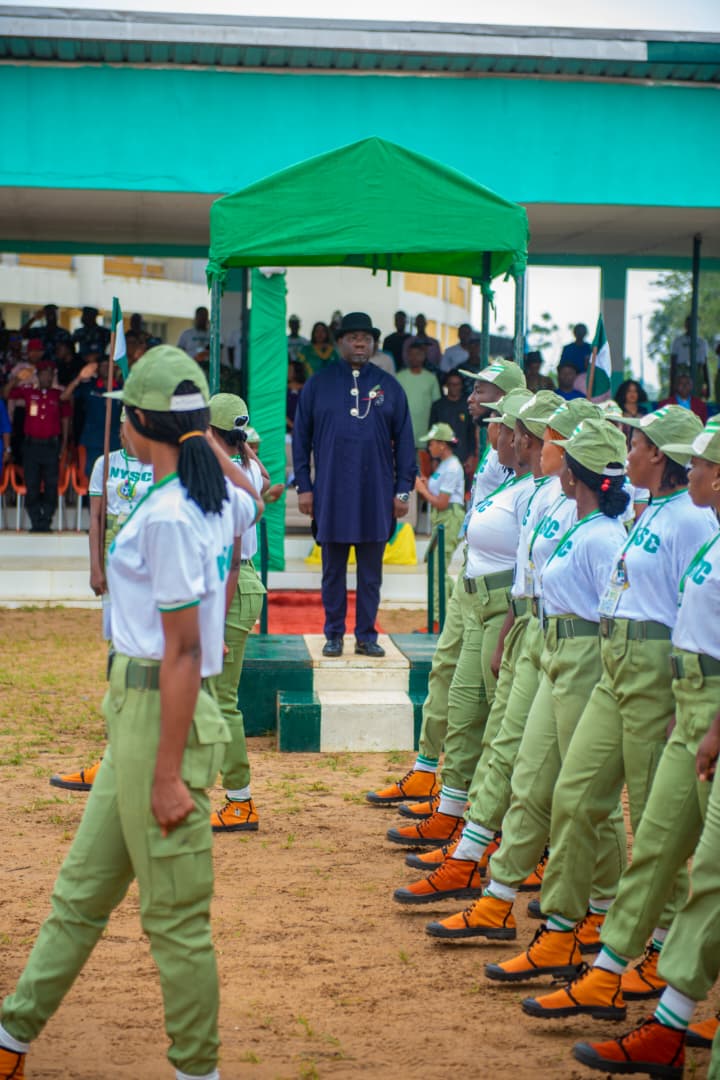
The Governor of Rivers State, Sir Siminalayi Fubara, has charged the 2025 Batch B, Stream II National Youth Service Corps (NYSC) members deployed to the State, to use the NYSC skill acquisition training programme to build capacity.

Governor Fubara gave the charge today when he declared closed, the 2025 Batch B Stream II orientation exercise in the State.

Represented by the newly sworn-in Secretary to the State Government and Chairman NYSC State Governing Board, Hon. Benibo Anabraba, Governor Fubara enjoined the Corps members to embrace skill acquisition wholeheartedly in order to elevate themselves as wealth creators and employers of labour.

“Take Rivers State as your home. Be assured of the warmth, hospitality, and accommodating disposition of the good of our people at all times.

“Take the skill acquisition and entrepreneurship development post camp training very seriously and equip yourselves with the capacity to compete favourably in the nation’s huge economic space,” he stressed.

The Governor called on the Corps members to see their mobilization into the NYSC Scheme as a fundamental way to provide humanitarian services.

“Remember that you owe it to yourself, family, and the nation, the responsibility to serve selflessly and honourably,” he admonished.

In his farewell address, the State Coordinator of NYSC, Mr. Moses Oleghe appealed to the Corps members to use the opportunity of the service year to discover their true purpose.

He further encouraged them to embody selfless service and empathy in serving the people.

The colourful ceremony witnessed a vibrant parade.

800 Rivers Farmers Receive RHI Agric Empowerment Support …First Lady Urges Beneficiaries To Build Foundation For Food Security

0

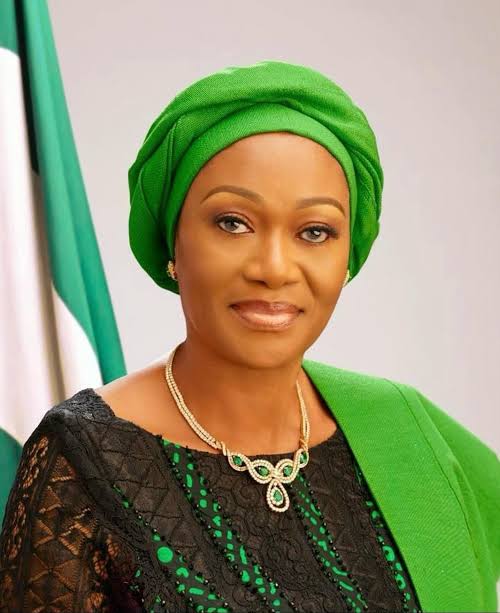
Nigeria’s First Lady and National Coordinator of the Renewed Hope Initiative (RHI), Senator Oluremi Tinubu, has called on farmers in Rivers State to take full advantage of the agricultural empowerment support programme by growing their seedlings, nurturing livestock, and producing high yields to help build a food-secured Nigeria.

Represented by the wife of the Rivers State Governor, Lady Valerie Siminalayi Fubara, Senator Tinubu made the call during the distribution of agricultural support materials to 800 pre-selected farmers at the Government House Field in Port Harcourt on Tuesday.

RHI pre-selected 400 farmers drawn from across the three senatorial districts, including members of the Female Farmers’ Association, the Young Farmers’ Club, and non-indigenes. While Rivers State Government, under Governor Siminalayi Fubara, complemented the initiative with additional support for 400 farmers, which include 100 young and 300 older farmers, bringing the total number of beneficiaries to 800.

The event was organised by the Renewed Hope Initiative in collaboration with the Federal Ministry of Agriculture and Food Security, the Rivers State Government, and the Young Farmers’ Club of Nigeria.

Delivering the First Lady’s message, Lady Valerie Fubara urged beneficiaries to take responsibility for their farms and contribute to national food production.

“Grow these seedlings, nurture these livestock, and turn them into good yields,” she said. “As you do that, you will also reawaken the entrepreneurial spirit that we are known for.”

Lady Valerie Fubara described the initiative as a practical effort to revive Nigeria’s agricultural potential, drawing lessons from past government programmes such as Operation Feed the Nation and the Green Revolution.

She noted that with the commitment to empowering Nigerians, the initiative reflects genuine love and dedication to the nation’s progress.

“This support programme is not just assistance, it is an investment that will lead to food surplus and help combat scarcity,” she added.

She also emphasised that the Rivers State Government, under Governor Siminalayi Fubara, is complementing the initiative with additional support for 400 farmers, which include 100 young and 300 older farmers, bringing the total number of beneficiaries to 800.

“The First Lady of Nigeria is trusting you to make the best use of this opportunity,” Lady Valerie Fubara said. “The Rivers State Government believes in your ability, do not let us down,” she added.

Rivers State Deputy Governor, Prof. Ngozi Odu, praised the programme as a platform that promotes inclusivity and bridges socio-economic gaps.

“This initiative embodies the Federal Government’s commitment to improving lives through sustainable and inclusive development,” she said.

She also commended Lady Valerie Fubara for her leadership and passion in localising the Renewed Hope Initiative in the state.

“Beyond the immediate benefits,” she added, “this programme lays the foundation for a more prosperous and self-reliant Rivers State,” she said.

The Head of the Rivers State Civil Service, Dr. Inyingi Brown, described the programme as timely and impactful. She urged the beneficiaries to become catalysts for sustaining the initiative, and appealed for future inclusion of civil servants.

“You are the first set of beneficiaries, please, show example so that the programme will be replicated. Let it not die in your hands,” she said.

The Supervising Commissioner for Agriculture, Engr. Victor Kii, commended the First Lady’s vision, describing the initiative as a key step toward food security, job creation, and inclusive economic growth.

He praised Lady Valerie Fubara for her role in ensuring the programme’s success in Rivers State, noting that it “uplifts women, creates jobs, and secures a sustainable economic future.”

In her welcome remarks, Rivers State Coordinator of RHI, Mrs. Tonye Briggs Oniyide, said that RHI pre-selected 400 farmers drawn from across the three senatorial districts, including members of the Female Farmers’ Association, the Young Farmers’ Club, and non-indigenes.

The beneficiaries received farm implements, seedlings, fingerlings, livestock, and starter packs, all aimed at boosting food production and encouraging youth participation in agriculture.

Electoral Reform: NASS Seeks Conclusion Of Election Litigations Before Swearing-in

0

The National Assembly is proposing the conclusion of all election litigation matters before the swearing-in of winners in every election contest organised by the Independent National Electoral Commission (INEC).

The proposed amendment also sought to conduct elections six months before the expiration of tenure of an elected incumbent.

Chairman, House of Representatives Committee on Electoral Matters, Rep. Adebayo Balogun gave the highlights of some of the proposed amendments at end of one-day public hearing on the repeal of 2022 Electoral Act and enact of the 2025 Electoral Act.

Balogun said that the aim was to give enough time for disposal of election litigations before swearing-in of declared winners.

He said that Section 285 of the 1999 Constitution as amended would be further amended just as Section 139 would also be amended.

“To ensure that all manner of election litigations are dispensed with, before the swearing-in of winners, we are proposing amendment that will reduce 180 days of tribunal judgement to 90 days.

“The 90 days expected of judgement by Appellate Court to 60 days up to the Supreme Court, which will all not exceed 185 days.”

The News Agency of Nigeria (NAN), reports that highlights of the proposal for the amendments sought in the 2022 Electoral Act indicates that election into offices should be conducted not later than 185 days before expiration of tenure of the incumbent.

According to the proposal document, Section 4 (7) states that elections into the office of the President and Governor of a State shall be held not later than 185 days before the expiration of the term of office of the last holder of the office.

“For the Federal and State legislators, Section 4(5) of the proposed amendment states that election into the State Houses of Assembly and the National Assembly shall be held not later than 185 days before the date on which each of the Houses stands dissolved.”

On resolving the constitutional impasse against the amendment, the draft proposal showed that section 28 now section 27 (5 – 7) was introduced due to amendments to Sections 76, 116, 132 and 178 of the Constitution.

The amendments sought to remove the determination of election timeline from the constitution to the electoral Act.

Under continuous registration, Section 10 was proposed for amended to include the use of the National Identification Number (NIN) in the voters’ registration requirements.

According to the proposal document, INEC is expected to develop software to enable anybody with NIN to be able to upload it personally use for election purposes.

For inclusivity and voting by inmates, it proposed that provision be made for registration and voting by inmates under section 12 (2).

It said that the proposal was in compliance with the existing court judgement that mandated INEC to make provision for inmate voting.

On early voting, the bill also proposed early voting for Nigerians whose official duties prevent them from voting on the main election days.

This, it said guaranteed their constitutional rights to vote without compromising national security or electoral logistics.

The proposal for compulsory use of permanent voter’s card reflected in Section 18 and 47, deleting section 22.

The proposal on notice and time line of elections in Section 28, now section 27, was introduced due to sections 76, 116, 132, and 178 of the constitution.

The proposal also listed categories of Nigerians listed for the pre-poll to include security personnel, officials of the commission, accredited domestic observers, accredited journalists, and ad hoc staff of the commission.

Other proposed amendments are mandatory electronic transmission of election results and non – compulsory use of permanent voters’ cards, among others.

“The Presiding Officer shall transmit the results including total number of accredited voters to the next level of excuses both electronically and manually.

“It criminalises failure of Presiding Officer or Collation Officer who distribute unstamped ballot papers and results sheets, such erring officers will be jailed for one year or pay a fine of N1 million.”

Stakeholders who made presentations at the public hearing, including the representative of the Independent National Electoral Commission (INEC), Prof. Abdullahi Zuru aligned with the joint committee’s proposals.

Shell Approves $2bn Offshore Gas Project In Nigeria

0

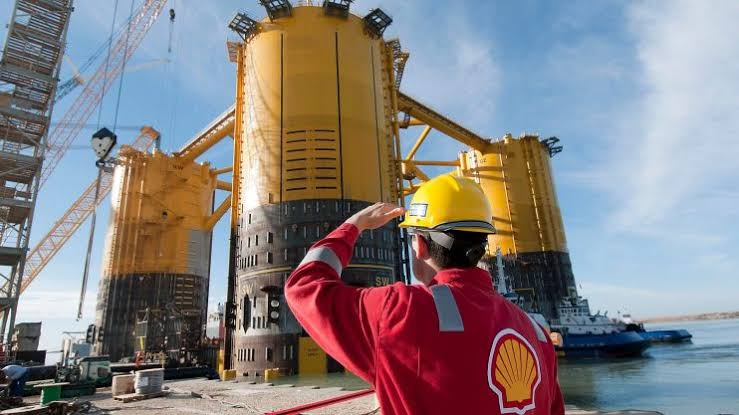
Nigeria has secured its third major gas investment in 18 months, with Shell approving a $2 billion Final Investment Decision (FID) for a new offshore gas development in the HI Field, located in Oil Mining Lease (OML) 144.

The project, is expected to deliver about 350 million standard cubic feet of gas per day (mmscf/d) from 2028 — roughly one-third of the gas requirements of the Nigeria LNG Limited’s Train 7 project.

The Shell Nigeria Exploration and Production Company Limited (SNEPCo), on Tuesday announced the additional investment to grow Nigeria’s offshore gas output.

SNEPCo, a subsidiary of Shell UK PLC, announced the Final Investment Decision in a statement by its Communications Manager, Mrs Gladys Afam-Anadu,

Afam-Anadu said that when completed, the project would supply 350 million standard cubic feet of gas daily.

According to her, the gas production which targets to commence before 2030 will be fed to Nigeria Liquified Natural Gas (NLNG) Train 7.

Shell holds 25.6 per cent interest in NLNG, which produces and exports liquified natural gas to global markets.

“Today’s announcement demonstrates our continued commitment to Nigeria’s energy sector, with a focus on deep-water and integrated gas.

“This upstream project will help Shell to grow its leading integrated gas portfolio, while supporting Nigeria’s plans to become a more significant player in the global market.

“The project will also bolster NLNG’s contribution to Nigeria’s economic development goals, including jobs in construction and operations,” she said.

Meanwhile, President Bola Ahmed Tinubu, in a statement by his Special Adviser on Information and Strategy, Bayo Onanuga, welcomed the investment, describing it as another clear vote of confidence in Nigeria’s economic reforms and energy policies.

“This major FID announcement by Shell, their second in one year, is a clear validation of our wide-ranging reform efforts and a signal to the world that Nigeria is fully open for business and investment,” the President said.

The new decision brings total upstream investment commitments in Nigeria’s oil and gas sector to over $8 billion since Tinubu assumed office in 2023.

The announcement follows earlier approvals of the Ubeta Non-Associated Gas project and the Bonga North deepwater development, both seen as cornerstones of the administration’s energy revitalisation drive.

Together, the Ubeta and HI gas projects will supply up to 15 percent of the total feedgas requirements of the NLNG’s Trains 1 to 7, underpinning energy security and export reliability.

These investment inflows, it was gathered, are the result of targeted reforms introduced by the Tinubu administration, coordinated through the Office of the Special Adviser to the President on Energy.

The reforms include fiscal incentives, streamlined regulatory processes, reduced contracting costs, and faster approval timelines — measures now enshrined in law.

The HI gas field, discovered in 1985, is being developed under Presidential Directive 40, which introduced a new fiscal framework to attract Non-Associated Gas investment in onshore and shallow offshore zones.

Special Adviser to the President on Energy, Olu Arowolo Verheijen, said the HI and Ubeta projects will solidify the foundation for NLNG’s Train 7 and enhance domestic energy access.

“With the Ubeta FID and now the HI FID, we have secured the gas supply needed to make NLNG Train 7 not just possible, but transformative. These projects will strengthen Nigeria’s LNG exports, expand LPG availability for households, reduce imports, and boost foreign exchange earnings. And this is only the beginning — more FIDs are on the horizon”, Verheijen stated.

Shell’s Upstream President, Peter Costello, affirmed the company’s long-term commitment to Nigeria’s energy sector.

“Following recent investment decisions related to the Bonga deep-water development, today’s announcement demonstrates our continued commitment to Nigeria’s energy sector, with a focus on Deepwater and Integrated Gas.
“This project will grow Shell’s leading gas portfolio while supporting Nigeria’s ambition to become a more significant player in the global LNG market”, Costello said.

The NLNG Train 7 expansion, to which the new projects will contribute, is expected to increase Nigeria’s LNG capacity by 8 million metric tonnes annually, a 35 percent boost over current production.

The expansion will also stimulate thousands of direct and indirect jobs, strengthen SME participation in host communities, and expand the country’s clean energy footprint.

President Tinubu reaffirmed his administration’s commitment to sustaining a stable investment climate.

Climate Change, Not Only Environmental Challenge, But Financial Imperative -Minister

0

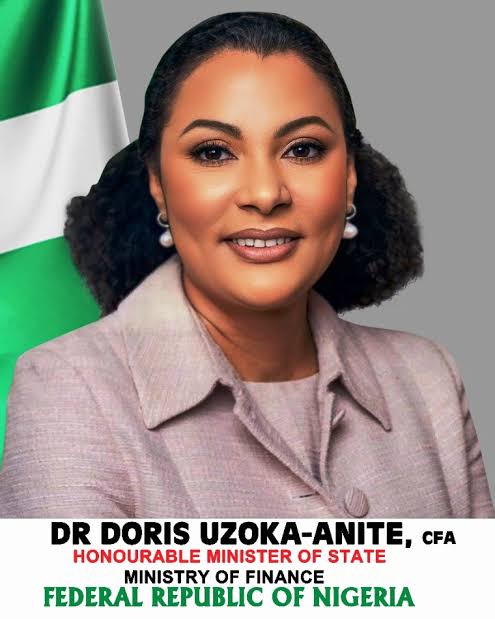
Nigeria’s Minister of State for Finance, Dr Doris Uzoka-Anite, has called for improved regional collaboration among West African insurers to strengthen resilience against the growing economic risks posed by climate change.

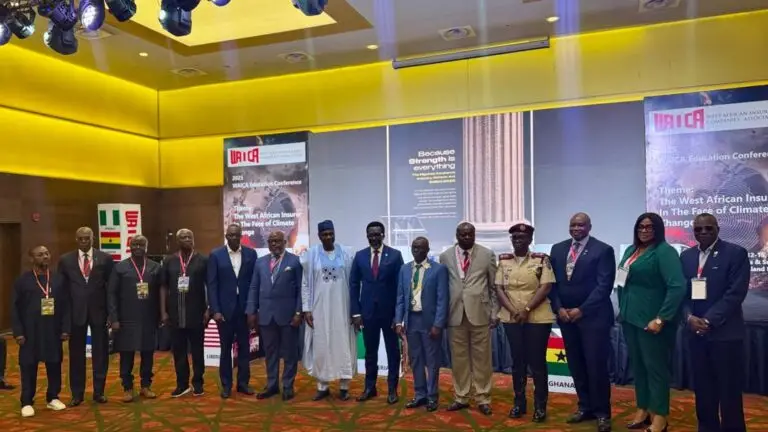
Uzoka-Anite, speaking at the opening of the 2025 West African Insurance Companies Association (WAICA) Education Conference in Lagos on Monday, urged insurers across the region to take the challenge seriously.

The minister represented by Dr Ali Mohammed, Director, Home Finance Department of the Ministry, said that the event’s theme, “The West African Insurer in the Face of Climate Change,” reflected the urgent need for regional action on climate-related financial risks.

She said the theme underscored the urgent reality that climate change had become not only an environmental issue but also a financial and developmental challenge for the sub-region.

“Climate risk is now a financial risk. It influences fiscal policy, national budgets, and the overall stability of our financial systems.

“No nation can confront this threat alone. The same storms that affect Nigeria affect Ghana, Sierra Leone, Liberia, and The Gambia. Our solutions, too, must be collective.

“We must treat climate change not only as an environmental challenge but also as a financial imperative. Africa loses billions annually to climate-related disasters. Traditional budgets can no longer cope.

“Through WAICA, we can develop regional risk-pooling and reinsurance platforms; exchange data and expertise on climate modelling and disaster forecasting; and build professional capacity for innovative, sustainable insurance products.

“Such cooperation will transform insurance from a business venture into a development enabler for agriculture, trade, and small enterprises,” she said.

She noted that floods, droughts, and coastal erosion across West Africa were destroying livelihoods and straining public finances, with each disaster imposing heavy fiscal burdens on governments.

Uzoka-Anite emphasised that insurance must be treated as a core component of economic planning, serving as a mechanism to share and absorb shocks that governments alone could not bear.

Speaking on Nigeria’s domestic reforms, she highlighted the Nigerian Insurance Industry Reform Act (NIIRA 2025) as a bold step toward modernisation and resilience building.

On climate finance, Uzoka-Anite disclosed that the Federal Government was advancing frameworks that combine sovereign risk insurance, regional disaster-risk pools, and public–private climate finance mechanisms.

She explained that such measures were designed to ensure rapid response to disasters and maintain fiscal stability amid climate disruptions.

The minister reaffirmed the Federal Government’s commitment to strengthening the insurance industry through policy coordination, fiscal alignment, and international partnerships.

IMF Warns African Leaders Against Overreliance On Domestic Banks To Service Government Debts

0

Two economist with the International Monetary Fund (IMF), Jean Serra and Thibaut Lemaire have advised African countries to handle local markets with care as overreliance on domestic banks to finance government debt could expose financial systems to instability.

The two IMF economists agreed that deep reforms were needed to strengthen institutions and improve governance.

They said that such a step would help African countries diversify their financing mix, reduce borrowing costs, and create fiscal space for critical social and infrastructure investments.

The economists, Jean Serra and Thibaut Lemaire, made the call in Washington on Monday at the Annual Meetings of the IMF/World Bank Group.

They analysed how African countries could effectively mobilise funds to build schools, hospitals, and other infrastructure while managing rising debt.

They called on governments in Sub-Saharan Africa to strengthen governance and maintain macroeconomic stability to secure sustainable financing.

According to Serra, public debt vulnerabilities remain high across the region, with interest payments consuming a significant portion of revenue.

“Since the COVID-19 pandemic, Sub-Saharan African nations have faced tighter global financial conditions, making it more difficult to access affordable external financing.

“A study examined three key financing sources, Eurobonds, cross-border syndicated loans and bond markets, highlighting both the opportunities and challenges they present.

“Between 2020 and 2024, African governments raised about 40 billion dollars through Eurobonds, while syndicated loans accounted for 170 billion, however, borrowing costs have surged in recent years.”

He said that the average yield on Eurobonds rose from 6.5 per cent to 9.5 per cent, reflecting both global market tightening and country-specific risks

Lemaire said that there was no inherent bias or “African premium” in the markets once factors like governance quality and economic fundamentals were taken into account.

According to him, countries with stronger institutions and better governance not only enjoy lower borrowing costs, but also attract more investment.

He said that while syndicated loans had become easier to access, they often lacked transparency compared to Eurobonds, posing accountability challenges for citizens and parliaments.

“Meanwhile, domestic bond markets have emerged as a growing source of funding, with local debt issuance doubling since 2019,” he said.

Discharge Your Duties With Respect, Protect Rivers Interest, Fubara Tells New SSG

0

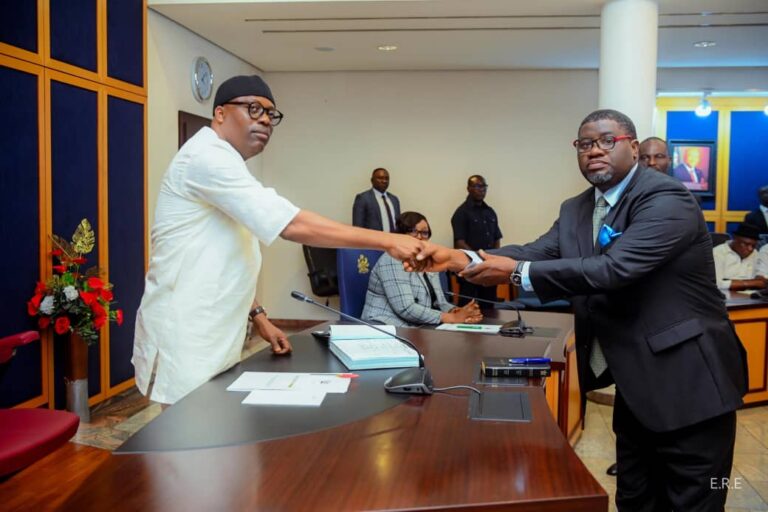
Governor Siminalayi Fubara of Rivers State has appointed Hon. Benibo Anabraba as Secretary to the Rivers State Government (SSG) and charged him to guard the office with honour and protect interest of the State.

The appointment marks the first key political appointment by the governor upon return to office after the lifting of the state of emergency in Rivers State.

Gov.Fubara in his charge to Hon. Anabraba on Monday, October 13, 2025 in Government House, Port Harcourt, said, “God has brought you in at this particular time to be the Secretary to the Government of Rivers State.

“It is a position of honour, so guard that office with honour. Discharge your duties with respect, and protect interest of Rivers State, so that when you leave office, it will be with honour. You can only leave with honour when you discharge your duties responsibly.”

The governor told Anabraba, his former cabinet member and one time Minority Leader, Rivers State House of Assembly, “Within the period we worked together, you did well as a very dedicated person.

He urged the newly sworn-in SSG not to use the opportunity to display power or show of force of office, but see it as a call to duty, adding, “We are just coming out from a very bad situation, so we need to reassure the people of Rivers State that we mean well for them especially now that peace has returned to the State

“Please, by the grace of God, do your work very well to help us to succeed in this assignment that God Almighty has given to us.”