Home Blog Page 132

Naira Gains Further At Official Market

0

The Naira on Monday appreciated further at the official foreign exchange market, trading at N1,452.79 to the dollar.

Data from the Central Bank of Nigeria (CBN) showed the Naira gained N5.16 compared with Friday’s rate of N1,457.95.

This represents a 0.35 per cent appreciation, extending the weeklong positive trend recorded in the previous week.

The Association of Bureau De Change Operators of Nigeria (ABCON) commended the month-long appreciation of the Naira in both official and parallel markets.

ABCON President, Dr Aminu Gwadabe, told the News Agency of Nigeria (NAN) in Lagos that several factors contributed to the gains.

He listed them as Nigeria’s exit from the Financial Action Task Force (FATF) grey list, increased oil revenue, higher foreign reserves and diaspora remittances.

Gwadabe congratulated the nation for leaving the FATF grey list, noting that the Naira gained N10.00 against the dollar at the parallel market on Monday.

He said the development had boosted investors’ confidence and attracted more foreign investments into the country.

According to him, sustained reforms and information sharing among security agencies helped trace proceeds of crime and facilitated Nigeria’s exit from the list.

He added that the CBN’s success in raising foreign reserves to about 42.26 billion dollars provided a strong buffer for the Naira.

“The sustained stability has reduced speculation. Speculators’ activities have been rendered ineffective in the market,” he said.

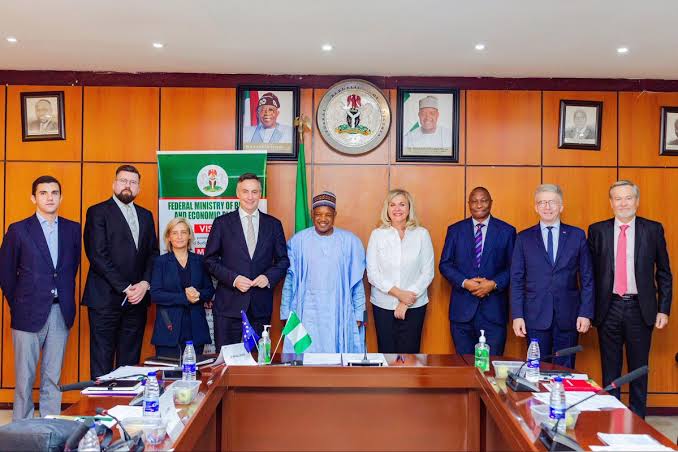
Nigeria, Crucial Partner To European Union -MEP McAllister

Mr David McAllister, Chair of the European Parliament Committee on Foreign Affairs (AFET), has described Nigeria as a crucial partner of the European Union (EU), saying that the country “matters greatly to the bloc.”

McAllister made the remark in an interview on the sidelines of a reception hosted by Mrs Annett Günther, the Ambassador of Germany to Nigeria, in honour of a six-member delegation of the European Parliament.

The delegation, comprising Members of the European Parliament (MEPs), is on a working visit to Nigeria from Oct. 26 to Oct. 28.

During the visit, the team will engage with key stakeholders in Nigeria’s democratic process.

McAllister said the visit aimed to better understand Nigeria’s political and economic systems and discuss insecurity challenges affecting the country and its neighbours.

“So we are here to listen carefully and to understand better the Nigeria system, and our message when we return to Brussels while filing our reports to the European External Action Service and the European Commission is that Nigeria Matters.

“But Nigeria matters for us as an important partner, we’ve seen a lot of improvement in our cooperation but I think there is still more that we can do together.

“That is why this year we have set up dialogue with the Nigerian government on economic cooperation, and that is what our message is and we were also briefed on the security in the country.

“ We are concerned about the threat of the Nigerian people and the integrity of the country in the North, and I was personally not aware of the magnitude of the humanitarian crisis.

“Which is unfolding in the North and that really shattered our delegation and its heart breaking to see pictures of these poor children.

“I think it is important that the bloc also gives to humanitarian assistance that we can to help these people who are in desperate need have hope,’’ he said.

McAllister reiterated that Nigeria’s role as a key partner justified the visit, describing the country as a development and economic partner, as well as a thriving democracy.

According to McAllister, the EU and Nigeria share common values and interests, which make the country an important partner — particularly as a thriving democracy.

Speaking to NAN, MEP Marta Temido, who serves on the Sub-Committee on Human Rights and is Vice-Chair of the Committee on the Environment, said the visit aimed to learn from and share experiences with Nigeria.

According to her, Nigeria matters greatly to the EU, noting that “the mission seeks to strengthen existing cooperation through a peer-to-peer partnership with Nigeria and ECOWAS, as both are vital to regional development.

“It is very important to learn from countries like Nigeria, given the many challenges it faces — from ethnic diversity to climate issues,” Temido said.

“Also the extraordinary natural resources challenges which we call the malediction of resources.

“Sometimes when you have a huge amount of resources you find problems with corruption with good governance and all that.

“So, it is important for us to understand and to learn, to engage with Nigeria, ECOWAS and to be open to the world as EU sharing, learning and understanding, ‘’ she said.

Nigerians Suffer 65% Of Zoonotic Diseases -NVMA President

0

Nigerians Suffer 65% Of Zoonotic Diseases -NVMA PresidenDr. Moses Arokoya, President of Nigerian Veterinary Medical Association (NVMA), has said that 65 per cent of human diseases in Nigeria were Zoonotic (livestock related).

Arokoya made the declaration on Monday at the 61 Annual National Congress/ Annual General Meeting (AGM) of the NVMA holding in Jalingo.
He noted that zoonotic diseases were on the increase in Nigeria, adding that 2.7 million lives were globally lost annually due to zoonotic diseases.

He said that the choice of Taraba for the conference was strategic, nothing that a Disease Free Zone (DFZ) was to be established on the Mambilla Plateau.
The president added that the eradication of diseases from Mambilla Plateau would lead to production of large metric tones of fresh meat.

Arokoya said that more DFZ were needed in the country to make livestock production an economic stimulus.

The president further decried the state of abbatoirs in Nigeria, adding that poor abbatoirs have enhanced microbial resistance as most Nigerians consume drugs used in the treatment of livestock before they were slaughtered.

He said that modern abbatoirs were needed in the 774 local government areas to address the menace.

He commented President Bola Tinubu for the reforms in the livestock sector, adding that the vetinerians needed an empowerment from the federal government.
Arokoya also requested the National Emergency Management Agency (NEMA) to include them on their disaster intervention Policy.
He stressed the need to include vetinerians in the preparedness and response strategies for emergencies.

LIFE-ND Charges 630 C’ River Incubatees To Grow Local Economy

0

The Livelihood Improvement Family Enterprise in the Niger Delta (LIFE-ND), on Monday, inducted 630 new Life-ND incubatees in Cross River, charging them to improve productivity and grow local economy.

Dr Sani Abiodun, National Project Coordinator (NPC) of the (LIFE-ND) disclosed this during a one day orientation session for incubatees in Calabar.

Represented by Dr Chinwe Onyegbula, Liaison Officer of FGN/IFAD Country Programme Advisory Team, Abuja, the national cordinator urged the new incubatees not to see their selection as national cake.

He charged the incubatees to be committed and disciplined if they must succeed, and that they should see their selection as life-changing opportunity.

He reminded them that success in agribusiness took time, patience, and consistency in developing sustainable enterprises as every business has an incubation period.

“We want you to see agriculture as a business, not subsistence farming; produce to sell, improve productivity, and grow your local economy,” he added

Simirlarly, Mr Johnson Ebokpo, the state Commissioner for Agriculture and Irrigation Development, charged the incubatees to change their perception of agriculture as a dirty job and embrace it as profitable.

Ebokpo, who declared the orientation opened, likened the Life-ND incubation model to the Igbo apprenticeship system, where learners eventually become business owners through mentorship and practical experience.

He announced a ₦500,000 prize for the best-performing incubatee to promote excellence and motivate participants toward outstanding agribusiness performance.

“Your success stories will become a beacon for other Niger Delta states; let us make Cross River the best-performing state,” the commissioner declared.

On his part, Mr Innocent Ogbin, State Project Coordinator, (SPC) of the LIFE-ND, noted that over 4,370 beneficiaries had been previously empowered under the Life-ND project since its inception.

Ogbin stated that the new phase, known as the ‘’Additional Financing Component,’’ would run until 2028.

The SPC listed the targeted groups under the project to include youths, women, and persons with disabilities.

According to him, the project is being organised across six local government areas of Biase, Akpabuyo, Yakurr, Obubura, Ogoja and Yala in Cross River.

“The success of this programme depends on your dedication and passion. You are working for yourselves and your communities,” he said.

He warned participants against selling inputs or abandoning farms after empowerment, stressing that the government would not tolerate misuse of project resources and opportunities.

Mr Bassey Emogor, Programme Manager of Agriculture Development Programme (ADP), described Life-ND as an exceptional project.

He emphasised that it had been apolitical and focused on empowering real farmers across rural communities.

He told the incubatees to count themselves lucky and follow the Life-ND model diligently in order to not only feed their families but become employers of labour,

“This project is not about giving millions in cash; it’s about giving you knowledge, tools, and opportunities to grow; use them wisely,” he said.

The LIFE‑ND project, is a joint initiative of International Fund for Agricultural Development (IFAD), the Niger Delta Development Commission (NDDC) and the Federal Ministry of Agriculture.

The initiative, which has run for six years in Cross River and empowered 4,370 rural youths and women, concluded in 2025 but received additional funding to continue until 2028.

Dangote Refinery’s Expansion Will Save Africa- Lokpobiri … FG Promises Support

0

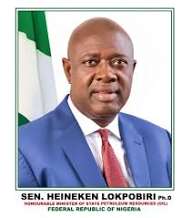
Minister of State for Petroleum Resources (Oil), Heineken Lokpobiri, says the Federal Government will fully support Dangote Refinery in achieving its 1.4 million barrels-per-day refined products target.

Lokpobiri said this on Monday in Lagos during his welcome address at the 19th Africa Downstream Energy Week.

The theme of the event is “Energy Sustainability: Growth Beyond Boundaries and Competition”.

“I received the good news that the Dangote Refinery is expanding its capacity to 1.4 million barrels per day.

“That will not just save Nigeria or West Africa, it will save Africa and, indeed, make an impact globally.

“The Federal Government will support him all the way to accomplishing that goal,” he said.

The minister described the refinery’s expansion plan as a major milestone for Africa’s energy independence and a validation of the government’s policy direction under President Bola Ahmed Tinubu.

Lokpobiri explained that the removal of fuel subsidy and the liberalisation of the downstream petroleum sector were key policy decisions aimed at creating a viable environment for private sector investment.

“The main reason President Tinubu announced the removal of fuel subsidy on his first day in office was because, with subsidies, the private sector could not grow.

“The downstream can only thrive when the right business environment allows private capital to flow in, invest, and maximise opportunities.

He noted that while some Nigerians initially misunderstood the policy, it has now led to a more stable and competitive petroleum products market.

“With deregulation and liberalisation, there is now healthy competition. Prices are stable, availability has improved, and products are more accessible and affordable despite challenges,” he said.

Lokpobiri stressed that if the government had not removed subsidies, Nigeria’s energy sector would be facing severe difficulties today.

The minister reaffirmed the Federal Government’s commitment to deepening investment in the oil and gas sector, saying the global conversation on energy transition is gradually shifting to a more balanced perspective that recognises the continued importance of hydrocarbons.

“The world has realised that energy transition cannot happen in a vacuum.

“Even as we pursue cleaner sources, the global economy still depends on oil and gas.

“Without substantial investment in these resources, there will be no financial capacity to fund the energy mix we all desire,” Lokpobiri noted.

Citing recent United Nations reports, Lokpobiri said the world needs to invest about $540 billion annually in oil and gas recovery and related infrastructure to meet growing energy demand and ensure global energy security.

He added that discussions on climate change and net-zero emissions remain relevant, but the realities of global population growth and consumption patterns make it clear that hydrocarbons would continue to play a central role for decades to come.

“Africa, with a population exceeding 1.4 billion people, cannot afford to ignore investment in oil and gas.

“Expanding exploration, production, and refining capacity is crucial not only for self-sufficiency but also for the continent’s economic stability,” he said.

Lokpobiri noted that Nigeria’s downstream sector is gradually stabilising following the removal of subsidies, with improved product availability and increased investor confidence.

The minister said, “Subsidy was not sustainable; it discouraged private investment and placed a heavy burden on government finances.

“What we are seeing today is a more competitive environment that promotes efficiency and private participation.”

He commended President Tinubu for taking decisive policy actions that have repositioned the downstream sector for long-term growth and sustainability.

“It takes a courageous leader to make decisions that may be unpopular today but are necessary for the country’s future,” he added.

The minister also reaffirmed that ongoing reforms in the oil and gas industry aim to ensure energy security, encourage domestic refining, and foster private sector participation across the value chain.

“We are no longer just talking about transition; we are building an energy mix that guarantees security for Africa,” Lokpobiri said.

“Every stakeholder must align with this vision to create the Africa we want.”

Also speaking, the Chairman of the Advisory Board of OTL Africa Downstream Energy Week, Mr Adetunji Oyebanji, called for renewed collaboration, policy consistency, and innovation to drive Africa’s energy sustainability and competitiveness in a rapidly changing global landscape.

Oyebanji said that the conference underscored the need for Africa and Nigeria to look beyond conventional limits and create an energy future anchored on integration, inclusiveness, and responsible growth.

He described the OTL Africa Downstream Energy Week as a bridge between policy and practice, bringing together regulators, operators, investors, and innovators to shape the future of Africa’s downstream energy industry.

“Energy sustainability is not merely about preserving resources; it is about ensuring that our growth today does not compromise the prosperity of tomorrow.

“We must build an industry that is competitive, responsible, and adaptable to a rapidly changing global environment,” he explained.

Oyebanji, the former Chairman of the Major Energy Marketers Association of Nigeria (MEMAN), observed that the global energy sector had been undergoing major shifts, driven by geopolitical tensions, supply uncertainties, and the accelerating march toward energy transition.

He said that the conflicts in Eastern Europe and the Middle East, had kept oil markets tight, while the global push toward cleaner fuels and renewables is reshaping investment priorities.

He stressed that the continent, richly endowed with natural resources and human capital, must move beyond being just a supplier of raw hydrocarbons to becoming a hub for innovation, efficiency, and value addition.

“Africa must position itself not just as a source of energy, but as a source of innovation.

“Our growth must be sustainable, inclusive, and borderless,” he added.

The OTL Advisory Board Chairman emphasised that Nigeria remains central to Africa’s energy transformation.

The deregulation of the downstream petroleum sector, renewed focus on gas commercialisation, and expanding infrastructure, he said, have laid a foundation for long-term growth.

He, however, cautioned that sustained progress depends on policy stability, regulatory transparency, and institutional consistency.

He noted, thrive on predictability, and long-term capital inflows will only come with confidence in the regulatory environment.

Reflecting on recent developments in Nigeria’s downstream market, Oyebanji said that while the removal of fuel subsidies and market liberalisation have presented short-term difficulties, they also mark necessary steps toward building a competitive, efficient, and innovation-driven sector.

He highlighted ongoing progress in logistics optimisation, storage efficiency, and digital trading platforms as signs of renewal within the industry.

He noted, “The downstream market is evolving amid both turbulence and transformation.

“Success will depend on our ability to combine innovation with policy stability and operational efficiency.”

Oyebanji called for a new mindset where collaboration becomes the new competition, urging industry players to balance innovation with inclusiveness and competition with cooperation.

“Our capacity to grow beyond boundaries depends not only on how hard we compete but on how well we cooperate,” he said.

He added that the future of energy lies in integration, bridging hydrocarbons, renewables, and alternative energy sources, to create a system that promotes both growth and environmental responsibility.


Fubara Wades Through Creeks To Inspect Ongoing Trans-Kalabari Road … Happy With Pace Of Work

0

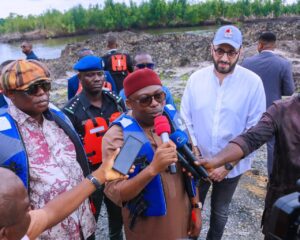
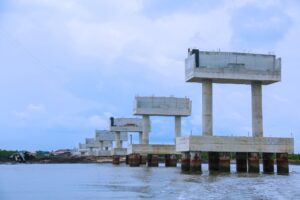
Rivers State Governor, Sir Siminalayi Fubara, has expressed satisfaction with the level of progress recorded on the ongoing Trans-Kalabari Road project, revealing that about 75 percent of the critical piling work has been completed.

Rivers State Governor, Sir Siminalayi Fubara (middle); addressong newsmen during the on-the-spot inspection of the progress of work on the 12.5km Trans-Kalabari Road project, connecting Kalabari communities to Port Harcourt, the State capital, on Monday.

Governor Fubara made this known on Monday while addressing journalists after an on-the-spot inspection of the 12.5-kilometre road project, which will connect the state capital to several Kalabari communities across the sea.

The Governor rode on a boat from a jetty at Rumuolumeni in Obio/Akpor Local Government Area through the rivers and creeks on the project route during the inspection.

The project was awarded to Lubrik Construction Company Limited, on May 15, 2024, with an initial 32-month completion timeline.

75% of piling work completed

The Governor said the visit was aimed at verifying reports from the Ministry of Works regarding the project’s advancement. He commended the contractors for their dedication, and described the progress as “a true reflection of hard work and commitment to excellence.”

“The first phase of the project takes us to Bakana, and features four major river-crossing bridges and nearly five deck-on-pile structures. The terrain is difficult, and the engineering work required is complex. But to the glory of God, I can confirm that the reports I’ve been receiving are accurate. Almost 75% of the piling job, which is the most critical part of the project, has been achieved,” Governor Fubara said.

He emphasised that the Trans-Kalabari Road is one of the most technically demanding infrastructure projects in the state due to its challenging marine terrain but reaffirmed his administration’s resolve to deliver it on schedule.

Governor Fubara highlighted the strategic importance of the road in connecting the Kalabari Kingdom to Port Harcourt, and stimulating economic growth across riverine communities.

“This is a key project that will turn around the lives of the Kalabari people immediately it is concluded. By the grace of God, in the next six months, if we return here for inspection, we might be driving across the bridge,” he said.

Governor Fubara assured Rivers people that his administration remains focused on delivering transformative infrastructure projects that will improve lives and bring lasting development to rural communities.

“We have made a promise to our people to embark on projects that will change lives and bring development, and this is a testament to that commitment,” he said.

Odumegwu-Ojukwu Advises S’East Business Community On Harnessing Duty-free Trade

0

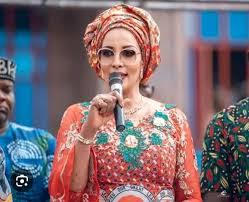
Nigeria’s Minister of State for Foreign Affairs, Amb. Bianca Odumegwu-Ojukwu has urged the South-East business community to explore duty-free platforms to bolster trade cooperation across West Africa.

Odumegwu-Ojukwu made the call in a statement issued on Monday by Dr Magnus Eze, Special Assistant on Communication and New Media, to the Minister of State for Foreign Affairs.

Eze’s statement is against the backdrop of the ECOWAS Trade Liberalisation Scheme (ETLS) workshop scheduled to hold on Oct. 28, 2025, in Enugu.

The ETLS was put together by the ECOWAS National Unit of Ministry of Foreign Affairs in collaboration with the Government of Enugu.

The scheme is a trade instrument established in 1979 by ECOWAS to serve as a cornerstone for regional integration within the region.

According to the minister, the scheme is designed to promote intra-regional trade and allow for duty-free access to markets for products certified as origination within the ECOWAS region.

“The effective implementation of the scheme will help reduce dependency on imports, encourage entrepreneurship and significantly promote job creation.

“Since inception of the scheme, Nigeria accounts for 36.1 per cent of the total number of the registered companies in the region.

“The number of registered companies in Nigeria is 3,146 while the number of products stands at fairly more than 6000. In 2024 alone, 800 companies and 419 products were registered.

“In spite its great promise, the ETLS remains underutilised, as many stakeholders including Small and Medium Enterprises (SMEs), traders and the public sector are unaware of true schemes benefit, eligibility criteria and implementation processes.

She explained objective of the ETLS to be carrying out sensitisation in Enugu, promote understanding about the scheme and engage targeted stakeholders on best practices in the scheme.

This, according to her, would boost awareness about several benefits of ETLS, such as duty-free access, elimination of non-tariff barriers

The workshop will provide stakeholders with a clear understanding of the rules of origin, certification processes and the eligibility criteria required to benefit from the scheme.

“This will improve compliance, to guide stakeholders on ETLS documentation, proper submission of the Certificate of Origin, and to encourage adherence to ECOWAS regulation.

“It will further increase rise in intra-ECOWAS trade, particularly among SMEs and informal trades. The processing of ETLS application in Nigeria is free.

“Women in Business, exporters club, Agro and allied processors and organised private sector in the South-East are expected at the one-day workshop on the theme: “Increasing Intra-regional Trade through ETLS,” she said.

She further said that the scheme would attract entrepreneurs, Small and Medium Enterprises (SMEs) operators, members of the Manufacturers Association of Nigeria (MAN), the Nigerian Association of Chambers of Commerce, Industry, Mines and Agriculture (NACCIMA).

The Governor of Enugu, Mr Peter Mbah, will be the chief host, saying the Minister of State for Foreign Affairs, Amb. Odumegwu-Ojukwu will host the event at 9.a.m. at the International Conference Centre in Enugu.

JAMB Releases Results Of 85 Exceptional Underage Candidates For Admission

0

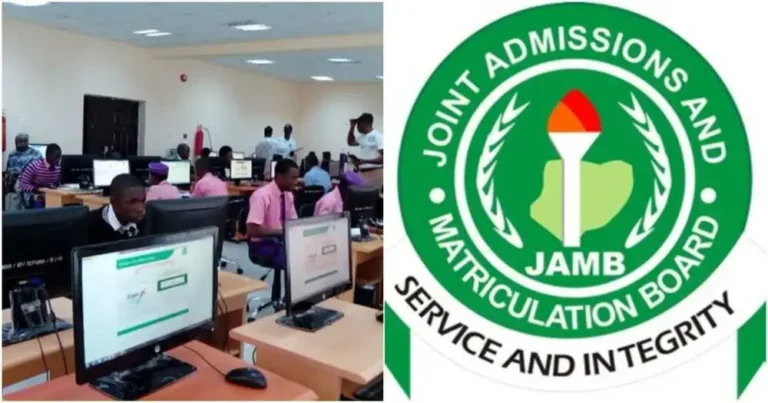
The Joint Admissions and Matriculation Board (JAMB) has released the results of 85 underage candidates (less than 16 by September, 2025) who successfully completed the comprehensive screening process established by the board for exceptional admission.

This is contained in a statement sighted by The Atlantic Bell in Abuja on Monday by the spokesperson of JAMB, Dr Fabian Benjamin.

Benjamin said that after meticulous evaluation, 85 candidates who were adjudged to be qualified had been duly notified to proceed to their respective institutions to complete the admission process and print their individual JAMB admission letters.

He said the policy of exceptional admission was consistent with global best practices, where such cases were treated as rare exceptions rather than the norm.

“It is to be noted that in the 2025 Unified Tertiary Matriculation Examination (UTME), of the 2,031,133 applicants, a total of 41,027 candidates sought consideration under this special category of which 599 score the 80 per cent threshold in the UTME.

“These 599 were subjected to further scrutiny of school certificate and PUTME screening, which led to the emergence of 182 candidates (178+4).

“After due verification, interviews, and screening, 85 candidates were found to have met the criteria and have consequently been cleared for admission.

“Any of the 182 finalist candidates with valid reason missed the final interview is advised to submit a formal request through the JAMB Support Ticketing System under the newly created category titled – 2025 Underage Complaint.”

Benjamin said that such complaints would be reviewed individually, and decisions would be made strictly on their own merit.

According to him, this window is for only the 182 finalists who might, for one reason or the other, missed the final interview.

In addition, he said that candidates who score 320 and above in UTME but failed to upload O-Level results and were subsequently disqualified from proceeding were now given a chance to upload no later than Wednesday, October 29, 2025 and notify the Board of such through the ticketing.

He reiterated the Board’s commitment to ensuring that the admission process remained credible, transparent, and inclusive while also maintaining the integrity of academic standards across all tiers of tertiary education in Nigeria.

Terrorism Trial: Consult Experts In Criminal Law On The Path You Have Chosen, Judge Tells Kanu

0

Justice James Omotosho of the Federal High Court in Abuja has advised Nnamdi Kanu, leader of the proscribed Indigenous People of Biafra
to consult experts in criminal law on the consequences of the option he had chosen on his ongoing trial.

Kanu, had upon the resumed hearing in his ongoing trial for alleged terrorism offences, told Justice Omotosho that he had perused the case file and come to the conclusion that he had no case to answer.He therefore abandoned his earlier plan to call witnesses in his defence.

Justice Omotosho had, on Friday, fixed today for Kanu to open his defence following his complaint that the case file was yet to be handed over to him.

The IPOB leader had, in a motion filed on October 21, informed the court of his intention to call about 23 witnesses and applied for witness summons.

But when the case was called on Monday, Kanu said he had gone through the case file and had realised that there is no valid charge against him.

He argued that since he was convinced that there is no valid charge against him and that he was subjected to unlawful trial, there would no be need for him to conduct any defence.

Justice Omotosho then asked him to file a written address to that effect and serve the prosecution.

The judge consequently adjourned the matter until November 4, November 5 and November 6 for the adoption of the final written addresses based on the defendant’s position that evidence led so far and the charge had not established any case against him or for the defendant to enter his defence.

Alleged Trafficking: NAPTIP Rescues 26 Children, Arrests Orphanage Owner

Operatives of the National Agency for the Prohibition of Trafficking in Persons rescued no fewer than 26 trafficked children at an orphanage home in Benue state.
This is contained in a statement by NAPTIP Press Officer in Abuja on Sunday, Mr Vincent Adekoye.
One of the suspects, a 60-year-old man(name witheld), is the founder of an internationally recognised Civil Society Organisation, National Council of Child’s Right Advocates of Nigeria (NACRAN), based in Benue.
Adekoye stated that the suspect was in connection with an alleged large-scale case of child trafficking, child sale, and illegal adoption.
He said that another 34-year-old female accomplice was equally arrested.
In a related development, he said two other orphanage operators in the Federal Capital Territory (FCT) and Nasarawa State, and some allegedly trafficked children were recovered.
”The breakthrough operations led by operatives of the agency for the suspects arrested in Markudi was carried out by the state command of the agency.
”The Markudi operation, NAPTIP rescued 26 children, out of the over 300 children suspected to have been trafficked and sold to different persons within Benue, Enugu, Lagos, Nasarawa, and Abuja.
Adekoye stated that investigation is ongoing to trace the circumstances surrounding the 274 others, and to unravel the full extent of the syndicate’s activities.
According to him, this sad development is coming barely a few weeks after the Director-General of NAPTIP, Hajia Binta Adamu-Bello, expressed concern over the unwholesome activities of some operators of orphanages in Nigeria.
According to him, the latest operation by the agency is a continuation of the renewed crackdown on orphanages and Care Homes across the Country which was ordered by the director-general of NAPTIP.
He said that this action followed series of reported cases of alleged infractions and illegal activities by the operators of the Orphanages homes in the country.
The press officer, stated that the agency was also prompted by a report lodged by a man, reporting that his four-year-old son was given out by his mother-in-law to an NGO without his consent.
He said that the petition lead to the arrest of several others, and uncovering of a wider network involved in trafficking and illegal adoption of children.

According to him, preliminary investigations revealed that the suspects feasted on the vulnerability of the rural communities in Benue through a voodoo initiative called: “Back to School Project” to recruit children from crisis-ridden communities in the state.

He said that the suspects organised meetings with villagers and traditional leaders, convincing them that the project would sponsor children’s education.

“Parents were deceived into signing consent forms or verbally agreeing to release their children, with promises that they would see them again after three years.

“Over 300 children were reportedly handed over to the suspects. Some parents were unaware or did not sign any consent forms,.

“The children, aged between one and thirteen years, were transported to orphanage homes in Abuja and Nasarawa, where they were allegedly sold to interested couples under the guise of adoption, for amounts ranging from ₦1 million to ₦3 million per child.

“Some of the orphanages identified were used as holding centers where children awaited “adoption” or sale,” Adekoye said .

He said that four orphanage homes located at Kaigini, Kubuwa, Abuja; Masaka Area I, Mararaba, by Abaca Road; and Mararaba, behind the International Market, have been linked to the syndicate and are currently under investigation.

“One complainant alleged that he paid ₦2.8 million as an adoption fee and ₦100,000 consultancy fee to a member of the syndicate.

The identities of many of the rescued children have been changed, complicating tracing efforts, ” he said.

Reacting to the arrest, Adamu-Bello, described the situation as unbelievable and mind-bugling.

“Arising from the case at hand, I wish to say that issues of child trafficking and adoption are becoming a national crisis that requires urgent attention from all relevant stakeholders.

“A few weeks ago, based on credible intelligence, I expressed concern and alerted the State Ministries of Women Affairs on the unpatriotic and illegal activities of some Orphanage Operators across the Country.

“It is painful that some unpatriotic elements with recognised entities and status, now use their social class to deceive the already vulnerable people in the crisis-prone communities.

“These children are trafficked most of whom narrowly escape death in the wake of communal or farmer–herder clashes. They are sold to challenged parents in the name of adoption without the valid legal consent of the parents.

“This is unacceptable, and those already arrested in connection with this wicked act shall be made to face the full wrath of the law.

“Our children are not commodities to be displayed in Orphanages and sold at will to the highest bidders. This must stop,” Adamu-Bello said.