Home Blog Page 13

South African Football Mourns As World Cup Midfielder Jayden Adams Dies At 25

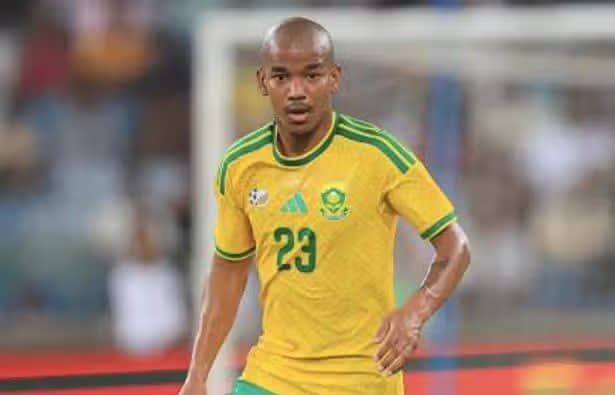
South African football has been plunged into mourning following the death of midfielder Jayden Adams, who passed away at the age of 25, just days after representing his country at the 2026 FIFA World Cup. The tragic development has sparked an outpouring of grief across the football community.

Adams, who played for Mamelodi Sundowns, featured in all three of South Africa’s group-stage matches at the World Cup, helping Bafana Bafana reach the knockout stage. He was, however, an unused substitute in the team’s 1-0 Round of 32 defeat to Canada, which brought their historic campaign to an end.

The gifted midfielder’s death comes barely weeks after he returned from football’s biggest stage, where he carried the hopes of his nation with distinction.

Earlier in the tournament, Adams endured personal tragedy after losing his grandmother, Marianna Adams, a day before South Africa’s Group A clash against the Czech Republic. Despite the heartbreaking loss, he honoured his national team commitment by taking to the field.

At the time, the South African Football Association (SAFA) expressed sympathy with the player and his family, confirming that his 72-year-old grandmother had died in a Stellenbosch hospital before being laid to rest in June.

A product of the Stellenbosch FC academy, Adams signed his first professional contract in 2020 and quickly established himself as one of the club’s brightest talents. He made 139 appearances for Stellenbosch—ranking among the club’s most-capped players—before securing a move to Mamelodi Sundowns in 2025.

He earned nine senior international caps for South Africa and was widely regarded as one of the country’s most promising midfielders.
The South African Football Players Union (SAFPU) described his passing as “an immeasurable loss” to his family, teammates, clubs and the nation, paying tribute to his humility, talent and commitment to the game.

The cause of Adams’ death had not been officially disclosed as of Saturday, with tributes continuing to pour in from across the football world.

Port Harcourt Airport Secures Global Safety Certification After 40 Years, FAAN Commends Fubara

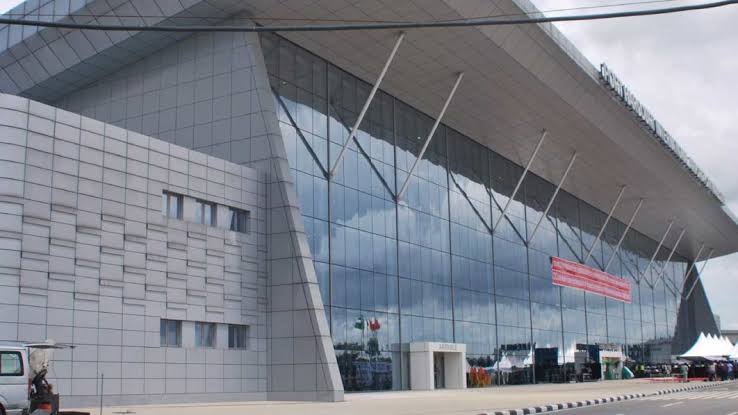
The Port Harcourt International Airport has, for the first time in its over 40-year history, secured full aerodrome certification and operational licence after meeting stringent safety and security requirements set by the Nigerian Civil Aviation Authority (NCAA) and the International Civil Aviation Organisation (ICAO).

The landmark certification follows the extensive upgrade, expansion and modernisation of the airport’s infrastructure, alongside the provision of critical safety equipment, a development the Federal Airports Authority of Nigeria (FAAN) attributed to the support of the Rivers State Government under Governor Siminalayi Fubara.

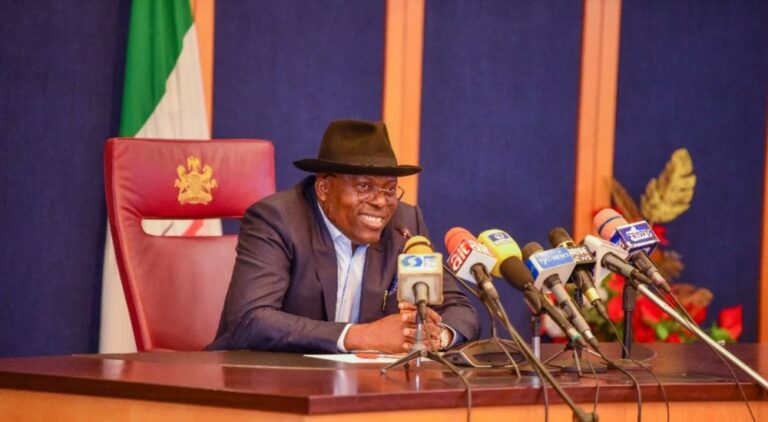
Regional General Manager, South-South Airports and Manager of Port Harcourt International Airport, Mrs Lynda Ezike, disclosed this on Friday during a courtesy visit by a FAAN delegation to Government House, Port Harcourt, where she formally presented the certification to Governor Fubara.

Speaking with journalists after the presentation, Ezike described the certification as a historic milestone that positions the airport for increased international operations while reaffirming its compliance with globally accepted aviation safety standards.

“We came here on a historic mission to present this certificate to His Excellency, Sir Siminalayi Fubara, because his administration made this achievement possible,” she said.

According to her, the certification signifies that Port Harcourt International Airport, regarded as the gateway to Rivers State and the South-South region, now fully satisfies the operational and safety benchmarks prescribed by both national and international aviation regulators.

“This is no ordinary achievement. The airport is now certified, meaning more international airlines can operate into Port Harcourt with the confidence that it meets globally recognised safety standards,” she stated.
Ezike credited the accomplishment to the governor’s commitment to upgrading airport infrastructure and providing critical operational equipment required to satisfy NCAA and ICAO regulations.
“The issuance of this certificate is a direct reflection of the unwavering support of Governor Siminalayi Fubara in the upgrade of airport infrastructure and the provision of critical equipment needed to meet national and international safety requirements,” she added.

She further noted that the certification enhances Nigeria’s profile in the global aviation industry while strengthening Port Harcourt International Airport’s capacity to attract more international flights and investment into the South-South region.

Fubara Flags Off 11.9MW Solar Mini-Grid In Rivers, Targets Clean Energy, Rural Economic Growth

0

The Rivers State Government has commenced the construction of an 11.9-megawatt peak (MWp) solar mini-grid in Bolo, Ogu/Bolo Local Government Area, in a move aimed at expanding electricity access, stimulating economic activities and accelerating the state’s transition to clean energy.

Speaking at the groundbreaking ceremony on Friday, Governor Siminalayi Fubara said reliable and affordable electricity remains fundamental to sustainable development, stressing that no community can achieve meaningful economic growth without stable power.

Represented by the Deputy Governor, Prof. Ngozi Nma Odu, the governor described the project, being executed in partnership with the Rural Electrification Agency (REA), as more than an infrastructure investment.
According to him, the solar mini-grid represents an investment in the future of Bolo, with the capacity to transform businesses, schools, healthcare facilities and the local economy.

Fubara expressed confidence that the project would boost electricity supply, stimulate small and medium-scale enterprises, create employment opportunities, reduce dependence on fossil fuels, promote environmental sustainability and improve the quality of life of residents, particularly women and other vulnerable groups.

He commended the Rural Electrification Agency and its development partners for collaborating with the Rivers State Government to deliver the project, describing the partnership as a demonstration of what can be achieved when governments and institutions work together to improve citizens’ welfare.

The governor reaffirmed his administration’s commitment to ensuring that no community is left behind in the state’s drive towards sustainable electrification and urged residents of Bolo to take ownership of the project by safeguarding the facilities, supporting contractors and cooperating with all stakeholders throughout the construction phase.

He expressed optimism that the community’s support would ensure the successful completion and long-term sustainability of the project.

Managing Director and Chief Executive Officer of the Rural Electrification Agency, Abba Aliyu, said the initiative aligns with President Bola Tinubu’s Renewed Hope Agenda, which prioritises improved electricity access, economic growth and job creation.

Aliyu disclosed that the agency had completed 16 renewable energy projects across Rivers State and has another 17 projects in the pipeline, positioning the state as one of Nigeria’s leading beneficiaries of clean energy investments.
Permanent Secretary, Rivers State Ministry of Power, Engr. Nicholas Iminabo Wokoma, explained that the solar mini-grid would complement the existing 33kV distribution network, providing Bolo community with a more reliable and efficient electricity supply.

He described the project as a scalable model that could be replicated in other unserved and underserved communities across the state, while commending the REA for partnering with the Rivers State Government to strengthen the state’s energy infrastructure.

Earlier, Chairman of Ogu/Bolo Local Government Area, Vincent Nemieboka, praised the state government for selecting Bolo as the host community, describing the project as a sustainable energy solution that would guarantee affordable and clean electricity for residents.

Also speaking, Chairman of the Bolo Se Council of Chiefs, Chief Augustus Daddie Oforibokaka, expressed appreciation to the Federal and Rivers State governments for bringing the project to the kingdom.

He said the solar mini-grid would not only address the community’s longstanding electricity challenges but also improve access to potable water, stimulate economic activities and accelerate development.

The traditional leader, on behalf of the monarch, the Council of Chiefs and the people of Bolo Kingdom, thanked Governor Fubara and the Ogu/Bolo council chairman for facilitating the project, describing it as a landmark intervention for the community.

Relief As Kidnapped Oyo Pupils, Teachers Regain Freedom

The pupils and teachers abducted in Orire Local Government Area of Oyo State have regained their freedom, bringing an end to days of anxiety over their fate.

The development was disclosed on Friday by the Special Adviser to the President on Information and Strategy, Bayo Onanuga, in a post on his verified X account.

“Finally, the kidnapped pupils and teachers in Orire, Oyo have been freed by their abductors,” Onanuga wrote.

However, authorities have yet to provide details on the circumstances surrounding their release, including whether a ransom was paid or if security operatives facilitated their freedom.
Further details are expected as officials provide more information.

Fubara Targets Retirees’ Welfare With N107bn Pension, Gratuities Package In N1.854tr Budget … Raises Hope For Fresh Employments

0

Retirees Get Major Boost as Fubara Sets Aside Over N107bn for Pensions, Gratuities, Death Benefits
Governor Siminalayi Fubara has signalled a major commitment to the welfare of retired civil servants in Rivers State, earmarking more than N107 billion in his proposed N1.854 trillion 2026 Budget to settle pension obligations, clear outstanding gratuities and pay death benefits.

Presenting the 2026 Appropriation Bill, christened “Budget of Resilience for Growth and Development,” before the Rivers State House of Assembly on Friday, the governor said his administration had made adequate provisions to address the long-standing plight of retirees, particularly those owed benefits accumulated over the years.

A breakdown of the budget shows that N20 billion has been allocated for gratuities, another N20 billion for legacy pension gratuities, N55.1 billion for monthly pension payments and N7 billion for death benefits.

The government also proposed N5 billion for Group Life Insurance and N4 billion for obligations under the Employee Compensation Act, bringing the total social protection package for serving and retired workers to well over N111 billion.
Fubara declared that the allocations reflect his administration’s determination to restore dignity to retired public servants by settling longstanding entitlements.

“We have also made sufficient arrangements to clear the backlog of gratuities and death benefits owed to retired civil servants, which had accumulated under previous administrations,” the governor said.

Beyond retirees, the governor proposed N15.22 billion for the recruitment of new workers into the public service, a move expected to strengthen manpower across ministries, departments and agencies while creating employment opportunities for qualified residents.

Fubara said the people-centred budget was deliberately structured to improve the quality of life of Rivers people through sustained investment in human capital and social development.

According to him, the N1.854 trillion budget, representing a 24.49 per cent increase over the adjusted 2025 estimates, was designed through extensive public consultation and reflects the aspirations of residents for a more prosperous and resilient state.

He noted that the budget aligns with his administration’s broader vision of building “a secure, prosperous and resilient State characterised by inclusive economic growth, sustainable development and improved standards of living for all.”

The governor identified economic growth, human capital development, socio-economic infrastructure and social investment as the four major pillars of the 2026 fiscal plan, stressing that every allocation was aimed at improving service delivery and expanding opportunities for citizens.

Describing the appropriation proposal as a budget that would touch every part of the state, Fubara told lawmakers that it was crafted to respond to the needs of Rivers people.

“We present to this Honourable House a budget that reflects the needs and aspirations of our people—a budget that will deliver for all residents of Rivers State,” he said.

The governor urged the House of Assembly to give the budget speedy consideration and approval to enable the government commence implementation of programmes aimed at accelerating development while improving the welfare of workers, retirees and other residents of the state.

Fubara Unveils N1.854tr 2026 Budget, Prioritises Infrastructure, Education, Economic Growth

After Delay, Fubara Presents N1.854tr ‘Budget of Resilience’ to Rivers Assembly
Governor Siminalayi Fubara on Friday presented a proposed N1.854 trillion Appropriation Bill for the 2026 fiscal year to the Rivers State House of Assembly, with a strong emphasis on infrastructure renewal, education, healthcare, economic expansion and human capital development.

Presenting the budget, christened “Budget of Resilience for Growth and Development,” before lawmakers, Fubara said the proposal was designed to build a more resilient, prosperous and inclusive economy while sustaining ongoing investments in critical sectors.

The governor said the projected expenditure of N1,854,248,734,475.76 represents a 24.49 per cent increase over the adjusted 2025 budget, driven by anticipated improvements in statutory allocations from the Federation Account Allocation Committee (FAAC), derivation revenue and internally generated revenue.

Despite political and economic challenges, Fubara said his administration had maintained fiscal stability through prudent management of public resources.

“Our State has remained fiscally stable, thanks to our commitment to fiscal responsibility, prudence and accountability in managing public funds.

We do not tolerate mismanagement at any level and have wisely utilised public funds to provide services, attract investment, create jobs and expand socio-economic opportunities for our people,” he said.

According to the governor, the projected revenue profile comprises N487.61 billion from internally generated revenue, N936.05 billion from FAAC allocations, including derivation funds, Value Added Tax and exchange gains, N48.11 billion in opening and closing balances, and N382.48 billion from capital receipts, including domestic loans, grants and asset sales.

Fubara proposed N413.11 billion for recurrent expenditure and N1.405 trillion for capital projects, underscoring his administration’s commitment to development-oriented spending.

He disclosed that personnel costs would gulp N154.77 billion, while N15.22 billion was earmarked for new recruitment into the public service. Other recurrent allocations include N55.10 billion for pensions, N20 billion each for gratuities and legacy pension liabilities, N7 billion for death benefits and N36.71 billion for overhead costs.

The governor announced a 50 per cent increase in overhead allocations to ministries, departments and agencies to enhance operational efficiency immediately the budget is passed into law.

He also pledged to clear the backlog of gratuities and death benefits owed retired civil servants, saying the liabilities accumulated under previous administrations would receive priority attention.

On capital spending, infrastructure retained the largest share, with N533.32 billion allocated to works and infrastructure. Education follows with N315 billion, while N105.43 billion was earmarked for healthcare delivery.

The Rivers State House of Assembly is expected to receive N41.44 billion, while the judiciary was allocated N30 billion. Other sectoral allocations include N19.26 billion for agriculture, N15 billion for power, N8.5 billion for chieftaincy and community development, N7.98 billion for sports, N7 billion for youth development, N6.5 billion for women affairs and N6.61 billion for environmental sustainability.

Fubara described the appropriation bill as a people-centred budget designed to accelerate development, stimulate economic growth and improve living standards across the state.

He identified economic growth, human capital development, socio-economic infrastructure and social investment as the administration’s core priorities for the 2026 fiscal year.

The governor said the budget would fund new infrastructure projects, complete ongoing road construction and ensure the maintenance of existing roads and bridges, while significantly expanding investment in education to reposition the sector for better outcomes.

Acknowledging the delay in presenting the budget, Fubara assured lawmakers that implementation would be robust and anchored on transparency, accountability and responsible financial management.

He urged members of the House of Assembly to rise above political differences and approve the proposal in the overriding interest of Rivers people.

“The collective interests of our State and people are more important than any other consideration. As leaders, it is our collective duty to ensure every kobo is spent where it is most needed and to deliver on our mandates to the people,” the governor said.

He thereafter formally laid the 2026 Appropriation Bill before the House for consideration and passage into law.

Tinubu Seeks Senate’s Swift Approval Of Senior Secondary Education Commission Amendment Bill

0

President Bola Tinubu has transmitted the National Senior Secondary Education Commission (Amendment) Bill, 2026, to the Senate, seeking accelerated legislative approval for reforms aimed at strengthening the administration and regulation of public senior secondary education in Nigeria.

The President’s request was conveyed in a letter read during Thursday’s plenary by Senate President Godswill Akpabio.

Tinubu said the proposed amendment was designed to enhance the management, institutional framework and oversight of public senior secondary education nationwide as part of his administration’s broader agenda to revitalise the education sector.

According to the President, the Federal Executive Council (FEC) approved the bill at its meeting of April 30, 2026, following which the Federal Ministry of Justice vetted and finalised the draft in line with constitutional provisions and legislative drafting standards.

“In furtherance of this administration’s commitment to strengthening educational institutions in the national interest, the National Senior Secondary Education Commission (Amendment) Bill, 2026, is hereby forwarded for legislative action by the National Assembly,” Tinubu stated in the letter.
He urged the Senate to accord the bill expeditious consideration, expressing confidence that its passage would support ongoing efforts to improve the country’s education system.

Responding, Akpabio referred the proposed legislation to the Senate Committee on Rules and Business, directing it to report back to the chamber within one week.
The bill comes amid the Federal Government’s renewed push to reform secondary education.

Minister of Education, Tunji Alausa, recently announced plans to end the policy separating junior secondary schools (JSS) from senior secondary schools (SSS), arguing that the arrangement has failed to achieve its intended objectives.

According to the minister, the policy has created disparities in student enrolment, with overcrowding in many junior secondary schools while several senior secondary schools remain underutilised.

He also disclosed that the disarticulation policy had weakened the transition from primary to senior secondary education, revealing that more than 20 million pupils who enrolled in primary schools did not progress to senior secondary level.

Police Can’t Search Phones Without Court Warrant, Says Police Commissioner

0

The Commissioner of Police in Plateau State, Bassey Ewah, has warned officers and men of the state command against stopping citizens to search the contents of their mobile phones without a valid court warrant, declaring the practice unlawful.

Ewah, in a statement issued on Thursday by the Police Public Relations Officer, Alabo Alfred, said no police officer has the legal authority to compel any citizen to surrender a mobile phone for inspection during routine road checks without judicial authorisation.

The police commissioner stressed that the directive was part of the command’s commitment to professionalism, discipline and the protection of citizens’ fundamental rights.

He urged residents of the state to firmly but politely refuse any unlawful demand for access to their phones and promptly report erring officers through the command’s established complaint channels.

Reaffirming the command’s resolve to uphold the rule of law, Ewah said the Plateau State Police Command would not tolerate acts of misconduct or abuse of office by its personnel.

“The Plateau State Police Command remains committed to protecting the lives, property and constitutional rights of all residents. We will continue to ensure effective policing in accordance with the law and global best practices,” he said.

The commissioner reiterated that officers must discharge their duties within the confines of the law, warning that violations of citizens’ rights would attract appropriate disciplinary measures.

2,361 NYSC Members Pass Out In Rivers As Nine Ordered to Repeat Service Year

0

No fewer than 2,361 members of the 2025 Batch B Stream I of the National Youth Service Corps (NYSC) have successfully completed their mandatory one-year national service in Rivers State, while nine corps members have been directed to repeat the entire service year for various infractions.

The Rivers State Coordinator of the NYSC, Mr. Moses Oleghe, disclosed this on Thursday during the low-key passing-out ceremony held at Isaac Boro Park in Port Harcourt.

Oleghe said the nine affected corps members comprise seven males and two females, while 35 others — 21 males and 14 females — were sanctioned with extension of service for misconduct committed during the service year.

He urged the outgoing corps members to remain worthy ambassadors of the Scheme by upholding its core values as they advance in their careers and personal endeavours.

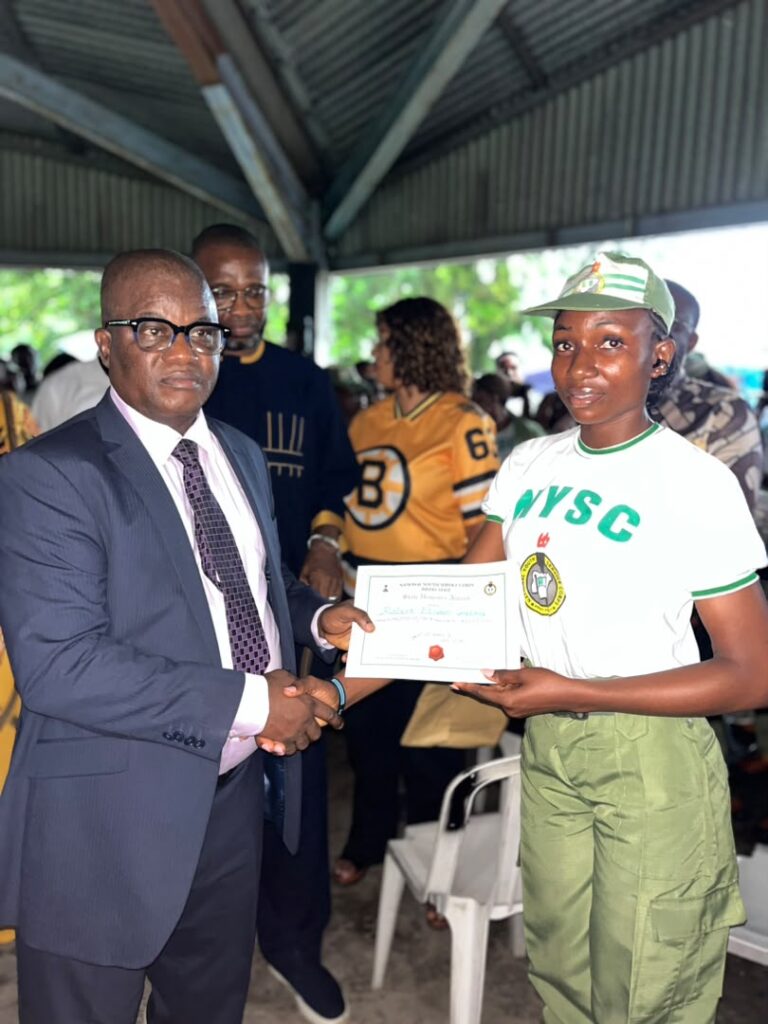
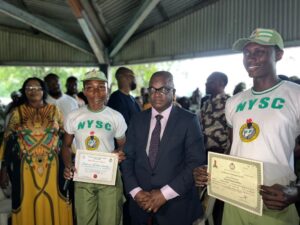
Rivers State NYSC Director, Moses Oleghe flanked by the Award winners.

According to him, “Continue to uphold the ideals of the NYSC as you climb the ladder of life. Let patriotism, discipline, honesty, integrity, commitment and dedication to duty remain your guiding principles in all your pursuits.”

A breakdown of those who completed the service year showed that 941 are males and 1,420 are females, bringing the total number of those passing out to 2,361.

The State Coordinator also announced that two corps members — one male and one female — received the State Honours Award in recognition of their outstanding service and contributions to their host communities.

He expressed appreciation to Rivers State Governor, Sir Siminalayi Fubara, and the people of the state for providing a peaceful and enabling environment that allowed corps members to complete their service successfully.

Oleghe appealed for the continued support of the state government and residents towards the NYSC scheme.

He also noted that the 2025 Batch B Stream I service year ended without any recorded death, describing the feat as a remarkable milestone and giving glory to God for the successful completion of the exercise.

Ex-PAP Boss Ndiomu: A Career of Service Confronts Unverified Allegations

Public service often comes with intense scrutiny, particularly for individuals who have occupied strategic national positions. For retired Major-General Barry Tariye Ndiomu, former Interim Administrator of the Presidential Amnesty Programme (PAP), recent bribery allegations circulating on social media have again raised the question of whether public reputations should be judged by evidence or speculation.

An anonymous X (formerly Twitter) account, identified as Third Eye, alleged that Ndiomu paid ₦4 billion in bribes to retain his appointment as PAP Interim Administrator, including alleged monthly payments of ₦500 million over eight months to the Chief of Staff to the President, Femi Gbajabiamila.

However, the allegation has not been accompanied by documentary evidence, bank records, witness testimony or findings from any law enforcement or anti-corruption agency. As such, it remains an unverified claim.

In a constitutional democracy governed by the rule of law, allegations of criminal conduct require credible evidence before they can be regarded as facts. Without such proof, they remain matters of speculation rather than established wrongdoing.
For many observers familiar with Ndiomu’s career, the allegations appear inconsistent with the profile of a man whose public life has largely been defined by military discipline, legal training and institutional service.

A lawyer and career soldier, Ndiomu served in the Nigerian Army for about 35 years, from 1983 until his retirement in 2017, rising through the ranks to become a Major-General. His elevation placed him among the country’s senior military officers after decades of operational, command and administrative responsibilities.

His achievement also carried historical significance, as his father, the late Major-General Charles Bebeye Ndiomu, attained the same rank, making them one of the few father-and-son pairs in Nigeria’s military history to both reach the rank of Major-General.

Following his retirement, Ndiomu remained largely outside public office until September 2022, when the Federal Government appointed him Interim Administrator of the Presidential Amnesty Programme at a period marked by administrative and operational challenges within the intervention agency.

During his tenure, he embarked on extensive consultations with traditional rulers, community leaders and critical stakeholders across the Niger Delta, with the aim of rebuilding confidence in the programme and strengthening peace-building efforts in the region.

His administration also pursued initiatives designed to create sustainable opportunities for beneficiaries. Working with institutions including the Office of the Head of the Civil Service of the Federation, the National Information Technology Development Agency (NITDA), the Ministry of Foreign Affairs and the Nigeria Customs Service, efforts were initiated to facilitate employment opportunities for about 350 graduates of the Amnesty Programme who earned first and second-class university degrees.

The administration also sought to create pathways for trained beneficiaries into the security services and the oil and gas sector, while encouraging the formation of cooperatives to promote entrepreneurship and long-term economic empowerment.

Supporters of the former PAP administrator also point to his handling of inherited financial liabilities. According to available records, his administration cleared outstanding commitments estimated at about ₦17 billion owed to consultants, contractors and vendors within six months of assuming office.

Beyond the Amnesty Programme, the Presidency appointed Ndiomu Chairman of the Special Investigative Panel on Crude Oil Theft, a sensitive assignment aimed at tackling one of Nigeria’s most persistent economic and security challenges.

Observers credited his tenure with strengthening stakeholder engagement, improving confidence in the Amnesty Programme and contributing to relative peace across the Niger Delta through dialogue and prompt responses to community concerns.

Supporters further argue that the governance structure of the Presidential Amnesty Programme, which operates under established government oversight mechanisms, makes claims of unofficial arrangements to secure tenure difficult to reconcile with institutional procedures.

Throughout his military and public service career, Ndiomu earned a reputation for adherence to due process, discipline and institutional accountability. As both a lawyer and retired senior military officer, associates describe him as meticulous and committed to established procedures.

While public officials should remain subject to scrutiny and accountability, democratic accountability, they argue, must be anchored on verifiable facts rather than anonymous accusations.

Ultimately, Ndiomu’s public record spans more than three decades of military service, leadership of the Presidential Amnesty Programme during a critical period, efforts to expand opportunities for Niger Delta beneficiaries and his role in the Federal Government’s campaign against crude oil theft.

Whether history remembers him favourably, many contend, should depend on those verifiable contributions rather than allegations that remain unsupported by credible evidence. Until proven otherwise through lawful investigation, they maintain, his legacy continues to rest on a career built on service, discipline and public duty.

By Max Ekeke