Home Blog Page 127

NELFUND Hits One Million Student Loan Applications …Over N116bn Disbursed To Nigerian Students

0

The Nigerian Education Loan Fund (NELFUND) on Sunday said that the student loan scheme has crossed one million applications on its official portal.

The organisation noted that this marked one of the biggest uptake levels for a government-backed social scheme since the start of President Bola Tinubu’s administration.

NELFUND, in a statement by the Director, Strategic Communications, Oseyemi Oluwatuyi, stated that the milestone comes barely one year after the programme’s launch on 24 May 2024, describing it as proof that the student loan initiative is gaining strong national traction and public trust.

said that over ₦116bn has so far been disbursed to students across universities, polytechnics and colleges of education in Nigeria, covering institutional charges and upkeep allowances.

The Managing Director of NELFUND, Akintunde Sawyerr, said the development reflected the impact of the President Tinubu Renewed Hope policy drive on access to higher education.

The statement explained: “Crossing the one-million mark represents more than data; it represents renewed hope for a generation of Nigerians determined to rise above financial barriers to education

“It is a testament to visionary leadership, sound policy design, and the collective efforts of all stakeholders driving this transformative agenda.”

NELFUND reiterated that it is committed to continuous process improvement to make sure “every qualified Nigerian student, regardless of background or location, can access education funding with transparency, efficiency, and dignity.”

The agency described the programme as non-discriminatory — saying it benefits Nigerians across religions and ethnic backgrounds — and is helping to unify national aspirations through equal learning opportunities.

It said it remains focused on ensuring “no Nigerian is denied the opportunity to learn, grow or contribute to national progress because of financial limitations.”

US Threat Against Nigeria: Northern Leaders Sing Discordant Tunes … Kwankwaso, Gumi, Lamido Advice Tinubu

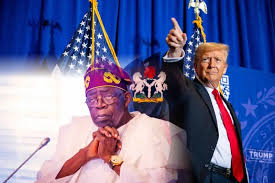
The threat by the President of the United States of America, Donald Trump, that his administration will suspend all aid and assistance to Nigeria if President Bola Tinubu’s government fails to address the growing attacks on Christians across the country, has continued to attract reactions from notable leaders from Northern Nigeria.

The situation reached its height on Friday, when President Donald Trump redesignated Nigeria as a Country of Particular Concern.
The US government under Trump had first designated Nigeria a country of particular concern in 2020.

In a post on his Truth Social account on Saturday, Trump accused the Nigerian government of allowing what he described as “killing of Christians.”

He alleged that radical Islamist groups have been targeting Christian communities in different parts of Nigeria, insisting that Washington might be forced to intervene if the Nigerian authorities continue to look the other way.

The American leader also directed the Department of War to prepare for possible action in Nigeria.

“I am hereby instructing our Department of War to prepare for possible action. If we attack, it will be fast, vicious, and sweet, just like the terrorist thugs attack our CHERISHED Christians! WARNING: THE NIGERIAN GOVERNMENT BETTER MOVE FAST!”

In separate reactions, former Kano State Governor,Rabiu Musa Kwankwaso, Sheikh Ahmad Gumi, and former governor of Jigawa State, Sule Lamido, admitted the seriousness of the threat and advised the President Bola Tinubu administration on steps to take.

Senator Rabiu Musa Kwankwaso, Presidential Candidate of the New Nigerian Peoples Party (NNPP) in the last general election, has reacted to the threat of US President, Donald Trump, to Nigeria over alleged genocide.

Responding in a statement on Sunday, Kwankwaso said Nigeria is a sovereign nation whose people face different threats from outlaws.

He said insecurity does not distinguish between Christians or Muslims, adding that the US ought to assist Nigeria to tackle widespread security issues.

“I have noted with increasing concern the heightened pronouncements on Nigeria by President Donald Trump. This follows his designation of Nigeria as a “country of particular concern.”

“It is important to emphasise that our country is a sovereign nation whose people face different threats from outlaws across the country. The insecurity we face does not distinguish based on religious, ethnic, or political beliefs.
The United States should assist the Nigerian authorities with better cutting-edge technology to tackle these problems rather than posing a threat that could further polarise our country.

“The Nigerian government should also consider appointing special envoys from its distinguished diplomats to engage the American government. Additionally, it is necessary to appoint permanent ambassadors to represent Nigeria’s interests on the international stage.

In his reaction, Islamic cleric, Sheikh Ahmad Gumi urged President Bola Tinubu to take decisive action against former U.S. President Donald Trump following his threat of military action against Nigeria.

In a post on his verified Facebook page on Sunday, Gumi condemned Trump’s threat as an insult to Nigeria’s sovereignty and called for an immediate diplomatic response.

“For Trump to threaten a sovereign country with military attack is a profound disrespect to our authority, but we can rise above it,” he wrote.

Gumi advised the Nigerian government to summon the U.S. ambassador and demand a retraction, warning that failure to do so should lead to severing diplomatic ties.

“President Tinubu should summon the US ambassador; they either retract their threats or we sever diplomatic ties with this irresponsible regime,” he said.

He also emphasized the need for Nigeria to explore other options for economic growth and military partnerships.

“There are lots of other options for our economic expansion and military alliance,” Gumi said.

In his own reaction, former Jigawa State Governor, Sule Lamido, urged President Bola Ahmed Tinubu to immediately convene a meeting with all past Nigerian leaders to discuss and address the recent threat issued by United States President, Donald Trump, against Nigeria.

Lamido, in a statement posted on his official Facebook page, described the invasion threat as “very ominous,” warning that its consequences could be dire if not properly handled.

He said, “The threat of war on Nigeria from President Trump of the United States of America, under whatever guise, is very ominous. The consequences of such action cannot be imagined.”

The Peoples Democratic Party (PDP) chieftain called for unity among Nigerians, stressing that this is the time for all citizens, regardless of creed or background, to rally around the nation’s sovereignty.

“It is now time for all Nigerians of all creed to unite around our sovereignty. President Tinubu, on his part, must swallow his pride and invite all our past leaders for a closed-door meeting to fully discuss and find a way around this dangerous development,” Lamido stated.

“Our former Presidents and Heads of State are eminently positioned to engage the USA and President Trump in an all-out quiet diplomacy, outside the media realm, to resolve whatever concerns the U.S. may have,” he added.

Lamido warned that Nigeria does not have the luxury of time and emphasised the need for urgent collective action.

The Atlantic Bell reports that President Bola Tinubu had earlier dismissed suggestions of religious intolerance in Nigeria, affirming that the country remains firmly governed by constitutional guarantees protecting freedom of religion and belief for all citizens.

Responding to remarks credited to US President Donald Trump, Tinubu on Saturday emphasised that his administration has, since 2023, maintained open and active engagement with both Christian and Muslim leaders while addressing security challenges affecting citizens across all faiths and regions.

The characterisation of Nigeria as religiously intolerant does not reflect our national reality, nor does it take into consideration the consistent and sincere efforts of the government to safeguard freedom of religion and beliefs for all Nigerians,” Tinubu stated.

He noted that religious freedom and tolerance have always been central to Nigeria’s collective identity, stressing that the country “opposes religious persecution and does not encourage it.”

The President reaffirmed that Nigeria’s Constitution provides strong guarantees for the protection of citizens irrespective of their faith and reiterated his government’s commitment to working closely with the United States and the international community to deepen understanding and cooperation in protecting all religious communities.

Track Vandalism, Cause Of Warri-Itakpe Train Derailment, Says NRC … Confirm Safety Of Passengers

0

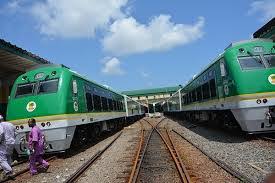
The Management of the Nigerian Railway Corporation (NRC) says all passengers of the Warri–Itakpe Train Service (WITS) are safe after the trains derailment.

The Managing Director/Chief Executive Officer of NRC, Dr Kayode Opeifa , said this in a statement on Sunday in Lagos.

“We wish to inform the public that a train derailment incident occurred on Saturday at approximately 19:.30 hours, involving two out of the seven coaches of our WITS at Kilometre 212+8m, Agbor.

“Preliminary investigations indicated that the incident may have been caused by suspected track vandalism.

“We are pleased to confirm that all passengers on board were safely evacuated to Agbor, and everyone has been fully accounted for. No casualties or injuries were recorded,” he said.

Opeifa said that the NRC recovery team, supported by security personnel, had been at the site since last night carrying out recovery operations.

He added that these efforts were progressing steadily and are expected to be completed soon.

“As a precautionary measure, train services on the corridor have been temporarily suspended today to enable a comprehensive security and safety audit of the track and related infrastructure.

“We sincerely regret any inconvenience this may cause our valued passengers and the public.

“Normal operations will resume as soon as it is verified safe to do so,” he assured.

NUJ Seeks End To Attacks, Impunity Against Journalists

0

The Nigeria Union of Journalists (NUJ), Rivers State Council, has joined the global community to commemorate the International Day to End Impunity for Crimes Against Journalists.

The event which is observed annually on November 2 was designed to implement definite measures to end impunity against journalists.

‎The Council in a statement signed by the Chairman, Comrade Paul Bazia -Nsaneh and Secretary, Dr Ijeoma Tubosia expressed deep concern the high level of impunity against journalists has persisted over the years even with the creation of national safety mechanism.

“There has been.increasing threats, harassment, and violence faced by journalists in the course of carrying out heir duties, both in the State and other parts of the Country”

‎The statement called on government well meaning individuals, security agencies and employers of Journalists to promote a safe and enabling environment for Journalists to perform their duties without harn.

“Journalists deserve better for their sacrifices in pursuit of truth, accountability, and justice for the society.”

‎The NUJ also reiterated its commitment to continue advocating for the safety, welfare, and professional development of journalists in the State.

It further called on Journalists to adopt individual safety measures by upholding the the Journalistic codes, practice collaborative journalism and build public support.

‎The Union also urged journalists covering sensitive assignments, especially in the risky area to analyze the risk involved before venturing into them, exercise caution in a crime scene, know the law and above all prioritize their lives.

Similarly, the Nigeria Union of Journalists, NUJ, Federal Capital Territory, FCT Council, also called on government authorities, law enforcement agencies and other stakeholders to ensure the safety, protection and dignity of media practitioners in Nigeria.

In a statement issued in Abuja on Sunday, the Secretary of the Council, Comrade Jide Oyekunle, condemned all forms of violence and intimidation targeted at journalists, describing them as an assault on democracy and freedom of expression.

According to the Council, this year’s observance of the Day is a solemn reminder of the continuing threats, harassment and violence faced by journalists in the line of duty, and the alarming lack of accountability for those responsible for such crimes.

It expressed deep concern that attacks on media practitioners, including intimidation, unlawful arrests, and physical assaults have continued to rise, often without justice being served.

“A society that silences its journalists silences the truth. We cannot build a transparent and accountable democracy when those who bring information to the public are constantly harassed, attacked, or unjustly detained,” the statement read.

The Council further urged the Federal Government and security agencies to demonstrate genuine commitment to ending impunity by thoroughly investigating all past and recent cases of attacks on journalists and prosecuting perpetrators, irrespective of their social or political standing.

It also called on state and non-state actors to respect the constitutional role of journalists, guaranteeing them the freedom to report without fear or interference, adding that the culture of impunity not only endangers journalists but also undermines the citizens’ right to know.

“Justice for journalists is justice for society. Every attack on a journalist is an attack on truth, accountability, and the people’s right to be informed,” the statement stressed.

The Council reaffirmed its unwavering commitment to defending press freedom, promoting journalists’ welfare, and working with relevant partners to ensure that all members of the press can carry out their duties safely and responsibly.

It also paid tribute to journalists who have suffered, been detained, or lost their lives in the pursuit of truth, urging society never to forget their sacrifice.

NDDC to Support Skills Training in Custodial Centres

0

The Managing Director of the Niger Delta Development Commission, NDDC, Dr Samuel Ogbuku, has assured that the Commission will assist the Nigerian Correctional Service with training and skills acquisition for inmates in custodial centres in the region.

Ogbuku stated this during a courtesy visit by the Comptroller-General of the Nigerian Correctional Service, Mr. Sylvester Nwakuche, at the NDDC headquarters in Port Harcourt.

The NDDC Chief Executive Officer observed that there had been a long-standing partnership between the Commission and the correctional service, noting that the NDDC had incorporated the Nigerian Correctional Service into the Operation Light Up the Niger Delta and the Free Medical Services. He added that the Commission would consider various ways of incorporating prison inmates into its youth training programmes.

He said: “We have had a partnership with the Correctional Service over the years in some of our interventionist programmes, even before the name was changed from Nigerian Prisons Service to Nigerian Correctional Service. But under our watch, we have included the Nigerian Correctional Service in the operation Light Up the Niger Delta to ensure the place is well illuminated, as darkness promotes criminality. We are glad that since then, we have not heard of any jailbreaks in this region.

Considering that prison inmates have fundamental human rights, the NDDC will partner with the Correctional Service to see areas it can intervene, such as the youth internship scheme, training programmes.”

He added that, towards realising the objective, the Commission would select from its database to train inmates in their areas of competence, thereby ensuring its sustainability.

In response to the Comptroller-General’s request for assistance in decongesting correctional facilities, Ogbuku said the NDDC would oblige after reviewing the position of existing laws.

He remarked: “I have also heard the Controller General soliciting for support in the area of decongesting the custodial facilities in the region by way of paying fines for those being held due to their inability to pay minimal penalties imposed by the courts. We are prepared to intervene to ensure that such inmates, who are also members of society, are supported in regaining their freedom.”

Ogbuku called on the hierarchy of the Correctional Service to weed out officers who conspire with inmates to smuggle drugs into custodial centres.

The Comptroller General of Correction, Mr. Sylvester Nwakuche, applauded the Managing Director of NDDC and his management team for the laudable feats recorded in the region since they assumed office.

According to him, “Some of us here may not understand what NDDC has done for the region. The NDDC has executed impactful projects in the community where I come from. He acknowledged that the NDDC had provided some amenities in almost all the correctional centres in the Niger Delta region.

Nwakuche appealed for further collaboration with NDDC across diverse areas, including agriculture and health.

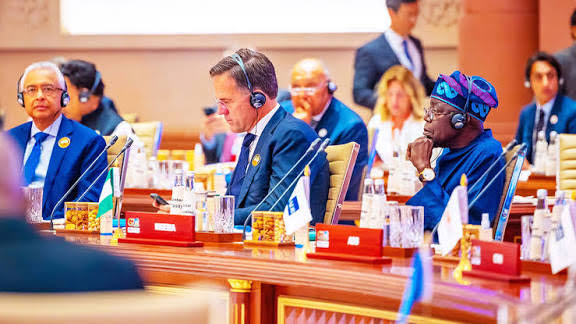
G20 Summit: Nigeria To Benefit From Global Economy

The Ministry of Foreign Affairs has reaffirmed Nigeria’s position towards benefiting from various sectors of global economy during the 2025 G20 Summit in Johannesburg, South Africa.

Amb. Bolaji Akinremi, Director of Reform and Foreign Service Innovation, Ministry of Foreign Affairs, disclosed this in an interview on Sunday in Abuja.

He spoke against backdrops of the expectations for the Summit, given that Nigeria is a member of the African Union (AU), and the event would be hosted for the first time in Africa.

According to him, the G20 agenda will impact positively on the socioeconomic, cultural, and humanitarian development of the African continent.

Bolaji said: “The Johannesburg G20 Summit will be the first of its kind to be held on the African soil, and that has great significance for us as Africans.

“Our expectation is that it is going to be very successful and that it is going to bring lots of hopes and fulfilment to Africa.

“Nigeria gained entrance and recognition at the same time with the AU into G20 in New Delhi, and since then, they have been members of the G20.

“Nigeria deserves and desires to be a member on its own, not just a guest country or on the platform of the AU, being the largest economy in Africa.

“So, we want to see how that works out in the coming years.”

He stressed that Nigeria’s preparation to host one of the pre-summit meetings in Abuja on Monday proved the country’s readiness to participate fully in the forthcoming summit.

This, according to him, means Nigerians should expect the issue of debt sustainability and reduction of debt burden across Africa would be discussed.

He said expected discussion during the summit would be climate change and climate financing, saying such would provide stronger platform for Africa Continental Free Trade Area to grow economically.

“Nigeria will be very strong on this. We must ensure we take advantage of it. Other G20 countries are also going to come up with different programmes that are going to bring us meaningful development.

“So, our expectation (at the summit is) to harness the potential and opportunities we have seen before now, and Nigeria has been preparing for this.

“There will be a pre-summit meeting here in Nigeria, and all of these are going to involve the inter-ministerial, private sector, and the public sector. So, we will hopefully come home with good results.

“We expect our involvement in G20 will become stronger and more focused, to identify areas we can champion, in terms of collaboration with other countries,” he added.

He revealed that Nigeria and South Africa already have youth dialogue and that hosting of the G20 summit on the African soil would bolster networking with other countries.

He described G20 as 20-powerful and rich countries of the world that determine the direction of global economies in terms of financing, development, and industrialisation.

“A lot of discussions at the summit will focus on sustainability of debt ratio, and this should give relief to some African countries, and to us too, because our debt profile is also increasing.”

He advised the private sector operators in Nigeria to cash in on President Bola Tinubu’s policies to grow limitless business environments under the auspices of the G20 summit.

“We are all keying behind President Tinubu and looking forward to a wonderful outcome and participation in the G20 in Johannesburg,” Bolaji said.

Factions Emerge In PDP, As Anyanwu Suspends Damagum, Others

0

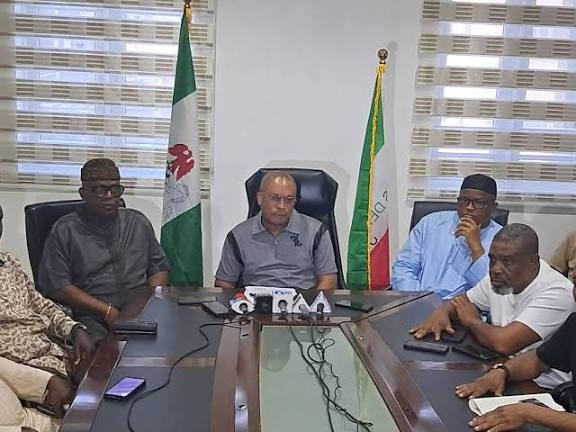
The Peoples Democratic Party has plunged deeper into crisis as fresh divisions emerged within its leadership, with a faction backed by the Minister of the Federal Capital Territory, Nyesom Wike, announcing the suspension of the Acting National Chairman, Umar Damagum, and five other members of the National Working Committee.

Briefing newsmen in Abuja on Saturday on behalf of the factional NWC, the PDP National Secretary, Senator Samuel Anyanwu, announced the party’s National Vice Chairman (North Central), Mohammed Abdulrahman, as the Acting National Chairman.

The faction also announced the suspension of the Acting National Chairman, Umar Damagum, and five other members of the National Working Committee, NWC.

Anyanwu, while briefing journalists in Abuja on Saturday on behalf of the factional NWC, announced the party’s National Vice Chairman (North-Central), Mohammed Abdulrahman, as the Acting National Chairman.

He said, “Unfortunately, some people may say that the National Secretary, National Organising Secretary who has the responsibility of monitoring everything and the National Legal Adviser, who is responsible for all legal issues, were purportedly suspended.

“On this note, we decided to suspend the National Chairman of the party, Ambassador Ilya Damagum, for incompetence, financial misconduct, and disregard for court judgment.

“He has been suspended for one month and should face the Disciplinary Committee.

“Secondly, we also suspended the National Publicity Secretary, Debo Ologunagba, for issuing statements without the party’s approval, and the Deputy National Vice Chairman (South), Taofeek Arapaja, has also been suspended.

“The National Financial Secretary, Daniel Woyenguikoro, who has been involved in alleged financial misconduct, has also been suspended.

“The National Youth Leader, Sulaiman Kadade, and the Deputy National Secretary, Setonji Koshoedo, have also been suspended for 30 days. All of them will be sent to the Disciplinary Committee to show cause why they should not be expelled.

The Atlantic Bell reports that the NWC under Damagum’s leadership had earlier announced the suspension of Samuel Anyanwu, National Legal Adviser Kamaldeen Ajibade, SAN, and two other members from the party. He announced that they will face the party’s Disciplinary Committee

15% Import Duty On Petroleum Products Will Worsen Inflation, Cost of Living Pressures – Experts

0

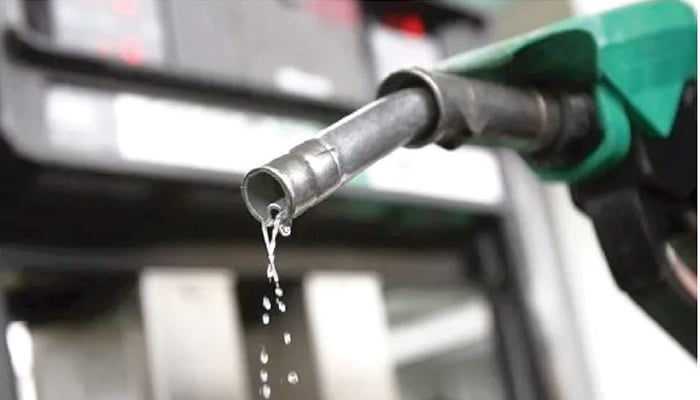
Some energy experts have expressed concern over the Federal Government’s approval of a 15 per cent import duty on petrol and diesel, saying it may drive up fuel prices.

They expressed their concerns in separate interviews on Saturday in Lagos.

On October 29, President Bola Tinubu approved a 15 per cent import tariff on petrol and diesel, a policy expected to raise the landing cost of imported fuel.

The experts said that the move could ranslate into higher pump prices for consumers, with some estimating an increase of up to N150 per litre or more.

Dr Ayodele Oni, Partner and Chair of the Energy and Natural Resources Practice Group, Bloomfield Law Practice, said the policy, though aimed at protecting local refining, could worsen inflation and cost-of-living pressures.


“The imposition of a 15 per cent duty will increase the landing cost of imported fuel, and this additional cost will be passed on to consumers.

“In a deregulated economy like Nigeria’s, where prices are determined by market forces, there’s a strong possibility of price volatility.” Oni explained.

Oni noted that the government’s stated objectives for the policy include strengthening national energy security, supporting domestic refining capacity, and ensuring competitive market stability.

“By making imported fuel more expensive, local refineries will become more competitive.

“This should, in theory, encourage domestic production and reduce dependence on imported fuel,” he said.

However, he warned that without adequate infrastructure and operational refineries, the policy could backfire, resulting in fuel scarcity and black-market activities.

“If local refining capacity remains weak, this duty could disrupt supply, as over 60 per cent of Nigeria’s fuel is still imported.

“The government must back this policy with infrastructural support, refinery rehabilitation, and efficient logistics to prevent scarcity,” Oni added.

Oni also emphasised that the increased duty would raise operational costs for importers and marketers, affecting competition and liquidity within the downstream sector.

“This policy could push out smaller independent marketers who may be unable to meet the new cost requirements, leaving the market dominated by larger players,” he said.

As an alternative, Oni advised the government to incentivise local refining through tax holidays, duty-free importation of refining equipment, and infrastructure investment rather than imposing heavy tariffs on imports.

Meanwhile, Petroleum Products Retail Outlets Owners Association of Nigeria (PETROAN), however, lauded th decision, describing it as a step toward achieving energy security and sustainable local refining.

Its national president, Dr Billy Harry, commended President Bola Tinubu for approving the duty, saying it would encourage investment in domestic refining and stabilise the downstream sector.

“This policy will increase local refining capacity, boost the economy, create jobs, and strengthen the Naira

“While there may be short-term challenges such as price hikes and job losses in the import sector, the long-term benefits outweigh the disadvantages” Harry said.

He urged the Nigerian Midstream and Downstream Petroleum Regulatory Authority (NMDPRA) to ensure that local refineries are properly regulated to prevent monopolistic tendencies.

“We must guard against a situation where a few refineries dominate the market. Monopoly could defeat the purpose of this policy,” he noted.

He also appealed to the Nigerian National Petroleum Company Ltd. (NNPC Ltd.) to guarantee adequate crude oil supply to local refineries to ensure consistent production and prevent scarcity.

A downstream operator who preferred anonymity raised questions about the current state of local refining and transparency in the sector.

“The government has supported local refineries through tax incentives and crude supply in naira, but the cost of locally refined products remains higher than imported fuel.

“Before imposing such tariffs, there should be full transparency about production levels, cost structures, and refinery efficiency,” the source said.

He cautioned that without clear data and accountability, the 15 per cent duty could worsen the situation by raising both local and imported fuel prices simultaneously.

“If imports become more expensive and local refineries can not meet demand, the outcome will be higher prices and scarcity,” he said.

He urged the government to critically assess the timing of the policy and ensure that refinery operations were capable of meeting national fuel demand before implementing the duty.

“Supporting local manufacturing isn’t bad, but it must be backed by transparency and realistic planning,” he added.

Accorilding to him, while the 15 per cent import duty aims to stimulate local refining and reduce dependence on imports, its success will depend on transparency, infrastructure, and effective regulation.

FDP: Ministry, NUPRC, NNPC, Disagree With Lawmakers Over Creation Of New Commission

0

The Ministry of Petroleum Resources and its two agencies have jointly opposed the bill to establish the National Commission for the Decommissioning of Oil and Gas Installations (NC-DOGI), 2024.

The agencies are the Nigerian Upstream Petroleum Regulatory Commission (NUPRC) and the Nigerian National Petroleum Company Limited (NNPC Ltd.)

A statement in Abuja by Eniola Akinkuotu, Head, Corporate Communications and Media, NUPRC said that the position was delivered at a public hearing organised by the House of Representatives Committee on Petroleum Resources (Upstream).

In his submission, the Minister of State for Petroleum Resources, Dr Heineken Lokpobiri, said contrary to assumptions by the lawmakers, creating a Commission for decommissioning and abandonment would not address any community issues as these were already being taken care of.

Lokpobiri said the issues were taken care of by the Host Community Development Trust Fund (HCDT), which had generated nearly N400 billion for community development projects.

He said that Nigeria had been recording new Final Investment Decisions (FIDs) and witnessing renewed activities in upstream, midstream, and downstream operations, developments that were stagnant for over a decade before the Renewed Hope administration of President Bola Tinubu.

He, therefore, said that the creation of the NC-DOGI risked scaring away investors.

The minister also said that creating a new agency to handle decommissioning and abandonment would duplicate the responsibility already vested in the NUPRC as provided by Sections 232 and 233 of the Petroleum Industry Act (PIA) 2021.

He advised the committee to step down the bill, citing that a predictable and stable legal framework attracts investors.

In his presentation, the Commission’s Chief Executive, NUPRC, Mr Gbenga Komolafe said creating a different Commission to handle decommissioning and abandonment did not align with global best practices, where they were domiciled with the upstream regulator.

The CCE said the issue of decommissioning was not a stand-alone affair and would lead to having a separate regulator dealing with Field Development Plan (FDP) and a different agency handling decommissioning and abandonment.

“This will make the NUPRC not to have full line of sight on the FDP as decommissioning and abonnement is an integral part of any FDP and will jeopardise the intended objective of the development plan.” he added.

He said that between 2014 and 2021, Capital expenditure for oil and gas investment declined by about 75 per cent due to lack of a stable legal and regulatory framework until the emergence of the PIA.

The CCE aligned with the position of the Minister and stated that Nigeria has now put in place the PIA, tinkering with it will send wrong signals to the international community.

“ Creating such will show that we have again started to create an unstable framework which will be a disincentive to the investments.”

The Executive Vice-President, Upstream, NNPC, Mr Udobong Ntia, agreed with the minister and the CCE that there was no need for the establishment of a new agency.

Ntia said that decommissioning and abandonment were not a regular exercise but an activity that could take place at the end of the life of a field which could take years.

“What will such a commission be doing when the NNPC, for instance, has no decommissioning and abandonment until 2045?” he asked.

Earlier, the Chairman, House Committee on Petroleum Resources, (Upstream), Mr Alhassan Doguwa, said that the bill was conceived in order to address local environmental issues and challenges within oil producing communities.

Tax Reform: Professional bodies, Our Prime Targets In 2026 – IRS

0

Mr Edwin Okon, Executive Chairman, Cross River Internal Revenue Service (CRIRS) says professional bodies will be its prime target in 2026 for tax infractions.

Okon disclosed this in Calabar during a training session organised by IRS for selected key tax paying companies across the state.


The IRS boss said the purpose of the training is to enlighten companies on the newly introduced 2025 Tax Reform Act.

No fewer than 50 firms, operating in the state, attended the training.

The theme of the training: “Understanding the New PAYE Framework: Implications and Opportunities,” was used to discuss the practical aspects of the revised Pay-As-You-Earn (PAYE) system.

According to the chairman, private firms must do the right thing at the right time by ensuring that they file their returns at the end of every year while for individuals, it’s January 31.

He called on the companies to use the online platform of the service in making their remittances.

He noted that the state’s IRS had been working towards enabling taxpayers to generate their tax clearance from the comfort of their homes.

“By 2026, even if your financial transactions is little as your letterhead, if you are sending instructions to a bank or any financial institution, you must state your Tax Identification Number (TIN).

“Some companies may need to redesign their official letterheads to include their tax identification numbers, as it would become a mandatory requirement,” he explained.

He encouraged organisations to use IRS’s online platform for remittances, sensitise their staff on the importance of compliance, and refuse to give cash to any IRS staff as tax payment.

Delivering a presentation on ‘’Overview of the Nigerian Tax Reform Act 2025,’’ Mr Esien Ukorebi, former IRS Chairman in the state, outlined the objectives, key provisions, and compliance models of the new tax law.

He explained that the reform would commence in January, 2026, adding that 97 to 98 percent of Nigerian workers would either pay PAYE or experience reduced PAYE obligations by the time.

“Tax compliance goes beyond payment; it means fulfilling all obligations as required by law, individuals earning below ₦30,000 per month are exempted from tax but must still register with the tax authorities,” he explained.

Also speaking, Mr Daniel Anko, a resource person, emphasised the importance of possessing a valid Tax Clearance Certificate (TCC), whether as an employer or employee.

According to him, while employees’ incomes are taxed monthly, business owners are assessed at the end of the year, after which they have 90 days to file their returns.

Anko added that CRIRS had made tax payment more convenient through digital channels that allowed taxpayers to complete transactions without visiting the tax offices physically.

On her part, Mrs Lilian Ugbong, Technical Adviser to the Chairman of CRIRS, spoke on innovations introduced by the Joint Revenue Board (JRB) in implementing the 2025 Act.

She explained that the Joint Tax Board (JTB) had evolved into the JRB, with expanded powers and responsibilities aimed at improving tax compliance and harmonising revenue processes across Nigeria.

“The Act has strengthened the JRB’s authority and enhanced its collaboration with the Nigeria Governors’ Forum (NGF) to drive tax reforms and increase revenue generation,” she noted.