

Home Blog Page 123

INC Joins Global Call For Exoneration Of Saro-Wiwa, Others

0

The Ijaw National Congress (INC) on Thursday joined the global call for the formal exoneration of Ken Saro-Wiwa and the Ogoni eight of the allegations for which they were convicted and executed

Prof. Benjamin Okaba, Global President, INC made the call in his Solidarity message on the 30th anniversary of the execution the Ogoni nine in Abuja.

Saro-Wiwa and eight other Ogoni activists, known as the “Ogoni Nine,” were executed by the Nigerian military government in November 1995 following a trial.

“They were convicted of being complicit in the murders of four rival Ogoni chiefs and had been campaigning against environmental damage and the exploitation of oil resources by the Shell Oil Company in their homeland.

The executions drew international condemnation and led to sanctions against Nigeria.

According to Okaba, on this symbolic 30th anniversary, our remembrance must be more than a ritual; it must be a re-dedication to the cause for which they died. We hereby reaffirm and amplify the demands of the Ogoni people and the broader Niger Delta

“We join the global call for the formal exoneration and Justice (Not Pardon) of Ken Saro-Wiwa and the Ogoni eight.”

He also called for a full, transparent, and criminal investigation into Shell’s complicity in the human rights violations in Ogoniland, as called for by organisations like Amnesty International.

“We also call for the immediate and credible cleanup of Ogoniland, as recommended by UNEP. The exercises should be placed under a credible, internationally-managed body to ensure it is effective and accountable.

“We are also demand that Shell and other oil companies be held legally and financially liable for the destruction they have caused.

“The Ijaw nation stands with the Ogoni in their for the right to benefit from the resources of their land.

“We echo the call for the repeal of obnoxious laws like the Land Use Act and the Petroleum Act, which deny us the beneficial ownership of our resources,” he added.

The INC global president noted that the spirit of the Saro-Wiwa lives on.

According to him, it lives on in the continued peaceful resistance of the Ogoni people, in the work of environmental defenders across the globe, and in our unwavering commitment at the INC to champion the Ijaw cause.

“We will continue to constructively engage the state, the International Oil Companies (IOCs), and international agencies to demand sociopolitical inclusiveness, environmental remediation, and infrastructural development.

“To the family of Ken Saro-Wiwa, especially his daughter, Noo Saro-Wiwa, and to the families of the other eight martyrs, we say: Your pain is our pain. Your loss is our loss. Your steadfastness is our inspiration.

President Bola Tinubu granted a posthumous pardon to Saro-Wiwa and eight other activists who were executed in 1995.

The pardon, announced in June 2025, was granted in conjunction with conferring national honors on the activists.
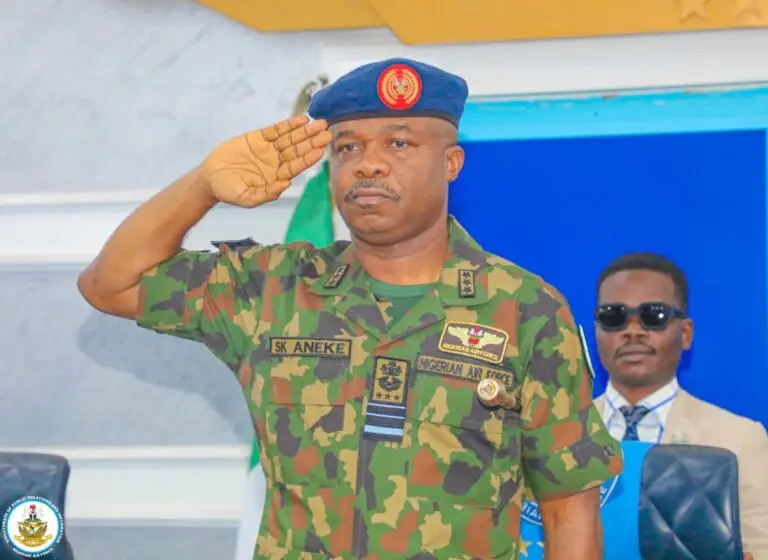
CAS To Operational Commanders: Deliver Smarter, Harder Airstrikes On Terrorists

Chief of the Air Staff (CAS), Air Marshal Sunday Aneke, has directed Air Component Commanders to intensify precision air operations and deliver smarter, harder strikes against insurgents, terrorists and other criminals.

Aneke gave the charge during his meeting with the commanders from all operational theaters on Wednesday in Abuja.

The Director, Public Relations and Information, Nigerian Air Force (NAF), Air Commodore Ehimen Ejodame, on Wednesday in Abuja.

The air chief said the changing security landscape requires agility, intelligence-led operations and close coordination with sister services.

“We must fly smarter and strike harder — not only to neutralise threats but to protect lives and property.

“Every mission must reflect professionalism, purpose and patriotism,” he told the commanders.

The CAS emphasised the need for synchronised air, land and maritime operations to ensure joint mission success and stressed that operations must be intelligence-driven and focused.

He also assured personnel of his commitment to their welfare and capacity development, saying the NAF would prioritise training, innovation and technological upgrades to enhance operational effectiveness.

Aneke urged commanders to translate strategy into decisive action, sustain operational tempo and ensure every sortie yields tangible results on the ground.

The meeting, which brought together operational commanders from across the country, reaffirmed the NAF’s commitment to upholding professionalism and accountability while supporting national efforts to restore peace and security.

FG Stockpiling Strategic Reserves To Ensure Food Security – Minister

0

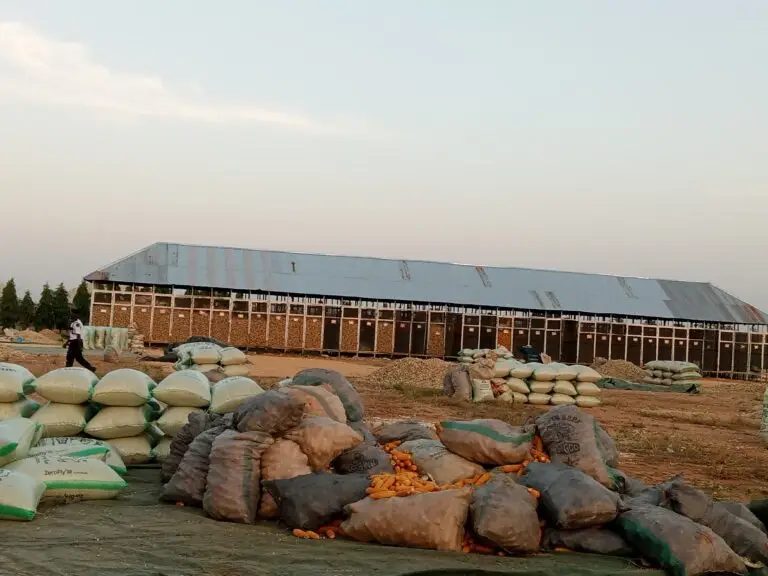
The Federal Government of Nigeria is actively pursuing a plan to stockpile its Strategic Food Reserve to address food security concerns, stabilise prices, and ensure financial liquidity into the agricultural sector for farmers.

The government said the gesture would enable farmers to go into all-year-round farming especially during the dry season.

The Minister of Agriculture and Food Security, Sen Abubakar Kyari, gave the assurance on a working tour of some facilities in Kaduna with the Minister of State for Agriculture Sen. Abdullahi Aliyu in company of other stakeholders.

The tour was on the sidelines of the 47 Regular meeting of the National Council on Agriculture and Food Security (NCAFS).

Reacting to the worries by farmers on crash in cost of food items across the country in spite hike in cost of input he however assured of the readiness of the government to tackle the challenge.

“Though farmers are worried about crash in cost of food but they also go to the same markets and as well benefit from cheaper prices.

“At the same time, the problem with farmers is the price of inputs.

“President Bola Tinubu is working on that. We are going to tackle the price of inputs and balance the welfare of citizens and that of the farmers.

“Very soon, we are also going to stock up strategic reserves, which will give a lot of financial liquidity into the agricultural sector for farmers to be able to go into all-year-round farming, especially in the dry season,”he said

Assessing the performance of some factories visited the minister expressed satisfaction over the high level and interest of the populace on food production, processing of raw materials among others.

According to him, farmers and processors have heed to the clarion call of President Tinubu, on the issue of food security and food sovereignty.

He says “it is evident that what you see on the field is almost in line with the renewal hope agenda of Mr. President,”.

Some of the factories visited include Olam Agri, TMDK Agro Park, DEBRANCH Farmers, Quality Afriexim Bank Quality Assurance Office and Tomato Jos

According to him, the quality assurance office seeks to give Nigerian produce a seal of approval for both domestic and export markets.

Mira Mehta, Chief Executive Officer, (CEO) Tomato Jos giving an overview of the company’s activities said the company aimed at producing high-quality tomato paste from locally grown tomatoes, thereby supporting smallholder farmers and boosting Nigeria’s food security.

Mehta said the company’s core mission is “local production for local consumption,” creating a middle class in rural Nigeria by providing a consistent market for farmers and processing their produce into high-quality paste.

She emphasised that the company operates a state-of-the-art processing factory in Kaduna State making it the third-largest tomato processing plant in Nigeria.

“We work with over 350 partner farmers, providing them with support, modern farming techniques, and a guaranteed market for their crops.

“Tomato Jos aims to reduce Nigeria’s reliance on imported tomato products and create jobs, both directly and indirectly.

“It has created hundreds of jobs in the construction of its factory among others,”she said.

Mehta, who frowned at importation of tomatoes paste from China said it was detrimental to the country’s economy

She who said the organisation has invested over 20 million dollars empowering the populace adding that women account for 60 per cent of the farmers.

Mehta further said that tomato Jos has also invested in infrastructure.

According to her, at the moment, the organisation has cleared over 300 hectres of irrigated land in preparation for dry season tomato cultivation.

The CEO listed some of the challenges bedeviling the industry as market, importation of tomatoes paste, policies, inputs like fertiliser and other chemicals, Tuta Absoluta , a major pest of tomato.

She, however, called for the creation of coordinated quick response by the Federal Government in order to ensure that the disease would no longer thrive in the country.

The CEO further decried that the organisation is challenged with selling their final product

She, however, solicited the partnership of the government, food packaging companies to mop up their products and become an ambassador of their grains.

Nigeria has 33 grain silos nationwide with a total storage capacity of about 1.136 million metric tonnes.

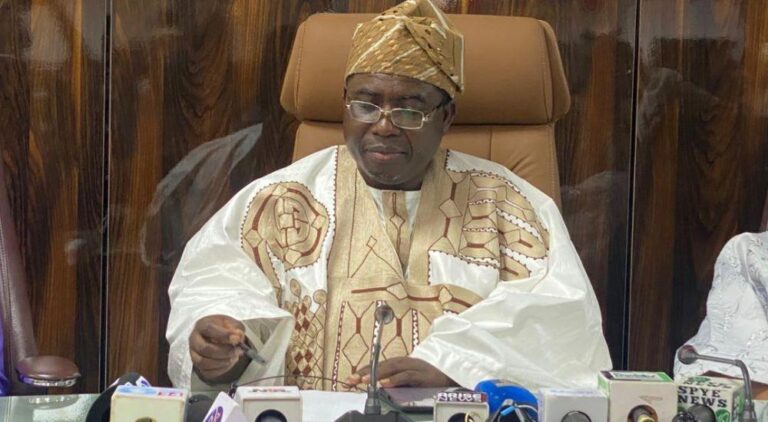
Pre-election Tussles Account For 75% of Litigations – Amupitan

0

The Independent National Electoral Commission (INEC) says 75 per cent of pre-election litigations the commission was joined in were due to lack of internal democracy and leadership tussles among political parties.

INEC Chairman, Prof. Joash Amupitah, in an interview with the newsmen in Awka on Wednesday, when responding to question if he was concerned about issue of lack of internal democracy among registered political parties in Nigeria.

Amupitan said that he was bordered by the menace because of the impact on the electoral process and Nigeria democracy.

“It bothers me because of the money and the time wasted. Every party going to court, they must join INEC. When INEC is joined, the commission must go to court, engage lawyers, we pay for them, which is not cheap.

“I was informed that 75 per cent of our litigations are in respect of pre-election matters, mostly dealing with political party tussles, and leadership.

“Also, primaries that are conducted contrary to the provisions of the constitutions of the party,’’ he said.

Amupitan said that Nigerians continue to scrutinise the country’s elections but ignored the political party’s recruitment process for their candidates and internal democracy.

He said that INEC, saddled with the responsibility to monitor the parties was strengthening its “monitoring capabilities’’ to ensure that they were well regulated.

“That does not mean it’s not being done. However, we have also seen some loopholes within the law such that, like all these leadership problems of one party today.

In fact, as you were speaking, an Abuja Federal High Court says PDP don’t hold convention. Another order from Ibadan, says PDP must hold convention,’’ he said.

Also responding to question on new party registration, Amupitan said that the party was bond by the law to registered political associations that meet the requirements for registration.

He cited a court case involving Musa and INEC, where the Supreme Court made it clear that it’s part of INEC constitutional responsibility to register political parties.

“We are constrained in several ways. If you meant the requirement of the Constitution and of the Electoral Act, of course, the freedom of association. That was the argument of the courts.

“As speak today, we are looking at some applications. So if you meet the criteria that is established, after proper evaluation and monitoring, then we can consider registration of additional political parties.

On his view for calls to establish special court to for election related matters, Amupitan said election tribunals were already special court for election related matters.

He said that the creation of another special court required constitution amendment process, noting that while constitutional amendment process is ongoing right, it remains a very tedious task.

“Let me also say that the election tribunals established under the constitution, they are also special courts, because they are courts specifically for the purpose of the election.

“ After the election proceedings, up to the Court of Appeal, they cease to be election petitioner tribunals. Even though they are manned by regular judges.

“For instance, when the Court of Appeal is exercising its powers as presidential election tribunal, it’s not the Court of Appeal anymore, It’s a special court.

“Even if you’re sitting in Abuja, you don’t have the same panel in Abuja. A special panel is created for that purpose.

“So, we already have specialised courts for the purposes of handling election petition, but the issues have to do with maybe the time it takes to conclude election matters.

“That is part of what is going on in the amendment process, to see how the time can be reduced and maybe some of the technicalities can also be addressed,’’ he said.

NAF Promotes Music As Soft-tool To Civil-Military Cooperation

0

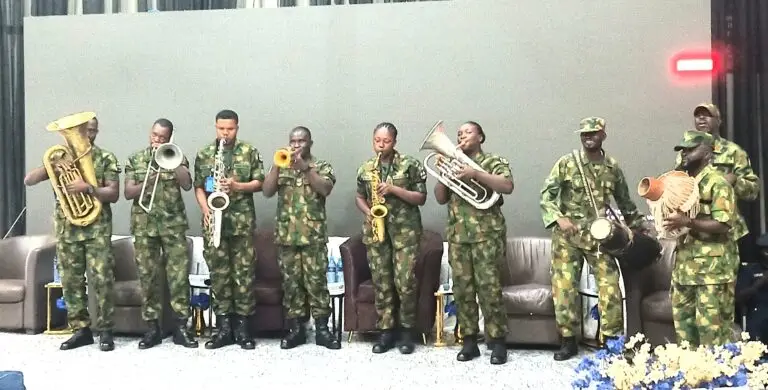
The Nigerian Air Force (NAF) has intensified efforts to strengthen civil-military cooperation through strategic use of music as soft-power tool for public engagement and trust building.

The Chief of the Air Staff (CAS), Air Marshal Sunday Aneke, stated this on Thursday while declaring open the 2025 NAF Music Personnel Workshop, organised by the Directorate of Music in Abuja.

The workshop, with the theme “Music as a Tool for Winning Hearts and Minds for Enhanced Civil-Military Cooperation in Support of Nigerian Air Force Operations,” brought together band commanders and music specialists from NAF formations nationwide.

Aneke said that the theme was timely, describing music as vital instrument in shaping perceptions, boosting morale and building bridges between the military and civilians.

Represented by Air Commodore Christopher Akpa, the Director, Enabling Operations, at the Civil-Military Relations Branch, NAF Headquarters, Aneke said that “the role of military bands has gone beyond ceremonial functions.

“In today’s operational environment, winning the hearts and minds of people is as essential as winning the battle itself.

“NAF is complementing its kinetic operations with strategic non-kinetic approaches, including community outreach and cultural engagements through music.

“As we expand our operations and interact deeply with communities, music becomes a tool of influence, unity and national pride.”

He, therefore, urged participants to use the workshop to refine their professionalism and ensure performances reflect excellence, discipline and purpose.

He pledged sustained investment in training, equipment and welfare for music personnel as part of the service’s human capacity development agenda.

Earlier, the Director of Music, Group Capt. Ayodeji Ayanbode, said the workshop was the fourth in the series since the creation of the Directorate of Music in 2019.

Ayanbode said that the programme was designed to enhance the competence of music personnel and highlight the role of music in building morale, harmony and advancing NAF’s soft power engagements.

He added that “beyond ceremonies, music is a bridge between the military and the people, promoting mutual respect and understanding.”

The workshop features technical sessions on music administration, performance standards and public communication for operational effectiveness.

A paper on the theme was presented by a professor of music at the University of Port Harcourt, Prof. Onyee Nwankpa, and Air Commodore Akpa Akpan, as well as panel discussions.

NNPCL Charts Sustainable Course For Africa’s Energy Future — Dagazau

0

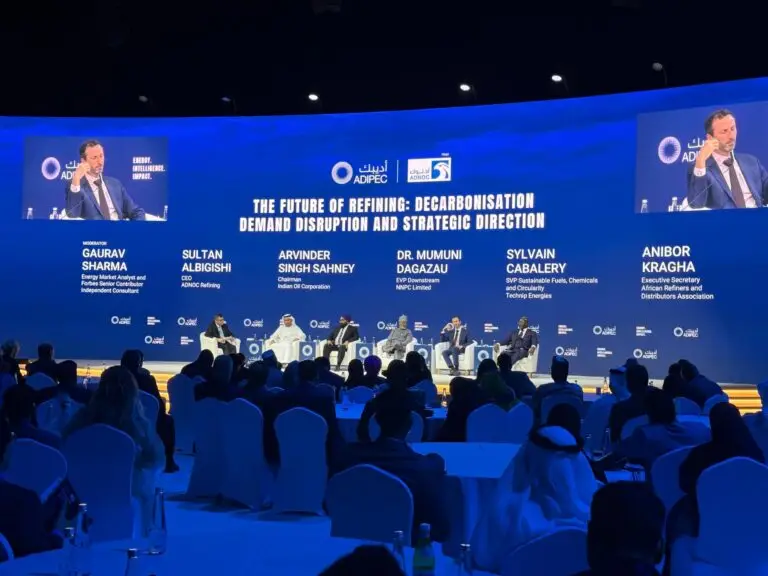
The Nigerian National Petroleum Company (NNPC) Limited is charting a sustainable course for Africa’s energy future through technology deployment, business integration and strategic partnerships.
Mr Mumuni Dagazau, the Executive Vice President, Downstream, NNPC Ltd., stated this at a high-level panel session on the Future of Refining during the ongoing 2025 Abu Dhabi International Petroleum Exhibition and Conference (ADIPEC).
Dagazau said the company was redefining its operations around sustainability and full integration to ensure long-term profitability in a rapidly decarbonising global energy landscape.
“Decarbonisation is no longer an option but a licence to operate.
“Energy transition must balance cost, energy security and environmental responsibility.
He said Nigeria’s challenge and opportunity depends on expanding its energy availability while pursuing decarbonisation targets.
“Success, for us, means remaining a sustainable and profitable business, 20 years from now.
“To ensure energy security, we must deploy technology with partnerships.
“We are integrating our refining, petrochemical and retail operations to protect future product requirements for Nigeria and Africa,” he said.
Dagazau reiterated NNPC Ltd.’s commitment to leading Africa’s energy transformation through strategic, sustainable and commercially viable investments.

Oil Theft: Nigeria May Have Lost N300bn, As Senate Receives Interim Report

0

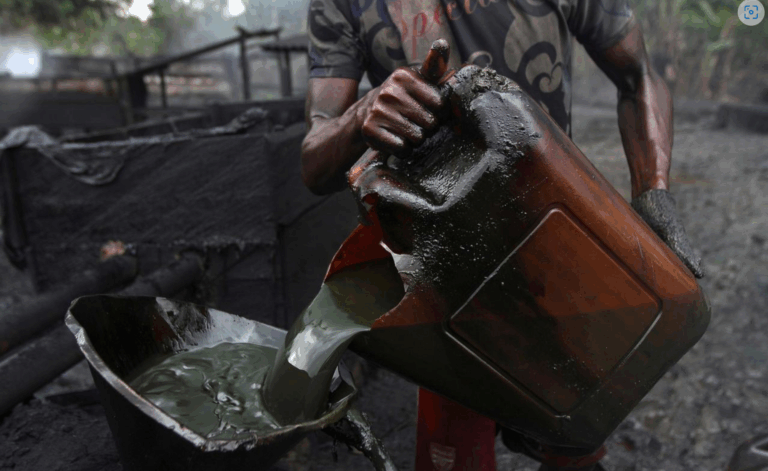
The Senate, on Wednesday, received the interim report of its Ad hoc Committee investigating the incessant and nefarious acts of crude oil theft and related sabotage in the Niger Delta.

The committee’s findings indicated that Nigeria may have lost more than 300 billion dollars in unaccounted crude oil proceeds as a result of oil theft.

Presenting the report, the Chairman of the Committee, Sen. Ned Nwoko (APC-Delta), said that the findings so far exposed systemic irregularities, poor measurement standards and weak enforcement in the oil and gas sector.

According to him, the interim report which runs into about 40 pages, recommends several measures to tackle crude oil theft, strengthen accountability and recover lost revenues.

Nwoko said that the committee, after extensive assessment, recommended that the Nigerian Upstream Petroleum Regulatory Commission (NUPRC) should strictly enforce internationally accepted crude oil measurement standards at all production sites and export terminals.

The report further urged the Federal Government to equip security agencies with modern surveillance technology.

“It also recommended unmanned aerial vehicles (UAVs) to combat oil theft as well as to establish a Maritime Trust Fund to enhance maritime infrastructure and safety”.

Other recommendations include the establishment of special courts to prosecute crude oil thieves, full implementation of the Host Communities Development Trust Fund under the Petroleum Industry Act (PIA).

“And the handover of abandoned wells to the NUPRC for proper management and utilisation”.

The committee also proposed that it be empowered to “track, trace and recover” all stolen crude oil and its proceeds, locally and internationally, a recommendation that immediately sparked debate among lawmakers.

Several senators commended the committee’s work, but cautioned against exceeding legislative powers.

Senator Abdul Ningi (PDP-Bauchi) described the report as “detailed and commendable,” but argued that the committee’s mandate should not include direct recovery of stolen funds.

“We can track and trace, but recovery is beyond the powers of the Senate. The committee should specify losses, locations, and report back for referral to agencies such as the EFCC or ICPC,” he said.

Ningi noted that consultant reports cited in the document revealed crude oil revenue shortfalls of 81 billion dollars between in 2016 and 2017, in addition to 200 billion dollars in unaccounted proceeds from 2015 to date.

Chairman Senate Committee on Appropriations, Sen. Solomon Adeola supported Ningi’s position, saying the recovery process must be handled by the executive arm.

“The committee should provide more details names of companies, figures and locations before any further steps are taken.

“It is not the role of the Senate to recover funds; that lies with appropriate agencies,” Adeola said.

Other senators, including Sen. Ibrahim Dankwambo (APC-Gombe), also called for a more comprehensive final report.

This he said is to identify all “actors” involved in the theft, the specific wells and rigs affected and quantities of crude lost through illegal bunkering and pipeline leakages.

“The title of the report includes ‘the actors,’ so we must know who they are. It is a complex web involving companies, individuals and illegal refineries. We need well-by-well and rig-by-rig data,” Dankwambo said.

Sen. Enyinnaya Abaribe (APGA-Abia) urged patience, stressing that since the report was interim, the Senate should only receive it and await the final submission.

In his remarks, President of the Senate, Godswill Akpabio commended Sen. Nwoko and his team for their “thorough and courageous work,” but aligned with colleagues who said that the Senate could not directly recover stolen funds.

“Our duty is to track and trace. Recovery is a separate mandate handled by government agencies. Nonetheless, we encourage the committee to continue its work and present a final, comprehensive report,” Akpabio said.

He described the estimated 300 billion dollars in crude oil losses as “staggering,” saying it underscores the need for urgent reforms and stricter oversight of Nigeria’s petroleum sector.

The Senate, thereafter, resolved to adopt the interim report and directed the ad hoc committee to continue its investigation and submit a final report with detailed findings and actionable recommendations.

Nigeria Can Earn $5bn Marine Revenue Annually, If… -Experts

0

Maritime law experts say Nigeria could earn between US$3 billion and US$5 billion yearly from marine bioproducts by commercialising ocean resources through research and private investment.

The projection was made during a panel session at the 4th Nigeria Admiralty Law Colloquium in Lagos.

The colloquium brought legal and maritime specialists together to examine Nigeria’s Blue Economy framework and its development potential.

Speaking on the theme, ‘Nigeria’s Blue Economy Framework,’ maritime lawyer Dr Chukwuchefu Ukattah said Nigeria’s coastline and diverse marine ecosystem offer major economic opportunities.

He referenced a United Nations Environmental Programme report outlining Africa’s US$100 billion marine tourism potential by 2030, noting Nigeria’s low participation due to weak infrastructure.

Ukattah said destinations like Lagos, Calabar and Delta, alongside cultural sites such as Bonny Island, remain under-promoted globally.

He stressed that the US$6.45 trillion global maritime tourism market represents a significant opportunity for Nigeria.

Ukattah noted that Landmark Beach attracts over one million visitors annually and supports more than 80 small businesses, showing the value of proper infrastructure.

He said Nigeria’s marine biodiversity, including seaweed, microalgae, corals and mangroves, holds immense value for pharmaceutical and cosmetic industries.

He cited compounds like Ecteinascidin and Discodermolide, developed from marine organisms, as examples of high-value medical products derived from ocean research.

Ukattah said structured Blue Economy programmes could make Nigeria a regional hub for marine-based innovation and generate billions for the economy.

He revealed that Nigeria has around 14,120 megawatts of marine-linked hydropower potential, far above the current electricity generation capacity.

He said renewable offshore wind, tidal and ocean energy could reduce dependence on fossil fuels and strengthen energy security.

On fisheries, Ukattah said fish provides about 40 per cent of Nigerians’ protein, yet the country faces a 2.5-million-tonne supply gap yearly.

He said this shortfall forces more than ₦100 billion in fish imports annually, stressing the need for sustainable aquaculture and cold-chain systems.

He recalled a fisherman in Rivers State who caught a Blue Marlin valued at US$2.6 million but ate it due to lack of awareness.

Ukattah noted that Nigeria, despite its oil and gas wealth, still underutilises non-oil marine resources.

He added that Africa’s Blue Economy is worth US$300 billion annually, with deep-sea mining set to increase to 10 per cent of global output by 2030.

He called for collaboration among policymakers, investors and research bodies to responsibly harness marine resources for national development.

Ukattah said a well-governed Blue Economy could drive innovation, jobs and long-term prosperity for Nigeria.

HYPREP Project Collapse In Ogoni, Case Of Corruption, Poor Accountability – COPER

0

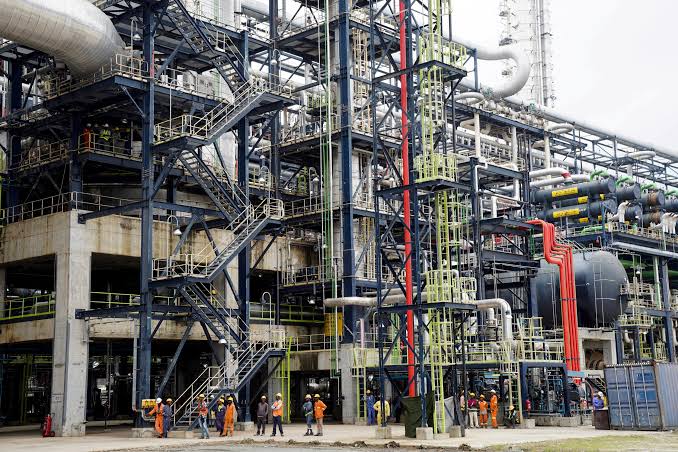
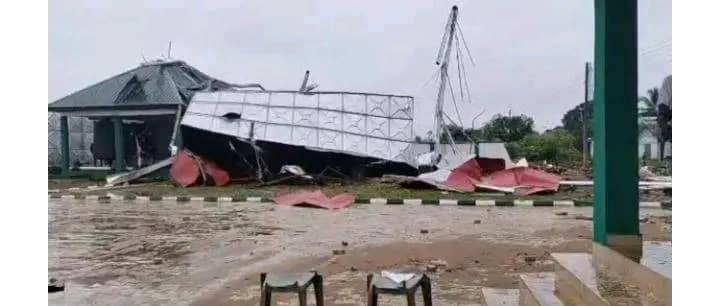
The collapse of the multi-million-naira water station, located at Gwara, Khana local government area of Rivers, built by the
Hydrocarbon Pollution Remediation Project (HYPREP) has been described as a clear case of corruption and poor accountability that is the bane of the country.

Reacting to the collapse of the water project four days after its commissioning, the Centre for Oil Pollution and Environmental Response (COPER) has called for a thorough investigation into the circumstances that led to the collapse of the project.

The Executive Director of COPER, Dr. Kaani Zorva,
condemned the incident, describing it as another example of corruption and poor accountability in the implementation of the United Nations Environment Programme (UNEP)-recommended clean-up projects, and called for an immediate investigation into the incident.

He said: “This collapse is not just an engineering failure; it is a moral failure. Billions have been spent in the name of the Ogoni people, yet what we see are substandard projects designed to fail.

The project which was inaugurated last week amid praise from top government officials, including representatives of the Federal Ministry of Environment is part of the Federal Government’s effort to provide safe and clean water to communities affected by decades of oil pollution.

The provision of potable water is part of the efforts by the Federal Government for remediation of the Ogoni communities devastated by pollution due to oil exploration.

Sources informed The Atlantic Bell that the water treatment plant developed structural faults shortly after its commissioning, leading to the collapse of a major section of its reservoir platform.

The community, which just started enjoying potable water a few days ago, after years of agonising wait, has been thrown back to the past as a result of the poor job executed under HYPREP.

The Ogoni clean-up, launched in 2016 and re-energized under President Bola Tinubu’s administration, has faced persistent criticism over alleged mismanagement, delays, and poor quality of work.

With this latest development, Ogoni indigenes are of the opinion that such risks further erode public trust in the government’s sincerity toward environmental justice in the Niger Delta and the ability of HYPREP to deliver on the mandate of the United Nations Environment Programme (UNEP) and the federal government .

The collapse of the water project which has been seen as very embarrassing has forced the HYPREP Project Coordinator, Professor Nenibarini Zabbey, to constitute a high level committee to immediately visit the site and commence investigation into the immediate and remote cause of the incident.

in a statement in it’s official social media platform, HYPREP Management on Wednesday, said the Committee set up by the Project Coordinator had visited the site.

“The Hydrocarbon Pollution Remediation Project (HYPREP) is deeply disturbed by the collapse of the overhead tank at the newly commissioned Gwara Water Station in Khana LGA.

“In the interim, Professor Nenibarini Zabbey, Project Coordinator has constituted a high level committee to immediately visit the site and commence investigation into the immediate and remote cause of this unfortunate incident.

“Consequently, the Committee has visited the site and will be painstaking in its investigation to establish likely structural failure or third-party interference.

“The Project further empathises with the Gwara community and asks for calm as steps are being taken to ensure that the damaged facility is being restored, and water reticulated to affected communities.

“HYPREP remains committed to continue to deliver quality projects that meet best standards. It has introduced both internal and external measures to ensure quality assurance and control. This includes the engagement of a Project Consultant, EcoProject, supervision from the Monitoring and Evaluation Unit and Water Supervisors among others,” the statement read.

Nigeria Acknowledges Security Challenges, Ready to Work With US, Global Partners to Eliminate Terrorism – FG

0

The Federal Government has affirmed Nigeria’s willingness to collaborate with the United States and other nations for the complete elimination of terrorism from Nigerian soil.

Minister of Information and National Orientation Mohammed Idris made the statement during a world press conference in Abuja on Wednesday.

Acknowledging the country’s security challenges, he clarified that these issues are not targeted at any religion or group, countering claims based on faulty data.

He noted that over the past two years, President Bola Tinubu has strengthened efforts to tackle insecurity, as reflected in Nigeria’s improved ranking on the Global Terrorism Index and recent changes in the leadership of security agencies.

The minister appealed to the United States and other international partners to support President Tinubu in confronting the menace of criminals and terrorists that make life difficult for Nigerians.

“The Nigerian government is willing to work with international partners, including the United States, to ensure that criminals are permanently eliminated.

“We welcome support from global partners to address our security challenges.

“President Tinubu is leading efforts to resolve these issues in collaboration with the US and other countries.


Nigeria acknowledges the severity of its insecurity situation.

“The government and people have taken note of the US stance regarding alleged human rights violations.

“President Tinubu remains determined to confront and end these security challenges,” he said.

Last week, US President Donald Trump warned of possible military action in Nigeria if alleged killings of Christians were not addressed, following Nigeria’s designation as a ‘Country of Particular Concern