


Home Blog Page 12

NYSC Urges Rivers Employers To Create Enabling Workplaces For Corps Members

0

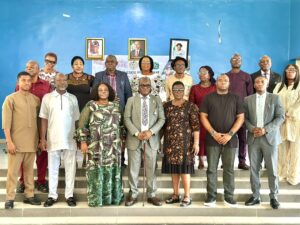
The Director-General of the National Youth Service Corps (NYSC), Brig.-Gen. Olakunle Oluseye Nafiu, has urged employers of corps members in Rivers State to provide conducive work environments that will enable them to enjoy productive and rewarding service years.

Nafiu made the call on Tuesday at the 2026 NYSC/Corps Employers’ Workshop held at the Port Harcourt City Council. The workshop, themed “Fine-tuning Stakeholders’ Collaboration to Enhance Corps Members’ Welfare and Workplace Experience,” brought together public and private sector employers and other stakeholders.

Represented by the Deputy Director, Certification and Mobilisation, NYSC South-South Area Office II, Port Harcourt, Mrs. Faustina Ilora, the Director-General described the workplace as the primary platform where corps members acquire practical experience, develop professional competence and contribute meaningfully to national development.

According to him, the quality of the workplace experience has a significant impact on corps members’ productivity, morale, personal development and overall perception of the NYSC scheme.

He therefore charged employers to assign corps members duties that align with their academic qualifications, while providing effective mentorship, proper supervision and opportunities for professional growth.

In his welcome address, the NYSC Rivers State Coordinator, Mr. Moses Oleghe, urged corps employers to regard the welfare of corps members and the provision of a conducive working environment as a sacred responsibility.
He expressed optimism that the workshop would equip participants with new strategies for strengthening collaboration and improving the implementation of the NYSC scheme in the state.

Delivering the keynote lecture, Dr. Sabastine Nwankwo Jr. of the Department of Political Science, Ignatius Ajuru University of Education, called on employers to be deliberate in harnessing the talents and potential of corps members by creating workplaces that encourage innovation, productivity and personal development.

The workshop attracted a large turnout of stakeholders, including employers from government ministries, agencies, educational institutions and private organisations, all committed to enhancing the welfare and workplace experience of corps members in Rivers State.

NDDC Tightens Procurement Process, Reaffirms Commitment To Transparency, Accountability

0

The Niger Delta Development Commission (NDDC) has reaffirmed its commitment to strict compliance with the Public Procurement Act, declaring that adherence to due process remains central to ensuring transparency, accountability and value for money in project execution across the Niger Delta.

Speaking at a capacity-building workshop on public procurement for the Commission’s executive management and directors in Port Harcourt, the Managing Director, Dr Samuel Ogbuku, said the training was designed to deepen the understanding of procurement procedures among senior officials and strengthen institutional governance.

Ogbuku said the Commission had taken significant steps to reform its procurement system, including the digitisation of contract award letters to eliminate the circulation of fake documents that had previously exposed directors and contractors to investigations by the Economic and Financial Crimes Commission (EFCC).

He noted that the introduction of an electronic procurement (E-procurement) system was part of broader efforts to curb corruption, improve accountability and eliminate delays associated with manual procurement processes.

According to him, the Commission has reached a stage where strict compliance with government policies and procurement regulations is essential to achieving sustainable development in the Niger Delta.

The NDDC chief executive urged directors to ensure that all procurement requests align with approved procurement plans and annual budget provisions, stressing that procurement decisions must be guided by the region’s needs assessment.

He also advised management staff to develop a sound understanding of procurement procedures and subject vendors’ proposals to rigorous scrutiny in line with established priorities and due process requirements.

Ogbuku further called for prudence and selflessness in the management of public resources, describing sacrifice and accountability as indispensable qualities in public service.
Earlier, the Executive Director, Finance and Administration, Alabo Boma Iyaye, underscored the importance of continuous capacity building for public officials entrusted with the management of government funds.

Also speaking, the Director of Procurement, Dr Chuks Osuji, said the training was organised to strengthen the knowledge, skills and competencies of procurement professionals, project managers, finance officers and other stakeholders involved in the procurement value chain.

He reaffirmed the Commission’s commitment to investing in capacity development initiatives that promote integrity, transparency and professionalism while enhancing service delivery and good governance.

Delivering an overview of public procurement in Nigeria, the pioneer Director-General of the Bureau of Public Procurement, Engr. Emeka Eze, observed that procurement systems are designed primarily to prevent corruption rather than merely combat it.

He described public procurement as one of the areas of government most vulnerable to corrupt practices and urged participants to strictly adhere to established rules to avoid sanctions.

Eze identified transparency, integrity, openness, fairness, competition and accountability as the guiding principles of public procurement, while commending the NDDC for embracing E-procurement, which he described as a transformative step towards a more transparent and efficient procurement system.

Rivers Assembly Threatens Constitutional Sanctions Against Heirs Energies Over Alleged Defiance

0

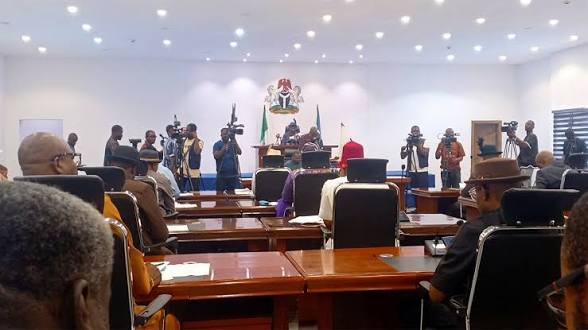
The Rivers State House of Assembly has threatened to invoke its constitutional powers against Heirs Energies Limited over what it described as the company’s persistent refusal to honour legislative invitations concerning a petition filed by the Omuohia Community in Igwuruta Town, Ikwerre Local Government Area.

The Assembly directed the company’s Managing Director and management team to appear before lawmakers on Monday, July 20, 2026, at 10:00 a.m. at the Rivers State House of Assembly Quarters, where plenary is temporarily being held, warning that failure to comply could attract sanctions under the 1999 Constitution.

The summons was conveyed in a letter dated July 7, 2026, signed by the Clerk of the House, Dr. Emeka Amadi, and addressed to the Managing Director of Heirs Energies Limited. A copy of the correspondence was obtained by our correspondent on Tuesday.

The Martin Amaewhule-led Assembly said the directive followed the consideration and adoption of the report of its Committee on Public Complaints and Petitions during the Fourth Legislative Sitting of the Fourth Session of the 10th Assembly.

Lawmakers expressed strong displeasure over what they termed the company’s “wilful refusal” to appear before the committee despite several invitations, describing the conduct as unacceptable and disrespectful to the legislative institution.

Consequently, the House warned that it would not hesitate to activate the enforcement provisions contained in Section 129 of the Constitution of the Federal Republic of Nigeria, 1999 (as amended), should the company fail to honour the latest summons.
Section 129 of the Constitution empowers a House of Assembly to compel the attendance of witnesses, require the production of documents and, where necessary, impose sanctions for non-compliance with legislative directives.

The petition before the Assembly was filed by the Omuohia Community in Igwuruta Town against Heirs Energies Limited, although details of the community’s grievances were not disclosed in the summons.

Part of the letter reads: “At the Fourth Legislative Sitting of the Fourth Session of the Tenth Assembly, the House considered the report of the House Committee on Public Complaints and Petitions on the petition by Omuohia Community in Igwuruta Town against Heirs Energies Limited and resolved to register its displeasure and condemn, in strong terms, the wilful refusal of Heirs Energies Limited to appear before the Committee despite several invitations to this effect.

“The House further resolved to invite you to appear before it with your management team on Monday, July 20, 2026, at 10:00 a.m. at the Rivers State House of Assembly Quarters and warns that it will not hesitate to invoke its powers, in consonance with Section 129 of the Constitution of the Federal Republic of Nigeria, 1999 (as amended), should you fail to appear accordingly.

“You are requested to treat this invitation as a matter of utmost priority.”

Appeal Court Verdict Won’t Derail 2027 Primaries, Candidates, ADC Reassures Members

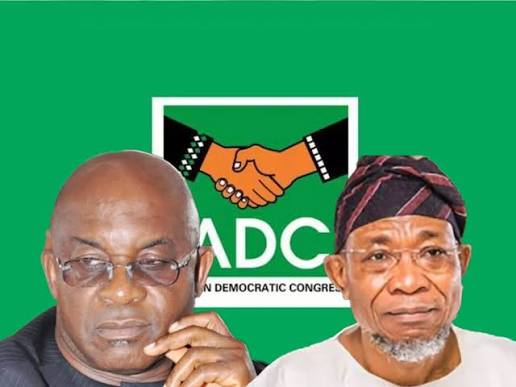
The African Democratic Congress (ADC) has reassured its members and supporters that the Court of Appeal judgment on the party’s congresses will not affect its participation in the 2027 general elections or the validity of candidates that emerged through its direct primary process.

The party said Monday’s judgment, delivered by the Court of Appeal in Abuja in respect of ward, local government and state congresses, has no bearing on the direct primaries through which its candidates for the 2027 polls were nominated.

In a statement issued by its National Publicity Secretary, Bolaji Abdullahi, the ADC urged party faithful to remain calm, insisting that its electoral preparations remain firmly on course despite the ongoing legal dispute.

“The African Democratic Congress (ADC) notes the judgment delivered by the Court of Appeal in Abuja on Monday in a matter relating to party congresses for the election of ward, local government and state executive committees of the Party,” the statement said.

“We wish to assure members of the Party and the general public that this judgment has no effect whatsoever on the direct primaries through which the Party’s candidates have emerged at all levels.”

The opposition party disclosed that it had already commenced the process of challenging the appellate court’s decision at the Supreme Court, describing the judgment as legally unsustainable.
It also expressed confidence in the dissenting opinion delivered by the presiding justice, arguing that it reflected the settled position of the law and the party’s stance.

“The Party has already commenced the process of appealing the judgment, which we respectfully disagree with and consider to be legally unsustainable.

“We also note the dissenting judgment of the presiding Justice, which, in our view, more accurately reflects the settled position of the law and the Party’s position,” the statement added.

Calling for unity, the ADC urged its members not to be distracted by the litigation, maintaining that the party remains focused on presenting what it described as a credible alternative to Nigerians in the 2027 elections.

“We urge all Party members and the millions of our supporters to remain calm, confident and focused. The African Democratic Congress remains committed to the task of providing Nigerians with a credible alternative and will continue to pursue that mission in accordance with the Constitution and the rule of law,” it stated.

The judgment is the latest in a series of legal disputes surrounding the party’s internal leadership and congresses, disputes that have triggered rival claims to the ADC leadership ahead of the 2027 general elections.

Despite the litigation, the party has consistently maintained that its recognised national leadership remains intact and that its direct primary process complied with both the party’s constitution and the Electoral Act.

The latest reassurance also comes amid heightened political activities ahead of the 2027 polls and follows recent controversies over claims by a rival faction that it had uploaded candidates’ names to the Independent National Electoral Commission (INEC) nomination portal.

Both the ADC leadership and INEC have dismissed the claim, with the electoral body affirming that it recognises only the Senator David Mark-led National Executive Committee and has not granted portal access to any rival group.

Over 10,000 Lives Lost In Deadly Record-breaking Europe Heatwave

0

More than 10,000 people died across Europe during the record-breaking heatwave that swept through the western part of the continent in June, with the overwhelming majority of the victims being elderly people, according to new mortality data.

Figures released by EuroMOMO, a mortality monitoring network supported by the European Centre for Disease Prevention and Control (ECDC) and the World Health Organisation (WHO), showed that 10,650 excess deaths were recorded across 27 European countries during the week of June 22 to 28, when temperatures peaked in France, Spain, the United Kingdom and several other nations.

Of the total, more than 9,000 deaths occurred among people aged 65 years and above, underscoring the devastating impact of extreme heat on older populations.

EuroMOMO said the excess mortality was far above seasonal expectations, noting that the combined mortality across the same countries had, in the preceding eight weeks, averaged about 500 fewer deaths per week than normal.

Chief Physician at Denmark’s Statens Serum Institut, which hosts EuroMOMO, Lasse Vestergaard, described the mortality surge as highly unusual.

“To have this kind of excess at this time of year is unusual. It’s really high,” Vestergaard said, adding that it was difficult to attribute the spike in deaths to anything other than the extreme heat.

Health experts explained that extreme heat can prove fatal by triggering heat stroke or worsening cardiovascular and respiratory diseases, with older people among the most vulnerable.

Scientists also linked the unprecedented heatwave to human-induced climate change, saying such an event would have been “virtually impossible” without global warming, which has made heatwaves more frequent, longer-lasting and more intense.

The data covered deaths from all causes rather than only those directly linked to heat. However, researchers said there were no major concurrent events, such as COVID-19 outbreaks, that could explain the sharp increase in mortality.

The late-June heatwave crippled parts of Europe, disrupting electricity supplies, forcing school closures and shattering temperature records in France, Spain and the United Kingdom.

Although EuroMOMO does not publish country-specific mortality figures, it reported that France and Belgium recorded “very high excess” mortality during the final week of June. Belgium’s public health institute, Sciensano, said the country’s excess mortality was the highest recorded during any heatwave since records began in 2000.

In a separate study published on Monday, researchers from Imperial College London, the UK Met Office and the London School of Hygiene and Tropical Medicine estimated that about 2,700 people died from heat-related causes in England and Wales during the May and June heatwaves.

The study further found that 42 per cent of those deaths were attributable to the additional heat generated by human-caused climate change, reinforcing growing concerns over the escalating human cost of global warming across Europe.

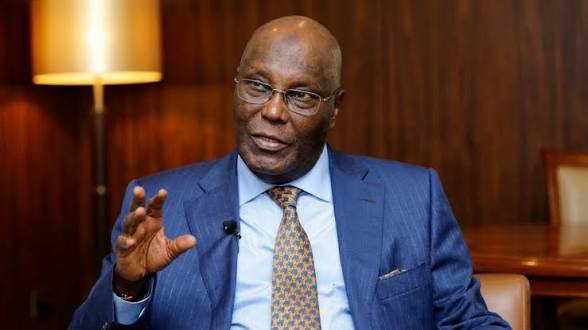
Atiku Alleges INEC Backing Rival ADC Faction, Demands Explanation Over Candidate Portal Access

The Atiku Media Office has accused the Independent National Electoral Commission (INEC) of unlawfully granting access to its candidate nomination portal to a rival faction of the African Democratic Congress (ADC), alleging that the move is designed to undermine opposition parties ahead of the 2027 general election.

In a statement issued on Monday in Abuja, the media office claimed that the electoral commission’s action amounted to partisanship and could trigger avoidable leadership disputes within the opposition party.

The statement followed an announcement by Nafiu Bala Gombe, whom the Atiku Media Office described as a “pretender” to the ADC national chairmanship, that he had successfully uploaded the names of candidates for the 2027 elections through INEC’s candidate nomination portal on July 11.

According to the Atiku Media Office, access to the commission’s nomination portal is reserved for the duly recognised leadership of registered political parties in line with INEC’s guidelines for the 2027 polls.

It argued that the commission had already recognised the National Executive Committee led by former Senate President David Mark, insisting that any candidate list submitted by Gombe lacked legal validity.

“By granting access code to Bala Gombe, a pretender laying claims to the chairmanship of the ADC, though the law is not on his side and INEC has since validated the chairmanship of the Sen. David Mark-led executive, the electoral umpire is once again manifesting its partisanship,” the statement said.

The media office further questioned how two individuals could simultaneously claim recognition as national chairman of the same political party, maintaining that only the David Mark-led leadership enjoys legal recognition.

It also alleged that Gombe did not conduct valid party primaries as stipulated by the Constitution and the Electoral Act, stressing that only candidates produced through the recognised ADC leadership could lawfully participate in the elections.

Describing the granting of portal access to Gombe as unconstitutional and unlawful, the Atiku Media Office maintained that any parallel submission of candidates outside the recognised party structure was null and void.

It, therefore, called on INEC to publicly explain the circumstances under which access to the candidate nomination portal was granted to Gombe and urged the electoral body to refrain from actions capable of fuelling internal crises within opposition political parties.

INEC had yet to respond to the allegations as of the time of filing this report.

RSU Cracks Down on Final-Year Sign-Out Celebrations, Imposes Total Ban On Campus Festivities

0

The management of Rivers State University (RSU) has reinforced its ban on final-year sign-out celebrations within the university community, warning that any student or visitor who violates the directive will face disciplinary action.

In an internal memorandum dated July 13, 2026, and signed by the Acting Registrar, Dr. Idanyingi I. Daminabo, the university said the decision followed increasing incidents of unruly behaviour, public disturbances and security concerns associated with sign-out celebrations by graduating students.

The management recalled that a similar prohibition was introduced last year, stressing that the directive remains in force and is aimed at protecting lives and property, preserving security and maintaining a peaceful academic environment.

Under the renewed directive, all final-year sign-out activities have been outlawed before, during and after the final examination period anywhere within the university community.

The university also prohibited students from wearing white shirts, white tops, jeans or any attire designed for sign-out celebrations, including writing, signing or scribbling on clothing.

To prevent gatherings linked to the celebrations, the institution barred parents, guardians, relatives, friends, photographers and other visitors from entering the campus for sign-out activities.

The management further banned the bringing into the university of cash for spraying, money bouquets, cakes, flowers, balloons, food, drinks, gift items and other celebratory materials.

It also outlawed activities capable of disrupting peace on campus, including splashing water, spraying substances, throwing powders or money, playing loud music, dancing in processions, blocking roads or engaging in any conduct that could cause disorder, intimidation, injury or damage to persons or property.

In addition, the university prohibited reckless driving, speeding, drifting, convoy movements, motorcycle stunts, excessive use of vehicle horns, sirens, security escorts and other dangerous vehicular displays within the campus.

The memorandum directed university security personnel and other designated officials to ensure strict enforcement of the directive across all campuses.

The Atlantic Bell reports that heads of campuses, provosts, deans, directors and heads of departments were also mandated to enforce compliance within their respective units.

The management warned that where a violation occurs and the offender is not identified or reported, the head of the affected department would be held accountable for failure to enforce the directive.

The university emphasised that any student or person found violating the order would be sanctioned in accordance with the institution’s rules and regulations.

Management reminded graduating students that the university’s convocation ceremony remains the only officially recognised platform for celebrating the successful completion of their academic programmes, urging them to conduct themselves in a manner that upholds the values and reputation of the institution.

The Atlantic Bell further reports that the directive, according to the memorandum, takes immediate effect.

FG Suspends Controversial 82% Hike In WAEC, NECO Registration Fees After Public Outcry

The Federal Government has suspended the proposed increase in registration fees for the 2027 West African Senior School Certificate Examination (WASSCE) and the National Examinations Council (NECO) Senior School Certificate Examination (SSCE), following widespread public criticism and calls for a review.

The Federal Ministry of Education announced on Monday that it had withdrawn its June 18, 2026 circular conveying the proposed fee adjustment to pave the way for broader consultations with key stakeholders before any final decision is reached.

In a statement signed by the ministry’s Director of Press and Public Relations, Boriowo Folasade, the government said the decision was informed by concerns and feedback from the public over the proposed increase.

“The letter conveying the proposed fee adjustment, dated June 18, 2026, has been withdrawn to allow for a comprehensive review and broader consultations with all relevant stakeholders before a final decision is taken,” the ministry stated.

It explained that the proposed review was necessitated by the rising cost of conducting national examinations, noting that registration fees had remained largely unchanged for several years despite increasing operational expenses.

According to the ministry, the cost of logistics, security, printing of examination materials, technology deployment, quality assurance and other critical services required to sustain the credibility of public examinations has risen significantly.

The Minister of Education, Dr. Maruf Tunji Alausa, was said to have directed that the proposal be put on hold in keeping with the Federal Government’s commitment to transparent, inclusive and evidence-based policymaking.

“The Honourable Minister of Education, Dr. Maruf Tunji Alausa, has directed that the proposal be placed on hold in line with the Federal Government’s commitment to inclusive, transparent and evidence-based policymaking,” the statement added.

The ministry assured Nigerians that the review process would involve extensive consultations with examination bodies, state ministries of education, school proprietors and administrators, parents’ associations, organised labour and other education stakeholders before any new fee structure is approved.

It stressed that the proposed increase would not take effect until the consultation process is concluded.

Reaffirming the government’s commitment to students’ welfare and equitable access to quality education, the ministry pledged to keep the public informed throughout the engagement process.
The suspension comes barely weeks after the Federal Government approved a new registration fee of N50,000 for both WAEC and NECO examinations beginning from 2027, representing an 82 per cent increase from the current N27,500.

The approval, announced in a June 18, 2026 statement signed by the Director of Senior Secondary Education, Adeniji Ibrahim, followed a request by WAEC for an upward review of examination fees.

The proposed hike, however, triggered widespread criticism from parents, education stakeholders and opposition figures, including former Vice President Atiku Abubakar and the National Association of Nigerian Students (NANS), who described the increase as excessive and capable of worsening access to secondary education for many Nigerian families.

2026 W/Cup: England, Argentina Renew Iconic Rivalry As Ghost Of ‘Hand Of God’ Looms Large

0

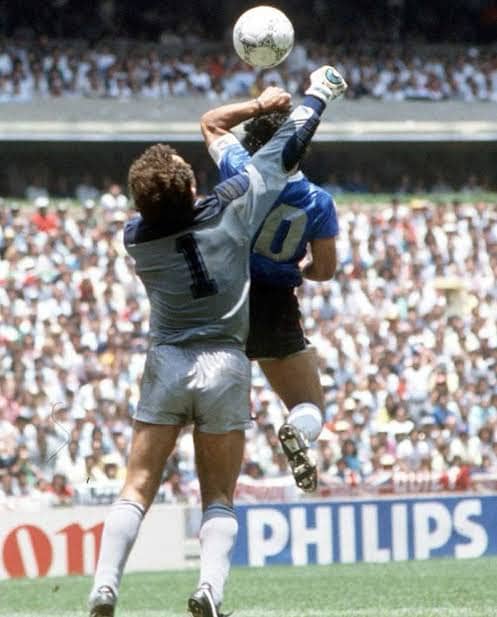
England and Argentina will renew one of football’s fiercest rivalries on Wednesday when they clash in a blockbuster World Cup semi-final, 40 years after Diego Maradona’s unforgettable “Hand of God” performance rewrote football history and left England heartbroken.

The heavyweight showdown in Atlanta revives memories of the 1986 World Cup quarter-final in Mexico City, where Maradona inspired Argentina to a controversial 2-1 victory with two of the most iconic goals ever witnessed at a World Cup.

His first, punched into the net and later immortalised as the “Hand of God”, remains one of football’s most debated moments, while his breathtaking solo run moments later is widely regarded as one of the greatest goals in the history of the tournament.

This time, Argentina will once again look to their talisman, Lionel Messi, as the defending champions chase history by becoming the first nation since Brazil in 1962 to retain the World Cup.

Standing in their way is an England side desperate to end six decades of major tournament heartbreak.

Inspired by Jude Bellingham and captain Harry Kane, the Three Lions know victory would move them within touching distance of a first World Cup triumph since 1966.
The winners will face either France or Spain, who meet in the other semi-final in Texas on Tuesday, in Sunday’s final on July 19.

Argentina booked their place in the last four after overcoming a stubborn Switzerland 3-1 in Kansas City. Extra-time strikes from Julian Alvarez and Lautaro Martinez finally broke Swiss resistance after the teams had been locked together at the end of normal time.

With political tensions surrounding the Falkland Islands, known in Argentina as the Malvinas, likely to resurface ahead of the encounter, Argentina coach Lionel Scaloni sought to keep the focus firmly on football.

“This is a football game,” Scaloni said after the victory over Switzerland.
“We’re playing against a very strong opponent with an excellent coach. That’s all it is.”

England, meanwhile, advanced after surviving a stern examination from Norway in the searing heat of Miami.

Thomas Tuchel’s men required extra time to secure a tense 2-1 victory, with Bellingham scoring twice to send England into only their fourth World Cup semi-final.

Norway had stunned England when Andreas Schjelderup fired them ahead before half-time, but Bellingham restored parity in stoppage time after a controversial build-up in which Norway claimed goalkeeper Ørjan Nyland’s goal kick had struck an overhead camera cable.

The Norwegians’ protests were waved away, and after also seeing another goal ruled out, they were ultimately punished when Bellingham struck again in extra time to seal England’s passage.
Despite the victory, Tuchel admitted his side must raise their level significantly if they are to overcome the reigning champions.

Now, four decades after Maradona’s “Hand of God” altered the course of football history, England have another opportunity to settle old scores against Argentina, this time with a place in the World Cup final at stake.

SERAP Sues INEC, Demands Investigation Into Alleged N800bn FAAC Diversion For Tinubu Campaign

0

The Socio-Economic Rights and Accountability Project (SERAP) has sued the Independent National Electoral Commission (INEC), seeking a court order compelling the electoral umpire to investigate allegations that governors elected on the platform of the All Progressives Congress (APC) diverted about ₦800 billion from Federation Account Allocation Committee (FAAC) allocations to finance political and campaign activities.

In the suit, filed last week before the Federal High Court in Abuja and marked FHC/ABJ/CS/1426/2026, SERAP is asking the court to issue an order of mandamus directing INEC to investigate the allegations and determine whether the reported contributions breached provisions of the Electoral Act governing campaign financing.

The organisation also wants the court to compel INEC to demand full disclosure from the APC and the affected governors on the alleged campaign fund, including the identities of contributors and the lawful sources of the funds.

SERAP further urged the court to direct the electoral commission to commence a comprehensive review of compliance with Section 91 of the Electoral Act, particularly regarding political donations, campaign financing and disclosure requirements by political parties and candidates in the current electoral cycle.

According to the rights group, the allegations raise fundamental concerns over transparency in political financing, electoral fairness and the constitutional right of Nigerians to participate freely in the democratic process.

It argued that opaque campaign financing remains a major conduit for corruption and undermines public confidence in democratic institutions.

In the suit filed by its lawyers, Kolawole Oluwadare and Kehinde Oyewumi, SERAP contended that the alleged diversion of public funds for political purposes poses “a grave threat” to the credibility of the 2027 general elections.

The organisation maintained that large public financial flows, combined with weak transparency and oversight mechanisms, provide sufficient grounds for INEC to activate its constitutional and statutory powers to investigate and monitor political financing.

SERAP argued that Section 91 of the Electoral Act empowers INEC to regulate political donations, require disclosure of contributors and sources of campaign funds, and sanction individuals or political parties that exceed legally prescribed donation limits.

It noted that political parties found guilty of violating the donation ceiling risk fines of up to ₦10 million and forfeiture of excess funds, while individuals may be liable to penalties amounting to five times the value of contributions made beyond the legal limit.

According to SERAP, the Constitution, the Electoral Act and Nigeria’s obligations under international anti-corruption and human rights treaties impose clear responsibilities on INEC to prevent the misuse of state resources for electoral advantage and to guarantee transparency in political financing.

The organisation further argued that where allegations suggest that public resources may have been channelled into political campaigns outside lawful procedures, INEC has a legal duty to investigate and enforce the relevant provisions of the law.

SERAP also cited Sections 13, 14 and 15 of the 1999 Constitution (as amended), as well as Nigeria’s obligations under the African Charter on Human and Peoples’ Rights, the International Covenant on Civil and Political Rights and the United Nations Convention Against Corruption, insisting that electoral integrity cannot be guaranteed without accountability in campaign financing.

It warned that any diversion of public funds for partisan political purposes would amount to a serious abuse of public trust, distort electoral competition and undermine the principle of a level playing field.

No date has been fixed for the hearing of the suit.