

Home Blog Page 114

No Going Back On Use Of BVAS, IREV, Says INEC Chairman …Technology has ended era of voter impersonation

0

The Chairman of the Independent National Electoral Commission (INEC), Prof. Joash Ojo Amupitan, on Tuesday said that the deployment of the Bimodal Voter Accreditation System (BVAS) has effectively solved the protracted challenge of identity theft in Nigeria’s elections.

This is contained in a statement issued by the Chief Press Secretary to the INEC Chairman, Dayo Oketola, on Tuesday in Abuja.

The statement quoted Amupitan as making the declaration while speaking at the 2025 Digital Nigeria International Conference and Exhibitions in Abuja, organised by the National Information Technology Development Agency (NITDA).

Amupitan, who was represented by INEC National Commissioner, Mrs May Agbamuche-Mbu, stated that the era of multiple voting and identity fraud was over.

He said that the BVAS signposted a milestone in the nation’s democratic history, having become a ‘foolproof mechanism’ for verification.

“The BVAS device has become our frontline defence against identity fraud, ensuring that only the rightful, eligible voter can be accredited at the polling unit.

“With the biometric safeguards now in place, voter impersonation has been effectively eliminated from our electoral system,” Amupitan said.

Amupitan, who backed his assertion with BVAS data from the recently concluded Anambra Governorship election, noted that the 6,879 BVAS devices configured and deployed for the polls recorded a highly commendable performance.

The 2004 University of Iowa Fulbright visiting scholar added that over 99 per cent of polling unit results were uploaded to the INEC Result Viewing (IReV) portal on election day.

“These outcomes confirm that the deployment of BVAS and IReV is no longer experimental but an entrenched part of Nigeria’s electoral architecture.

“The figure announced at the polling units is the same figure visible to the public. Technology has safeguarded the vote,” he said.

The INEC boss reminded the audience that previous technologies, while innovative, lacked the ‘teeth’ of the law, leaving the commission vulnerable to technicalities in election tribunals.

He, however, said the situation shifted with the Electoral Act 2022.

He said that Section 47(2) of the Act is the watershed provision that has transformed digital devices from mere administrative guidelines into “statutorily protected pillars” of the electoral system.

“This legislative foundation ensures that our digital tools have both operational and legal legitimacy.

“It has strengthened public trust and enabled the Commission to innovate with confidence,” Amupitan explained.

He noted while voter impersonation and multiple voting had been largely tackled with BVAS, connectivity remained a logistical headache.

Amupitan acknowledged that while the Commission’s steady deployment of technology had boosted credibility, it was by no means a cure-all.

He pointed to the nation’s uneven telecommunications landscape as a stubborn obstacle.

“With 176,846 polling units tucked into swamps, perched on mountains, and hidden in far-flung communities, achieving real-time upload of Polling Unit results to the INEC Result Viewing Portal remains one of the toughest battles for transparency on Election Day.

“A tool like the BVAS is only as good as the network it runs on,” he said.

The chairman said that INEC will continue to engage the NCC and network providers to find ways of addressing the challenge, while actively exploring alternative technologies to bridge the gaps.

In spite of these technology challenge, Amupitan sent a strong signal to the political class that there was no U-turn in deploying technology for elections in the country.

He firmly rejected suggestions of returning to manual procedures, describing the old model of manual accreditation as “vulnerable to human interference.”

“The gains we have recorded are too significant to reverse,” the INEC Chairman insisted.

He outlined a future where the Commission would not only stick with the current tech but actively upgrade it to more seamless solutions.

The INEC chairman reiterated that ‘ghost voter’ practice common to Nigerian elections had become a thing of the past and the Commission had no intention of looking back.

“Our mission is simple. To ensure that every eligible voter is accurately verified, every vote is properly counted, and every result is transparently shared.

“Technology has helped us secure these foundations of democracy,” Amupitan added.
Reps Committee To Track, Revive Over 11,000 Neglected FG’s Landed Property Set Up

0

Speaker of House of Representatives, Rep. Abbas Tajudeen, has inaugurated an ad hoc committee to identify, resuscitate and activate all abandoned Federal Government’s landed assets for the benefit of citizens.

Speaking at the inauguration of the House Ad-Hoc Committee on Abandoned Federal Government Landed Property in Nigeria on Tuesday, Tajudeen said that the committee was very important, as they were over 11,000 abandoned government assets across the country.

He said that the committee had the mandate to investigate the authenticity of all abandoned projects, review the defunct presidential committee report on abandoned assets and make far-reaching recommendations.

“I have no doubt in my mind that with the array of members and based on their training and integrity, there will be fairness and balance in your report.

“I urge you to do a thorough job, get relevant information to identify these landed property and make your recommendations,” he said.

Tajudeen urged all relevant agencies of government to support the committee by making available all necessary information required to do the job.

In his remarks, Chairman of the committee, Rep. Daniel Amos (LP-Kaduna), said that the mandate of the committee was not merely administrative but a solemn responsibility to the Nigerian people whose resources and heritage the assets represent.

Amos said that across the country, countless number of public properties and projects lie unutilised, under-valued or abandoned.

The lawmaker stated that assets were silent reminders of lost opportunities; opportunities for housing, revenue and national development.

“It is our duty, as representatives of the people, to reverse this trend and ensure that every public asset delivers real value to citizens,” he said.

According to him, the committee’s mandate include: identification and verification of all abandoned federal government landed properties and establishment of a centralised and reliable national database to ensure accurate documentation and institutional memory.

He said that the committee would also evaluate the financial, economic and developmental implications arsing from their abandonment and determine agencies that hold custodial or administrative responsibility for the assets.

Part of the mandate, he said, was to do an in-depth examination of the administrative, budgetary, regulatory and operational deficiencies that had impeded proper utilisation and formulation of clear and actionable strategies for the recovery, rehabilitation or productive deployment of all identified assets.

The lawmaker said that the committee was also tasked with the development of sustainable, forward-looking policy recommendations to address systemic weaknesses and prevent future occurrences.

“This committee pledges to discharge this mandate with the utmost diligence, transparency and fidelity to the public trust, ensuring that every aspect of the responsibility entrusted to us is executed with precision and integrity.

“We further commit to delivering outcomes that reflect the highest standards of legislative oversight, timely, evidence-driven and firmly anchored in the national interest.

“The work before us is not just technical, it is moral. Every abandoned property represents deferred development, lost revenue and a diminishing of public trust.

“By undertaking this assignment with diligence, fairness and integrity, we reaffirm the commitment of the House of Representatives to prudent management of national resources.

“This committee will operate with openness, professionalism and unwavering dedication to the people of Nigeria,” he said.

Amos sought for the cooperation of all stakeholders to ensure a credible and impactful process.

“Together, let us turn these dormant assets into engines of growth, sources of revenue and symbols of renewed national stewardship,” he said.

Seplat Energy Trains, Empowers 25 Journalists In Imo

Seplat Energy Plc, a leading Nigeria indigenous energy company, has trained and empowered 25 journalists in Imo with digital storytelling skills.

Seplat’s Corporate Communications Manager, Mr Stanley Opara, said this to journalists in Owerri, on Tuesday.

The two-day capacity-building workshop brought together journalists from both print and electronic media across the state, for an intensive learning experience to enhance their digital writing and communication.

In his opening remarks, the company’s Director, External Affairs and Social Performance, Mrs Chioma Afe, reaffirmed the company’s commitment to nurturing media partnership that promotes transparency, accountability, and national development.

He emphasised Seplat Energy’s role in supporting journalists to adapt to the fast-evolving digital and technological landscape.

“The critical role of the media in shaping narratives and culture makes it very important to embed global best practices in its delivery because we consider excellence as cardinal in everything we do.

“This is what we need to drive development in Nigeria, and Seplat Energy is well aligned on this,” Afe said.

The Base Manager, Eastern Assets, Mr Emmanuel Otokhine, encouraged journalists to make the most of the robust training and capacity-building opportunity.

He advised them to remain spontaneous, adaptable, and open to exploring career prospects that leverage their transferable skills.

The workshop featured insightful sessions led by Dr Solomon Avbioroko, who explored the psychology of communication, professional interaction, and the importance of self-awareness in journalism.

A Media expert, Mr Nnamdi Uwaemulem, facilitated practical modules on report writing and mobile video journalism (MOJO).

He introduced participants to the art of creating impactful stories using smartphones; from framing and lighting to mobile editing.

Uwaemulem also examined how digital disruption was reshaping the industry and opened participants’ eyes to new opportunities in media entrepreneurship and content creation.

Another facilitator, Mr Abiola Adedeji, guided participants through ‘Understanding Digital Marketing and Social Media Strategy.”

He explained how data-driven storytelling and analytics could amplify journalistic impact across platforms such as X (formerly Twitter), Instagram, TikTok, and YouTube.

Participants engaged in interactive exercises and assessments that deepened their understanding of effective storytelling and newsroom productivity.

Mr Temitope Kuteyi, of Channels Television, who spoke on behalf of the participants, described the experience as both practical and transformative.

He commended Seplat Energy for its sustained investment in human capital development.

Oshiomhole, CJN Advocate Stricter Enforcement Of of Road Safety Laws

0

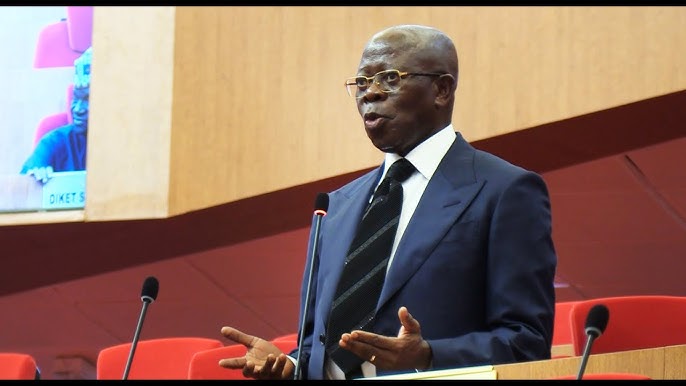
Adams Oshiomhole, Chairman of the Senate Committee on Interior, has called for urgent action to curb road traffic deaths in Nigeria.

Oshiomhole made the call at the International Day Remembrance of Road Traffic Victims Conference in Abuja on Tuesday.

Recounting personal experiences of loss, he highlighted the devastating impact of road accidents on families, students, and communities.

He emphasised that road safety required both personal responsibility and institutional enforcement.

He said that everyone could do something different when on the road.

He urged that drivers should be properly tested before operating vehicles and that authorities should ensure compliance.

Oshiomhole criticised the misuse of sirens and technical vehicles by unauthorised individuals and stressed the need for a unit to determine vehicle roadworthiness.

He pointed out the dangers posed by unqualified drivers and second-hand vehicles, and called on authorities to regulate imports to prevent accidents.

The senator also drew attention to unsafe driving practices observed abroad and compared them with lapses in Nigeria.

He called on law enforcement agencies to enforce traffic regulations strictly and to ensure that offenders were prosecuted to serve as deterrents.

Oshiomhole encouraged Nigerians to raise awareness, uphold the law, and educate youths about road safety.

He said that the day was not one for lamentation but for action, and he urged Nigerians to pray for the youths and the safety of the roads.

He also commended the FRSC and its committee members for their efforts in promoting driver competence and road safety.

Oshiomhole urged Nigerians and authorities to combine vigilance, education, and enforcement to prevent further loss of lives on the nation’s roads,

.He stressed that action must replace grief to safeguard lives.

In her goodwill message, the Chief Justice of Nigeria (CJN), Justice Kudirat Kekere-Ekun, called for urgent and collective action to protect victims of road traffic crashes

Kekere-Ekun noted that every accident was preventable.

The CJN was represented by Halimat Turaki.

She commended the visionary initiative of the KRSD Foundation, which she described as a living memorial offering hope, legacy, and healing to countless families across Nigeria and beyond.

She noted that the conference challenged stakeholders to view road accidents not as inevitable but as preventable.

Kekere-Ekun urged policymakers, law enforcers, health professionals, and the judiciary to work together in building a culture of accountability, compassion, and strategic intervention.

The CJN also praised the advocacy for the establishment of Trauma Recovery Centers for road crash victims, describing it as a monumental step toward justice, dignity, and societal responsibility.

“Behind every crash lies not just justice but the need for fear, desolation, responsibility and law,” she said.

Emphasising the moral duty of the judiciary, Kekere-Ekun stated that the law must not only address negligence but also protect the dignity of victims and their families.

She said that the lessons from the KRSD Foundation and similar initiatives inspired a future where human lives were safeguarded and society was more humane.

In her remarks, Justice Monica Dongban-Mensem, President of the Court of Appeal, called for firm accountability for reckless road use and stronger protection for victims of road crashes across Africa.

Dongban-Mensem said that the continent must move road safety issues to a higher level.

“Africa does not manufacture vehicles. We import and reuse them, yet lose lives every day,”she said.

Dongban-Mensem recounted losing her son in a crash, noting that many families endured similar pain.

“The silence of victims and families worries me. Some are afraid to speak.

“That is why we needed this conference, a place where voices can be heard and healing can begin,”she said.

The Appeal court president said the organising team conducted trainings for drivers, school visits, commercial motor parks outreach and national road campaigns to raise awareness.

Dongban-Mensem said collaboration with the private sector was crucial and confirmed the FCT Minister’s allocation of land for a trauma centre.

She added that several governors and traditional leaders had shown commitment to the project, expected to provide relief for victims needing long-term care.

Dongban-Mensem lamented that survivors often struggled with physical disabilities, emotional trauma and financial hardship.

“Many stay indoors with artificial limbs and no support. They are not beggars.

“Their lives have been reduced by circumstances we can change,” she said.

She urged African governments to enact affordable, updated and enforceable road safety laws, emphasising the need for emergency care legislation.

She, however, insisted that individuals must also be held accountable for bad conduct on the roads.

She expressed the hope that the conference, the first focused on African victims, would not be the last.

“We need laws compelling hospitals to respond immediately. Many die because attention comes too late.

“Even with good roads in Abuja, drivers still behave recklessly. People must face consequences for dangerous behaviour,”she emphasised

“Let us keep our citizens safe, support victims and ensure the stories we have shared this week yield lasting impact,” she said.

Dongban-Mensem prayed for survivors, families and participants, saying “May none of you ever become victims.”

NUC Approves Four New Programmes For LASU

0

The National Universities Commission (NUC) has approved four new full-time undergraduate programmes for the Lagos State University within its Faculty of Computing and Information Technology.

This is contained in a statement issued and signed by the Deputy Registrar and Coordinator, Centre for Information and Public Relations, LASU, Mrs Oluwayemisi Thomas-Onashile on Tuesday.

The Atlantic Bell reports that this development would further strengthen LASU’s position as a leader in technology-driven education.

“The approval was conveyed in a letter dated November 3, and signed by the Acting Director of Academic Planning, Mr Abubakar Girei, on behalf of the Executive Secretary of the NUC.

“This approval follows a recent rigorous resource verification visit to the university by panels of experts tasked with assessing the availability of human and material resources for the proposed programmes.

“The four programmes were approved, effective from the 2025-2026 academic session.

“The programmes are B.Sc. Cyber Security, B.Sc. Software Engineering, B.Sc. Information and Communication Technology, and B.Sc. Data Science,” she said.

Thomas-Onashile added that the development also emphasised LASU’s commitment to providing cutting-edge education aligned with global technological advancements.

“However, it should be noted that the approval currently applies only to full-time study modes.

“By expanding its academic offerings, LASU reaffirms its dedication to nurturing expertise in computing disciplines and equipping graduates with the skills required to excel in Nigeria’s digital economy and beyond.

TotalEnergies Hails NUPRC, Eyes Opportunities In 2025 Licensing Round

0

The TotalEnergies has applauded the Nigerian Upstream Petroleum Regulatory Commission (NUPRC) for delivering a transparent 2024 mini-bid round and has signalled interest in the forthcoming 2025 Licensing Round to commence December 1.

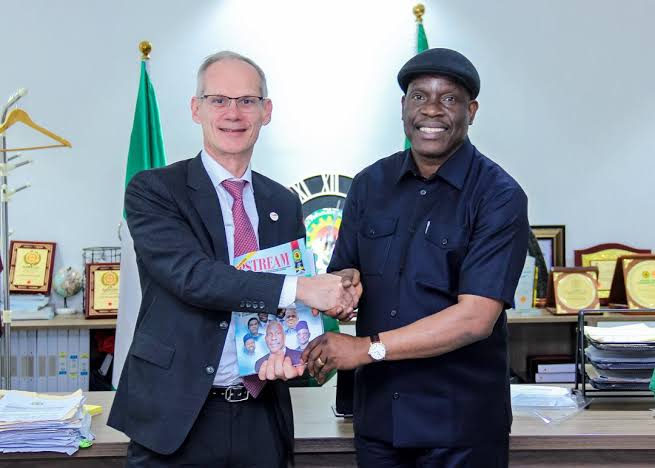
This commendation was given during a courtesy visit to the Commission Chief Executive, Mr Gbenga Komolafe, by a high-level TotalEnergies delegation, led by Mr Nicolas Terraz, President, TotalEnergies Exploration and Production.

According to a statement on Tuesday by Eniola Akinkuotu, Head, Media and Strategic Communication, NUPRC, Terraz was accompanied by the Managing Director/Chief Executive of TotalEnergies Upstream Companies in Nigeria, Mr Mathieu Bouyer and other dignitaries.

Komolafe, while reiterating the NUPRC’s commitment to a predictable regulatory environment, said it was not only a regulator but a strategic business enabler in line with the provisions of the Petroleum Industry Act (PIA) 2021.

The commission chief executive said the era of regulatory ambiguity in Nigeria’s upstream sector is over.

“Now, in Nigeria, we have a regulator that step in to address the issues as an enabler,” the NUPRC helmsman said, underscoring the commission’s investor-centric reforms and continued drive to improve operational clarity for oil and gas companies.

He also commended TotalEnergies for its recent execution of projects under the Obagi Host Communities Development Trust (HCDT), describing the development as a demonstration of the company’s commitment to community development and the spirit of the PIA’s host community provisions.

He encouraged the operator to actively participate in the upcoming 2025 Licensing Round, which the commission has positioned to attract high-value investments, new entrants and increased exploration activity across frontier and mature terrains.

In his remarks, Terraz praised the NUPRC for the transparency and credibility displayed during the 2024 mini-bid round.

He expressed confidence that the 2025 round would benefit from the commission’s reform-driven processes and enhanced governance framework.

Terraz said that the company remained optimistic about new opportunities in Nigeria, noting that the clarity and fairness exhibited in the previous round had strengthened investor confidence.

He added that lessons learned from the 2024 exercise will positively shape expectations for the 2025 Licensing Round.

He reaffirmed the company’s long-term commitment to Nigeria’s upstream sector, describing the country as a strategic hub in its global portfolio.

He emphasised TotalEnergies’ readiness to align with NUPRC’s vision for a more competitive, transparent, and investment-driven oil and gas industry.

“Drawing from the 2024 bid round, the 2025 edition would be positive. TotalEnergies is optimistic about the new bid round,” he said.

RSG Moves To Strengthen Partnership With Private Sector …Invites International Breweries’ Youth Empowerment Initiative to Port Harcourt

0

The Rivers State Government has encouraged International Breweries PLC to bring its flagship “Empowering Nigeria’s Future Leaders” programme to Port Harcourt, so that Rivers youth can fully benefit from the training, mentorship and entrepreneurial opportunities it offers.

The charge was given by the Honourable Commissioner for Commerce and Industry, Warisenibo Joe Johnson, when he received a delegation from the company in his office. He emphasized that hosting the next edition in Rivers State aligns with the Gov. Sim Fubara’s commitment to youth development and economic empowerment.

Reaffirming the state’s support for investors, Johnson also appealed to International Breweries PLC to revive the much-loved Grand Lager Beer, a heritage brand from the old Pabod Breweries, describing it as a cultural asset cherished by Rivers people.

The Commissioner further invited the company to participate in the government’s Rivers State Christmas Discount Market, scheduled to run from December 5–15 at the Yakubu Gowon Stadium, Elekahia, an initiative designed to provide residents with affordable shopping during the festive season.

The IBL team led by Public Affairs Manager, Dr. Helen Chimezie, was on a courtesy visit to formally invite the Commissioner to their 10th anniversary edition of “Empowering Nigeria’s Future Leaders,” scheduled for November 17, 2025.

BREAKING: Wike, Govs Makinde, Bala Mohammed clash At PDP Secretariat

0

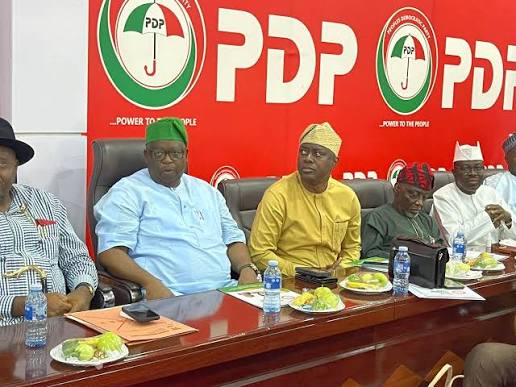
Chaos erupted at Peoples Democratic Party, PDP, National Secretariat in Abuja on Tuesday as rival factions, led by Governors Seyi Makinde of Oyo State and Bala Mohammed of Bauchi State on one side, and FCT Minister Nyesom Wike on the other, clashed over control of the party’s headquarters amid the ongoing leadership dispute.

According to ARISE, security operatives aligned with both the FCT minister and governors Seyi Makinde and Bala Mohammed engaged in a chaotic standoff over control of the complex, with teargas reportedly deployed around the premises by both sides.

Governor Makinde stormed the venue alongside the newly elected National Secretary, Taofeek Arapaja, while Nyesom Wike remained with Samuel Anyanwu, the embattled National Secretary who maintains that his tenure remains valid until December 8, 2025.

Party leaders have expressed deep concern over the incident, accusing the police of failing to maintain neutrality amid the ongoing leadership crisis within the opposition

The Peoples Democratic Party (PDP) faction loyal to the Minister of Federal Capital Territory (FCT), Nyesom Wike, has taken over the party’s national secretariat, Wadata Plaza, Abuja.

The take-over of the party’s secretariat was ahead of the parallel meeting reportedly scheduled for the same venue by the faction that held its national convention in Ibadan at the weekend.

The Taminu Turaki-led National Working Committee (NWC) elected at the Ibadan controversial national convention had scheduled its inaugural meeting with party stakeholders at 10 a.m. at the PDP national secretariat.

Also, the Abdulrahman-led faction of NWC had summoned an emergency National Executive Committee (NEC) and Board of Trustees (BoT) meetings for 11a.m. and 2 p.m. respectively at the same venue.

The factional National Chairman, Abdulrahman Mohammed, was already at the secretariat building, which was before now under lock and key.

Thr Atlantic Bell reports that armed security operatives were also deployed to the party secretariat.

The operatives, comprising personnel of the Mobile Police Force, Nigeria Security and Civil Defence Corps (NSCDC), and Department of State Services (DSS), were stationed at the entrance gates of the party and other strategic locations within the party premises and environs.

There were also security patrol vehicles stationed along the roads leading to the party secretariat, aimed at forestalling any breakdown of law and order, as the PDP factions lay claim to offices within the premises.

While the suspended National Secretary of the party, Sen. Samuel Anyanwu had already gained access to the party secretariat, with accreditation ongoing ahead of their 103 NEC meeting in progress, the Turaki faction also arrived.

EFCC, NDC Partner On Overhauling College’s Curriculum

0

The Economic and Financial Crimes Commission (EFCC) and the National Defence College (NDC) are to partner on overhauling the College’s curriculum to reflect Nigeria’s rapidly evolving security and governance landscape.

EFCC Spokesperson, Dele Oyewale, said this in a statement on Monday in Abuja.

Oyewale said the agreement was made when the NDC Commandant, Rear Admiral Ahmed, led senior officers of the college on a courtesy visit to EFCC’s Chairman, Ola Olukoyede, in Abuja.

He quoted Ahmed as saying that the curriculum of the College needed a rejig in line with the present-day realities.

He lauded the EFCC’s expertise in tackling financial and economic crimes and solicited for the infusion of the skills in reviewing NDC’s curriculum.

“In taking over the college. I have discovered that the curriculum has not been reviewed for quite some time, and I feel that it should be reviewed in relation to our current realities.

”I feel that this agency would be of help. So, I want us to work closely in terms of what we put in the new curriculum.

”We cannot do it better than the master. We will need some insights on how to manage public funds. We want participants to learn about managing public funds.

”This is the input we want from this place and we want experts to come and talk to participants by the next course on things like that, so that any office they happen to go and take over they know exactly what to do,” he said.

Ahmed also commended Olukoyede and his team for the wonderful job they are doing for the country in terms of asset recovery and in terms of earning trust for the country.

”I also advise that you should please not rest on your oars. You should continue to do your best as much as you can.

”If there’s any research that you want us to carry out for you as an agency, we have a center for strategic research,” he said.

Olukoyede, in his response, expressed the appreciation of the commission for the visit and the proposal.

He assured the delegation of EFCC’s preparedness to work with the College to enable it achieve greater heights.

“Collaboration is a factor that brings about effectiveness and results. It’s important for us as government agencies to work together.

”We know we have a long history of collaboration with the National Defence College. We have been sending students for its programmes.

”Right now, we also have a student. That is a testament of our working together. We’ll continue to do that.

”We have a very good working relationship with the Navy, particularly in maritime investigation, arrest and prosecution of fraudsters.

”We are ready to take this to the next level, particularly with National Defence College in whatever area we need to work together in sanitizing the economy and the country,” he said.

Olukoyede explained that the commission’s mandate was to fight financial crimes, but there’s always a relationship between the work you do and what we do as well.

He said there were areas of collaboration where we can find synergy and work together in the interest of the nation.

”What you do is to train people, prepare their minds, policy areas and strategies, which are also key to our own mandate as well. In the nature of the crimes we fight, new trends are evolving.

”As a matter of fact, there’s an aspect of cryptocurrency fraud that the world is just waking up to. The world lost over $2 trillion to it last year.”

According these are emerging things, so we need to look at strategy, points of view and review your curriculum along those areas you need to look at.

”We are ready to collaborate with you in that particular area. We will love you to incorporate the development in financial crimes and corruption into your curriculum.

“We can also help you to sanitize your processes. When you are able to guarantee the sanctity of your processes, things will work right.

”It is not many people that come up with this kind of proposal for which you are inviting us over. Not very many people have that confidence.

”I believe that’s what has brought you to where you are today. Continue with that,” he said.

Kabowei Clan Traditional Council Commends Governor Diri Over 18.7 km Road Project

0

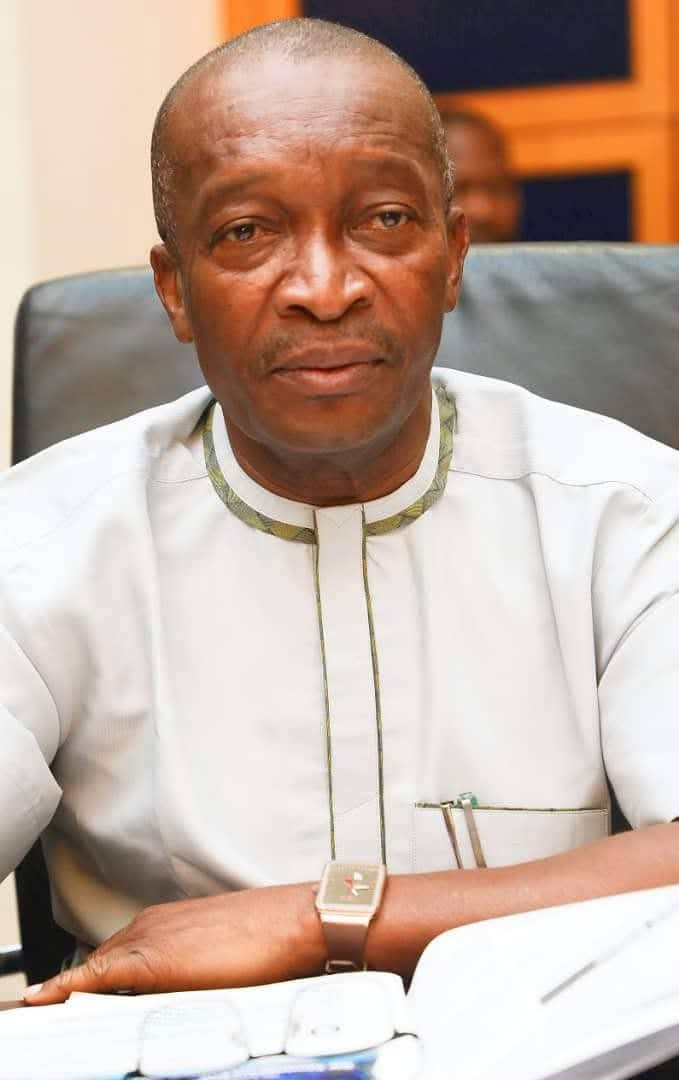
The Ebedaowei, HRH (Engr) Hope Aserifa Torru and members of the Kabowei Clan Traditional Council (Bayelsa) have expressed gratitude to the governor of Bayelsa State, Governor Douye Diri, for the approval of an 18.7 kilometer road linking eight communities in Sagbama LGA.

A statement signed by High Chief John Daria
Ekiopre-owei (Adviser), High Chief Freston Akpor
Ozitua-owei (Spokesman), and High Chief Stephen Kpodoh Fungei-owei (Secretary) Kabuowei Traditional Council, Bayelsa State, on behalf of the Traditional Council notes that the initiative will significantly enhance connectivity, as it will link Odoni-Agbere-Abuetor-Osifo-Osekwenike-Asamabiri-Ekperiwari and Elemebiri and have a sustainable impact on three Kabowei communities to be linked to the road.

Current state of Asamabiri-Ekperiwari road.

The statement commends and salutes Governor Douye Diri for his foresight in extending and expanding the frontiers of infrastructural development to Kabowei and sister communities in Sagbama Constituency Three

It says the approval of the road project which is a counterpart funding scheme with the Niger Delta Development Commission, NDDC would no doubt promote and stimulate the much needed economic development which will positively affect the overall quality of life in the beneficiary communities.

The statement also acknowledged the importance the government attached to the immediate take off of the project and early completion.

“We recognize the significance of reliable infrastructure and how crucial it is in fostering growth. This project is a testament to Governor Diri’s commitment to the welfare of our people”

The statement by the Kabowei Traditional Council also lauded the Governor for what it described as his people-centric leadership style and dedication to addressing the infrastructural gaps in communities across the state.

“While we anticipate the timely completion of the project and its positive impact be felt on our local economy and social cohesion, we are in a state of readiness to support and participate in the process of the flag-off to the completion of the project”.

The statement restated the Ebedaowei, Kabowei Traditional Council and the people’s continued commitment to collaborate with the state government in ensuring peace, progress and prosperity of communities in line with the aspirations of the “Prosperity Government” which has brought governance closer to the people, more than ever before.