

Home Blog Page 113

Siege: PDP National Secretariat On Lockdown As Police Block Entry Points

0

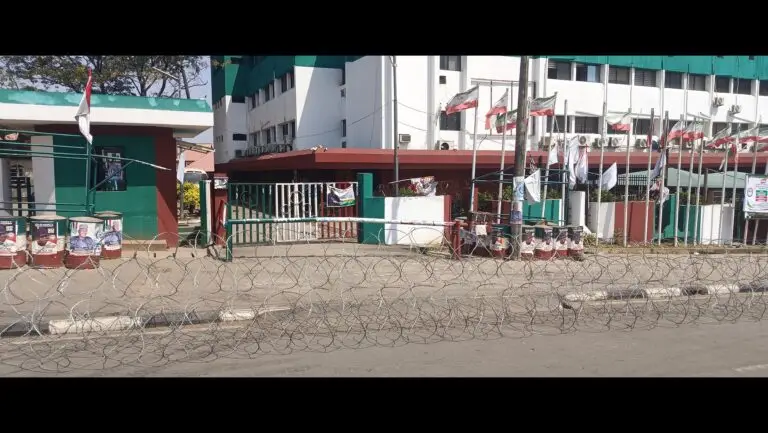
The Nigeria Police Force (NPF), FCT Command, on Wednesday sealed off the Peoples Democratic Party (PDP) national secretariat, Wadata Plaza, Abuja, using barbed wire.

The police also blocked all the access points to the party secretariat with patrol vehicles. The action followed the Tuesday violent confrontation between two factions of the party.

Reporters who visited the party secretariat, observed that large coils of razor wire were strategically deployed outside the access road by the building’s perimeter fence, blocking the main gates and halting all administrative and political activities at the facility.

Police patrol vehicles, including trucks, were used to block the road leading to the secretariat as well as the exit gate from the building.

Some police personnel were also seen manning strategic locations around the party secretariat, with no access permit to the secretariat staff members and party officials.

A riot control vehicle was equally stationed adjacent the party secretariat, while security personnel took positions at strategic points.

The Atlantic Bell reports that two rival groups, one loyal to the newly elected National Chairman, Taminu Turaki, and another backed by the Minister of the Federal Capital Territory (FCT), Nyesom Wike, had on Tuesday clashed at the party secretariat.

This followed the plans by the two groups to hold parallel meetings at the same venue within the party secretariat.

Tension, however, escalated following the arrival of prominent figures from both sides, including Wike, the suspended National Secretary, Samuel Anyanwu, Turaki as well as Governors Bala Mohammed (Bauchi) and Seyi Makinde (Oyo).

The security operatives deployed to the scene subsequently fired tear gas repeatedly to disperse the crowd and restore order within the secretariat.

The PDP, at its recent controversial elective national convention in Ibadan, had expelled Wike, Anyanwu and his group from the party for alleged anti-party activities, while the new national Working Committee, led by Turaki was elected.

However, the factional National Executive Committee (NEC) of the PDP, led by Alhaji Abdulrahman Mohammed, after its 103rd meeting on Tuesday, also announced the expulsion of Makinde, Bala Mohammed and Gov. Dauda Lawal of Zamfara from the party.

Speaking with newsmen after gaining access to his office on Tuesday, Turaki said that he had assumed office, adding that the party leadership would continue to fight for Nigeria’s democracy.
Visionary: Africa Must Harness Innovation, Integration to Shape Global Future — ECA Chief

0

Africa stands at a defining moment where frontier technologies and deeper regional integration could recalibrate its economic future, the UN Economic Commission for Africa (ECA) has said.

The position was contained in a statement issued yesterday by ECA’s Communication Section.

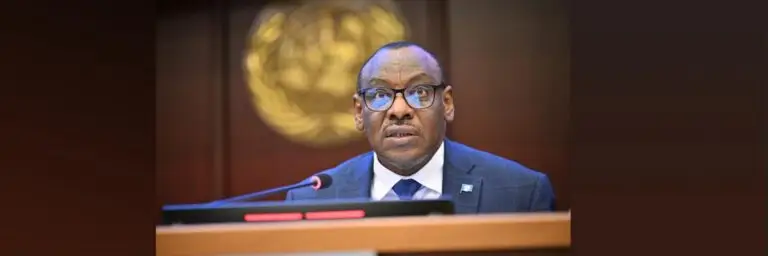
Speaking at the Fourth Session of the Committee on Private Sector Development, ECA Executive Secretary, Claver Gatete, underscored the theme, “Leveraging frontier technologies and innovation to advance regional integration for sustainable growth.”

Gatete commended the outgoing Chair of the Bureau, Mamadjam Dinis Djalo of Guinea-Bissau, for steering the Committee through a critical phase in its development work.

He noted that Africa faces a world marked by rapid technological change, geopolitical tensions, constrained finances and intensifying climate impacts — factors that are deepening vulnerabilities and widening inequalities across the continent.

Yet, he stressed, Africa retains distinct competitive advantages, including the world’s youngest population, vast renewable energy potential, fast-growing digital ecosystems and a continental market of 1.4 billion people under the African Continental Free Trade Area (AfCFTA).

“Integration and innovation must move in tandem,” he said. “Individually, each has limits; together, they can position Africa as a global economic shaper rather than a follower.”

Gatete pointed to transformative innovations already emerging across the continent, from mobile money and drone-powered medical deliveries to digital agriculture and generative AI — technologies he said could collectively boost productivity and unlock more than US$220 billion annually.

He argued that technology thrives on scale, while scale depends on integration, making the AfCFTA essential for harmonised regulations, investment incentives and market opportunities that can support innovation.

Conversely, he noted, innovation strengthens integration. The rise of cross-border instant payment systems, which expanded by nearly 40 per cent between 2019 and 2023, has lowered transaction costs and linked African markets more seamlessly.

The ECA chief outlined three priorities: expanding digital and physical cross-border infrastructure; empowering the private sector — particularly young people and women; and harmonising regulatory regimes to fully activate the continent’s trade potential.

He said African countries have already begun to deploy frontier technologies, undertake policy reforms and build systems geared toward a more resilient and globally competitive continent.

Gatete reaffirmed ECA’s commitment to supporting member states with data-driven policy advice, technical assistance and partnerships involving the African Union, regional blocs, the private sector and development agencies.

He urged delegates to convert discussions into measurable action and share country experiences that can shape Africa’s inclusive, innovative and integrated economic future.

Impactful: CBN Credits Monetary Policy Department For Key Economic Turnaround

0

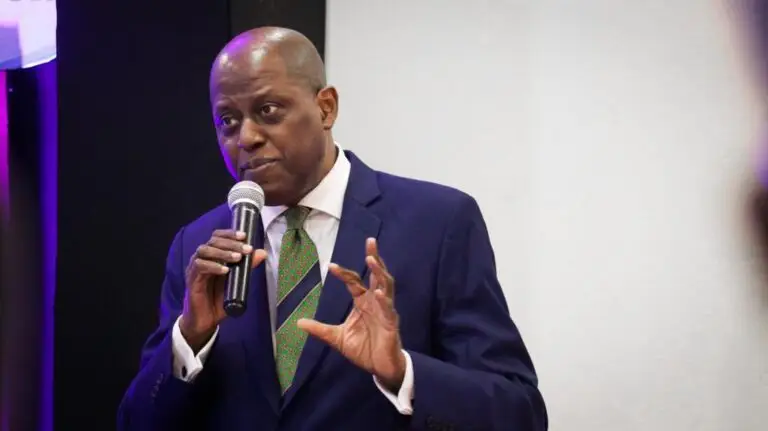
Governor of the Central Bank of Nigeria (CBN), Olayemi Cardoso, has credited the apex bank’s Monetary Policy Department (MPD) with playing a pivotal role in shaping major policy milestones recorded over the years.

Cardoso, represented by the Deputy Governor in charge of Economic Policy, Dr. Mohammed Abdullahi spoke yesterday in Abuja at an event marking the MPD’s 20th Anniversary Colloquium, themed “Monetary Policy in Nigeria: Past, Present and Future.”

He noted that the department has consistently provided technical backbone to key CBN committees, including the Monetary Policy Committee (MPC) and the Monetary Policy Technical Committee, thereby strengthening policy coherence and decision-making.

“The department’s work has underpinned several landmark achievements, including the introduction of the Monetary Policy Rate (MPR), which replaced the minimum rediscount rate in 2006 and improved clarity and coordination of monetary policy,” he said.

Cardoso also highlighted the MPD’s role in adopting the Interest Rate Corridor framework, which established guidance around the MPR to better steer short-term interest rates and enhance liquidity management.

According to him, the department has equally advanced evidence-based policy analysis and improved the bank’s communication strategy, contributing to greater transparency in monetary operations.

He said Nigeria’s economy had undergone significant transformation over the past two years, driven by policy reforms that have helped restore confidence and set the stage for long-term macroeconomic stability.

“As a result, inflation has moderated to 16 per cent as of October, down from a peak of 34.6 per cent in November 2024 — the lowest in three years and the seventh consecutive month of disinflation. Core inflation is also easing, showing that tight monetary policy is taking effect,” he said.

Cardoso added that the naira had continued to stabilise as foreign exchange pressures eased.

Director of the MPD, Dr. Victor Oboh, described the department’s 20-year journey as one defined by intellectual discipline, strategic foresight and unwavering commitment to the CBN’s core mandate.

He thanked the CBN Governor for his guidance and support, noting that the department’s work had shaped Nigeria’s transition from direct controls to a more market-based monetary policy regime.

Oboh said the MPD’s resilience had been evident during global and domestic shocks, including the financial crisis, commodity price downturns and the COVID-19 pandemic.

Worrisome: Rising Unemployment, A Ticking Time Bomb -Philanthropist

0

A philanthropist, Chief Bibopere Ajube, says the rising unemployment in the country will consume the nation if able individuals fail to support government.

Ajube said this at a youth summit to commemorate the 13th anniversary of the Gallery Security Services Ltd. (GSSL) on Wednesday in Agadagba-Obon, Ese-Odo Local Government Area of Ondo State.

Ajube, the founder of GSSL, said he had taken it upon himself to invest in humanity and society in order to bring positive impacts.

According to him, all well-to-do people should invest in their respective localities to address unemployment, which has been a major cause of social vices and criminalities.

“Our coming to this world is to impact our environment. Whatever God gives me is for my people, not only me and my family.

“That is why we are doing this, and we are not going to be tired. If we don’t find a solution to unemployment, the problem will consume us,” he said.

Ajube, a community leader, said the creation of GSSL was to address insecurity, especially in the coastal areas of the Niger Delta.

“The conventional security agencies are just to assist us. You know that it’s left for us in coastal areas to do the work. Let us all see security as a personal responsibility.

“That is the only way we can have peace in our communities. I will never leave you people alone. I am ready to serve you till I am old and die,” he said.
Earlier at a news conference, the General Manager of GSSL, Mr Anthony Onyeisue, said 1200 youths would be empowered during the summit.

Onyeisue said the society would be difficult to control if there was a chunk of unemployed youths.

‎”We believe here in GSSL also that one of the ways we can actually reduce crime across this country is to create valuable jobs for our youth population so that they can also contribute to the society,” he said.

According to him, the security outfit has secured lives and property in the coastal communities of the state and beyond.

“It has also contributed remarkably to the socio-economic well-being of the jurisdiction that it serves.

“GSSL has consistently exhibited amiable courage and professionalism in combating sea piracy, oil thefts, pipeline vandalism, and other criminal activities.

“The company’s highly trained, dedicated, and motivated personnel have continued to complement the efforts of government security agencies in providing security services to communities.

“GSSL, through its Corporate Social Responsibility (CSR), continues to rekindle the hope of individuals in need of healthcare by providing them access to free medical services.

“The free health services include surgical operations, comprehensive health investigations, and drug administration.

“Also, hundreds of households, men and women inclusively, have directly benefited from cash support and non-interest loan initiatives,reflecting the compassion, generosity, and leadership of its founder, Senior High Chief Bibopere Ajube,” he stated.

The summit was tagged “Strengthening Waterways Security and Community Safety by Tackling Illegal Bunkering, Sea Piracy, Kidnapping, Cultism and Drug Abuse”.

Lectures were given on bunkering, sea piracy, drug abuse, youth vulnerability, cultism, and youth violence.

Shocking: NDLEA Arrests Over 16,304 Persons, Seize 4.5m kg Drugs In 10 Months

0

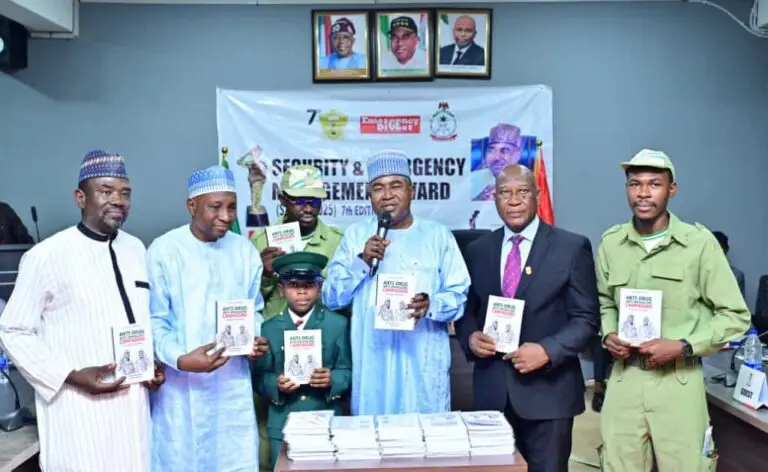
The National Drug Law Enforcement Agency (NDLEA) said it arrested over 16,304 drug suspects and seized 4.5 million kilograms of illicit substances between January and October.

The NDLEA Chairman, retired, Brig. Gen. Buba Marwa disclosed this at the 7th Security and Emergency Management Awards and Lecture (SAEMA) on Wednesday in Abuja.

Marwa said that, as an agency mandated to curb illicit drug problems, the NDLEA under his leadership had responded to the challenge by pursuing a two-pronged strategy.

According to him, the first aspect of the strategy is Supply Reduction, which entails closing down the supply pipelines of illicit drugs.

“We do this through intelligence-led operations, interdictions, and international collaborations.

“By these means, we have intercepted tons of narcotics, dismantled cartels, and prosecuted offenders.

“From our borders to our airports and seaports, our officers remain resolute and execute their job without fear or favour. “Gratifyingly, we are getting good results.

“In the first 10 months of this year alone, we have recorded over 16,304 arrests and have successfully prosecuted and secured the conviction of about 3,000 drug offenders with hundreds of cases ongoing in court.

“In the same vein, we have seized 4.5 million kilograms of illicit substances.

“We go the extra mile deep into the forests to locate cannabis plantations and destroy them.

“In these operations, we have destroyed 612.2864 hectares of cannabis farms within the same 10-month period,”he said.

Speaking further, Marwa said that the second aspect of the agency’s strategy was the Demand Reduction, which entailed ensuring a near-zero demand for illicit drugs by users.

The NDLEA boss said that the agency’s demand reduction activities were built around the recognition that enforcement alone was insufficient to effectively curb the instances of drug abuse.

He said that people must be made aware of the dangers of using these illicit substances, and persuaded not to experiment with them no matter the circumstance.

He added that those who were already users needed to be cured of their dependence and weaned off the substances.

“To this end, we launched a social advocacy campaign, the War Against Drug Abuse, which we often refer to as WADA.

“This comprehensive, grassroots-driven initiative is designed to awaken every citizen, family, and institution to their role in the collective effort to stamp out the ills of illicit drugs in our society,”he said.

Marwa said that through WADA, the agency had entered schools, markets, places of worship, traditional institutions and communities to spread the message that drug abuse was not a private vice but a national menace.

He said “in 2025 alone, we have criss-crossed this country and reached nooks and crannies with our public awareness campaign.

“We have conducted over 3,765 WADA activities comprising public lectures, sensitisation visits and other engagements.

“Till today, officers of our 36 state commands, 14 zonal commands and 10 strategic commands engage in weekly WADA activities,”

The NDLEA boss named the other part of the demand reduction strategy as treatment, rehabilitation, and reintegration of drug users.

He added that they were very important activities that must balance the agency’s offensive effort.

According to him, to simplify its importance, I usually reference the law of demand and supply. Where there is no demand, there will not be supply.

“If we wake up tomorrow and no one is demanding cocaine or cannabis, the market will dry up and the suppliers will be out of business.

“But that cannot happen unless you treat those who have become dependent on the substances and need their fix regularly,”he added.

According to Marwa, the agency runs 30 rehabilitation centres across the country, offering medical treatment, counselling, and reintegration support for those struggling with addiction.

He said that NDLEA was expanding these facilities and partnering with state governments, NGOs, and international allies to ensure that recovery was possible and accessible

He thanked the event organisers for choosing NDLEA to host the year 2025 ceremony.

They included the Image Merchants Promotion Limited,(IMPR), the Centre for Crisis Communication,(CCC) the Civil Society Legislative Advocacy Centre, (CISLAC) and the International Emergency Management Society(TIMES).

He also commended them for the honour they continued to bestow on institutions and individuals working tirelessly to safeguard Nigeria.

Your Agitations Have Been Addressed, Reps Tell Retired Police Officers

0

The Nigerian House of Representatives Committees on Police Affairs and Pension have respectively assured protesting retired police officers that their demands and agitations have been addressed.

The Atlantic Bell reports that the retired police personnel had in the last six weeks staged protest at the National Assembly front gate over the non-remittance of their contributory pensions and gratuities.

Addressing a news conference in Abuja on Wednesday, the Chairman, House Committee on Police Affairs, Rep. Makki Yalleman, said that the demands of the retired police officers were encapsulated and addressed in a bill entitled HB979.

Yalleman, who expressed optimism that the provision of the bill would address the plethora of demands made by the police retirees, urged them to go home happily.

He described the 10th House of Representatives as a listening one, expressing the willingness of the lawmakers to alleviate the plights of all Nigerians.

“We have been interacting with the retired police officers, and we have looked into their complaints and packaged them in a bill,” he said.

Also speaking, the Chairman, House Committee on Pensions, Rep. Hussein Jalo, expressed the commitment of the House to addressing the agitations.

Jalo said that the committee had been working in synergy with the Inspector General of Police and Director General, Pensions Board to address the complaints.

He explained that the bill entitled “A Bill for An Act to Establish Nigeria Police Pension Board (HB979) had been moved to the Senate for harmonisation and onward forwarding to the President for assent.

Jalo said: “My plea to them is to leave the gate and go back to their homes.”

Insecurity: Tinubu Postpones S’Africa, Angola Trips Over Kebbi, Kwara Attacks

0

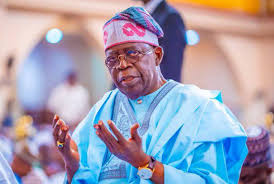
President Bola Ahmed Tinubu has postponed his scheduled trip to Johannesburg, South Africa and Luanda, Angola, as he awaits further security briefings on the kidnapped Kebbi schoolgirls and the attack on Christ Apostolic Church worshippers in Eruku, Kwara State.

A statement signed and made available to The Atlantic Bell on Thursday by Mr Bayo Onanuga,
Special Adviser to the President
(Information and Strategy), stated that in response to the request by the governor of Kwara State, President Tinubu has ordered the deployment of more security men to Eruku and the entire Ekiti Local Government Area of the state, and directed the police to go after the bandits who attacked worshippers.

President Tinubu was scheduled to leave Abuja on Wednesday to attend the 20th G20 Summit of leaders in South Africa and thereafter proceed to Luanda to attend the 7th AU-EU Summit.

Disturbed by the security breaches in Kebbi State and Monday’s attack by bandits against worshippers at Christ Apostolic Church, Eruku, President Tinubu decided to suspend his departure.

He now awaits reports from Vice President Kashim Shettima, who paid a sympathy visit to Kebbi on his behalf, as well as reports from the police and the Department of State Services regarding the attack in Kwara.

President Tinubu reiterates his directive to the security agencies to do everything possible to rescue the 24 schoolgirls, abducted by the bandits and bring the girls back home, safe.

On Tuesday night, Tinubu had directed Vice President Kashim Shettima to visit Kebbi State on Wednesday over the abduction of 25 students of Government Girls Comprehensive Secondary School, Maga, Kebbi State, and the killing of the school’s Vice-Principal.

The President, who had been briefed by the military authorities “expressed sadness over the abduction of the schoolgirls, despite intelligence warnings of a possible strike by the bandits.

The Zuru Emirate in Kebbi State was thrown into panic in the early hours of Monday after armed bandits attacked Government Girls Comprehensive Senior Secondary School, Maga in Danko/Wasagu Local Government Area and killed the Vice Principal and abducted at least 25 students.

The vice principal, Hassan Makuku, who reportedly attempted to shield students from the attackers, was killed in the attack, the Kebbi State Police Command confirmed.

The police also confirmed that 25 students were abducted from the school.

While assuring the guardians of the kidnapped schoolgirls that the government will ensure their quick release, Tinubu also commiserated with the military over the incident.

Fubara’s Industrial Revival Plan Boosts SMEs As 3,000 Access Single-Digit Loans

0

More than 3,000 small business operators in Rivers State have so far benefitted from the ₦4 billion single-digit loan scheme jointly funded by the Bank of Industry (BoI) and the Rivers State Government, the Commissioner for Commerce and Industry, Warisenibo Joe Johnson, has said.

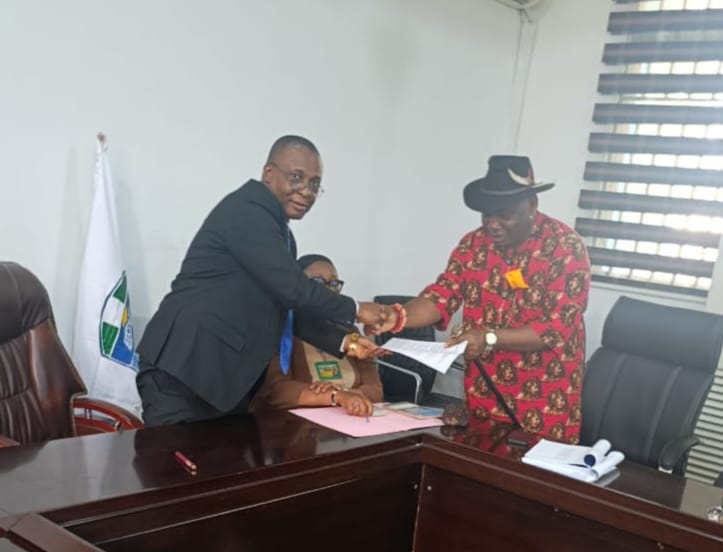
Johnson, who spoke when the Rivers State chapter of the Nigerian Association of Small and Medium Enterprises (NASME) paid him a courtesy visit in his office on Wednesday, said the intervention—managed through the Rivers State Microfinance Agency—forms a key component of Governor Siminalayi Fubara’s development agenda.

He said the governor’s 37-page blueprint prioritises the re-industrialisation of the Trans-Amadi Industrial Layout, once home to major firms such as Michelin, Rivers Vegetable Oil Company (RIVOC) and Crocodile Machetes, but which suffered decline due to years of economic downturn.


According to him, the administration is working to restore the area’s industrial vibrancy, stimulate business growth, create jobs for young people, expand opportunities in technology and skills acquisition, and boost the state’s internally generated revenue.

Earlier, Rivers NASME chairman, Elder Dogda Sakpege, described the association—founded in 1996—as a consistent advocate for the development and sustainability of small and medium-scale enterprises nationwide.
“We want to partner with your ministry to improve the fortunes of small businesses in Rivers State,” he said.

Visitation Panel Report: UNIPORT Begins Implementation, Inaugurates Board of UIL

0

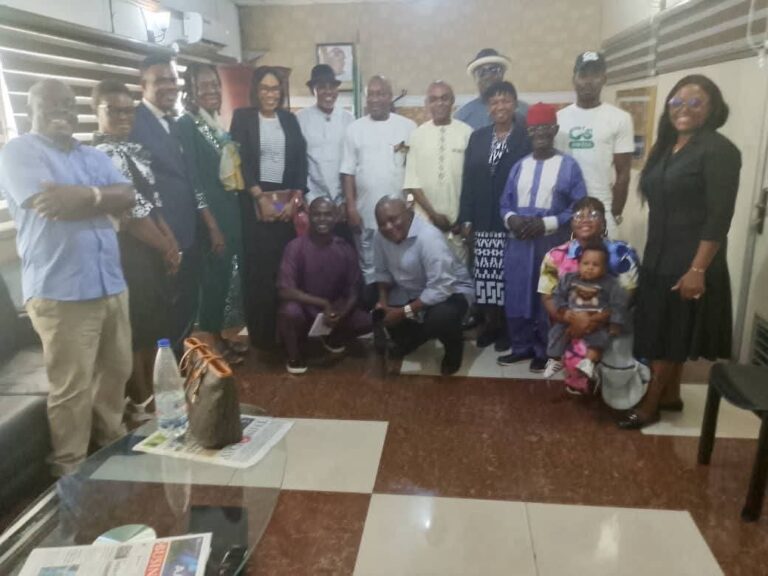
The University of Port Harcourt has begun implementing key recommendations contained in the Presidential White Paper/Visitation Panel Report and recent decisions of the 17th Governing Council. As part of this process, the University has reconstituted the Board of Uniport Investments Limited (UIL) to strengthen governance, increase revenue, and enhance institutional growth.

The Board, inaugurated by the Vice Chancellor, Professor Owunari Georgewill, has Chief (Hon.) Mene Kadilo Kabari as Chairman. Other members include the Registrar, Dr. Gloria Chindah; the Bursar, Dr. Godspower Obah; the University Librarian, Prof. Helen Emasealu; Council Representative, Prof. Glory Amadi; and the Head of Legal Unit, Barr. Inko Tariah, who will serve as Company Secretary/Legal Adviser. The Managing Director, Prof. Micah Leyira—a seasoned Professor of Accounting—will be joined by representatives from Senate and Congregation.

The Presidential White Paper emphasized the need for financial autonomy for UIL, with the University retaining strategic interest in its ownership and administration. The UIL is expected to operate as a private-sector–driven revenue generator for the University and will oversee all business concerns of the institution.

The 17th Governing Council, led by Senator Mao Ohuabunwa, recently directed the University Management to ensure full compliance with the provisions of the White Paper and to revitalize Uniport Investments Limited.

While inaugurating the Board, the Vice Chancellor dissolved all previously existing task forces to avoid operational conflicts. He charged the new Board to embrace teamwork and deliver results that meet the expectations of both Management and the Governing Council. He also assured them of the Management’s full cooperation to ensure the success of UIL.

In his response, Mene Kadilo Kabari—a former CTC Chairman of Gokana LGA in Rivers State, and member of the Uniport Governing Council—thanked the Council and Management for the confidence reposed in them. He pledged to pursue reforms that will transform the operational efficiency and revenue contribution of the University’s business ventures under the UIL Board. He also expressed confidence in the Managing Director and the calibre of Board members, noting their readiness to hit the ground running following the inauguration.

Health Minister Lauds Nigeria’s Progress In Tobacco Control At COP11 Global Meet

0

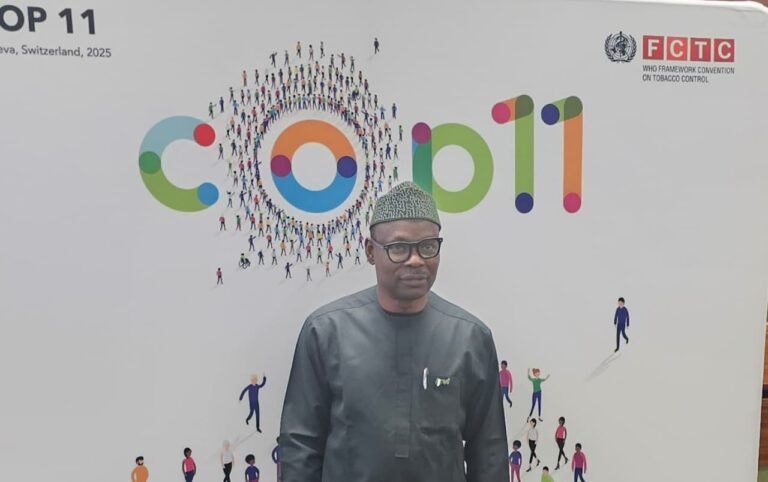
The Minister of State for Health and Social Welfare, Dr Iziaq Salako, has lauded Nigeria’s significant strides in tobacco control since 2012, noting a continued decline in adult tobacco use.
Salako made the remark at the ongoing 11th Session of the Conference of Parties (COP11) to the World Health Organisation, Framework Convention on Tobacco Control (WHO FCTC) in Geneva.
The minister’s remark was contained in a statement issued by
Mr Robert Egbe, Media and Communication Officer, Corporate Acountability and Public Participation Africa (CAPPA), in Port Harcourt, on Tuesday.
Salako attributed the progress to strengthened enforcement, updated national data, and bold regulatory actions.

He cited some of the key achievements including the completion of the second round of the Global Adult Tobacco Survey (GATS 2025), which shows a decline in daily tobacco use among adults.
He also mentioned a survey revealing that graphic health warnings had contributed to a rise in smokers considering quitting, from 26.7 per cent in 2012 to 43.3 per cent in 2025.

Salako said that the overall survey from 2012 to 2025, revealed that secondhand smoke significantly declined inside homes, government buildings, restaurants, public transportation, tertiary institutions, schools, and others.

The minister noted that Nigeria had advanced WHO FCTC Article 19, holding the tobacco industry accountable for actions undermining public health.
He cited a $110 million fine imposed on British American Tobacco Nigeria (BATN) by the Federal Competition and Consumer Protection Commission (FCCPC) for violating tobacco control laws.

Salako also highlighted new regulations from the National Film and Video Censors Board (NFVCB) prohibiting tobacco advertising, promotion, and sponsorship across media platforms, a step towards protecting young people.
He, however, acknowledged some challenges, including tobacco industry interference and the rise of new nicotine products.

He called for global collaboration and technical support to counter industry tactics.

The Acting Head of the WHO FCTC Secretariat, Mr Andrew Black, said that the ongoing 11th Session of the Conference of Parties to the WHO Framework Convention on Tobacco Control presented an opportunity for parties to consider several forward-looking measures.

According to him, COP11 provides an opportunity for parties to consider forward-looking tobacco control measures, environmental protection, liability, and measures to prevent and reduce tobacco consumption, nicotine addiction, and exposure to tobacco smoke.

Black described the conference the theme of the ;”20 years of change – uniting generations for a tobacco-free future,” as apt.
He noted that it would be followed by the fourth meeting of the Parties to the Protocol to Eliminate Illicit Trade in Tobacco Products from November 24-26