Home Blog Page 111

Court Sentences Nnamdi Kanu To Life Imprisonment

0

The Federal High Court in Abuja on Thursday, sentenced Nnamdi Kanu, leader of the proscribed Indigenous People of Biafra (IPOB), to life imprisonment after he was found guilty of the terrorism offences.

Justice James Omotosho, who earlier convicted Kanu in all the seven counts preferred against him, held that the Federal Government had been able to prove its case beyond reasonable doubt against Kanu in the terrorism offences.

Justice Omotosho consequently sentenced the IPOB leader to life imprisonment in counts one, four, five and six, instead of death sentence penalty.

According to the judge, life is sacred to God.

The judge, who sentenced Kanu to a 20-year jail term in count three, however, committed him to three years imprisonment in count seven.

Surge In Cholera, Mpox, Marburg Worsening Across Continent -Africa CDC

0

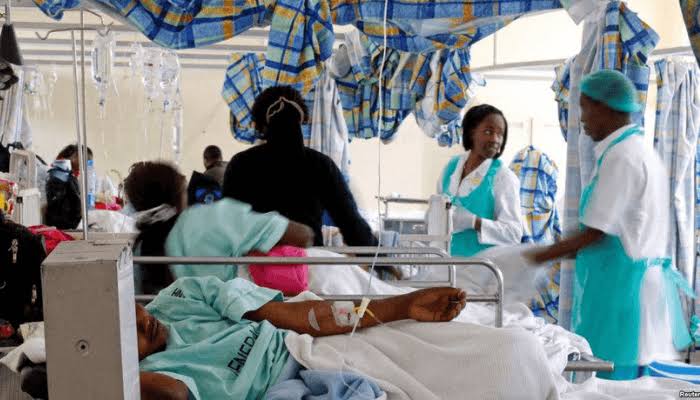
The Africa Centres for Disease Control and Prevention (Africa CDC) has warned of surge in outbreaks of cholera, Mpox, Marburg across the continent.

The centre also warned of threat surge in other public health driven by fragile water systems, poor sanitation, and funding gaps.

Prof. Yap Boum, Incident Manager for Health Emergencies at Africa CDC, gave the warning on Thursday during the continent’s virtual weekly press briefing.

Boum said that since the COVID-19 pandemic in 2020, Africa had been pushing the new Africa health security and sovereignty agenda.

He announced that The Lancet had published the Africa Health Security and Sovereignty Agenda, marking a shift from the earlier new public health order.

According to him, the new strategy is built on five pillars of a more inclusive continental health architecture.

“These pillars are prevention, preparedness and emergency response, digital transformation, local manufacturing of health products; and domestic, innovative and blended health financing.”

He said Africa could not achieve universal health coverage or pandemic preparedness without the ability to finance, produce, and govern its own health systems and countermeasures.

He also warned that the Antimicrobial Resistant (AMR) was already causing more than 27 deaths per 100,000 people in Africa, with the real toll likely far higher.

According to him, this is even as the world marks the AMR week.

“Only 1.3 per cent of laboratories in the continent have bacteriology capacity; meaning most antibiotics are prescribed without laboratory confirmation, driving misuse and resistance.”

Boum added that the Mpox cases continued to decline continent-wide, noting that Ghana, Kenya, Liberia and Guinea remained areas of concern.

“Ghana has shown steady improvement over the past three weeks, with 72 per cent of cases concentrated in Greater Accra and Western Region, where surveillance, RCC interventions and vaccination efforts are being intensified.

“Ghana’s 25 per cent test positivity rate indicates active case-finding and tracing.

“Vaccination rollout continues with nearly one million doses delivered across 16 countries, and 80 per cent of countries having used more than half of their vaccine stocks.

“Liberia will receive 20,000 doses next week, while Kenya is scheduled to receive another consignment on Dec. 10,” he said

The Africa CDC incident manager, further said that cholera remained Africa’s most urgent outbreak, with three times more cases and deaths than recorded three years ago.

According to him, South Sudan, DRC, Angola and Nigeria now account for 90 per cent of all cholera cases in the continent.

Giving country-by-country highlights, he said Angola had 152 affected municipalities, a case fatality rate of 2.6 per cent, and a reduction in weekly cases from 606 to 500.

He noted that 44 per cent of Angola’s population still lacked access to safe drinking water, prompting Africa CDC to warn that stable water and sanitation investments were urgently needed.

He said that in the DRC, the country had reported 7,000 cases in just six weeks in spite of a downward trend, making it one of the highest cholera burdens on the continent.

He added that Burundi, continued to record a very low case fatality rate of 0.4 per cent, with cases declining, although fragile water systems posed a major risk.

“Kenya is battling both mpox and cholera, with a case fatality rate of about four per cent, above acceptable thresholds, while hotspots remain Narok, Migori and peri-urban areas of Nairobi.

“Ongoing interventions include WASH support, clinical training and water distribution.

“Cameroon has also reported new cholera cases in the Far North region bordering Nigeria, where difficult terrain is complicating access, though authorities have activated rapid response systems.

“Ethiopia continues to respond to an outbreak of marburg virus disease in Jinka, South Ethiopia, where four cases have been confirmed and three deaths recorded, a 75 per cent fatality rate

“Rapid response teams are deployed, and Africa CDC is supporting surveillance and cross-border preparedness in Kenya and South Sudan,” he revealed.

NACA Hails UCTH Oxygen Plant As South-South’s Most Comprehensive

0

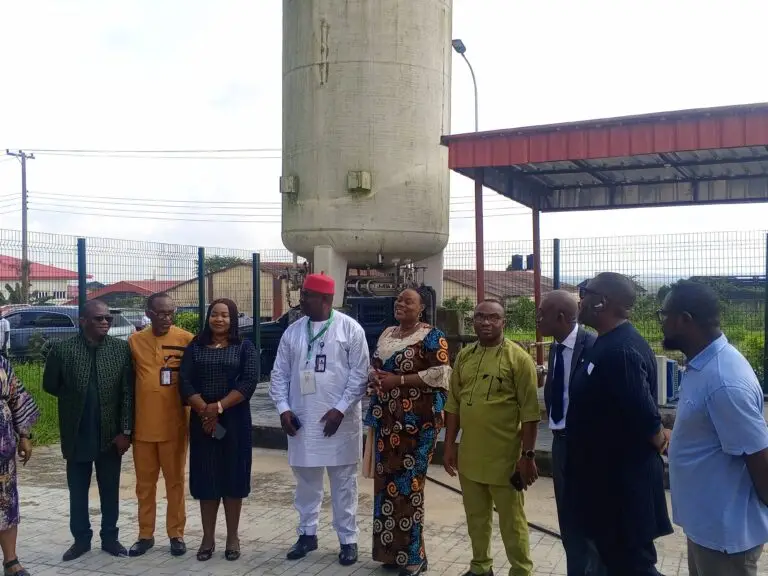
The National Agency for the Control of AIDS (NACA) has described the 10,000-litre oxygen plant donated to the University of Calabar Teaching Hospital (UCTH) as the most comprehensive in the South-South region.
Dr Temilope Ilori, NACA’s Director-General, made the disclosure on Thursday during an inspection of the facility in Calabar, donated under the Global Fund COVID-19 RM grant facilitated by the Federal Government.

She explained that the Global Fund C19 RM grant, managed by NACA, aimed to strengthen Nigeria’s health systems after COVID-19 through provision of essential medical infrastructure and equipment.

“UCTH is a major beneficiary, receiving a 10,000-litre oxygen plant, more than 400 cylinders, humidifiers, concentrators, and pulse oximeters to support emergency and critical care services,” she said.

Ilori said the agency was satisfied that the equipment was being effectively used for public health services, fulfilling the intended purpose of the intervention.

She added that the grant also supported fully functional PSA oxygen plants in Ogoja, currently delivering services to surrounding communities, with another in Ikom yet to be inaugurated.

While stressing the need for deliberate efforts to sustain the facilities, Ilori said the Global Fund secured five-year warranty and maintenance contracts, including spare parts support for the newly installed oxygen plants.

“Cross River has received one of the most comprehensive oxygen system upgrades in the South-South, valued at about 800,000 dollars.

“The strengthened infrastructure at UCTH and expanded oxygen capacity in Ogoja and Ikom ensures safer, more reliable oxygen therapy services,” she noted.

She emphasised that collaboration among the Federal Ministry of Health, NACA, and the Cross River Government was critical for optimal use of the investments.

Ilori, however, added that sustained success would require strong state ownership, skilled manpower, and continuous operational and maintenance support.

Responding, UCTH Chief Medical Director, Prof. Ikpeme Ikpeme, said the hospital operated the plant under a revolving fund model to guarantee sustainability.

He explained that revenue from the plant was paid into a TSA sub-account for maintenance, servicing, and oxygen refilling as required.

Ikpeme said the plant currently met the hospital’s oxygen needs before supplying other facilities, a measure necessary due to high demand.

He described UCTH as the largest functioning health institution in Cross River, with substantial oxygen requirements from its ICU, Pediatric ICU, and Special Care Unit.

The CMD added that the hospital’s new Accident and Emergency complex would expand capacity with additional ICUs, neonatal units, trauma theatres, and emergency beds.

“Two years ago, oxygen shortages ended with the plant’s installation, marking a turning point in critical care delivery.

“The quality of oxygen produced is excellent and superior to many PSA machines in the region,” he said.

He further noted that many hospitals no longer relied on uncertified oxygen sources, adding that UCTH and other oxygen plants in the state now supplied reliable, high-grade medical oxygen.

Cargo Tracking system Will Save Nigeria N900bn In Revenue Leakages -Centre

0

The Sea Empowerment and Research Centre (SEREC) says implementing the International Cargo Tracking Note (ICTN) will save Nigeria an estimated N900 billion annually in revenue leakages.

The centre made the disclosure in a document on its policy commentary on `The Urgent Imperative of Implementing the ICTN in Nigeria` issued to newsmen by its Head of Research, Dr Eugene Nweke, on Thursday in Abuja.

Nweke said that when implemented, it could cut cargo clearance time by 25 to 35 per cent and curb trade malpractices by 40 per cent within 18 months, boosting Nigeria’s competitiveness and credibility in the regional maritime economy.

The director of research described ICTN as a trade facilitation system aimed at improving transparency, security and efficiency in Nigeria’s ports.

According to him, it enables pre-arrival processing of cargo data for faster clearance, reduces demurrage and documentation time, curbs illicit trade, closes revenue leakages and enhances Nigeria’s competitiveness in global maritime trade.

The Nigerian Shippers’ Council (NSC), under the supervision of the Federal Ministry of Marine and Blue Economy, is the lead agency implementing the ICTN.

The NSC would do it in collaboration with the Nigeria Customs Service (NCS), the Nigerian Ports Authority (NPA) and the Nigerian Maritime Administration and Safety Agency (NIMASA).

He expressed concern that in spite of the Federal Executive Council approval of the implementation of the ICTN in 2023, it was yet to be implemented.

“Without this pre-verification system, Nigeria’s trade regulators would continue to operate in a reactive intelligence model, allowing room for cargo concealment, under-declaration and falsified manifests.

“Experts estimated that the delay in implementation could lead to an estimated annual loss from non-standardised cargo declarations and transshipment concealment between N800 billion and N1.2 trillion.

“Ghana, Senegal, Ivory Coast, and Angola recorded an 18 to 22 per cent rise in customs revenue and a 30 per cent drop in port clearance delays within two years of adopting ICTN.

“The countries also saw a 40 per cent fall in false declarations during the same period.

“The delayed implementation could also affect the smooth implementation of the National Single Window (NSW) projected for the first quarter of 2026 and the modernisation drive of the Nigerian Customs Service,” he explained.

Nweke added that with customs modernisation advancing rapidly and the NSC approaching rollout, Nigeria must not operationalise these systems without ICTN integration or risk reinforcing data fragmentation.

“Government must recognise ICTN not as a competing system, but as a strategic enabler of all other reforms.

“The ICTN should serve as the data feeder layer into the National Single Window, Customs modernisation and port efficiency frameworks,“ he stated.

The director of research noted that although various digital modernisation efforts were underway in the maritime sector, the ICTN remained the key missing link needed to fully integrate trade intelligence across the system.

He emphasised that the continued delay in ICTN deployment poses critical national risks, including revenue leakage, national security exposure, reputational deficit and a fragmented digital ecosystem.

“The absence of verifiable pre-shipment data weakens Nigeria’s ability to detect high-risk or illicit consignments (arms, drugs, waste cargo, etc.) before arrival.

“Nigeria remains among the few major trading nations in West and Central Africa without an operational electronic cargo note system, affecting investor confidence in its maritime sector.

“It has also impacted the country’s compliance ratings under the World Customs Organisation (WCO) SAFE Framework of Standards and the International Maritime Organisation (IMO) International Ship and Port Facility Security (ISPS) guidelines,“ he added.

Sophos Introduces Advanced Cyber Intelligence Into Microsoft Security Copilot

0

Sophos, a global leader of innovative security solutions for defeating cyberattacks on Thursday announced its new integrations that connected Sophos Intelix, its robust repository of cyber threat intelligence, with Microsoft Security Copilot and Microsoft 365 Copilot.

The Chief Scientific Research Officer, Sophos, Simon Reed, said in a statement that organisations could access Sophos threat intelligence within Microsoft’s AI-powered environments.

Reed said that Sophos interlix helped organisations strengthen their defenses and respond to threats more effectively.

He said that every day, Sophos processed more than 223 terabytes of telemetry in its Sophos Central platform, generating over 34 milliom detections and automatically blocking more than 11 million threats.

According to him, this global scale of customer insight continuously informs Sophos product and services, and fuels the intelligence within Sophos Intelix, now accessible for free to users of Microsoft Security Copilot and Microsoft 365 Copilot.

“This milestone underscores Sophos’ mission to empower every organisation with resilient, intelligent cybersecurity and to democratise cybersecurity for organisations of all sizes.

“The milestone also meets organisations wherever they are in their cybersecurity journey, within the Microsoft Copilot ecosystem.

“The Microsoft Copilot ecosystem is transforming how people interact with technology by bringing natural language interfaces into the core of its Copilot ecosystem,” Simon Reed said.

The Corporate Vice President, Microsoft Security, Vasu Jakkal, said that the future of SOC productivity was moving beyond the graphical user interfaces relied on since the 1980s, toward a new paradigm of human–Artificial Intelligence collaboration.

Jakkal said that AI assistants powered by expansive datasets, deep threat intelligence, and advanced systems are fundamentally reshaping how analysts work.

He said that by making Sophos threat intelligence available through both Microsoft Security Copilot and Microsoft 365 Copilot, it was giving defenders faster, more natural access to insights to help them respond to threats with speed, precision, and confidence.

“AI is the force multiplier for defenders, and when partners like Sophos bring their agentic innovation into the Microsoft Copilot ecosystem, the impact is exponential.

“Together, we are not just building tools, we are creating a new era of intelligent, collaborative cyber defence,” he said.

The vice-president said that Sophos Intelix provided advanced threat context and enrichment capabilities directly into Microsoft Security Copilot, Microsoft’s generative AI assistant for Security Operation Center (SOC) and IT teams.

He added that security copilot connected data across Microsoft Defender, Sentinel, Intune, Entra, and Purview.

Jakkal said it allowed analysts and expert users to query and investigate threats using natural language enriched with Sophos’ insights from protecting more than 600,000 organisations.

According to him, these teams are often protecting organisations 24 hrs, 365 days and require the latest intelligence at their fingertips at all times to protect their organisation.

Jakkal said that at the same time, attackers were accelerating: the Sophos Active Adversary Report 2025 found that data exfiltration begins in just three days on average.

He said with a median of only 2.7 hours between exfiltration and detection, and attackers can reach active directory in as little as 11hrs.

According to him, these findings underscore the urgent need for defenders to adopt faster, more effective ways of analysing and investigating alerts.

Jackal said that one could learn more about Sophos Intelix integrations for Microsoft Security Copilot, Microsoft 365 Copilot, Microsoft Copilot Studio for creators, and Microsoft Agent 365 by going to https://www.sophos.com/en-us/intelix/copilot.

Sophos is a cybersecurity leader defending 600,000 organisations globally with an AI-driven platform and expert-led services.

SWAN Congratulates Anambra Beach Soccer Team On League Victory

0

The Sports Writers Association of Nigeria (SWAN), Anambra Chapter, has congratulated the Anambra Beach Soccer “Warriors” for winning the 2025 Nigeria Beach Soccer League title.

SWAN, in a statement signed by its Chairman, Mr Chimezie Anaso, and Secretary, Mr Uche Ndeke, said the team’s performance reflected the strong, resilient and determined spirit of Anambra people.

It recalled that the Anambra Beach Soccer team defeated reigning national and African champions, Kebbi Beach Soccer Club, to clinch the national title at the competition held in Abuja on November 9.

The association commended the Anambra Beach Soccer Association (ABSA), led by Prof. Victor Madubuko, for launching the state into the mainstream of beach soccer.

It noted that under Madubuko’s leadership, ABSA secured the highest national honour within three years of its establishment.

It said that the achievement justified the confidence reposed in the Madubuko-led ABSA.

“It also earned the association an award as the Fastest Growing Sports Association in Anambra during the 2024 SWAN Week.

“This recognition further underscores the association’s rapid growth and remarkable contributions to beach soccer development in the state.

“We are excited to associate with your victory, which has placed Anambra convincingly on the map as a new powerhouse in African beach soccer within three years of introducing the game in the state.

“ABSA showed it meant business when it built a standard beach soccer pitch and successfully hosted national competitions on two occasions within the period.

“SWAN Anambra expresses appreciation to your dedication in creating opportunities for youth engagement and advancing sports development in the state,” it said.

Riyadh 2025: Team Nigeria Wins Gold In Wrestling, Athletics

0

Team Nigeria has increased its Gold medal tally at the ongoing 6th Islamic Solidarity Games in Riyadh after winning two Gold medals in Wrestling and the women’s 4 x 100m on Wednesday night.

This is contained in a statement on Thursday by Kola Daniel, the Special Adviser to the Director-General of the National Sports Commission(NSC), Bukola Olapade.

In the 53kg freestyle Wrestling final Christiana Ogunsanya defeated her Uzbekistani opponent, Shokhida Akhmedova 11-1 in a very convincing version to claim the Gold medal.

Nigeria’s exciting young quartet of Bada Toyin, Ezechukwu Miracle, Omokwe Maria and Nweke Cynthia, later crowned the night with an excellent display to win Gold in the Women’s 4 x 100m final in a time of 44.27 seconds.

They condemned Bahrain to the silver medal with a time of 44.47s while the Gambia finished third with a time of 45.05s.

Nigeria also won an additional two silver medals and three bronze medals.

In the Men’s Javelin throw, Kure Adams won bronze while in the Men’s 400m, Badmus Atanda claimed a bronze medal.

In the women’s 400m, Patience George also finished second behind her Bahrainian opponent, while in the men’s 4x100m, the team of John Caleb, Chidera Ezeakor, Ezekiel Asuquo and James Emmanuel brought the country home in 3rd.

In Wrestling, Miesinnei Genesis, lost her Gold medal match in the Women’s 50kg freestyle final to Aktenge Keunimjaeva of Uzbekistan 5-1 to clinch the silver medal.

Olopade praised the performance of the girls and encouraged them to stay focused and disciplined ahead of other major international competitions.

“I am truly proud of both of you and just know that President Bola Ahmed Tinubu, will continue to expose Nigerian athletes to the best international competitions both home and abroad for podium success”.

“Your performance here means a lot to us and the NSC under the Chairmanship of Shehu Dikko is determined to ensure Nigeria continues to enjoy the feel good factor of Sports”, he said.

Team Nigeria has now won a total of eight Gold, 10 bronze and 7 bronze medals with more medals to come in Para athletics and Para-poweifting.

South-South Stakeholders, Senate Committee Demand Decentralised Approach To Curb Regional Insecurity

Stakeholders in the South-South region, in collaboration with the Senate Ad Hoc Committee on National Security, have strongly advocated for a decentralised, grassroots-focused strategy to address the region’s escalating security challenges.

This call for a paradigm shift was made on Thursday, November 28, 2025, during the South-South Zonal Public Hearing on National Security held in Port Harcourt, Rivers State.

Convened under the theme “The Way Forward to Tackling National Security Issues at the Local Level,” the summit assembled executive, legislative, and traditional institutions to diagnose threats ranging from crude oil theft to communal clashes.

Speaking on behalf of Rivers State Governor Sir Siminalayi Fubara, the Secretary to the State Government, Dr. Benebo Anabraba, urged the federal government to move beyond a centralised security structure.

He argued that a “sincerely driven” approach must include the voices of local communities, describing the event as a vital feedback mechanism from the people to policymakers.

Dr. Anabraba highlighted the region’s specific vulnerabilities, asking the Senate to pay special attention to the peculiar natural environment of the coastal region, which serves as the gateway to the Gulf of Guinea.

While acknowledging the state’s collaboration with federal agencies, including the provision of operational vehicles, gunboats, and logistics, he emphasised that military hardware alone is insufficient.

He noted that the administration is prioritising youth empowerment to curb the economic desperation that often fuels piracy and illegal bunkering, asserting that security is a shared responsibility rather than the sole business of the government.

Senator Abba Moro, Chairman of the Senate Ad Hoc Committee on Security, described the current security situation as “hyper-headed,” citing threats that span environmental sabotage, banditry, and farmer-herder conflicts.

Senator Moro admitted that these challenges are deeply rooted in weak governance structures, economic deprivation, and historic grievances that have not been sufficiently addressed.

He stated that the Senate recognises that no security architecture can succeed without a clear understanding of local dynamics and promised that the committee’s findings would form the basis of legislative interventions and policy reforms.

Adding the voice of the traditional institution, the Chairman of the Rivers State Council of Traditional Rulers, Eze Chike Worlu Wodo, called for a strengthening of trust between security agencies and local residents.

He identified collaborative intelligence sharing as the key to a crime-free community, urging leaders to work together to build safer societies.

This sentiment was echoed by religious leaders, including the Secretary general of the Christian Association of Nigeria (South-South), Bishop Lazarus Azia and Alhaji Nasir Awhelebe Uhor of the Rivers State Council for Islamic Affairs.

They emphasised the need for faith-based organisations to be properly integrated into the security architecture to help enlighten citizens on their civic roles.

Speaking for the Nigeria Police Force, ACP Okoro Iyke reiterated that while the force remains committed to its duties, it requires robust collaboration and information sharing from all stakeholders to effectively curb criminality.

The committee is expected to compile all the submissions into a comprehensive report for the 10th Senate

Fubara Extols Former President Jonathan On 68th Birthday

0

Rivers State Governor, Sir Siminalayi Fubara, has extended warm felicitations to former President, Dr Goodluck Jonathan on his 68th birthday today, November 20, 2025.

In a statement signed by the Chief Press Secretary to the Governor, Nelson Chukwudi, Governor Fubara, in a statement on behalf of his family, Government and the good people of Rivers State, praised Dr Jonathan for his leadership qualities, commitment to democracy, peace, unity and development, noting that his patriotic and selfless service to the nation, Africa, and the world have been truly exemplary.

“On behalf of the Government and people of Rivers State, I warmly congratulate His Excellency, Dr Goodluck Jonathan, on his birthday today.

“We eulogize his remarkable achievements and contributions to our nation’s development, particularly during his tenure as president. His commitment to democracy, peace, unity, and stability has earned him respect and global admiration.”

Governor Fubara wished the former President good health, sound mind, and many more years of fruitful living to continue his service to humanity. He also prayed God to continue to inspire him with wisdom and dedication to public service.

Google Lifts Africa Commitment With AI Skilling Blueprint, $2.25m Funding

0

Google on Wednesday announced that it had stepped up its commitment to closing the skills gap on the continent by launching the Artificial Intelligence (AI) Skilling Blueprint for Africa.

In a statement made available in Lagos, Nigeria, the organisation said that the Blueprint was a comprehensive policy roadmap to help governments build a future-proof, AI-ready workforce.

The blueprint, it said, focused on developing three critical cohorts: AI Learners, AI Implementers, and AI Innovators.

The organisation noted that the launch was part of a broader set of Africa-focused initiatives, which included a $2.25 million commitment to fund expert organisations building trustworthy public data sets for AI.

It said that the organisations are building public data sets in partnership with UN Economic Commission for Africa, UN Department of Economic and Social Affairs (UN DESA) and PARIS21 to modernise national statistical infrastructure.

“New organisations like FATE Foundation and the African Institute for Mathematical Sciences (AIMS) are receiving support from the $7.5M Google.org Skilling Fund to embed advanced AI curricula into universities across Nigeria, Ghana, Kenya, and South Africa,” Google said.

Google noted that with Africa’s immense potential for AI-driven economic growth, and 55% of firms reporting a need for AI talent—these initiatives provide a clear roadmap and essential investment to unlock the continent’s opportunity.

Doron Avni, Google’s Vice President , Government Affairs and Public Policy, said: “Africa’s AI moment is now, and Google is committed to being a partner for the long haul,”

“The AI Skilling Blueprint provides a clear roadmap for governments to build the workforce of the future.
“By also investing in AI-ready data and expert local organisations and partners, we are helping build the interconnected ecosystem needed for a prosperous, AI-driven future for the continent.”
According to the organisation, the AI Skilling Blueprint for Africa provides governments with a comprehensive, step-by-step guide to formulate national skilling strategies.

It said that the blueprint focused on developing three critical cohorts: AI Learners, who will gain foundational AI literacy; AI Implementers, professionals upskilled to integrate AI tools into their work.

Google said the third cohort are the AI Innovators, which are deep technical experts dedicated to building the next generation of AI solutions.

It stressed that its $2.25 million contribution to organisations would help national statistical offices modernise their infrastructure and empower decision-makers with reliable data.

Google explained that the data are needed to address challenges from food security to economic growth.

“For Africa to drive sustainable development, evidence-based policymaking is indispensable. This requires accessible, reliable, and AI-ready data.

“This effort is a crucial step forward. By building a Regional Data Commons, we can empower African institutions with the data and tools they need to make strategic choices that will drive growth and prosperity,” said Claver Gatete, Executive Secretary of the UN Economic Commission for Africa.

Google further announced that FATE Foundation and the African Institute for Mathematical Sciences (AIMS) are among the first set of expert social impact organisations to receive funding to execute on projects consistent with its skilling mission.

It said the funding from its $7.5 million Google.org Skilling Fund commitment, would enable the two organisations embed advanced AI curricula into universities.

Google added that two other expert social impact organisations – JA Africa and CyberSafe Foundation would advance crucial work in online safety and digital literacy.

“We are incredibly proud to partner with the African Institute of Management Sciences on the Advanced AI UpSkilling Project, with support from Google.org.

“This groundbreaking initiative is a direct response to the urgent need for deep AI competencies in Africa, empowering tertiary institutions, lecturers, and students in Nigeria, Ghana, Kenya, and South Africa.

Responding, Adenike Adeyemi, Executive Director, FATE Foundation said: “This strategic support aligns perfectly with FATE Foundation’s mission to foster innovation and sustainable economic growth across the continent, ensuring Africa is fully equipped to lead in the global technological future.”

Also, Simi Nwogugu, President and CEO, Junior Achievement Africa (JA), said: “We live in an age defined by rapid technological change and our mission at JA Africa is to ensure that African youth are not left behind.

“However, even as we engage our youth in more digital programmes and encourage AI literacy, we are fully aware of the harmful effects of unchecked online exposure and, therefore, invest equally in protecting their data, physical safety and mental wellbeing.

“Through this support from Google.org, we will give young people the tools, knowledge, and confidence they need to navigate the digital world safely and responsibly.”