

Home Blog Page 108

Insecurity: Akpabio Tasks DIA On Deepening Global Partnerships

0

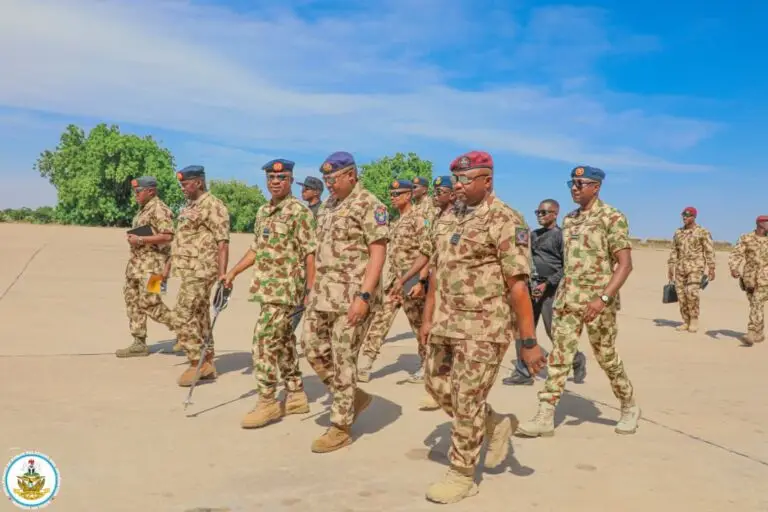
Senate President Godswill Akpabio has urged the Defence Intelligence Agency (DIA) to deepen bilateral and multilateral partnerships to strengthen Nigeria’s adaptive intelligence framework to tackle evolving security threats.

Akpabio made the call in Abuja on Monday at the opening of the Chief of Defence Intelligence Annual Conference 2025, with theme: “The Role of Multi-Source Intelligence Innovation in National Security.”

The Senate President was represented by the Chairman, Senate Committee on Defence, Sen. Ahmad Lawan.

He said global security realities had made it imperative for intelligence institutions to strengthen cooperation with allies, share timely information and leverage emerging technologies to counter complex threats.

According to him, national security agencies across the world now rely on multi-source intelligence platforms such as human intelligence, signals intelligence, open-source data, geospatial tools and cyber intelligence to generate actionable insights and anticipate threats.

Akpabio said the DIA had remained central to Nigeria’s efforts to build a more responsive and resilient intelligence system through data integration, interagency collaboration and technological adaptation.

He commended the agency for expanding the scope of the conference to include joint presentations from Defence Advisers and Attachés as well as State Office Coordinators, describing the approach as strategic in merging domestic and international intelligence perspectives.

“As threats evolve, so must our capacity to collect, process and interpret information across multiple domains in real time,” he said.

The Senate President emphasised that the Defence Attaché System remains critical to strengthening defence diplomacy, while state intelligence offices provide ground-level insights needed to counter emerging threats.

He urged Defence Attachés to intensify diplomatic engagements with host nations, while calling on state coordinators to improve collaboration with local security agencies to enhance intelligence collection and utilisation.

“These partnerships are essential in building a coherent and adaptive intelligence framework capable of anticipating and countering threats,” he said.

Akpabio also encouraged participants to explore the potential of artificial intelligence, machine learning and advanced data analytics in modern intelligence operations, noting that innovation was essential to keeping pace with adversaries who increasingly exploit technology.

He hailed the Chief of Defence Intelligence, Lt.-Gen. Emmanuel Undiandeye, for his foresight and commitment to reforming Nigeria’s intelligence system, and applauded the contributions of Defence Advisers, Attachés and state intelligence personnel.

“Our success in defending Nigeria depends on our ability to anticipate threats, connect information across domains and act decisively on informed insights,” he added.
Insecurity: PDP Asks Tinubu To Resign If Overwhelmed …Rejects Mass Closure Of Schools

0

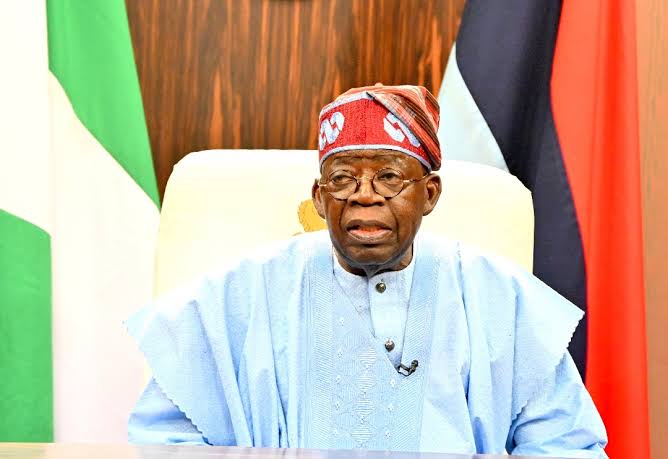
The Peoples Democratic Party (PDP) has criticised the recent closure of schools by the federal government and some state governments in response to escalating kidnappings, warning that such actions could inadvertently advance the objectives of terrorists.

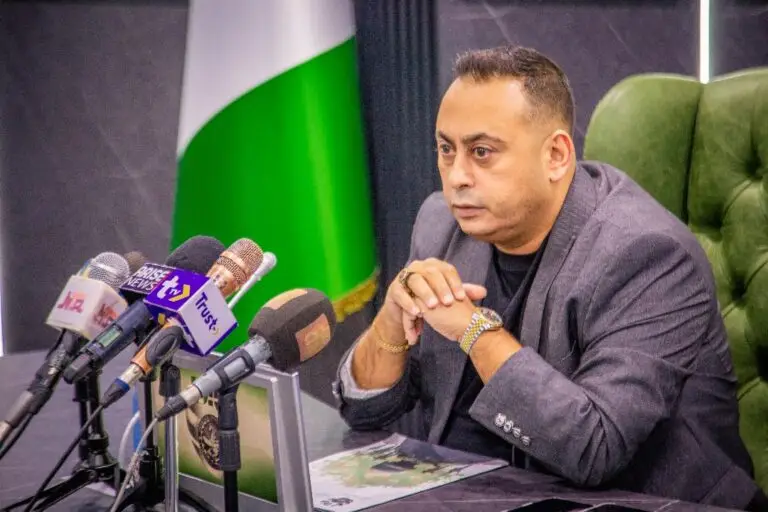
Speaking at a press conference in Abuja on Sunday, the National Publicity Secretary of the party, Comrade Ini Ememobong, said: “If the schools are closed, the goal of the terrorists would have been inadvertently achieved.”

He urged the federal government to “develop a comprehensive plan to combat the issue, instead of resorting to a simplistic approach of closing schools in a bid to prevent further kidnappings and to score cheap political points.”

Ememobong said the government must prioritise the funding and implementation of the National Policy on Safety, Security and Violence-Free Schools, which he noted is anchored on community intelligence and rapid response systems capable of anticipating and tackling attacks.

According to him, ensuring safety in schools has become imperative because insecurity poses a major “disincentivisation for education in the country, especially in Northern Nigeria.”

He expressed the party’s concern that shutting down schools would worsen the already dire educational situation in the region, citing UNICEF data indicating that Northern Nigeria accounts for the majority of the country’s 18.3 million out-of-school children—10.2 million at the primary level and 8.1 million at the secondary level.

Ememobong said: “This data not only paints a grim picture but also mirrors the exact situation in Nigeria. The series of attacks and kidnappings in different states within a week is indicative of the alarming insecurity that has become the contemporary lived experience and new reality of Nigerians under the APC-led Bola Tinubu government.”

He criticised what he described as the federal authorities’ inadequate response to recent abductions.

“More troubling is the fact that when these unfortunate incidents happen, the administration’s response is usually lacklustre and unempathetic,” he said.
“For example, instead of the President visiting Kebbi and Niger States to meet and sympathise with the parents of the children in captivity and to address security personnel there, he merely directed the Minister of State for Defence to relocate to Kebbi.”

He continued: “A juxtaposition of the contingents sent to the US Congress and the G-20 meeting with Matawalle’s lone envoy exposes the levity with which the Presidency treats this matter. This reaction is most insensitive and dismissive of the gravity of the problem by the APC-led federal government.”

The PDP reiterated its position that safeguarding lives and property is the foremost responsibility of government. Ememobong said: “We again remind the President, Asiwaju Bola Tinubu, and the entire APC-led administration that the security of lives and property is the primary function of any government. At any time a government is unwilling, unable, or incapable of executing this primary role, such a government must either ask for help—locally or internationally—or honourably resign if it is sincere and responsible.”

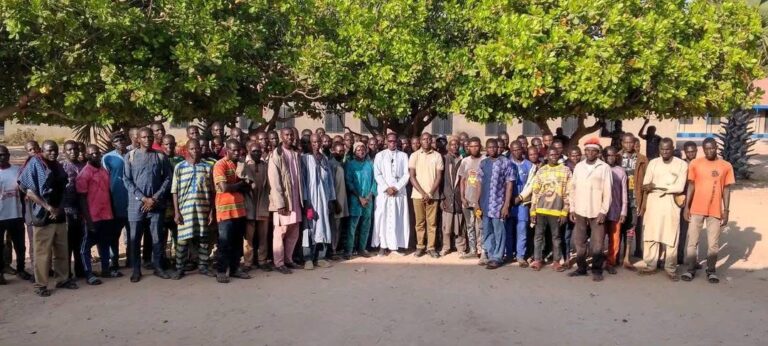
50 Abducted Niger Pupils Escape, Reunite With Families, Says Catholic Bishop

0

It is now known that fifty of the abducted school pupils of St. Mary Private Primary and Secondary Schools, Niger State, have escaped from their captors and reunited with their parents.

Disclosing this on Sunday, the Niger State Chairman of the Christian Association of Nigeria and Bishop of the Kontagora Diocese, Most Rev. Bulus Yohanna, in a statement issued by his media aide, Daniel Atori, stated that they discovered the development after visiting the parents of the children.

He explained that the school currently has 236 pupils in captivity, including three children belonging to staff members and 14 secondary students, making a total of 253 children and 12 staff members still held by the bandits.

“This is to notify the public that as of Sunday, 23rd November 2025, we received some good news as fifty (50) pupils escaped and have reunited with their parents.

“This comes just a few days after suspected terrorists attacked and abducted 303 pupils and students.

“The pupils escaped between Friday and Saturday and have reunited with their parents, as they could not return to the school after escaping. We were able to ascertain this when we contacted and visited some parents,” the statement read.

Yohanna added that in the primary section, out of the total number of 430 pupils enrolled, 377 are boarders while the remaining 53 are day students.

“Currently, aside from the 50 pupils who escaped and returned home, we have 141 pupils who were not abducted.

“As it stands now, we have 236 pupils, another three children belonging to staff, and 14 secondary school students — making a total of 253 children — in addition to 12 members of staff with the abductors,” he said.

While expressing relief at the return of the 50 children, the CAN chairman appealed for continued prayers for those still held.

“As much as we receive the return of these 50 children with some sigh of relief, I urge everyone to continue in prayers for the rescue and safe return of the remaining victims.

“I call on everyone to remain calm and prayerful. We will continue to actively collaborate with security operatives, community leaders, government, and relevant authorities for the safe and quick return of all abductees.

“May the Lord grant quick release to those abducted and continue to protect His people from all dangers,” Yohanna said.

The state police command is yet to speak on the development.

A total of 315 persons — including pupils, students and teachers — were abducted from St. Mary Private Primary and Secondary Schools, Papiri, in Agwara Local Government Area on Friday.

The incident prompted the state governor, Mohammed Bago, to order the closure of schools across the state on Saturday.

No Plans For Forced Recruitment Into Military, DHQ Clarifies

The Defence Headquarters (DHQ) has dismissed reports and videos circulating on social media on alleged forceful recruitment of young Nigerians from the age of 18 years into the military.

It described the report which was attributed to the Chief of Defence Staff (CDS) General Olufemi Oluyede, as “fake” and “clearly intended” to defame the character of the CDS and portray the military in bad light.

In a statement by the Director of Defence Information, Brig.-Gen. Samaila Uba, yesterday, the military high command stated that the Armed Forces remains a “noble profession with thousands of patriotic Nigerians ever ready to willingly join its ranks as attested to during various recruitment exercises into the three arms of the Nigerian military.”

“For the avoidance of doubt, let it be on record that the purported statement was never made by the Chief of Defence Staff, any of the Service Chiefs and indeed by any member of the Armed Forces of Nigeria,” the statement said.

The DHQ emphasized the need for individuals to exercise caution when sharing statements and videos to avoid spreading fake news, urging the public to verify the source and authenticity of information before sharing.

“It is therefore important for all to note that all statements and releases from the Chief of Defence Staff are to be sourced from verified Defence Headquarter’s designated spokespersons and its official social media handles,” it said

The military high command urged the public to disregard the “fake” report and video in their entirety.

Nigeria And History Of Mass Abductions

0

A Christian group on November 22, 2025 said 315 students and teachers were seized a day earlier in Nigeria’s second mass school abduction in a week, as security fears mounted in Africa’s most populous nation. The early November 21, 2025 raid on St Mary’s co-education school in Niger state in central Nigeria came after gunmen on November 17, 2025 stormed a secondary school in neighbouring Kebbi state, abducting 25 girls.

Nigerian gunmen have kidnapped more than 300 students and teachers from a school in north central Niger state in one of the country’s largest mass abductions.

Since Islamist militants kidnapped nearly 300 schoolgirls from Chibok town more than a decade ago, Nigeria has struggled with a series of mass kidnappings, mostly carried out by criminal gangs looking for ransom payments.

Often, gunmen attack remote boarding schools where they know a lack of security presence will make for soft targets. Most victims are released after negotiations.
Here are some of the country’s worst mass kidnapping incidents.

CHIBOK GIRLS
In April 2014, Boko Haram jihadists attacked a girls’ school in Chibok in northeast Borno State, the centre of Nigeria’s long-running Islamist insurgency that has killed more than 40,000 people since 2009.

Boko Haram leader Abubakar Shekau said he would sell off the girls, mostly Christians. The attack triggered the #BringBackOurGirls movement.

Some of the girls escaped early on; others were released or rescued by security forces. Some returned with children they gave birth to in captivity. Dozens of the Chibok girls are still missing.

The army rescued one of the girls as late as 2024.

Militants led another kidnapping of more than 100 schoolgirls in Dapchi in the nearby Yobe state in 2018.

– KANKARA BOYS KIDNAPPING
In the first major kidnapping in a year-long string of mass abductions, a criminal gang snatched 344 pupils from a boys boarding school in Kankara in Katsina state in December 2020. They were released a few days later. The kidnapping took place as then-President Muhammadu Buhari was visiting his home state, Katsina.

Auwalun Daudawa, the bandit leader who carried out the raid, surrendered to authorities in an amnesty deal. He was later killed in fighting.

ZAMFARA JANGEBE RAID
In February 2021, a kidnap gang raided the Government Girls Science Secondary school in the remote Jangebe village in northwest Zamfara state, snatching 279 female students aged under 18 years old.

Some of the girls said they were forced to walk for miles to the bandit’s camp. After negotiations, they were released from captivity in forest hideouts.

BETHEL BAPTIST SCHOOL
In July 2021, a criminal gang opened fire and overpowered security guards after storming the Bethel Baptist High School in northwest Kaduna state. They snatched around 120 pupils as they slept in their dormitories. Some of them escaped while others were released in batches over months.

By the time of the Bethel attack, around 1,000 school children had been kidnapped since the start of the year in different raids. Many were released after ransom payments.

An envoy who delivered a ransom payment for the release of the Bethel children was himself kidnapped after he handed over the money.

KADUNA TRAIN ATTACK
In one of the country’s most high-profile kidnapping attacks, in March 2022, gunmen used explosives to blow up tracks, and then opened fire and raided a train travelling from the capital Abuja to the northwestern city of Kaduna.

They snatched dozens of people from the train and killed eight more. The attack shocked Nigerians who had shifted to taking trains to avoid rural highways where kidnappings are common. The use of explosives made some experts suspect the kidnap gang worked with Islamist militants to carry out the attack.

The last of the hostages were released months later after negotiations.

Gunmen also attacked a train station in southern Nigeria in 2023, kidnapping about 30 people and wounding others. Security forces later rescued them.

KURIGA HIGH SCHOOL
In March 2024, students were just settling into their classes at Kuriga High School in Kaduna when dozens of gunmen dressed in military uniforms rode on motorbikes into the school grounds.

More than 100 schoolchildren were rounded up and kidnapped. Initially, teachers had said 280 were snatched, though the military later the same month said it had rescued all 137 pupils who had been kidnapped.

Source: AFP

Insecurity: FG Postpones NAFEST

0

Federal Ministry of Arts, Culture, Tourism and Creative Economy has announced the postponement of the 2025 edition of the National Festival of Arts and Culture (NAFEST).

The festival billed to be hosted by Enugu State was scheduled to commence on November 22.

However, the postponement announcement was made in statement by Nneka Anibeze, Special Assistant on Media and Publicity to the Minister, in Abuja yesterday.

He said the decision for the postponement was made after a careful assessment of the national mood and the recent problem of insecurity in different parts of the country.

“In solidarity with the affected families and communities, and out of deep respect for the lives lost, the Minister, Hannatu Musawa, in consultation with stakeholders, has approved the postponement of the festival to a later date.

“NAFEST has always played a powerful role in nation-building as it brings Nigerians together, strengthens social cohesion, and offers a platform for cultural diplomacy and soft power.

“NAFEST remains one of the rare national events capable of projecting a different and more accurate picture of Nigeria—a picture of unity, inclusiveness, hospitality, and national confidence.

School Attacks In Nigeria Coordinated – IHRC

0

The International Human Rights Commission ( IHRC RFT), Nigeria Chapter, has raised serious concerns over the rising wave of student abductions in the country.

According to them, the recent attacks on schools show signs of planning and coordination rather than random incidents.

In a statement signed by its Country Director and Human Rights Advocate, Amb. Abdullahi Bakoji Adamu, the commission said the abductions from three different schools within one week clearly point to a pattern, a strategy, and the possibility that some people may be involved behind the scenes.

According to the commission, reports that security personnel were withdrawn from some schools shortly before the attacks, an issue raised publicly by the Governor of Kebbi State suggest a major security gap that must be investigated.

“This cannot be dismissed as mere coincidence. There are signs of planning, intentional execution, and a hidden agenda that must be uncovered.”

The commission warned that the attacks violate several global and national laws, including the Universal Declaration of Human Rights and Nigeria’s 1999 Constitution.

It stressed that the right to life, dignity, and access to education are all being infringed upon when schools become targets of organised violence.

The organisation said, “No political, religious, or personal interest can justify harming a child. Nigerians have the right to know the truth about these attacks.”

The commission called on the Federal Government to act immediately, beginning with the urgent rescue of all abducted students.

“We are calling on the President, the National Security Adviser, service chiefs, and intelligence agencies to launch a rescue mission without delay. Time is running out,” the statement read.

IHRC-RFT also demanded an independent investigation into the withdrawal of security officers from affected schools, including who approved it and why.

It urged the government to prosecute anyone found to have aided or benefited from the attacks whether security personnel, politicians, or civilians.

The organisation further called for stronger protection for schools, including the creation of a specialised School Protection Unit, installation of security devices such as CCTV and alarms, and deeper community involvement in reporting suspicious activities.

The commission warned that Nigeria has reached a dangerous point and said the safety of children must become a national priority.

“We cannot continue to watch while our children are turned into bargaining chips. Nigeria is at risk. Our children are not political tools,” the statement said.

It added: “We are tired of explanations, we need action. We are tired of repeated security lapses we need protection. We need our children returned safely, today, not tomorrow.”

DICON–D7G Unveils First Batch of Indigenous Rifles, Sets Ambitious 60m Ammunition Target

0

The Defence Industries Corporation of Nigeria–D7G (DICON–D7G) has rolled out its first batch of locally assembled rifles, marking a major step forward in Nigeria’s quest for defence self-sufficiency. Within just two months of commencing operations in Kaduna, the corporation has successfully produced about 1,000 units of the upgraded DG-103 rifle.

The DG-103—a licensed, locally manufactured variant of the Russian AK-103 and chambered for the 7.62x39mm M43 cartridge—has undergone rigorous testing and certification, meeting operational requirements set by the nation’s Armed Forces and security agencies.

Briefing journalists at the organisation’s Abuja headquarters, the Director of Land Systems, Innovation, Research and Development, Maj.-Gen. Mainasara Masanawa (rtd.), who spoke on behalf of CEO Osman Chennar, described the achievement as a significant breakthrough in Nigeria’s renewed drive for indigenous arms production.

Beyond small arms, Chennar revealed that DICON–D7G is also manufacturing drones and counter-drone systems equipped with early-warning technology to bolster frontline operations. With full-scale production underway, he said the corporation has set an annual output target of 60 million rounds of ammunition, signalling a major boost to Nigeria’s defence manufacturing capacity.

Looking ahead, the CEO announced that by February 2026, the corporation will acquire a military jetty in Lagos. The facility, he noted, will host a production line, warehouses and personnel accommodation—an expansion expected to enhance local capacity and position Nigeria to export defence equipment to neighbouring African countries.

According to Chennar, the current milestones represent only the first phase of broader industrialisation efforts. “Plans are also in motion to establish a shipyard at the jetty for the servicing and maintenance of naval vessels,” he said.

He reiterated that DICON–D7G remains a critical driver of the defence industrialisation component of the Federal Government’s Renewed Hope agenda, aimed at strengthening national security readiness and reducing reliance on foreign arms suppliers.

Centre Unveils 2026–2030 Strategy, Sets Sights On Indigenous Rights, Environmental Justice

0

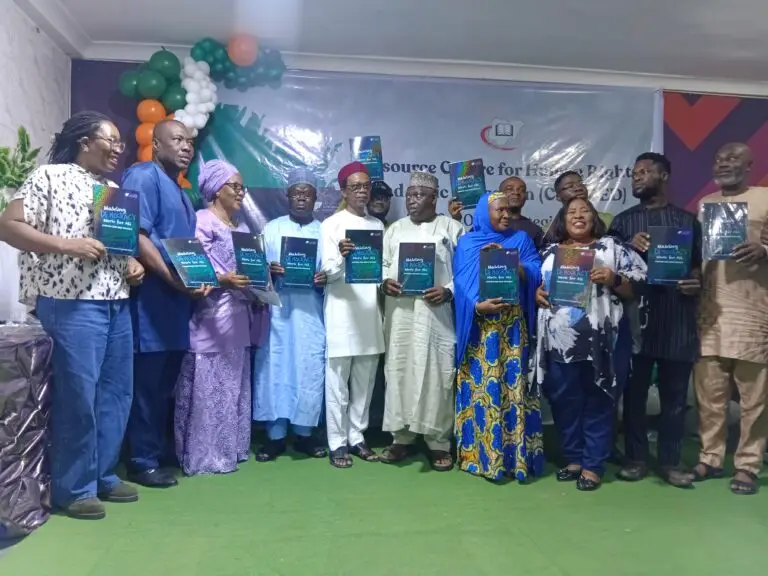
The Resource Centre for Human Rights and Civic Education (CHRICED) has unveiled a new five-year strategic plan, signalling a renewed push for indigenous rights, democratic accountability and environmental justice.

Launching the 2026–2030 plan in Abuja on Saturday, CHRICED’s Executive Director, Dr. Ibrahim Zikirullahi, described the document as a “roadmap for transformative civic engagement” and a reaffirmation of the organisation’s long-standing commitment to justice, inclusion and good governance.

Zikirullahi said the strategy is anchored on six core pillars that reflect Nigeria’s shifting socio-political landscape, including the escalating impacts of climate change, insecurity and the rise of digital repression.

“The challenges before us are daunting, but they are not insurmountable. They demand courage, clarity, and collective action,” he said. According to him, climate change is already reshaping livelihoods, particularly in northern Nigeria, where desertification and recurrent flooding are eroding food security and displacing families.

On indigenous rights, the CHRICED chief insisted that no democracy can claim legitimacy while excluding its original inhabitants. He said the organisation will intensify advocacy for the recognition and full inclusion of FCT indigenous communities, whose rights have remained a contentious issue.

Zikirullahi also highlighted CHRICED’s commitment to improving maternal and child health, lamenting what he described as the country’s “unacceptably high” mortality rates. The organisation, he said, will further expand work on digital freedom, strengthen civic platforms, and push back against tools of repression limiting citizens’ voices online.

On democratic governance, he emphasised that accountability remains the “heartbeat of democracy,” promising increased support for grassroots leaders, activists and the media in their efforts to hold public officials to account. Safeguarding electoral integrity, he noted, will remain a key priority because “without credible elections, democracy cannot thrive.”

He stressed that the new plan is rooted in a rights-based framework driven by data, community inputs and a commitment to equity and transparency. Zikirullahi also acknowledged the MacArthur Foundation for supporting the development of the strategy, and commended CHRICED’s board, staff and partners for their role in shaping the document.

In his remarks, Oladayo Olaide, Chair of the organisation’s Strategy Committee, said the plan also seeks to address the root causes of street children and the rising population of out-of-school children. He said social protection, gender inclusion and equipping young Nigerians with the skills required to thrive will be central to CHRICED’s interventions over the next five years.

Olaide added that the organisation will intensify engagements with government at all levels to tackle the out-of-school children crisis within the lifespan of the new strategic plan.

RSG Woos Investors As PHCCIMA Unveils Port Harcourt Int’l Trade Fair Logo

0
Rivers State Government has urged investors to invest in the state, saying that Riverst State is currently one of the safest states in Nigeria for business.
The Rivers State Commissioner for Commerce and Industry Warisenibo, Joe Johnson, stated this  during the unveiling of the 18th Port Harcourt International Trade Fair 2025 Logo at the Port Harcourt Chamber of Commerce, Industry, Mines and Agriculture (PHCCIMA) office, in Port Harcourt, last Thursday.
He said that Gov. Siminalayi Fubara’s administration would use the platform to dismantle lingering negative perceptions about the State and assured investors of the rebirth of a conducive business environment.
The Commissioner said that Gov. Fubara had demonstrated commitment in transforming Rivers State from an oil independent economy to a diversified economy.
“Our key intervention include the need to streamline business registration through the Rivers State Investment Promotion Agency (RSIPA) plus infrastructure upgrade across Port Harcourt Eleme, Etche, Oyibo, Ogba Egbema, Ndoni and Khana to link industrial zone partnering with development agency to boost small and medium scale enterprises.
“Gov. Siminalayi Fubara leadership in the State is a turning point in the economic trajectory of Rivers State”, he said.
The Commissioner reacted to complaints of government’s failure many years ago to release the 10,000 hectares of land to the CBN-backed Oil Palm Growers Scheme, saying he would liaise with his counterpart in Ministry of Agriculture to find out about the promise before speaking on it.
He said this is because Gov. Fubara does not promise and fail.
Speaking before the unveiling the logo for the International Trade Fair, the President of PHCCIMA, Dr. Chinyere Nwoga, said that the Port Harcourt International Trade Fair is back and that Rivers State is open, safe and good for business.
She said that the theme for this year trade fair is “Growing Through Innovation and Sustainability: Bridging Markets and Encouraging Disruptions.”
She said the trade fair would commerce from December 12 to 22, 2025, at the Obi Wali International Conference in Port Harcourt, the Rivers State capital.
 Dr. Nwoga emphasised that survival in the contemporary economy demands rapid adoption of technology, digital transformation, and artificial intelligence.
“To run a successful business today, you must innovate relentlessly, embrace technology, and operate on a global stage.
“The fair aims to attract a diverse constellation of participants, multinational exhibitors, diplomats, federal and state agencies, research institutions, manufacturers, trade associations, professional bodies, and the general public.
“Beyond networking and investment matchmaking, the event will double as a pre-Christmas shopping festival, with exhibitors offering substantial discounts to families.
“The 25 trade groups of PHCCIMA cutting across diverse sectors will also be active, conducting seminars.
“A notable innovation this year is the dedicated showcase by Rivers State’s 23 Local Government Areas, each presenting its unique products, agricultural produce, and economic potential.
“From the emerging blue economy opportunities to cutting-edge innovations in the oil and gas sector—still the heartbeat of Nigeria’s hydrocarbon industry—the fair promises to spotlight untapped prospects across multiple sectors.
“Government presence at the logo unveiling underscores the administration’s renewed commitment”, she said.
Earlier, the Director General of the Rivers State Investment Promotion Agency (RSIPA), Dr. Chamberlain Peterside, expressed excitement to be part of the unveiling.
 The DG of RSIPA, traced the history of Rivers State and said the present administration was determined to bring back fleeing businesses.
He said progress had been made and not all businesses were lost, pointing out that NLNG and Renaissance are still in Port Harcourt.
The DG promised assured that the administration would definitely look into the grievances of land owners whose Certificates of Occupancies (C of Os) have been held up because of the emergency rule, and speed up the processes so they too would know that Rivers State is back to business.
In his speech, a  former President of PHCCIMA, Dr. Emi Membere-Otaji expressed happiness that the state government came fully to back the trade fair.
Dr. Membere-Otaji who is now the first National Deputy President of Nigerian Chamber of Commerce, Industries Mines and Agriculture (NACCIMA)  said that the private sector is getting signals that good things are ahead in the State
He advised the governor to strive more to bring back fleeing businesses.