Home Blog Page 105

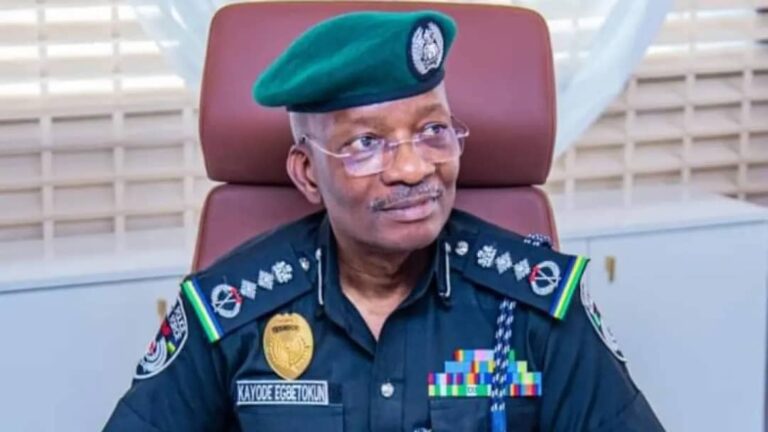
Deepen Your Intelligence Frameworks, I-G Urges CPs, Others

The Inspector-General of Police (I-G), Mr Kayode Egbetokun has called on Commissioners of Police (CPs) and other Strategic Police Managers to deepen their intelligence frameworks beyond professional reporting lines.

The I-G made the call on Thursday in Abuja at a conference with the strategic police managers, consisting of officers from the rank of CP and above.

“The fight against violent crime is one first in the field of intelligence. We must build systems that see crime before it erodes.

“I hereby direct all commands, CPs to deepen your intelligence frameworks beyond professional reporting lines.

“A dependable, native intelligence network is not built only on desk officers.

“It is built inside markets, transport unions, student leadership circles, farming clusters, religious institutions, and trusted community observers.

“Look at intelligence networks when communities trust the police.

“Therefore, their participation must be lawful, ethical, professional, and protected,” he said.

The I-G urged the senior officers to train their intelligence assets on confidentiality obligations and without exposure to political or social manipulation.

According to him, as senior commanders, you must deploy intelligence response cells that analyse lookup patterns, interpret successfully attack indicators, map crime migration corridors, and push intelligence systems to place that purpose.

“Information without action is not intelligence.

“Actionable information deployed ahead of crime is intelligence and so, this network must also integrate open source intelligence awareness.

“It must also, integrate forensic enabled investigative tracking, rural informant engagement, cyber intelligence monitoring of criminal black traits, and tactical intelligence retrieval after every attack.

“Each major incident should generate an intelligence packet that depicts not just who attacked, but who may be next,” he said.

He said community policing was not ancillary to national security, but a foundational to it, especially at this time where communities were no longer just witnesses to crime, but victims of coordinated assaults.

Egbetokun urged the CPs to police frameworks that structurally bind the police to grassroots influence networks, traditional rulers, town unions, local hunters, civil defence advocates, vigilante groups and youth organisations.

“Engaging community policing means building local shared ownership of security.

“Not delegating authority to non-police advocates. You must ensure that police are not just witnesses.

“Establish joint community safety forums. Conduct community threat profiling.

“Naturalise local crime watch desks and build village-level rapid information channels that signal the police before criminals’ classified positions.

“This is how threat is identified. Not by occupying only highways, but by occupying the confidence, cooperation and communication channels inside the people’s spaces,” he said.

According to him, when this system works, communities recover first from fear, then from crime and feed information freely, respond to police direction willingly, grant operational legitimacy faster, and discourage criminals socially.

How Delta Will Partner Experts To Address Electricity Needs – Gov. Oborevwori

0

Gov. Sheriff Oborevwori of Delta says his administration was ready to partner relevant stakeholders in the power sector to build power infrastructure to generate and distribute electricity to meet the state’s need.

The governor disclosed this during his remarks at a 3-Day Seminar/Workshop organised by the Asaba Correspondents Chapel of the Nigeria Union of Journalists (NUJ) to mark its Press Week in Asaba on Thursday.

The theme of the event is “Understanding the M.O.R.E Agenda of Governor Oborevwori’s Administration: Meaningful Development in the Power Sector as Panacea for Economic Recovery and Development in Delta State and Nigeria”.

Oborevwori, represented by the State Commissioner for Works (Rural Roads) and Public Information, Mr Charles Aniagwu, extolled journalists and described the press as dependable partners in the dissemination of government policies and programmes.

He noted that the theme of the event was apt, adding that electricity remained critical to the economic development of any nation.
“Let me thank the leadership of the Chapel for deeming it fit to take a look in the cause of this your gathering, a very important issue which affects all of us -‘Electricity’.
“The power sector is very critical to most of the things we do as a government and as a society.
”So, being able to bring experts in that field to talk to us helps us to know how we can indeed engage different stakeholders in the energy ecosystem”, the governor said.
Oborevwori who commended the chapel leadership for the event pledged government continued support to the media, and urged them to remain objective in their reportage.
In her remarks, the member representing Oshimili North in the State House of Assembly, Mrs Bridget Anyafulu, lauded the Chapel for the choice of the theme which bothers on national importance.
According to her, the Delta State House of Assembly has passed the Electricity Bill which has been assented to as law in the state.

“The state government is partnering relevant stakeholders to address electricity supply challenges across the state, ” she said.
The lawmaker urged the media to report truth and ensure accuracy which are the hallmarks of journalism practice, particularly on issues of national importance.

Also, the Commissioner for Works (Rural Roads) and Public Information, Mr Charles Aniagwu, represented by Mrs Stella Macaulay, a Director in the ministry, gave an overview of the state government’s efforts at restructuring and improving the power sector infrastructure in the state.
Aniagwu said that the state government has embarked on developing sustainable power infrastructure to enable adequate electricity supply in the Asaba capital city and other parts of the state.

The Chairman of the event, Elder Chris Biose, said that Nigeria needed over 100,000 megawatts of electricity to meet industrial, economic and demographic demands.
Biose said, “A former Minister of Power and Current Chairman, Geometric Power Limited, Prof. Barth Nnaji remind us that a nation of our size and ambition requires at least 100,000 megawatts to meet industrial, economic and demographic demands.

“This painful gap demonstrates why Nigeria’s productive capacity remains stunted despite abundant human and natural resources.
”The road to economic recovery, revival begins with fixing the power sector as every other reform depends on it.
“This is why the theme of this Seminar is timely and strategic”.

A Guest Lecturer, Prof. Emmanuel Ufuophu-Biri, Rector, Delta State Polytechnic, Otefe-Oghara, said Nigeria faces a severe energy crisis with over 60 per cent of its population lacking consistent access to electricity.
Ufuophu-Biri, represented by Dr Okoro Ferdinand, Director, Students Industrial Work Experience Scheme, delivered a paper themed, “Energy Mix for Sustainable Economic Recovery and Development of Delta State and Nigeria”.

According to Ufuophu-Biri, Nigeria stands at crossroads as continuing with fossil fuel dependence risks economic stagnation and environmental collapse.

“Embracing a balanced, locally-driven renewable energy mix is essential for Delta state’s prosperity and national resilience. The time to act is now.

“With bold policies, innovation and community inclusion, Nigeria can lead Africa’s sustainable energy revolution, ensuring a brighter future for all its citizens”.

Earlier in a welcome address, the Chapel Chairman, Mr Ifeanyi Olannye said the theme was chosen to mark the second anniversary of the executive and the Chapel press Week.

He said various governments should stop playing politics with power supply to the citizenry, adding that no meaningful development would be recorded without at least 18-hour electricity supply daily in the country.
Olannye lauded President Bola Tinubu for mustering political courage through his Renewed Hope Agenda to assent to Power Sector Amendment Bill as passed by the National Assembly.
He also, commended Gov Oborevwori’s courage via his ‘MORE Agenda’ to light up Delta state by assenting to the Electricity Bill as passed by the State House of Assembly.

Highpoint of the event was the presentation of awards to Oborevwori, Dr Isaac Akpoveta, DG, Contributory Health Commission and a Veteran Journalist, Asiwaju Sola Adebayo in recognition of their contributions to humanity.

LBHF Governor’s Belt: Boxers Battle For Final Slots

0

The race for places in the 2025 Lagos Boxing Hall of Fame (LBHF) Governor’s Belt intensifies on weekend as fighters clash in the November monthly championships.

The Agege Stadium will host the bouts on Saturday, where boxers seek coveted slots in the year-end showcase.

With competition rising, every punch will matter as athletes try to prove they merit places in Nigeria’s respected grassroots boxing event.

Three women’s bouts and seven men’s contests headline the monthly LBHF card.

In the women’s 48kg class, Mistura Otenaike of Surulere meets Aina Adekiwonsa of Lagos Island in a tense contest.

Eniola Idowu faces Oyindamola Agboola in the 45kg division, while an exhibition bout features Zainab Ibrahim against Peculiar Ifemaye at 27kg.

The men’s bouts promise excitement, starting with Kareem Yusuf of Amuwo against Olamide Bello of Yaba in the 53kg class.

In the 60kg division, Kola Ogunsemore of Lagos Mainland battles Qudus Akinwande, while Ganiu Ayomide faces Daniel Nkem.

Other men’s contests include Seun Habu vs Fasosi Paisol at 70kg, Christian Obi vs Paul Melvin at 85kg, and Victor Okagbue vs Daniel Nwose at 90kg.

An exhibition bout sees Modeed Omotayo face Michael Adedapo in the 30kg boys’ category.

The event serves as a crucial qualifier for boxers aiming for the Governor’s Belt finals later this year.

LBHF Director David Mohamed said interest has surged since the programme resumed in October.

“There has been serious interest from boxers across Lagos. We cannot accommodate everyone, so we will select only the best,” he said.

He added that this weekend’s bouts will produce another group of finalists for the end-of-year championship.

The LBHF monthly series returned in October 2025 after a break. It was founded in 2010 by Finance Minister Wale Edun.

LBHF is a non-profit organisation committed to developing amateur and grassroots boxing in Nigeria.

LBHF recently partnered with Mainstay Bulletproof Ltd. to strengthen support for young athletes.

Plans are underway for a new 2026 format involving divisional, regional, and national finals across all weight classes.

FG’s Sports Dev’t Agenda, Launchpad For SMEs -NSC D-G

0

Bukola Olapade, the Director-General, National Sports Commission (NSC), has described the Federal Government’s sports development agenda as a launchpad for Small Scale Enterprises in the country.

Olapade said this at the sidelines of the ongoing 2nd National Council on Sports meeting in Calabar on Thursday.

He said that no than 5000 small scale businesses had been impacted through President Bola Tinubu’s Renewed Hope Agenda on Sports.

Speaking at the event with the theme: “The Business of Sports: Creating Jobs, Wealth and Utility under the Renewed Hope Agenda” Olapade said: “we are creating a viable sports economy”

The NSC D-G said that the commission’s mandate was to create a sports economy that would transform small scale businesses into big players.

“We are making good progress. No fewer than 300 small scale businesses participated at the National Sports Festival in Abeokuta. Hundreds of vendors also participated at the African Athletics Meet,” he said.

He said that NSC was committed to building a sports economy that would resonate with athletes, entrepreneurs and a value exchange system between sports stakeholders and sponsors.

The 2nd edition of the National Sports Council meeting, which started on Wednesday, will end on Friday.

Senate Confirms Ayo Omidiran, 37 Others As FCC Chairman, Commissioners

0

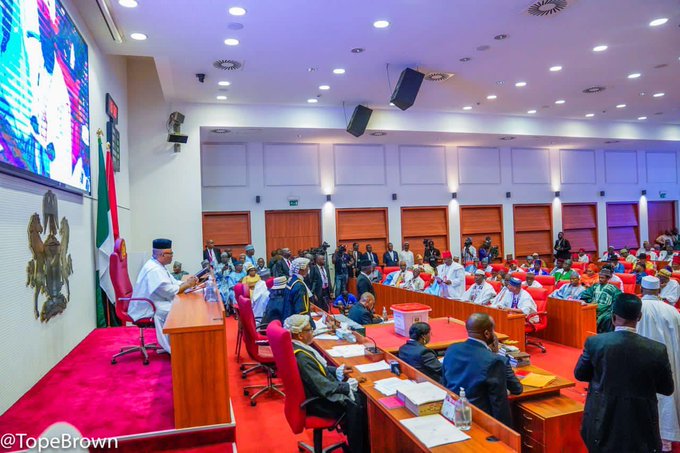
The Senate on Thursday confirmed Mrs Ayo Omidiran as the Executive Chairman of Federal Character Commission (FCC) and 37 commissioners representing the 36 states and the Federal Capital Territory (FCT).

The confirmation followed the adoption of the screening report presented by Chairman of the Senate Committee on Federal Character and Inter-Governmental Affairs, Sen. Allwell Onyesoh.

He said that all the nominees submitted the required documents and faced a thorough screening without any criminal petitions recorded against them.

Presenting the report, Onyesoh informed the lawmakers that all the nominees appeared before the committee on Nov. 13 and submitted CCB clearances, police reports, DSS vetting documents and their curriculum vitae.

Leader of the Senate, Sen. Opeyemi Bamidele, moved the motion for the senate to dissolve into the Committee of the Whole for the chamber to consider the nominees.

While supporting the motion, Deputy Minority Leader, Sen. Olalere Oyewumi, said from their résumé, the nominees had different positions both locally and internationally.

He thanked President Bola Tinubu for finding them worthy for nomination.

Following the submission, the senate dissolved into the Committee of the Whole to consider each nominee.

President of the Senate, Godswill Akpabio, subsequently put the nominations to a voice vote, while the senators unanimously confirmed Omidiran and all the 37 commissioners.

Oxfam, Partners Celebrate Five Years Of Climate Governance Programmes In Nigeria

0

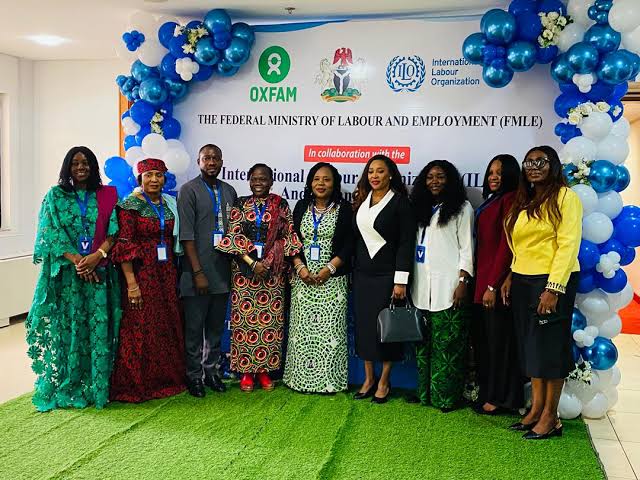
Oxfam in Nigeria, on Thursday, marked the close-out of its five-year Power of Voices, Fair for All (F4A) and African Activists for Climate Justice (AACJ) programmes in Nigeria.

Oxfam Country Director, John Makina, at the occasion on Thursday in Abuja, described the programmes as “a journey of courage, partnership and transformation.”

Makina said that the initiatives demonstrated the power of communities, when equipped, to “speak, act and lead” in governance, climate justice and economic accountability.

He said that the journey had been more than a development intervention.

“It has been a collective effort to shift power, amplify voices and place citizens where they rightfully belong—at the centre of governance, climate justice and economic accountability in Nigeria,” he said.

Makina highlighted key achievements of the programmes to include: cultivation of 15,500 seedlings through community nurseries and distribution of 3,500 clean cooking stoves in Bauchi State to reduce emissions and improve health.

He stated that 256 community volunteers, including persons with disabilities (PWDs), were also trained in briquette production and other nature-based solutions.

“Oxfam also supported the development of new climate laws, unlocked ₦15.5 billion in local climate financing and expanded climate-smart livelihoods, such as bee-keeping, briquette production and tree planting.

“Women beneficiaries reportedly earned between ₦150,000 and ₦300,000 through climate-friendly enterprises.

“The programmes reached more than 10 million Nigerians through the “Follow the Money” media platforms, while civic participation was strengthened through Freedom of Information coalitions, youth civic clubs and improved security commitments from the police,” he said.

Makina added that the initiative also trained 500 journalists in climate reporting, mobilised 664 citizens through the Africa Climate Caravan and empowered PWDs to participate independently in agriculture and community governance.

He expressed appreciation to some implementing partners, such as Civil Society Legislative Advocacy Centre (CISLAC), Connected Development (CODE) and BudgIT Foundation, among others, saying that their support and dedication contributed to the success of the initiatives.

The country director also commended the Government of The Netherlands for funding the project.

Speaking on behalf of the partners, CISLAC’s Executive Director, Auwal Rafsanjani, said the programmes delivered ‘transformative reforms, bold advocacy and unprecedented community-led impact’ across Nigeria.

Rafsanjani noted that the projects strengthened tax justice campaigns, boosted transparency in the extractive sector, improved compliance with beneficial ownership rules and expanded state-level advocacy platforms.

He said that sustained civil advocacy also helped in shaping the passage of four new tax laws and contributing to government’s approval of over one billion dollars for the upgrade of major ports.

Rafsanjani stressed that although donor funding had ended, the responsibility to sustain the gains now rests with Nigerians.

“The work must continue because inequalities, corruption and climate challenges remain,” he said.

While giving an overview of the project, the Programme Manager of Oxfam, Henry Ushie, said it built regulatory frameworks that mobilised communities to be proactive in demanding for the three per cent meant for them by companies.

“They were also empowered to access the money and demand for accountability and transparency on how the money was deployed, ensuring that it was ploughed back into the communities,” Ushie said.

The event featured the launch of a documentary and magazine capturing the project’s milestones.

Pope Leo Begins First Overseas Trip, Urges Dialogue In Turkey

0

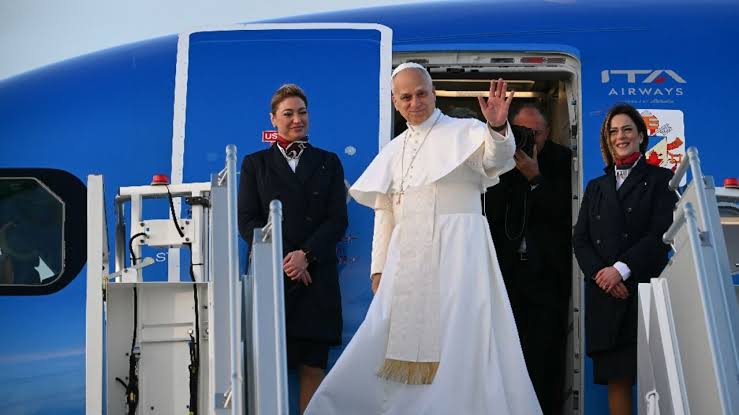
Pope Leo XIV met Turkish President Recep Tayyip Erdoğan at the presidential palace in Ankara on Thursday, launching his first foreign trip as head of the Catholic Church.

“Today, more than ever, we need people who promote dialogue and practice it with unwavering will and patient determination,” the pope said in a joint appearance with Erdoğan at the Turkish National Library.

Leo praised Turkey’s historic role as a “bridge between cultures and religions, “calling the country “a key place for Christianity.”

The pope’s first foreign trip comes more than six months after he replaced Francis as pontiff. He was welcomed with military honors at the presidential palace in Ankara.

Earlier in the day, the pontiff laid a wreath at the mausoleum of Mustafa Kemal Atatürk, the founder of modern Turkey.

In his remarks, Erdoğan called the visit “a very important step that strengthens our common ground.”

He noted that Leo’s planned visits to the religious affairs directorate and Istanbul’s Blue Mosque signalled a commitment to “building constructive ties with Muslims.”

Leo’s trip aims to show solidarity with Turkey’s small Christian communities roughly 180,000 people in a country of 85 million and to advance unity among Christian churches.

The pontiff is also expected to address issues of religious freedom, including the decades-long closure of the Halki seminary off Istanbul, a point of strain for Orthodox Christians.

After meetings in Ankara, Leo will travel to Istanbul for talks with Orthodox Ecumenical Patriarch Bartholomew I.

The pope from there is scheduled to head to İznik, a few hours’ drive south of Istanbul, to commemorate the 1,700th anniversary of the Council of Nicaea.

The visit, originally planned by the late pope Francis, will include prayers at the recently uncovered fourth-century Basilica of St Neophytos to underscore unity.

Leo continues to Lebanon on Sunday before returning to Rome on December 2.

Mother Tongue, Lost Voice: Inside the Battle Over Nigeria’s Cancelled Language Policy

0

On a warm November morning in Akure, as delegates filed out of the hall after the 69th National Council on Education meeting, a quiet shock settled over Nigeria’s education community.

The Minister of Education, Dr Morufu Olatunji Alausa, had just announced a sweeping reversal: the Federal Government was scrapping the National Language Policy, the 2022 framework that required schools to teach children in their mother tongue from Early Childhood Education to Primary Six. English, he said, would become the sole medium of instruction at all levels.

Within hours, the reverberations were felt from academic circles to community schools. To many, it was not merely a policy shift but a cultural turning point — a move that, if allowed to stand, could reshape the country’s linguistic identity and redefine its educational future.

The Minister’s justification was unequivocal. He linked poor performance in public examinations — WAEC, NECO, JAMB — to regions that had embraced mother tongue instruction “in an over-subscribed manner”. According to him, data over 15 years allegedly showed that teaching young children in indigenous languages had “destroyed education” in parts of the country.

But to Nigeria’s education scholars, linguists, and curriculum experts, the logic did not add up.

Within days, the Nigerian Academy of Education (NAE), a body of the country’s most senior education professionals, convened an emergency nine-member task force. Their mission: to respond — firmly, and with evidence. Their conclusion: the cancellation was “a significant misstep” with consequences far beyond the classroom.
In a policy document made available to The Atlantic Bell and signed by Emeritus Professor Olugbemiro Jegede, and Prof. Chris Chukwurah, President, and Secretary General of the Nigerian Academy of Education, the body condemned the policy of the Federal Government.

A Policy Decades in the Making

The National Language Policy was not a hasty experiment. It was the product of years of collaboration between language experts, researchers, curriculum developers, and policymakers. From its earliest iterations in the 1970s, the policy drew from UNESCO’s recommendation that children begin learning in the language they understand best.

Historically, Nigeria had already tested this model. The Ife Six-Year Primary Project led by education icon Prof. Babs Fafunwa, in the 1970s, demonstrated that children taught in their mother tongue showed stronger cognitive skills and performed better academically — even in English. The Rivers Readers’ Project offered similar evidence. More recently, a six-year dataset from the Obolo Bilingual Education Centre showed superior learning outcomes when instruction occurred in indigenous languages.

These results are not outliers. Researchers from UNESCO to Nigerian scholars such as Fafunwa, Bamgbose, Ubahakwe, and Omamor have long documented the benefits: stronger comprehension, higher classroom participation, better literacy, lower dropout rates and improved national cohesion.

A Faulty Premise?

The NAE argues that the government’s rationale for the reversal collapses under scrutiny.

For one, mother tongue instruction in Nigeria ends at Primary Four. Public examinations occur years later. “Attributing WAEC or NECO failures to early childhood language of instruction is not evidence-based,” the NAE warns.

Secondly, no comprehensive data was publicly presented to support the Minister’s claims. The Academy notes that poor performance in public exams correlates more strongly with structural challenges — teacher shortages, overcrowded classrooms, lack of learning materials, and underfunding — than with the language of instruction.

And crucially, the policy has never been fully implemented nationwide. How, they ask, can something that scarcely existed be blamed for failure?

A Global Lens

Countries that have successfully lifted literacy rates — from Finland to China, Kenya to Ethiopia — begin education in the mother tongue. Japan’s famed technological rise was built on a foundation of early learning in Japanese. Even in multilingual African nations, early grade reading in local languages remains standard practice.

Nigeria’s sudden departure from this model, the NAE warns, risks isolating the country from global best practice.

Beyond the Classroom: A Cultural Reckoning

For many advocates, the decision is not just pedagogical but existential. Nigeria’s 500-plus languages are more than communication tools; they are vessels of identity, memory, and heritage.

“To discard them at the foundational stage of learning,” one senior member of the Academy says, “is to accelerate their disappearance.”

The Academy’s report frames the cancellation as akin to reopening the wounds of colonialism — a symbolic surrender of linguistic autonomy at a time when many nations are reclaiming it.

A Call for Reversal

In its advisory, the NAE urges the Minister to “reverse the cancellation as a matter of urgency, national pride and national integrity”. Their recommendations are specific:

Reinstate mother tongue instruction through Primary Four.

Invest in teacher training, orthographies, and indigenous learning materials.

Deploy technology to expand access to local language resources.

Carry out data-driven evaluations every ten years instead of abrupt reversals.

Engage parents and communities through nationwide sensitisation campaigns.

The Academy insists that Nigeria’s literacy crisis — including the millions of out-of-school children and non-literate adults — will worsen if English becomes the compulsory medium from the earliest years. Learning in an unfamiliar language, they argue, alienate children, raise anxiety, and push many out of the school system altogether.

A Future on the Line

For now, the policy remains cancelled, though the debate grows louder. Educators, civil society groups, and cultural advocates continue to press for reversal, warning that the implications stretch far beyond pedagogy.

At stake is the cognitive development of Nigeria’s youngest learners. But there is something deeper too — the future of a multilingual nation, the preservation of its cultural heritage, and the question of whether its education system will evolve on its own terms or be shaped by old hierarchies.

“If the policy is allowed to die without rigorous interrogation,” the NAE cautions, “the permanent recolonisation of Nigeria, and the burial of its future and pride, would have been completed.”

For now, Nigeria stands at a crossroads — between the language of its ancestors and the language of its colonial past; between evidence and expedience; between a future built on inclusion, and one that may leave millions behind.


Sylva Responds To EFCC, Seeks Date For Appearance

0

Chief Timipre Sylva, the immediate past Minister of State for Petroleum, has written to the Economic and Financial Crime Commission (EFCC), asking the commission to give him a date for his appearance.

The former governor of Bayelsa, in a letter addressed to the EFCC chairman, frowned on the move by the commission to declare him wanted over alleged 14.8 million dollars fraud.

Sylva in the letter dated Nov. 24, received and acknowledged by the EFCC on Nov. 26, however, informed the commission that he was currently receiving urgent medical care for a life-threatening condition.

He said he was in constant consultation with his medical team to know whether he could discontinue his treatment to enable him to present himself to the EFCC for interrogation.

“In view of the foregoing, I most humbly request that a mutually agreed date be set subject to medical clearance to enable me appear physically and formally.

“I trust that the objective of your invitation is not to unalive, but to genuinely investigate an alleged crime in which case my request will be in order. For only the living may appropriately, fully and responsibly respond to any allegation, which I firmly and respectfully deny”.

Sylva recalled the events of the past weeks and said they had his family, close friends, supporters, associates and compatriots had endured an extraordinarily and bewildering period

“What began with an unverified accusations linking me to an alleged plot to undermine a constitutional authority of the President and Commander-in-Chief, His Excellence, President Bola Ahmed Tinubu escalated into a dramatic military operation at my private residence.

”During the period, several individuals were apprehended (drivers, security and domestic staff) and remain in detention.

“While still grappling with the emotional and psychological strain of those events, I was on Monday 10 November 2025, publicly declared wanted by your esteemed agency in relation to an alleged 24.8 dollars million fraud matter.

“It is pertinent to recall that I had been formally invited by the EFCC in December 2024 regarding the same matter.

”After providing all required explanations, I was granted administrative bail on self recognition and I was informed that I would be reinvited should my further input be necessary.

”To the best of my knowledge and belief, no further invitation or correspondence was issued to me thereafter,” he said.

Sylva said he was deeply surprised and profoundly unsettled to learn through a public announcement that he had been declared wanted despite his well-known disposition towards cooperation with lawful authorities.

“I am and have always been a law-abiding citizen of the Federal Republic of Nigeria and I have never declined or evaded the invitation of any competent law enforcement institution.

“Furthermore, on 14 November 2025, it was publicly stated that I had jumped bail. For the sake of clarity, propriety and historical records, I must respectfully state that no such incident occurred nor was any such bail condition in existence or ever violated by me.

“As these developments continue to unfold, it is difficult to dismiss the impression that matters may be proceeding in a manner capable of causing public misinterpretation.

”For example these frenzied and almost desperate actions may be viewed as political witch-hunt by many. Also considering that I have appeared to be a target since the beginning of this administration.”

NAOWA Powers Women’s Entrepreneurship, Unveils Cooperative Society

0

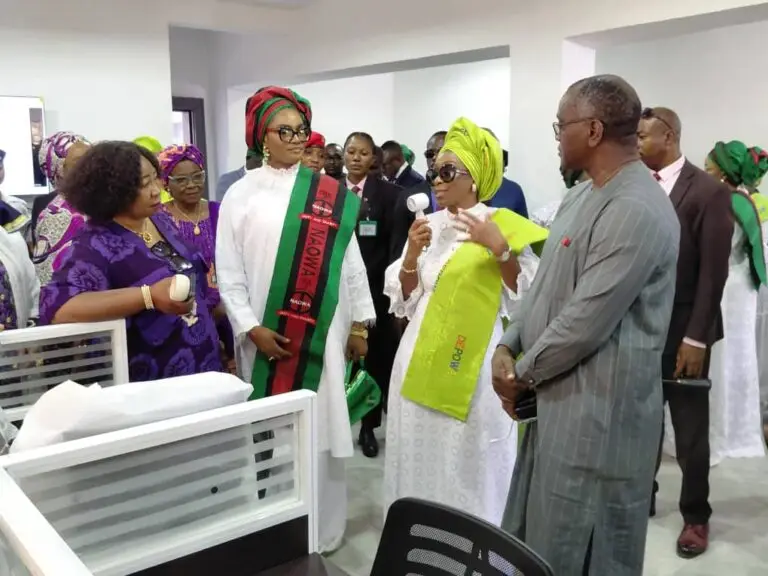
The Nigerian Army Officers’ Wives Association (NAOWA) has inaugurated the NAOWA Multipurpose Cooperative Society (NMCS) to strengthen the entrepreneurial capacity and economic wellbeing of women in military barracks nationwide.

The President of NAOWA, Mrs Safiyyah Shaibu, at the unveiling on Thursday in Abuja, said the initiative was designed to provide a dependable platform for members to save, access credit and grow sustainable businesses.

Shaibu said the cooperative was conceptualised and developed by her predecessor and current President of the Defence and Police Officers’ Wives Association (DEPOWA), Mrs Merna Oluyode.

She said the conceptualisation of the scheme was in line with NAOWA’s commitment to improving the welfare of officers’ wives, young entrepreneurs and widows of fallen heroes.

“Today is a proud moment for our association. This cooperative will serve as a financial support system to strengthen our members economically and promote self-reliance across our communities,” she said.

NAOWA President commended Oluyode for her foresight and leadership in laying the foundation for the cooperative, adding that it was fitting for her to perform the formal launch.

“As the current NAOWA president, I pledge our full support to ensure the cooperative remains transparent and becomes a dependable platform for all members,” she added.

The President of DEPOWA, Mrs Oluyede, said the cooperative was “a vision born in one administration and nurtured into reality by another.”

Oluyede, who initiated the idea during her tenure as NAOWA President, said seeing the cooperative take off under her successor was a powerful reminder that leadership is strongest when it transcends personal tenure.

She said the cooperative would help women cushion the financial shocks that frequently come with military life — frequent transfers, separation from spouses, and the strain of raising families in duty barracks.

Oluyede stressed that beyond loans, the cooperative would provide the structure, discipline and training that many women need to grow small businesses, build savings, or secure future investments.

“In NAOWA, we don’t build for ourselves alone. We build for the women coming behind us.

“This is about dignity. It is about ensuring that no woman in our community stands alone,” she said.

She added that financial literacy, youth skills development, and partnerships with reputable institutions would position NAOWA families for long-term stability.

Oluyede praised NAOWA’s leadership for sustaining the vision, saying the unity between past and present presidents showed that women’s associations could build enduring structures when they work hand in hand.

She described the cooperative as “a gift from women to women — and a symbol of what empowered military wives can achieve.”

A member of the NMCS Management Committee, Mrs Eyotoyosi Sonibare, said the newly inaugurated body had evolved from a concept seven months ago into a full-fledged institution built on resilience, shared purpose and the collective spirit of NAOWA members.

Sonibare said the cooperative was created to provide a platform for economic advancement, offering members opportunities to improve their livelihoods through agriculture, trading, manufacturing, real estate and other productive ventures.

She said the NMCS was designed to make funding more accessible for women in barracks to start or expand their businesses, invest in property and benefit from training and partnerships that strengthen capacity.

According to her, the overarching goal was to deepen financial independence, promote wealth creation and enhance social cohesion within NAOWA, in line with its tagline, “Together we thrive, together we grow.”

She added that the cooperative belongs to all members and expressed confidence that it would become a model of excellence and a symbol of unity for future generations.