


Home Blog Page 104

Women Converge 2025: Mrs. Fubara Inspires, Champions Unity, Strength Among Rivers Women

0

Women Converge 2025 unfolded yesterday as a compelling display of collective worship and shared spiritual energy, drawing women in their hundreds from across Rivers State, neighbouring regions, and the wider Nigerian Christian community.
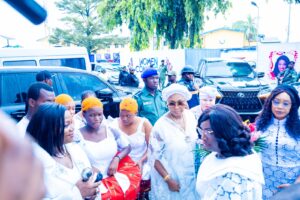
Mrs Sotonye Toby Fulton(3rd right), welcoming wife of Rivers State Governor, Mrs Valerie Fubara at the Women Converge 2025, held at the Alfred Diete Spiff Civic Centre on Thursday.

What began as a routine annual gathering evolved into a deeply resonant moment of unity, praise, and reflection — one many described as the most moving edition yet.

The event, organised by Rivers Women Unite for Sim (RWUS), had the theme: “The Women: In An Evolving World.” It brought together a large number of women for praise, worship, prayers, thanksgiving, and discussions on how to keep moving forward.
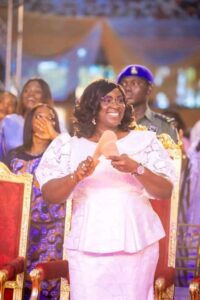
Wife of Rivers State Governor, Lady Valerie Siminalayi Fubara at the event.

The event which held at the Alfred Diete-Spiff Civic Centre in Port Harcourt gained added prominence with the attendance of the First Lady of Rivers State, Lady Valerie Siminalayi Fubara, whose presence brought both a symbolic and personal dimension to the day.

From the moment she arrived, there was a palpable shift in the room, not marked by ceremony or formality, but by a warm, reassuring presence that blended easily with the spirit of the event.

Lady Fubara did more than deliver formal remarks. She joined in the worship sessions, prayed alongside the women, and offered a short exhortation that was striking in its simplicity and sincerity.

Her message — centred on hope, perseverance, and the importance of faith-led resilience — appeared to strike a chord, drawing murmurs of agreement and quiet applause from those present.
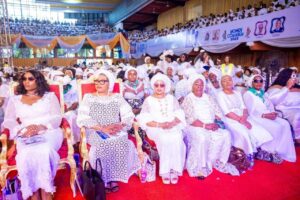
She praised women in Rivers State and across Nigeria for showing strength, courage, and determination in today’s challenging world.

Lady Valerie Fubara said women have continued to do well in business, farming, industry, public service, and politics, even while facing economic pressures and family responsibilities.

“Women remain strong and relevant in this changing world,” she said. “They keep pushing forward with faith in God and a desire to achieve more.”
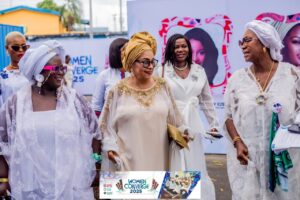
She described the gathering as an important moment for women to support one another and to contribute to peace and development in Rivers State.

“Our women have always been pace-setters,” she said. “Your prayers and commitment make a big difference in our society.”

Lady Valerie Fubara encouraged women to stay prayerful, united, and focused, saying God would reward their efforts. She thanked them for their support for her and her family.
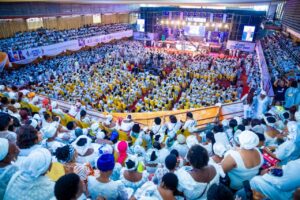
Earlier, the convener of Women Converge 2025, Mrs Sotonye Toby Fulton while welcoming participants described the Converge as one “deeply inspired by faith, values, and purpose.”

“It is also a space that welcomes every woman across professions, beliefs, social backgrounds, and generations.

“Today, we gather not only to pray, but also to learn. Not only to worship, but also to strategize. Not only to speak but also to take action.

“This is a place where faith meets policy, spirituality meets leadership, inspiration meets innovation, and women’s voices meet development,” Toby-Fulton said.

For many attendees, it reaffirmed a growing sense that leadership, in its most meaningful form, includes standing with citizens not only in governance but in moments of shared spiritual reflection.

Throughout the hall, the atmosphere echoed with music, prayer, and an unmistakable sense of belonging. Praise sessions lifted the room into a rhythm of joy; prayers were offered both collectively and quietly; testimonies hinted at personal battles and small victories.

Thanksgiving, which formed a central part of the programme, had the effect of drawing women into a single current of gratitude — for their families, for their communities and, for some, for the ability simply to gather in peace.

What emerged was a portrait of women stepping into their roles as spiritual anchors, moral guides, and the often-unacknowledged backbone of society. Many speakers noted that when women convene in worship, they bring an emotional clarity and spiritual depth that can shift the tone of entire communities.

Yesterday’s convergence seemed to affirm that view: worship became a soothing force, prayer a collective stabiliser, and mutual support a central theme.

While the gathering was steeped in faith, its social undertones were unmistakable. Conversations between sessions touched on the pressures of family life, the economic strains many households face, and the quiet but persistent work women undertake to hold their communities together.

In this context, the convergence was not merely a church event but a rare space where women shared stories, renewed friendships, and found reassurance in one another.

Lady Fubara’s presence added a maternal thread that ran through the day. Her interactions were unhurried and deliberate, marked by a willingness to listen, embrace, and offer words of comfort.

That conduct, participants said, created a sense of closeness — a feeling that the concerns of ordinary women were visible and valued at the highest levels of the state.
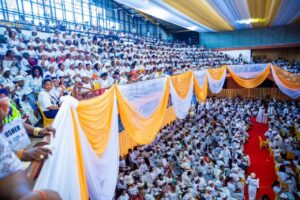
By the time the programme drew to a close, it was clear that Women Converge 2025 had offered more than spiritual upliftment. It delivered a reaffirmation of community, of shared faith, and of the quiet but enduring strength that women bring to public and private life. The songs may have faded, and the hall emptied, but the conversations, reflections, and bonds formed are likely to echo far beyond the day.

For many who attended, the convergence was a reminder that no woman stands alone — and that in shared worship, Rivers State finds a steadier, more hopeful heartbeat.

The event also featured a keynote message from Pastor Dr. Eno Jerry Eze; a prayer session led by Apostle Opuaya Bipiminayefie Agha of When Women Pray International, and praise and worship from several gospel ministers.
Banditry: PDP Seeks Statutory Powers For Governors As Chief Security Officers

0

The Peoples’ Democratic Party (PDP) has called on the National Assembly to grant governors full statutory powers as Chief Security Officers of their respective states.

The National Chairman of the party, Alhaji Kabiru Tanimu-Turaki, made the call in Birnin Kebbi on Wednesday when he led a delegation of the party’s National Working Committee (NWC) on a sympathy visit to Kebbi.

The PDP chairman was at Birnin Kebbi to sympathise with Gov. Nasir Idris and the people of the state over the abduction of 24 schoolgirls from Government Girls’ Comprehensive Secondary School, Maga, who regained their freedom on Tuesday, November 24.
The chairman reiterated the need to restructure the nation’s security framework, stressing that governors must be empowered to effectively discharge their roles as Chief Security Officers.
“We call on the National Assembly to restructure the country’s security architecture to give governors full constitutional powers as Chief Security Officers of their states.

“There is a need for the lawmaker to take proactive measures to give governors full powers to exercise their responsibilities,” he advocated.
Tanimu-Turaki said the party leadership was in the state to commiserate and rejoice with the government and people of Kebbi over the abduction and freedom of schoolgirls in Maga, Danko-Wasagu Local Government Area.
“We are here as leaders of the PDP to identify with the people of Maga over the abduction of our daughters.

“On behalf of the party’s leadership nationwide, we convey our message of empathy, sympathy and solidarity to the government and people of Kebbi state,” he added.
Tanimu-Turaki described the incident as a test of faith, urging citizens to unite irrespective of religious or ethnic differences.

“At times like this, we must reflect soberly and work collaboratively. Bandits see individuals as potential ransom targets, which is why we must come together because this is a common problem affecting our society.

“I commend your courage and resilience in asking the necessary questions that led to the early rescue of our children,” he said.
Tanimu-Turaki also commended the state government for its efforts, adding that, “Even though if you were in the PDP, you would do better.
“We will send a team to lobby you to join our party. Political differences should not affect our personal relationship.”

The chairman prayed that similar incidents would not occur anywhere in the country, saying that Nigerians must remain united to ensure peace and mutual protection.

Responding, Gov. Idris, commended the PDP chairman for what he described as patriotism and a demonstration of national unity above partisan considerations.
The governor, who was represented by the Deputy Governor, Sen. Umar Abubakar-Tafida, said: “National interest is higher than individual or party interest.
“We thank you for coming to commiserate with us over this unfortunate incident.

“We appreciate you and your delegation for identifying with the government and people of the state,” he said.
While congratulating Tanimu-Turaki on his emergence as PDP national chairman at the recently concluded convention, the governor prayed for a successful tenure.

Former Kano State Governor and ex-Minister of Foreign Affairs, Alhaji Ibrahim Shekarau, and former Minister of State for Foreign Affairs, Alhaji Buhari Bala, were among members of the PDP NWC delegation.

Stakeholders Demand Policy To Tackle Truck Operation Challenges

0

Maritime experts have urged Trucks Transit Parks (TTP) to develop a formal policy addressing truck movement challenges nationwide.

They made the call during a TTP roundtable on regulatory synergy and port logistics held on Thursday in Lagos.

Mrs Jean Anishere (SAN) urged TTP to present a structured policy to the National Assembly for proper legislative backing.

She said long-term goals must be included to guarantee sustainable reform across the maritime logistics chain.

“There are many discussions on maritime issues, but without reaching the National Assembly, they will fade away,” she said.

She cited past achievements in stevedores’ regulation as evidence of the value of formal legislation.

Anishere called for deeper collaboration and urged full digitalisation of port processes using a single-window platform.

She said such reforms would improve cargo clearance times and reduce overlapping government functions.

She pledged support to help truckers refine policy proposals that could enhance operations nationally.

TTP Managing Director, Mr Jama Onwubuariri, showcased the firm’s dashboard system tracking turnaround times at Apapa and Tincan ports.

He said quicker cargo movement improves operational efficiency and boosts profitability for the logistics sector.

Onwubuariri added that congestion, irregular pricing, and human interference once defined Lagos port access.

He introduced “Eto,” which he described as a disciplined ecosystem restoring order and structure to truck operations.

Former Port Manager, Mrs Funmi Olotu, urged government to equip truck parks with better facilities to improve efficiency.

She stressed accountability, collaboration, and transparency to position Nigeria as a preferred African cargo hub.

The roundtable, moderated by TTP Director, Mrs Jenifer Bekedemor-Imarhia, ended with a call for regulatory reforms and digital transformation.

Edo Assembly Summons Obaseki, Others Over MOWAA, Radisson Deal

0

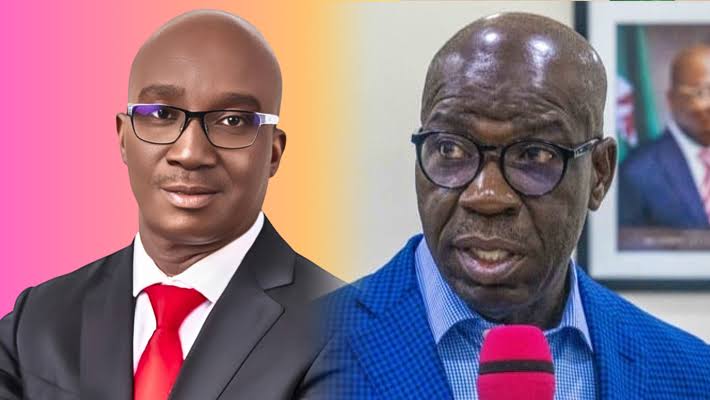
Edo House of Assembly has invited former governor Godwin Obaseki and the Museum of West African Art (MOWAA) Director, Philip Iheanacho, for questioning over MOWAA and Radisson Hotel funding.

In a statement on Thursday by Bekisu Oshone-Wilson, the Secretary to a committee set up by House, asked the invitees to appear before it on Dec. 4.

Other persons invited by the Committee are a former Secretary to the State Government, Osarodion Ogie; a former Edo Finance Commissioner, Mr Joseph Eboigbe; the former Attorney General, Mr Oluwole Osaze-Uzzi; and the Managing Director of Tilbury House Nigeria Limited.

Others include Mr Pramod Thorat, Project Manager of Hospitality Investment and Management Company (HIMC); Mr Ugochukwu Anigbogu, Managing Director of Afrinvest Capital Limited; the Managing Director of Meristem Trustees Limited; and the Managing Director of Emerging Africa Trustees Ltd.

The Radisson Hotel project had since been abandoned after billions of Naira were allegedly spent on it.

MOWAA is generating a rift between the management of MOWAA and State Hospital, Benin, over a large parcel of land belonging to the hospital used for the MOWAA project.

Besides, the indigenes of Benin are querying while the MOWAA project, which is supposed to house the artefacts recently returned from Europe, is being sited outside the palace of the Oba of Benin.

The artifacts were stolen from the palace when the British invaded Benin Empire in 1897. The indigenes are insisting that the artifacts should be kept at where they were stolen.

Oshone-Wilson said the attendance by Obaseki and others were required to help the committee in its investigation.

Insecurity: Saboteurs Will Fail, Nigeria will prevail, APC Assures

0

The All Progressives Congress (APC) has assured Nigerians that the nation will overcome its security challenges, insisting that those behind acts of sabotage will ultimately fail.

The party gave the assurance in a statement issued by spokesman of the party in Lagos, Mr Seye Oladejo, on Friday.

Oladejo urged citizens to remain calm and united despite the tension generated by recent attacks in parts of the country.

Oladejo said the APC was confident that “Nigeria will prevail” because President Bola Tinubu had taken decisive and unprecedented steps to strengthen national security.

“This too shall pass. Nigeria has survived recessions, insurgencies and political treachery. We are certain the nation will once again emerge stronger.”

The spokesman said President Tinubu was not responding with empty rhetoric,but with concrete actions aimed at restoring stability and dismantling hostile networks troubling the nation.

According to him, the president’s declaration of a state of emergency on security and his approval for the recruitment of an additional 20,000 police personnel—bringing total planned intake to 50,000—demonstrate the administration’s seriousness.

“These are not cosmetic gestures. These are far-reaching actions by a president who refuses to surrender one inch of the country to terrorists or their sponsors,” Oladejo said.

He alleged that the opposition was “amplifying fear” and spinning recent incidents as evidence of government failure, even as security forces continued to record operational breakthroughs.

“Rescue missions are ongoing, hostile networks are being dismantled, and communities are cooperating with security agencies like never before,” he added.

He claimed that some political actors were threatened by ongoing progress and were resorting to issuing “prophecies of unrest” shortly before coordinated attacks.

“The question Nigerians are asking is, who benefits when the country appears ungovernable? Their time is almost up,” he said.

Oladejo also accused the opposition of seeking foreign intervention by “crying wolf abroad,” but said such efforts would fail because Nigeria’s sovereignty was not for negotiation.

“Nigeria is not a playground for expired politicians. President Tinubu is hands-on and fully engaged in steering the security renaissance sweeping across the nation,” he said.

On the discomfort experienced by citizens, the APC attributed it to ongoing economic reforms, describing it as a transitional phase.

He said the dismantling of subsidy cartels, forex cabals and rent-seeking groups had created discomfort but was yielding positive results.

“The reforms are working—agriculture is expanding, investment confidence is returning and industries are waking up. Those who destroyed the house cannot mock the rebuilding,” Oladejo said.

He urged Nigerians to keep faith with the administration, stressing that saboteurs would not succeed in destabilising the country.

“The storm is temporary, the discomfort is transitional. Nigeria’s destiny is secure under a capable and courageous leader. The saboteurs will fail, and Nigeria will rise stronger,” Oladejo said.

How Tinubu’s VIP Escorts Order Will Impact Security -Expert

0

A security expert, Mr Seyi Babaeko, has praised President Bola Tinubu’s directive withdrawing police escorts from VIPs, describing it as a bold and long-overdue step toward restoring the integrity of policing in Nigeria.

Babaeko, the Managing Director/CEO of Absolute Security and Advance Protocol Ltd., made the commendation while speaking in Lagos on Friday.

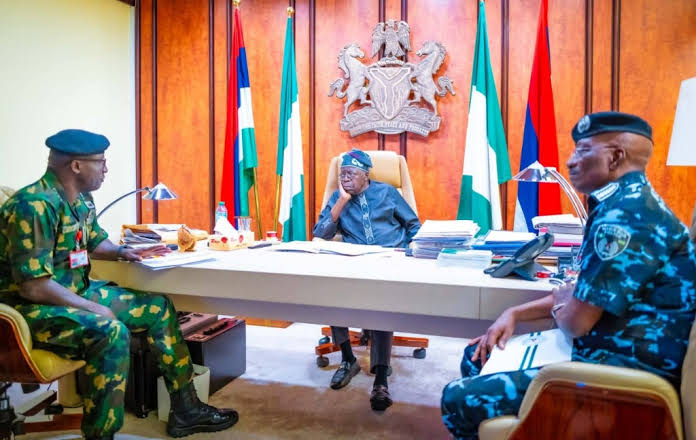
The directive, issued to the Inspector General of Police, Mr Kayode Egbetokun, orders the redeployment of officers previously assigned to politicians, business figures, and other high-profile individuals back to core policing duties.

Babaeko said that the decision reflected a welcome shift toward prioritising the safety of ordinary Nigerians.

“Policing became a service people could buy, and public safety began to feel like a privilege instead of a right.

“This directive puts citizens back at the center of Nigeria’s security strategy, ” he said.

The expert said that further structural reforms were necessary to achieve lasting impact.

Babaeko called for the urgent implementation of the Orosanye Report, particularly the recommendations to merge and reorganise overlapping para-policing and security agencies.

He said that Nigeria’s current security structure was burdened by duplicated roles, resource competition, and excessive costs.

“Streamlining these redundant units will reduce waste and strengthen the core pillars of policing.

“Savings from the reform could be used to boost recruitment, improve equipment and logistics, and enhance welfare for frontline officers,” he said.

The security analyst said that a more unified structure would bring stronger police presence in communities, quicker emergency response, and better relations between officers and citizens.

Babaeko lauded the Tinubu administration for showing readiness to confront deep-rooted issues that had weakened the nation’s security system for years.

He said that the success of the latest directive would depend on consistent implementation and discipline across security institutions.

“If these reforms hold, Nigeria will be a safer place for everyone, not just a privileged few, ” he said.

He urged the government to stay focused on reforms that return the Nigeria Police Force to its constitutional mandate.

“Let’s build a police system that protects and serves the people above private interests. Nigeria deserves nothing less,” he said.

Woman Kills Seven-year-old Girl In Rivers

Police in Rivers State have launched an investigation into the killing of a seven-year-old girl in Port Harcourt, after a woman identified as Success allegedly stabbed the child to death before turning the knife on herself.

The incident occurred on Tuesday at Okabia Street, Agip Estate, in the Rumueme area of the city. Residents of the area said the woman, said to be a relative of the child’s mother and well known in the neighbourhood, had gone to the girl’s school, collected her, and taken her to her apartment before carrying out the attack.

The victim, Alicia Olajumoke, and the suspect were both taken to hospital but were confirmed dead.

Alicia’s mother, Glory Joseph, reported the matter to the police after learning that her daughter had been picked from school and later found stabbed.

The spokesperson for the Rivers State Police Command, SP Grace Iringe-Koko, confirmed the incident in a statement on Thursday. She said the child’s body had been deposited in a morgue for autopsy, adding that detectives had opened an investigation to determine the motive behind the killing.

Opinion: Nigeria Cannot Afford To Lose Its Mother Tongue

0

The Federal Government’s decision to cancel the National Language Policy (NLP) and impose English as the sole medium of instruction at all levels of education is not merely an administrative choice. It is a profound error of judgment — one that threatens to derail early learning, deepen inequality, and accelerate the erosion of Nigeria’s cultural identity.

It must be reversed.

At the heart of this decision lies a troubling contradiction. The Minister of Education, Dr Morufu Olatunji Alausa, claims that students’ poor performance in WAEC, NECO, and JAMB is linked to the mother tongue instruction prescribed under the 2022 policy. Yet, he provides no credible evidence for this sweeping claim. Worse still, the logic collapses under basic scrutiny: mother tongue instruction in Nigeria ends at Primary Four, while the exams he cites are taken years later — after children have been taught in English for the majority of their schooling.

In effect, an unimplemented policy has been blamed for a national failure it did not cause.

Nigeria’s educational crisis is real. But to scapegoat the mother tongue is to dodge the harder questions: Why are basic education classrooms overcrowded? Why do millions of children lack textbooks? Why do teachers lack training and learning materials? Why are the poorest regions starved of funding? These are the real drivers of exam failure — and none will be solved by forcing a six-year-old to learn in a language she does not understand.

For decades, research has been unequivocal. From the Ife Six-Year Primary Project to the Rivers Readers’ Project, from UNESCO to countless Nigerian scholars, the evidence points in one direction: children learn faster, understand deeper, and perform better — even in English — when they begin their schooling in the language they speak at home.

This is not a radical position. It is a global best practice. Countries with some of the highest literacy rates — Finland, China, Japan — rely on early education in the mother tongue. Across Africa, nations as diverse as Kenya, Ethiopia, Ghana, and South Africa continue to strengthen indigenous language instruction, recognising its value for literacy, cohesion, and national pride.

To abandon this approach now is to move against the world — and against our own history.

More alarming is the cultural cost. Nigeria is one of the most linguistically diverse nations on earth. Our languages are not obstacles. They are repositories of memory, identity, and worldview. They carry the wisdom of communities and anchor our sense of belonging. To push them out of the classroom is to push them closer to extinction.

The Nigerian Academy of Education — the country’s most authoritative body of scholars and education leaders — has made a compelling case: the cancellation is hasty, unfounded, and damaging. Its task force urges the Minister to reverse the decision, recommit to mother tongue instruction through Primary Four, and finally invest in the materials, teacher training, and implementation frameworks that the previous policy lacked. It is a call grounded in evidence, patriotism, and common sense.

Nigeria’s education system is on the brink. Millions of children are out of school. Millions more are in school but not learning. The response can not be a retreat into linguistic insecurity or a misguided loyalty to English. True educational reform requires investment, planning, and continuity — not abrupt pivots driven by unverified assumptions.

The government owes Nigerians not just data but also accountability. The stakes are high: a nation that can not confidently teach its children in its own languages risks losing more than academic performance. It risks losing itself.

The Minister must reverse this cancellation. Nigeria’s children deserve an education rooted in understanding, not confusion. Our communities deserve a system that respects their voice. And the country deserves policies grounded in evidence, not fear.

We can still choose the path of progress — but only if we choose to listen to ourselves.

By Owen Raphael Daminabo

EDITORIAL: Nigeria’s Local Governments As Country’s Biggest Corruption Crime Scene

0

Nigeria’s greatest governance scandal is not in Abuja. It is not in the states. It is hidden in plain sight — inside the 774 Local Government Areas that are supposed to serve as the engine room of development.

A report recently released by the Nigerian Local Government Integrity Index (NLGII), has now confirmed what citizens have long suspected but government has refused to confront: the grassroots tier of government is collapsing under the weight of corruption, secrecy and state interference.

The verdict is brutal. 751 LGAs of the 774 — 85 per cent — are operating at “very high” or “critical” corruption risk. This is not mismanagement. This is a national emergency.

For years, local councils have functioned like political fiefdoms — budget documents hidden from the public, audit reports nonexistent, projects untraceable, and billions in FAAC allocations disappearing into a fog of opacity. The NLGII simply puts scientific language to what Nigerians see every day: local government has become the country’s largest, least-policed corruption zone.

The findings are alarming.
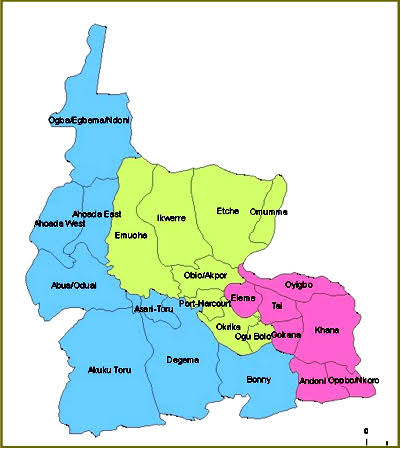
Tier 5 councils — 155 of them — include some of the country’s richest and most strategic LGAs: Obio/Akpor, Port Harcourt, Southern Ijaw, Ohaji/Egbema. These are places awash with resources but starved of accountability. The report describes them as vulnerable to criminal capture, political manipulation, and insecurity so severe that even elected officials can not operate freely.

Tier 4, containing an astonishing 503 LGAs, tells an even more damning story — entire states where every local government is considered a very high corruption risk. How can Nigeria talk of development when the structures closest to the people are structurally broken?

The recommendations are drastic but necessary:
– Direct FAAC allocations to LGAs without interference.
– Mandatory EFCC and ICPC oversight.
– Quarterly audited reports.
– Civic campaigns to enforce financial autonomy.
– Digital tools to shut down the opaque cash culture.

If any other sector performed this badly, it would be shut down or placed under federal receivership. But Nigeria continues to pour billions into councils that can not — or will not — account for a single kobo.

This is not just a governance issue; it is a human tragedy. Broken local governments mean broken primary schools, broken health centres, broken water systems, and broken security networks. It means citizens abandoned at the exact level where government is supposed to be closest to them.

The ICPC and EFCC must take the NLGII as a call to arms. State governments must end the unconstitutional habit of hijacking local finances. Nigerians must understand that the fight for transparency begins at the ward level, not only in Abuja.

The truth is simple: a country can not rise when the foundation is rotten.
Nigeria’s local governments are rotting — and unless urgent action is taken, they will keep dragging the nation down with them.

Serving local government chairmen must understand that leadership means service to the people and not an opportunity for personal aggrandisement.

The culture of sharing the common patrimony of the people at the table of any political tin God must stop.

Local legislative assemblies must rise up and perform oversight functions as required by the byelaws of their respective states. Unfortunately, owing to the undemocratic emergence, majority of them are unaware of their functions or have been castrated abinitio from carrying out the duties.

Thus, local government councils continue to bleed under the weight of inept leadership and corruption. Time for a closer look into the finances of the councils in Nigeria is now.

Insecurity: Tinubu sets up US-Nigeria Working Group

0

President Bola Tinubu has approved the constitution of the Nigerian side of the US-Nigeria Joint Working Group as part of measures to strengthen collaboration with the United States in addressing security challenges in the country.

The formation of the team followed a recent visit to Washington DC by a high-level Nigerian delegation led by the National Security Adviser, Nuhu Ribadu.

Ribadu will lead the multi-agency team, which includes senior officials drawn from key security and foreign policy institutions.

Members of the working group, as contained in a statement signed by the President’s aide, Bayo Onanuga, on Thursday, include the National Security Adviser, Nuhu Ribadu .

Ribadu is to lead the Nigerian side of the Joint Working Group, supported by a multi-stakeholder team comprising senior officials from relevant government establishments.

Members of the Joint Working Group include the Minister of Foreign Affairs, Amb. Yusuf Maitama Tuggar, Minister of Defence, Mohammed Badaru Abubakar, Minister of Interior, Hon. Olubunmi Tunji-Ojo, Minister of Humanitarian Affairs, Dr Bernard M. Doro, Chief of Defence Staff, Gen. Olufemi Oluyede, Director-General of the National Intelligence Agency, Amb. Mohammed Mohammed and the Inspector General of the Nigeria Police Force, Mr Kayode Egbetokun.

Ms Idayat Hassan of the Office of the National Security Adviser (ONSA) and Mr Paul Alabi of the Embassy of Nigeria in the US will serve as the secretariat.

Earlier this month, President Donald Trump had designated Nigeria as a Country of Particular Concern, over the lingering killings in some parts of the country.

However, the Federal Government had refused the designation, saying that government was working around the clock to tame the situation.

Following the controversy, the Nigerian President sent a delegation led by the National Security Adviser, Mallam Nuhu Ribadu, to the United States for discussions and collaboration.

Upon returning to Nigeria, the president set up the team to work with US in strengthening Nigeria’s security challenges.

Bayo Onanuga, Special Adviser to the President on Information and Strategy, said the “composition of the Joint Working Group was part of the agreement reached during the recent trip to Washington, DC, by a high-level Nigerian delegation led by the National Security Adviser, Nuhu Ribadu.”

President Tinubu has urged members of the Joint Working Group to work assiduously with their US counterparts to ensure smooth operationalisation of all agreements across sectors.