Home Blog Page 100

9,500 Persons With Disabilities Get First Lady’s N1.9bn Grants

0

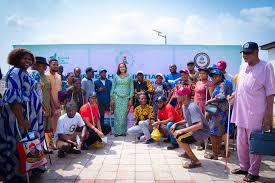
Nigeria’s First Lady, Senator Oluremi Tinubu, has empowered 9,500 persons living with disabilities across the country with a business recapitalisation grant of N200,000 each, totalling N1.9 billion.

The intervention, implemented through the Renewed Hope Initiative (RHI), was unveiled yesterday in Abuja as part of activities marking the 2025 International Day of Persons with Disabilities. A separate support package was also extended to 250 military and police veterans living with disabilities to bolster their small-scale enterprises.

Mrs Tinubu, who noted that national development was strengthened when every citizen was enabled to contribute meaningfully, said the programme aligned with President Bola Tinubu’s Renewed Hope Agenda.

Quoting Helen Keller, she said: “Alone we can do so little; together we can do so much,” adding that inclusivity and collective responsibility remained central to the RHI’s mandate.

According to her, 250 persons with disabilities in each state and the FCT are benefitting from the N200,000 grants, while all states, the FCT, and the Defence and Police Officers Wives Association (DEPOWA) received N50 million each for onward distribution.

“In total, 9,500 beneficiaries are receiving N1.9 billion,” she said, adding that the RHI had, in two years, supported more than 100,000 women and small business owners nationwide.

In her remarks, Mrs Mernan Oluyede, wife of the Chief of Defence Staff and President of DEPOWA, commended the First Lady’s “unwavering compassion,” noting that persons with disabilities—who constitute 16 per cent of the global population—still faced barriers in healthcare, education, employment, and social inclusion.

She said Mrs Tinubu’s leadership in health, education, agriculture, and social investment continued to uplift disadvantaged households across the country.

Beneficiaries, including retired Master Warrant Officer Patrick Ocheje and Inspector Adamu Yahaya, expressed gratitude, describing the support as a lifeline and a reminder that “there is ability in disability.”

The 2025 International Day of Persons with Disabilities is themed “Fostering Disability-Inclusive Societies for Advancing Social Progress.”

ICMPD, NAPTIP Strengthen School-Based Prevention As Child Trafficking Hits Alarming Levels

0

With children accounting for more than 75 per cent of trafficking victims in West Africa, the International Centre for Migration Policy Development (ICMPD) has intensified preventive efforts by training teachers in Enugu State on a new anti-trafficking curriculum approved for schools nationwide.

The two-day capacity-building workshop, funded by the Kingdom of the Netherlands and implemented in partnership with the National Agency for the Prohibition of Trafficking in Persons (NAPTIP), brought together teachers from selected schools to strengthen early detection and prevention of trafficking among school-aged children.

Head of ICMPD Nigeria Office, Ms. Isabelle Wolfsgruber, described human trafficking as one of the most disturbing threats facing Nigerian children. She noted that the alarming statistic — that over 75 per cent of trafficked persons are children — underscores the urgent need to equip teachers with tools to identify risks and protect pupils.

According to her, the School Anti-Trafficking Education and Advocacy Project (STEAP) was designed to deepen teachers’ understanding of TIP, improve practical classroom application, and create a network of Anti-Trafficking Champions in schools.

Wolfsgruber commended the Enugu State Ministry of Education, NAPTIP, and the Kingdom of the Netherlands for their collaboration in safeguarding children across communities.

Declaring the workshop open, NAPTIP Director-General, Dr. Binta Bello, represented by Mrs Ebele Ulasi, said human trafficking remained one of Nigeria’s gravest human rights abuses, with 55 per cent of victims being children within the country. She emphasised that such children, who deserve safe classrooms, often fall prey to exploitation.

Bello noted that integrating anti-trafficking content into school curricula had been years in the making, adding that teaching TIP themes in primary and secondary schools would empower children early enough to protect themselves.

The workshop, held across the five STEAP states — Delta, Edo, Enugu, Benue and Ogun — equipped teachers with modern methodologies, pedagogical tools, and age-appropriate techniques for delivering TIP lessons.

Mr Caroline Avah, Director of Review, Enugu State Ministry of Justice, said the state government continued its partnership with ICMPD to arrest and prosecute suspected traffickers.

Similarly, Mr Patrick Ochie of the Ministry of Education reaffirmed the state’s commitment to safeguarding learners, noting that prevention through education remained one of the strongest defences against traffickers.

Contemporary School Management And Ethical School Leadership

0

As Schools in Rivers State prepare to vacate for 2025/2026 Academic Session, Dr. Emmanuel Kaldick-Jamabo, an Education Leadership expert and a Public Affairs Analyst, writes on the need for School Heads to understand the concept of ethical School Leadership in contemporary school management practice.


The concept of School Leadership has been a subject of great debate among Scholars.

The question is what constitutes School leadership? What is identifiable leadership content and roles expected and are inherent in the concept, “School Leadership?

According to a British renowned Educationist and Writer Eleanor Wasserbery, the primary role of any leader particularly in a school context is the unification of people around key values”.

The core values she identified include: Schools are centered on learning- where all members of the school community are learners; where every member of the school community is valued as an individual. Besides, that school exists to secure its pupils and the local community, where Learning is about the development of the whole person and happens in and out of classrooms; where people prosper with trust, encouragement, and praise.

Thus, according to her school leadership is an aggregate leadership model aimed at unifying the common interest of producing and promoting lifelong learners that contribute to the development of the larger society.

In other words, School leadership is leadership for instruction and custodian of a brighter future, particularly for the learners. This is why Greenfield and Ribbins added that school leadership begins with the “character” of the leader expressed in terms of personal values, self-awareness, and emotional & moral capability.

School leadership is not only organizational leadership but also a moral and an embodiment of ethical leadership. School leadership is collective. It is a community of teachers and students led by a principal. It is a supportive and collaborative leadership designed to create a high expectation for teachers and students. It is a protective moral guide for the conscience, ethos, and cherished values and ethics of the larger society.

Indeed, the concept of school leadership is seen as a distinction between leadership, school management, and school administration, while also recognizing that the responsibilities of school leadership encompass all three.
According to scholars, irrespective of how these terms are defined, school leadership experience encompasses higher-order tasks designed to improve staff, students, and school performance beyond the routine maintenance of present operations-management and lower order duties of administration.
Thus, the three elements are so closely connected that it is unlikely for one of them to succeed without the others.

Nevertheless, one point is clear that the concept of the school principal ship is rooted in the industrial revolution model of schooling, where one individual bears the prime responsibility for the entire school organization.
On the contrary, School leadership in the contemporary school management context is rather a broader concept where the authority to lead does not primarily rest on one person, but can and is distributed among different people within and beyond the school.

Thus, school leadership encompasses people occupying various roles and functions such as principals, vice-principals, or HOD, (leadership teams and school-level staff involved in leadership tasks. It is indeed, a collective concept with particular reference to the supervisor, principal, the vice-principal, and possibly the Heads of Departments (HODs) in each secondary school.

Invariably, School leaderships simply refer to those in a leadership position who set the direction for the teachers and the students in a secondary school.

Other scholars often interchangeably used the term educational leadership for school leadership. But the concept of school leadership is used here as against education policymakers, whose duty it is to make policies for school leaders to implement or enforce to achieve general school academic improvement.

Furthermore, as it is used in this work, the concept simply refers to leading ethically. It is influencing teachers and students by the character disposition of the school leadership.
Ethical school leadership is supervisors, principals, vice–principals, and of course H.O.Ds. leading by following an approved set of values and rules and going beyond mere following rules, by actually acting out the approved set of rules at all times.

Ethical School Leadership is conducting the affairs of a school with the consciousness of morally right conduct. It is demanding, making a decision and setting the directions on what should be stirred up, how it should be stunned for, and how one should evaluate the pursuit of set objectives and goals of the school organization.
It is the school Supervisors, Principals, Vice Principals, and HODs providing ethical leadership by safeguarding and promoting approved moral values for schools.
Besides, as used in this work, Ethical School Leadership rests on certain fundamental pillars or components.

These are: The personal integrity of the leader that is the moral persona; The extent to which the leader can culturally integrate among his/her staff (teachers) and students consistently; The definite quality of the approved moral values for the educational system drawn from the aspirations of the society; The quality of the leader/follower relationship.
Expatiating further on this concept, William Hitt (1990), In his book Ethics and Leadership, established three basic points of connections or requirements between ethics and leadership.

These are:
I. Achieve an understanding of ethics.
II. Decisions made should be based on the leadership’s moral and ethical compass.
III. Developing and implementing a plan of action (rules, values) for promoting and demanding ethical conduct amongst teachers and students.

Again, it is important to spell out that the school system is the factory for the production of ethical leadership empowered with the knowledge of acceptable ways of behaviour, and conducting oneself. This is drawn from the platform of Godly and philosophical principles as entrenched in societal ethos and aspirations encapsulated in the National Policy on Education.

Therefore, school leaders are expected to be ethical leaders by the society and the government among other roles expectations as Oko (1998) said that the end product of education is the production of the “educated man”, who has the intellectual and moral strength to make the world a better place to live in. Ethical school leadership is therefore the art and practice of the production of the “educated man”. Indeed, School leadership matters.

In today’s world, the concept of School Leadership has now become a priority in education policy agenda internationally. It plays a key role in improving school outcomes by influencing the motivations and capacities of teachers, as well as the school climate and environment.

School Heads should therefore know that effective school leadership is essential in improving the efficiency and equity of schooling. As countries are seeking to adapt education systems to the needs of contemporary society, expectations for schools and school leaders are also changing. Many countries have moved towards decentralisation. They have moved to make schools more autonomous in their decision-making and hold them more accountable for results. At the same time, the requirement to improve overall student performance while serving more diverse student populations is putting schools under pressure to use more evidence-based teaching practices.

As a result of these trends, the function of school leadership across Nigeria is expected to now increasingly be defined by a demanding set of roles which include financial and human resource management, accountability and leadership for learning, and of course ethical leadership.

The truth is there are growing concerns across countries that the role of principals as conceived by the needs of the past is no longer appropriate.

Principals in Nigeria now have new workloads; while many are retiring and it is getting harder to replace them with effective hands. Potential candidates needed to know that roles are now more demanding and this is a source of concern, in addition to insufficient preparation and training.

These developments have made school leadership a priority in education systems across the world now.

As policymakers make efforts to enhance the quality of school leadership and make it sustainable, Scholars and System Actors have also identified four main policy initiatives that if implemented can improve school leadership practice:

Research has shown that school leaders can make a difference in schools and students’ performance if they are made to be up to speed and bridge the knowledge gap by clearly defining school leadership responsibilities

However, autonomy alone does not automatically lead to improvements unless it is well supported. In addition, it is important that as the core responsibilities of school leaders is clearly defined and delimited, School leadership responsibilities is being defined through an understanding of the practices most likely to improve teaching and learning.

Thus, as school prepare for the 1st term holidays, principals must resume with a fresh understanding of what is expected from them. And to say the least, what is expected from them is by no means less than this.


By Dr. Emmanuel Kaldick-Jamabo
An Education Leadership Expert
08097682297
Akwa Ibom Ranked Cleanest State In Nigeria For 2025 – Report

0

Akwa Ibom has been ranked the cleanest state in Nigeria for 2025, with a accumulative score of 79 per cent according to the State of the Nigerian Environment Report STONE 2025.

Mr Ene Owoh, National Coordinator Clean-Up Nigeria said this in an interview in Abuja on Wednesday.

“Akwa Ibom won the Stone 2025 Unbroken Green Crystal award Trophy and medal of service award for the 8th consecutive times, from 2018 to 2025.
Owoh who is also the Secretary of the National Technical Study Group (NTSG), said that the results were arrived at, during the State of the Nigerian Environment Report STONE 2025 unbroken and the Cleanliness Performance Index Ratings of all states in Nigeria, held in Abuja.
“Ebonyi and Enugu State followed closely, ranking 2nd and 3rd place with 65 per cent and 56 per cent respectively.

Owoh stated that the six geopolitical zones produced cleanliness champions namely: Akwa Ibom State South-South, 79 per cent, Enugu State South-East, 65 per cent.
“Lagos State South-West, 48 per cent Bauchi State North-East, 50 per cent, Plateau, North-Central, 52 per cent, and Kaduna State North-West, 35 per cent,” he said.

He revealed that the nine clean states are; Akwa Ibom, Enugu, Ebonyi, Bauchi, Plateau, Cross River, Anambra, Lagos, and FCT.
“The 15-member NTSG, led by Prof. Solomon Balogun, conducted the yearly study from November 2024 to November 2025.

“The study combined physical verification of all states and towns in Nigeria with a score point of 20 per cent and satellite imagery system that collects spectral data scoring 80 per cent monthly.

“The study used five variables namely :street/road cleanliness, vegetation and drainage control, waste management services, public opinion poll (POP), and knowledge, attitude, and practice (KAP) of hygiene and sanitation measures by the people.
“The report stated that in 2025, there was an 8 per cent performance in the procurement of waste management equipment by governments at all levels.
Owoh said that however, the health of sanitation workers dropped from 31 per cent in 2024 to 28 per cent in 2025.

“The incidence of sanitation-related diseases increased to 43 per cent in 2025, against 29 per cent recorded in 2024.

“The hygiene and sanitation practice of the people dropped to 32 per cent in 2025, against 36 per cent recorded in 2024.
“Open defecation has reduced from 24 per cent in 2024 to 19 per cent in 2025, but Nigeria remains the second country with the highest open defecation rating globally.
“Notably, in 2025, out of Nigeria’s estimated 240 million population, 187.2 million people are living in unclean environments, based on satellite imagery data.

According to him, The STONE report, states that the life expectancy of ordinary Nigerians has dropped from 50 years in 2024 to 47 years in 2025.
He therefore called on governments at all levels to increase funding for waste management services and urged citizens to prioritise hygiene and sanitation practices.

Owoh advocated for increased construction of public toilets to reduce open defecation and supported the establishment of health and environment clubs in schools nationwide to promote environmental awareness.

He expressed Clean- Up Nigeria’s willingness to partner with government and private sectors to improve cleanliness ratings nationwide.

He commended Sen. Oluremi Tinubu, the Wife of the President for her green initiative project and urged the Tinubu administration to adopt a green environmental agenda, focusing on city and nature living, energy research, green economy, and resources management.

INEC Ends First Phase Voter Registration, Dec. 10

0

The Independent National Electoral Commission (INEC) says physical (in-person) continuous voter registration exercise in the 17 local government areas of Yobe will end on December 10.

Alhaji Ibrahim Abdullahi, state INEC Resident Electoral Commissioner (REC), made this known in a statement in Damaturu on Wednesday.

He said the display of the preliminary register of voters for claims and objection would last for seven days, beginning from December 15 to December 21.

Abdullahi said the claims and objections would enable the registrants to correct errors on their bio data, including names, wards, National Identification Numbers (NIN).

Abdullahi said the Commission set aside December 21 for handling complaints arising from the claims and objections.

The REC, however, said the second phase of the continuous in-person voter registration would begin on January 5, 2026.

He recalled that the continuous voter registration began on August 18 with online registration, one week before the commencement of the in-person registration on August 25.

Abdullahi noted that registration of voters and production of an accurate register were fundamental and critical requirements of the electoral system.

“They are also primary functions of the Independent National Electoral Commission.

“Section 10 of the Electoral Act 2022 (as amended) mandates the Commission to conduct the registration of voters on a continuous basis,” the REC said.

Fubara Moves To Boost Youth Employment, Inaugurates 15-Member Monitoring Committee

0

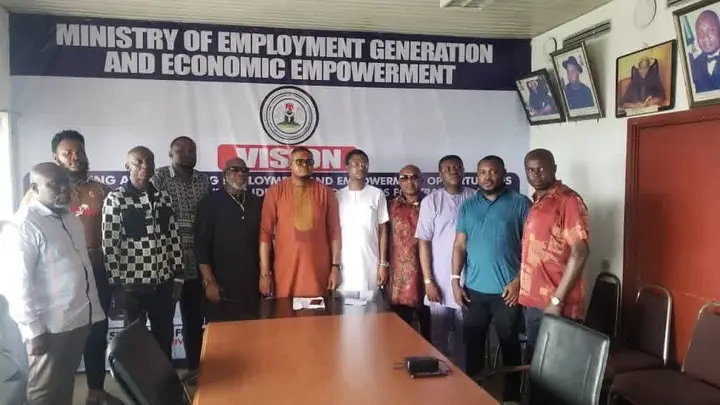
In a renewed drive to secure sustainable jobs and empowerment opportunities for young people across Rivers State, the Ministry of Employment Generation and Economic Empowerment on Tuesday, December 2, 2025, inaugurated a 15-member Employment Monitoring and Compliance Committee.

Speaking during the brief ceremony in Port Harcourt, Commissioner for Employment Generation and Economic Empowerment, Dr. Chisom Gbali, said the members were carefully selected for their competence, professionalism, and proven commitment to delivering on Governor Siminalayi Fubara’s mandate of aggressive job creation.

“The Governor has directed the ministry to vigorously pursue employment openings in telecommunications, oil and gas, and other critical sectors to place qualified Rivers youths in meaningful employment,” Dr. Gbali stated.

He emphasized that the assignment requires a professional and people-centered approach, especially when engaging corporate organizations on sensitive employment matters.

The committee’s key responsibilities include identifying companies with available vacancies, facilitating direct engagement between the ministry and such firms, and linking suitably qualified Rivers indigenes to job opportunities. It is also tasked with monitoring companies’ compliance with local content employment obligations across the state.

In his acceptance remarks, Committee Chairman Prince John Okorosa expressed gratitude to Governor Fubara and Dr. Gbali for the confidence reposed in the team. He assured that the committee would work diligently to deliver measurable results within the given timeline, in line with the administration’s broader youth empowerment vision.

Insecurity: Details of Tinubu’s Meeting With Service Chiefs Emerge

0

President Bola Ahmed Tinubu on Tuesday met with the nation’s Service Chiefs in a closed-door session as part of intensified efforts to address the growing insecurity across the country.

The president called for greater efficiency in strategies and results in the ongoing fight against insecurity in parts of Nigeria.

Tinubu gave the charge when he met with heads of intelligence agencies and service chiefs at the State House on Tuesday in Abuja.

Speaking after the meeting, the Chief of Defence Staff, General Olufemi Oluyede, said the president issued fresh directives and demanded improved results in the fight against insecurity.

The Service Chiefs arrived at the Presidential Villa around 5 p.m., and the meeting lasted for nearly two hours.

The session came a day after President Tinubu nominated former Chief of Defence Staff, Gen. Christopher Musa (rtd), as Minister of Defence, following the resignation of his predecessor, Abubakar Badaru.

Also, in attendance were the Chief of Defence Intelligence, Lt. General Akomaye Undiandeye; the Director-General of the Department of State Services, Oluwatosin Ajayi; and the Inspector-General of Police, Kayode Egbetokun.

Recall that last week, President Tinubu declared a nationwide security emergency after a surge in kidnappings and killings across several states.

Measures announced by the President included the recruitment of 20,000 additional police officers and the deployment of forest guards, among other security reforms.

Others present at Tuesday’s meeting were the Chief of Army Staff, Lt. General W. Shaibu; the Chief of Air Staff, Air Vice Marshal Sunday Aneke; and the Chief of Naval Staff, Vice Admiral I. Abbas.

General Oluyede described the meeting as “engaging,” noting that the President’s new directives are expected to yield stronger results in the nationwide security operations.

He assured Nigerians that security agencies are enhancing coordination to ensure peaceful Christmas and New Year celebrations.

Fubara Orders Revalidation of 1,000 Teachers as Rivers Moves to Strengthen Basic Education

0

In a decisive step toward closing the manpower gaps in public schools across Rivers State, Governor Siminalayi Fubara has approved revalidation of 1,000 teachers earlier recruited in 2023.

The move underscores the Governor’s commitment to repositioning the education sector and ensuring that public schools are adequately staffed to meet the growing demands of basic education in the state.

According to an official statement issued by the Chairman of the Rivers State Universal Basic Education Board (RSUBEB), Hon. Sam Ogeh, all teachers recruited in 2023 are required to undergo a mandatory revalidation exercise.

The exercise has been scheduled for Wednesday, December 3, 2025, at the RSUBEB State Office, Elechi Beach, beginning at 10:00 a.m. Affected teachers are expected to present themselves with their original appointment and posting letters.

Hon. Ogeh explained that the revalidation is part of a broader effort initiated by the Governor to reposition the basic education system, eliminate administrative discrepancies, and ensure that only duly qualified and verified teachers take up positions in public schools. He noted that the process will also help the Board properly align staff deployment with the needs of various schools across the state.

“The Governor has remained consistent in his commitment to strengthening the educational foundation of Rivers children,” Ogeh said. “This revalidation exercise is essential to ensure transparency and proper documentation as we deploy more teachers to classrooms where they are most needed.”

Stakeholders have praised the initiative, saying it comes at a time when many schools, particularly in rural communities are grappling with shortages of teachers. The revalidation drive is expected to significantly boost teaching capacity and enhance learning outcomes across the state.

With this renewed push, the Fubara administration is charting a more robust path toward improving public education, reassuring parents, students, and teachers that better days lie ahead for the state’s school system.

It would be recalled that Governor Fubara last Monday restated that amidst glaring challenges, his administration remained committed and focused on prioritizing education infrastructure in the State 2026 budget.

Governor Fubara disclosed this while addressing the 123rd and 124th combined quarterly general meeting of the Rivers State Council of Traditional Rulers at the Council Secretariat.

He explained that the 2026 budget will make provision for job creation and the refurbishment of schools in the state, which are in deplorable conditions, having given due consideration to roads and the health sector.

Edo State to Host Niger Delta Sports Festival, Lauds NDDC

0

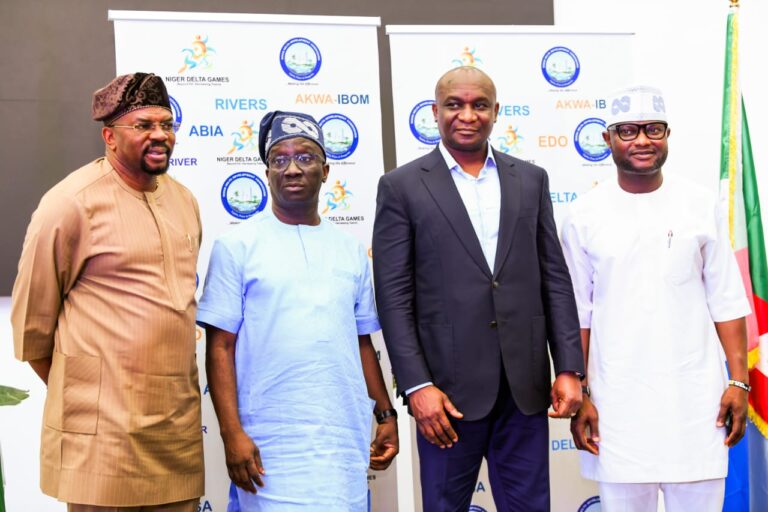
The Governor of Edo State, Senator Monday Okpebholo, has commended the Niger Delta Development Commission, NDDC, for offering the state the hosting rights of the 2026 Niger Delta Sports Festival.

A statement signed by Seledi Thompson-Wakama, Director, Corporate Affairs of the NDDC said that Senator Okpebholo gave the commendation when the NDDC Managing Director, Dr Samuel Ogbuku, led a team of the Commission’s officials, including the NDDC Executive Director of Finance and Administration, Alabo Boma Iyaye, the Edo State Representative on the Board of the Commission, Hon. Patrick Aisoweiorem, and other Directors, on a courtesy visit to the Government House, Benin City.

Governor Okpegholo acknowledged the achievements recorded by the NDDC in recent times, noting a positive turnaround in the execution of projects in Edo State.

The Governor said the Niger Delta Sports Festival would harness the youth’s potential, promote unity and community development in the Niger Delta region.

He commended the NDDC for initiating the sports festival, which he said had provided a platform to bring young sports talents from the region together. According to him, “this praiseworthy initiative would foster youth development, promote peace, and contribute to economic growth.”

In his remarks, the NDDC Managing Director, Dr Samuel Ogbuku, affirmed that the Commission was engaging all stakeholders to ensure harmony and cooperation in the development of the Niger Delta region.
Ogbuku urged state governors in the Niger Delta region to increase their collaboration with the NDDC to promote economic and sustainable development in the oil-rich region.

The NDDC boss restated the importance of stakeholder engagements, which he noted was a key pillar of President Bola Ahmed Tinubu’s Renewed Hope Agenda. He observed that events like sports festivals were not just about competition but also about unity, development, and the discovery of homegrown talents.

Ogbuku stated: “We are all united by a common problem, such as environmental challenges. We should leverage on sports as a uniting factor.”

The Managing Director noted that previous partnerships had been very beneficial to the Niger Delta region. He recalled that the NDDC successfully executed the 27.5-kilometre Ogbia-Nembe Road, constructed in collaboration with Shell Petroleum Development Company, SPDC.

He noted that the Commission recently completed the emergency reconstruction of the Irrua-Ewu-Agbede Road in Uhunwonde/Esan West Local Government Area of Edo State.

Ogbuku explained that the Irrua-Aviele project would link up with the Benin-Irrua road project being executed by the Federal Ministry of Works.

He acknowledged the contributions of the Minister of Regional Development, Engr. Abubakar Momoh, describing him as an excellent motivator for many achievements recorded by the NDDC.

Also speaking, the Executive Chairman of the Edo State Sports Commission, Mr Desmond Enabulele, said that the state was peaceful and rich in culture. He thanked the state governor for his massive support for sports development in the state.

How Bank Of Industry Disbursed N1.27trn to 14 Sectors In 2024 – Official

0

The Bank of Industry (BoI) has disbursed more than ₦1.27 trillion to enterprises across 14 sectors directly and indirectly in 2024.

The Chief Executive Officer of BoI, Dr Olasupo Olusi, disclosed this during the 10th Nigeria Energy Forum (NEF) Day 2 edition held virtually on Tuesday in Lagos.

Olusi was represented by the Executive Director, Public Sector and Intervention Programme, BoI, Ms Mabel Ndagi.

He said the bank during the period supported more than 900,000 jobs.

He noted that BoI had been at the forefront of Nigeria’s industrial transformation, supporting enterprises of all sizes to expand production, enhance value addition, and drive employment creation.

“The ₦200bn Federal Government MSME Intervention Fund, managed by BoI, provides affordable financing to small businesses nationwide through three dedicated windows.

“₦50bn for the Presidential Conditional Grant Scheme, ₦75 billion for the MSME Intervention Fund, and ₦75 billion for the Manufacturing Sector Fund.

“The bank is also expanding investments in green finance and circular economy solutions, supporting industries that integrate renewable energy, energy efficiency, and low-carbon processes,” he said.

He said the bank would continue to dominate leadership role in financing renewable energy infrastructure, clean manufacturing, and climate-smart industrial practices.

Also speaking, Ms Jadesola Rawa, Senior Associate, Grants Management, All On, an impact investment firm, said the Tertiary Institutions Energy Innovation Challenge (TIEC 3.0) was co-created by All On as Principal TIEC3.0 sponsor and implemented by the NEF.

Rawa said that the challenge was introduced to accelerate student-led energy innovation solutions for under-served and un-served communities in Nigeria.

Mrs Bamise Olanrewaju, NEF Director of Innovation, said the challenge featured winning teams represented by their Chief Executive Officers, Febechi Uzomadike (Green Preserve, Cross Rivers State University), Justice Esiri (AI Hybrid Agro Dryer, University of Lagos) and Fubara David (Keytric, University of Port Harcourt).

“The All On TIEC3.0 winners reported progress on product enhancements, community engagement and business structuring, using insights received from expert assessors and mentors,” she said.

Inga Stefoniwicz, Head of Green Growth and Digital Economy, European Union (EU) Delegation in Nigeria, said the union would invest in smart, clean and secure infrastructure in energy and other key sectors across the world to tackle inequalities.

Stefoniwicz added that the investment would put the Sustainable Development Goals back on track.

According to her, Africa-EU Green Energy Initiative will increase the number of African people, businesses and industries having access to affordable, modern and sustainable energy services.

“It will also support investments in renewable energy generation and promote energy efficiency so that by 2030, it will provide at least 100 million people with access to electricity.

“The EU has been the biggest donor partner in terms of grants to Nigeria’s power sector (with about €300 million since 2008 and including the current NIP,” she said.

Mr John Sloan, the Economic Affairs Officer, Economic Commission for Africa (ECA), said there is great potential for the green energy transition to yield significant opportunities for industrialisation and job creation in mineral-producing communities across Africa.

“Special economic zones are engines of job creation, fostering inclusive industrialization by providing sustainable employment opportunities for the local workforce,” Sloan said.

The NEF Co-Chair, Mr Adekunle Makinde, said sustainable production, value addition and industrialisation of lithium in Nigeria would foster economic growth, create quality jobs and enhance environmental protection.

Makinde added that adoption and localisation of both the United Nations Resource Management Systems and African Green Minerals strategies in minerals processing projects in Nigeria would strengthen capacity building and contribute to achieving global sustainable development goals.

Ms Xandra Weinbeck, the Senior Business Development Manager, Materials Circular Economy, Invest NL, said supporting industry in critical raw material economy enhances economic resilience and sustainability.

In his remarks, Dr Daniel Adeuyi, the NEF Group Chairman said the 10th Africa Youth Energy Innovation Challenge (AEIC) organised by the NEF and co-supported by GEF-SGP UNDP, BoI and PCNG-I, attracted over 400 entries from 38 out of 54 countries in Africa.

Adeuyi disclosed that more than 30 per cent of the participating teams were led by young women.

“The 2025 AEIC finalists were held during NEF2025 Day 2, comprising six independent expert assessors from the global energy community.

“The first prize winner Ecofuel Bioenergy DRC Grid Guard, Nigeria, received both the second prize and Public Vote Winner Prize.

“The third prize was awarded to AgroCold Solar Hub, Nigeria,” he said.

The most successful AEIC projects will be invited to showcase progress and exhibit products at the upcoming 11th Nigeria Energy Forum 2026 in July with the theme: “Upscaling Value Addition for Sustainable Industrialisation,” to be held in Lagos.