

Home Blog

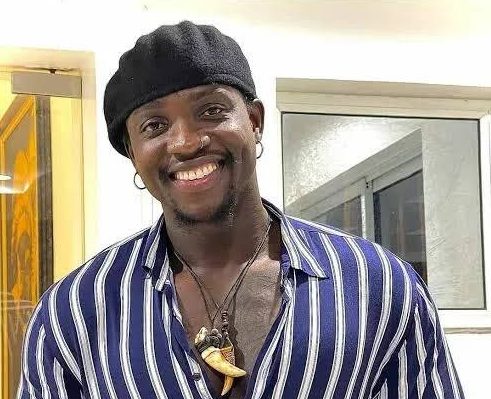
Kidnap Allegations: VDM Says He Has Evidence, Challenges Police To Charge Him

Social media activist Martins Otse, popularly known as VeryDarkMan (VDM), has insisted that he has evidence to support his allegation that some security personnel aid kidnapping and banditry in Nigeria, but said he would not hand over the evidence to the police.

Otse, who reacted on Thursday to an invitation extended to him by the Nigeria Police Force (NPF), said he was willing to honour the invitation but would prefer to present his evidence before a court.

“I’m not going to be giving the police my evidence. Why would I do that? I would be charged to court, and I would turn down the evidence in court,” he said in a video posted on his Instagram page.

The activist had alleged that some police officers manning checkpoints along major highways identify wealthy travellers and allegedly pass information about them to kidnappers to facilitate their abduction.

The allegation prompted the police to invite Otse to provide evidence, describing his claims as serious, unsubstantiated and capable of damaging the reputation of the institution.

The Force, however, said it was prepared to treat any evidence supplied by the activist with urgency and subject it to thorough investigation.

But Otse maintained that he would not submit the evidence at the police station, challenging the authorities to charge him to court if they believed his allegations amounted to an offence.

“So when I get to your office, you charge me to court. I can go to court on that same day. My lawyers are on ground,” he said.

His refusal to surrender the evidence to the police, however, came with a renewed insistence that he possesses information capable of backing his allegations against security personnel.

Otse alleged that elements within the police, military, immigration and customs services were aware of, or were contributing to, the persistence of insecurity in the country.

“It is the police people that aid insecurity. It is the military men that benefit from insecurity. That’s why it can never stop,” he alleged.

He also questioned why banditry, terrorism and kidnapping continue to thrive despite substantial government expenditure on national security.

“How much is your budget to battle insecurity? How much is your budget? Go and look at your budget and tell me why we still have bandits and terrorists kidnapping people,” he said.

Otse said he was prepared to face both the police and military in court over his allegations, insisting that the invitation would not deter him from speaking publicly about issues affecting the country.

“But like I said, why would I want to give you my evidence? I wouldn’t do that. Who would take you to court? You understand? When you’re ready, I’m ready. Face the love, don’t play,” he said.

The activist also criticised Nigerians who, according to him, had rallied behind security agencies following his allegations, despite frequently expressing frustration over the failure of the police and military to curb kidnapping, banditry and terrorism.

For now, the central issue remains whether the evidence Otse says he possesses will eventually be presented before a court or made available to investigators to enable the allegations to be independently established.

DHQ Warns Against Fake AI Video Targeting Nigeria’s Defence Chief

The Defence Headquarters (DHQ) in Nigeria has dismissed as fake and malicious an artificial intelligence-generated video purporting to show the Chief of Defence Staff (CDS), General Olufemi Oluyede, making partisan political statements.

The military authorities, in a statement issued on Thursday by the Director of Defence Information, Major General Samaila Uba, said the video did not emanate from the CDS and that the statements attributed to him were false.

Uba said the fabricated video was apparently created to deceive the public, misrepresent the position of the Chief of Defence Staff and damage the reputation of the Armed Forces of Nigeria (AFN).

“The Defence Headquarters wishes to state unequivocally that the video is fake and did not emanate from the Chief of Defence Staff. The statements attributed to the CDS in the video are false and should be completely disregarded,” he said.

According to him, the video was produced through artificial intelligence manipulation, describing its circulation as a deliberate attempt to mislead members of the public.

The Defence Headquarters stressed that the Armed Forces of Nigeria remains a professional, apolitical and non-partisan institution committed to the Constitution of the Federal Republic of Nigeria and the defence of the nation.

The military therefore condemned the creation and circulation of the video and warned those behind it, as well as individuals knowingly amplifying the material, to desist immediately.

It urged members of the public not to be misled by the video, advising them to verify information concerning the military through official Defence Headquarters communication channels.

The statement, dated August 27, 2026, was signed by Major General Samaila Uba, Director, Defence Information.

The DHQ said its verified communication platforms include Defence Headquarters Nigeria on Facebook and WhatsApp, DHQNigeria on X, DefenceHQ on Instagram and DefenceTV-Nigeria on YouTube.

Police Challenge VeryDarkMan: Produce Evidence Linking Officers to Kidnapping

The Nigeria Police Force has challenged social media activist, Martins Vincent Otse, popularly known as VeryDarkMan (VDM), to produce evidence backing his allegation that police officers manning checkpoints on major highways provide kidnappers and bandits with information about travellers.

The Force described the allegation as serious, unsubstantiated and capable of damaging public confidence in an institution saddled with the responsibility of protecting lives and property.

Otse had made the allegation at the recent Nigerian Bar Association (NBA) Conference in Port Harcourt, claiming that some police personnel at checkpoints identify wealthy travellers and allegedly relay information about their identity and movements to criminal groups, thereby facilitating their abduction for ransom.

Reacting in a statement issued on Thursday by the Force Public Relations Officer, CSP Ani Iniedu, and posted on its verified X account, the police said Otse must come forward with the evidence upon which he based the allegation.

“Accordingly, the Nigeria Police Force hereby invites Mr. Martins Vincent Otse to produce, without delay, the evidence upon which he based these serious allegations,” the statement said.

The Force specifically demanded evidence showing that police personnel at checkpoints identify wealthy individuals and subsequently transmit information about them to kidnappers for the purpose of facilitating their abduction.

It assured that any credible evidence presented would be treated with urgency and subjected to thorough investigation.

The police said while individual officers found to have compromised their duties would face disciplinary measures and prosecution where necessary, the entire institution should not be condemned on the basis of allegations made without evidence.

The Force maintained that personnel deployed to checkpoints and other strategic locations were there to prevent crime, detect criminal activity and protect citizens, rather than facilitate kidnapping.

It also highlighted the risks faced by police officers in the line of duty, noting that personnel had been ambushed, attacked and killed by terrorists, kidnappers and other violent criminals, while police stations, formations and operational assets had equally come under attack.

According to the statement, blanket accusations against the Force were unfair to the hundreds of thousands of officers who continue to perform their duties under difficult and dangerous conditions.

The police, however, reiterated its commitment to investigating credible allegations of misconduct, stressing that officers found culpable would not be shielded.

It urged members of the public who possess evidence of police misconduct to submit such information through appropriate channels to enable proper investigation and prosecution.

The Force further cautioned against making or circulating unverified allegations concerning national security institutions, saying legitimate criticism could strengthen accountability, while unsupported claims could undermine public trust and national security.

UNITAR-CIFAL Nigeria, Universities Launch Webinar Series On Global Energy Transition, Oil Legacy

The United Nations Institute for Training and Research (UNITAR) CIFAL Nigeria, in collaboration with the University of Newcastle, Rivers State University (RSU) and the University of Surrey, has announced a three-part international webinar series on energy security, resource wealth and the challenges of transitioning from fossil fuels.

The series, titled “The Politics of Power: Energy Security, Resource Wealth, Global Energy Transition, The Long Goodbye, Living with the Legacy and Balancing Responsibility with Opportunity,” will examine the economic, environmental, social and political consequences of resource production and its eventual decline.

The initiative is expected to draw lessons from resource-producing communities in different parts of the world, including the Hunter Valley in Newcastle, Australia, and the Niger Delta, particularly Ogoniland.

The first session, “The Long Goodbye,” will be hosted by CIFAL Newcastle on Friday August 28, 2026, at 9 a.m. West Africa Time.

It will focus on what happens to communities when mining and other resource industries decline or close, with particular attention to the economic and social consequences of resource depletion and possible pathways for communities to adapt.

The second webinar, “Living with the Legacy of Oil Mining in Niger Delta,” will be hosted by CIFAL Nigeria on September 25 at 9 a.m. WAT.

The session will examine the enduring effects of oil production on communities, livelihoods and the environment, while also exploring how political decisions have shaped the future of resource-producing communities, with lessons from Ogoniland.

The final session, “Balancing Responsibility with Opportunity,” will be hosted by CIFAL Surrey, United Kingdom on October 30 at 8 a.m.

It will examine the difficult balance between energy security and climate action, as well as how regulation, technological innovation and other measures can support sustainable energy futures.

The organisers said the series would provide an opportunity to examine the politics surrounding energy production and transition, particularly the choices facing governments and communities as the world moves towards cleaner sources of energy.

The webinars will be moderated by the Director of CIFAL Nigeria, Mrs Ihuoma Njemanze.
Participants will also receive certificates of participation at the end of the three-part webinar series.

https://uonewcastle.zoom.us/webinar/register/WN_TKxnQNiNRp-vTeo_OIZcBA#/registration

Fubara Charges NYSC Corps Members To Leave Lasting Legacies In Rivers Communities…As 3,344 End Orientation In Rivers

Rivers State Governor, Siminalayi Fubara, has charged members of the National Youth Service Corps (NYSC) deployed to the state to embrace patriotism, selflessness and integrity by leaving lasting legacies in their host communities.

Fubara gave the charge yesterday at the closing ceremony of the 2026 Batch ‘B’ Stream II orientation course for corps members deployed to Rivers State.

Represented by the Permanent Secretary, Cabinet Bureau, Office of the Secretary to the State Government, Dr Promise Oguzie, the governor urged the corps members to approach their service year with commitment and dedication, stressing that they owed the country a responsibility to contribute to national development.

He said: “You owe Nigerians the responsibility of serving with integrity, commitment and dedication in order to build the nation of our collective dreams.”

Fubara also assured the corps members that his administration remained committed to their welfare and security throughout their service year, urging them to give their best in serving the people of Rivers State.

The governor said their deployment to different communities presented an opportunity to make meaningful contributions beyond the formal requirements of the NYSC scheme.

Earlier, the NYSC State Coordinator in Rivers, Moses Oleghe, appealed to the governor to approve the release of funds for the immediate construction of 1,000-capacity hostels for male and female corps members at the orientation camp.

Oleghe urged the corps members to maximise the opportunities provided by the service year, describing it as a period for personal development, skills acquisition and preparation for their future careers.

He advised them to use their experiences in their host communities to broaden their understanding of Nigeria and develop values that would contribute to national unity and development.

A total of 3,344 corps members, comprising 1,357 males and 1,987 females, successfully completed the orientation course.

Why We Created Four New Army Divisions — COAS

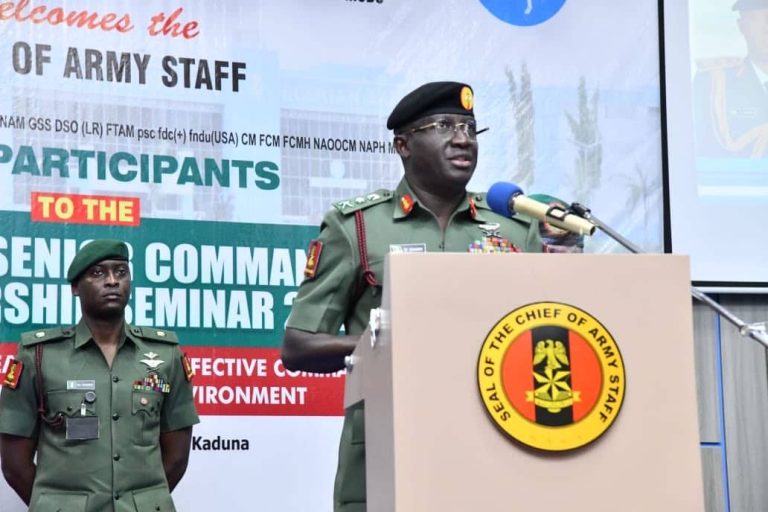
The Chief of Army Staff (COAS), Lt.-Gen. Waidi Shaibu, has explained that the creation of four additional divisions in the Nigerian Army was driven by the need to strengthen command capacity and respond more effectively to Nigeria’s increasingly complex security environment.

Shaibu spoke on Wednesday at the opening of the Second Senior Command and Leadership Seminar 2026 at Headquarters, 1 Division, Nigerian Army, Kaduna.

The seminar, themed, “Strategic Leadership for Effective Command in an Evolving Security Environment,” brought together senior commanders and resource persons to examine emerging security challenges and strengthen leadership capacity across the Army.

The COAS said the expansion of the Army from eight to 12 divisions should not be viewed merely as an increase in manpower or equipment, but as a strategic response to the changing nature and geographical spread of security threats across the country.

He said the new formations were intended to enhance command and control, improve the Army’s responsiveness and enable it to maintain a stronger operational presence in areas facing growing security challenges.

Shaibu, however, warned that creating new formations would only achieve its purpose if commanders were able to transform them into cohesive, credible and combat-ready fighting organisations.

“The expansion of the Army from eight to 12 divisions presents both an opportunity and a major leadership responsibility. It goes beyond increasing manpower and equipment. Our senior commanders have a decisive role in transforming these newly established formations into cohesive, credible and combat-ready fighting organisations,” he said.

He charged commanders to ensure that the values they promote, standards they enforce and leaders they develop would strengthen the effectiveness of the new formations for years to come.

The COAS said the contemporary operating environment had become increasingly complex, citing terrorism, insurgency, banditry, transnational organised crime, cyber threats, disruptive technologies and information warfare among the challenges confronting the military.
He urged commanders to develop strategic foresight, professional competence and the ability to make sound decisions under uncertainty.

Shaibu also drew attention to the growing battle for public perception, warning that adversaries were increasingly deploying misinformation, deliberate distortion and manipulation of public opinion to undermine the credibility of the military.

He said commanders must therefore integrate the information environment into campaign design, operational planning and military operations, while ensuring that official communication remained timely, accurate and credible.

According to him, the Nigerian Army’s credibility could not be sustained through communication alone if troops failed to maintain professional standards in the field.

He directed commanders to enforce strict compliance with the Rules of Engagement, respect for human rights, protection of civilians and accountability at all levels.

The COAS said the conduct of soldiers in the field could have consequences extending beyond individual operations, stressing that professionalism remained central to protecting the legitimacy and public confidence in the Army.

He urged the participants to convert lessons from the seminar into practical improvements in command, campaign planning, operational effectiveness and institutional performance.

Shaibu also charged commanders to build cohesive teams, mentor younger officers, develop successors, empower subordinates, encourage innovation and strengthen engagement with communities and legitimate stakeholders within their areas of responsibility.

He said the effectiveness of the Army’s expanded force structure would ultimately depend on the quality of leadership provided by its commanders and their ability to adapt to an evolving security and information environment.

2027: My Legacy Projects Will Give APC Advantage in Rivers — Fubara …Commissions 14.5km Agba-Ndele Road, Bridge Projects

0

Governor of Rivers State, Sir Siminalayi Fubara (middle) acknowledging cheers from the crowd as he commissioned the Agba-Ndele Road and Bridge projects on Wednesday.

Governor of Rivers State, His Excellency, Sir Siminalayi Fubara, has declared that his sterling performance in the delivery of legacy projects will give the All-Progressives Congress (APC) an advantage in the forthcoming General Elections, as candidates of the ruling party will be leaning on his track records when they go out on electioneering campaigns.

Governor Fubara stated this on Wednesday during the commissioning of the 14.5 kilometre Agba-Ndele Road and a 200meter-long bridge, a strategic link between communities in Emohua and Abua/Odual Local Government Areas of Rivers State.

He stated that the projects, like several others commissioned last week, will serve as a strong campaign tool for the APC as it will make it easier for the party’s candidate to connect with voters at the grassroots.

“I believe that what we have done here today will make it easy for our candidate that will be representing us in the forthcoming elections. When he comes here to campaign, more especially in Emohua, he will tell them: my party did this and my party did that. So, it will be easy for us to win election here,” he said.

The Governor described the road and bridge as part of his administration’s determination to take development to the grassroots and ensure that governance translates into visible benefits for the people. According to him, government intervention on the road became necessary after noticing the deplorable state of the old Abua Road and the long hours commuters were losing on the route.

“Like I’ll always say, I’m not interested in just doing anything, I’m interested in doing something that can add value and change the life of our people. I can beat my chest this afternoon to say, the value of this project cannot be overrated. It is something that had come at the right time, when our people from Abua, our people from this other side of Ahaoda are having difficulties on the old Abua road. So, with this project, I think that part of the problems they are having there will be solved,” he said.

The Governor disclosed that the bridge was not initiated by his administration, nor by his immediate predecessor, but by an earlier government. He however noted that he was motivated to intervene because of his belief that governance is a relay race in which each administration should endeavour to continue from where their predecessor stopped.

He said his administration decided to complete the project because of its importance to the people of Agba-Ndele and surrounding communities.

“When you see something that will benefit the people, it doesn’t matter who started it. What is important is you complete it and put it to use. So, I want to thank everyone who has supported us in this project, most especially the people of Ndele who gave their total commitment to the contractor. Without you giving that support, this project wouldn’t have been completed and we won’t be here today”, he said.

Governor Fubara also charged the Chairman of Emohua Local Government Area, Hon Chidi Lloyd and the Chairman of Abua/Odual Council, Hon Owolobi Michael Ofori to take direct responsibility for the protection of projects sited in their domains.

The Governor also called on the people of Agba-Ndele and adjoining communities to see the road and bridge as their own assets. He urged residents, youth groups, and traditional rulers to take ownership of the facility and ensure it serves the purpose for which it was built. According to him, government can build, but the people must protect.

Fubara warned strongly against vandalism and the destruction of public infrastructure, noting that such acts set communities back and amount to a waste of public resources.

The Rivers State Commissioner for Works, Prof. Temple Nwofor, who gave details of the project, said the road measures 14.5 kilometres, with a 10.3-metre binder-course width, a 7.3-metre wearing-course width and three-metre shoulders, while the drainage section measures 0.6 metres by 0.6 metres. The bridge, Nwofor said, comprises a 239.4-metre structure with a 10.3-metre width, including 1.5-metre walkways on both sides, as well as a 1.2-kilometre access road.

UNITAR-CIFAL Nigeria, Universities Launch Webinar Series On Global Energy Transition, Oil Legacy

The United Nations Institute for Training and Research (UNITAR) CIFAL Nigeria, in collaboration with the University of Newcastle, Rivers State University (RSU) and the University of Surrey, has announced a three-part international webinar series on energy security, resource wealth and the challenges of transitioning from fossil fuels.

The series, titled “The Politics of Power: Energy Security, Resource Wealth, Global Energy Transition, The Long Goodbye, Living with the Legacy and Balancing Responsibility with Opportunity,” will examine the economic, environmental, social and political consequences of resource production and its eventual decline.

The initiative is expected to draw lessons from resource-producing communities in different parts of the world, including the Hunter Valley in Newcastle, Australia, and the Niger Delta, particularly Ogoniland.

The first session, “The Long Goodbye,” will be hosted by CIFAL Newcastle on Friday August 28, 2026, at 9 a.m. West Africa Time.

It will focus on what happens to communities when mining and other resource industries decline or close, with particular attention to the economic and social consequences of resource depletion and possible pathways for communities to adapt.

The second webinar, “Living with the Legacy of Oil Mining in Niger Delta,” will be hosted by CIFAL Nigeria on September 25 at 9 a.m. WAT.

The session will examine the enduring effects of oil production on communities, livelihoods and the environment, while also exploring how political decisions have shaped the future of resource-producing communities, with lessons from Ogoniland.

The final session, “Balancing Responsibility with Opportunity,” will be hosted by CIFAL Surrey, United Kingdom on October 30 at 8 a.m.

It will examine the difficult balance between energy security and climate action, as well as how regulation, technological innovation and other measures can support sustainable energy futures.

The organisers said the series would provide an opportunity to examine the politics surrounding energy production and transition, particularly the choices facing governments and communities as the world moves towards cleaner sources of energy.

The webinars will be moderated by the Director of CIFAL Nigeria, Mrs Ihuoma Njemanze.
Participants will also receive certificates of participation at the end of the three-part webinar series.

https://uonewcastle.zoom.us/webinar/register/WN_TKxnQNiNRp-vTeo_OIZcBA#/registration

Fubara Charges NYSC Corps Members To Leave Lasting Legacies In Rivers Communities …As 3,344 End Orientation In Rivers

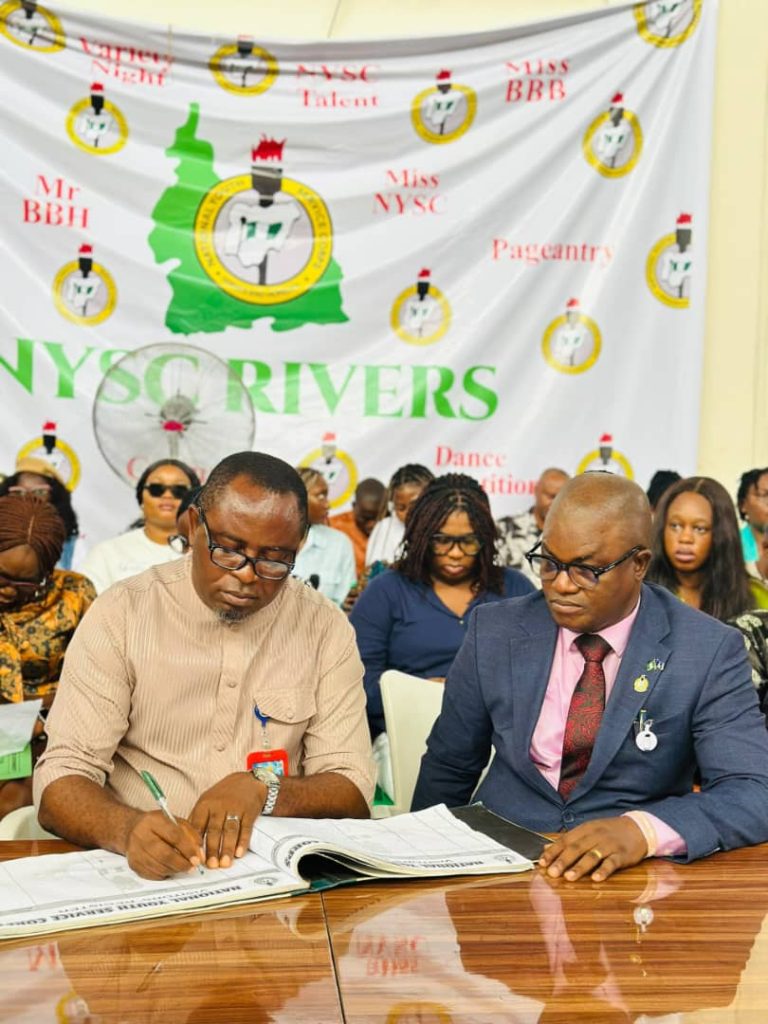
Representative of Rivers State Governor, Promise Oguzie(left) and Rivers State NYSC Coordinator, Moses Oleghe at the occasion.

Rivers State Governor, Siminalayi Fubara, has charged members of the National Youth Service Corps (NYSC) deployed to the state to embrace patriotism, selflessness and integrity by leaving lasting legacies in their host communities.

Fubara gave the charge yesterday at the closing ceremony of the 2026 Batch ‘B’ Stream II orientation course for corps members deployed to Rivers State.

Represented by the Permanent Secretary, Cabinet Bureau, Office of the Secretary to the State Government, Dr Promise Oguzie, the governor urged the corps members to approach their service year with commitment and dedication, stressing that they owed the country a responsibility to contribute to national development.

He said: “You owe Nigerians the responsibility of serving with integrity, commitment and dedication in order to build the nation of our collective dreams.”

Fubara also assured the corps members that his administration remained committed to their welfare and security throughout their service year, urging them to give their best in serving the people of Rivers State.

The governor said their deployment to different communities presented an opportunity to make meaningful contributions beyond the formal requirements of the NYSC scheme.

Earlier, the NYSC State Coordinator in Rivers, Moses Oleghe, appealed to the governor to approve the release of funds for the immediate construction of 1,000-capacity hostels for male and female corps members at the orientation camp.

Oleghe urged the corps members to maximise the opportunities provided by the service year, describing it as a period for personal development, skills acquisition and preparation for their future careers.

He advised them to use their experiences in their host communities to broaden their understanding of Nigeria and develop values that would contribute to national unity and development.

A total of 3,344 corps members, comprising 1,357 males and 1,987 females, successfully completed the orientation course.

Why We Created Four New Army Divisions — COAS

0

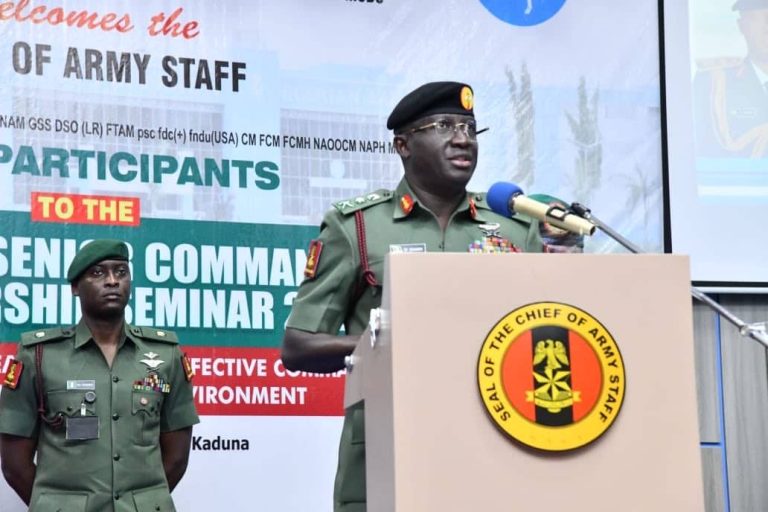
The Chief of Army Staff (COAS), Lt.-Gen. Waidi Shaibu, has explained that the creation of four additional divisions in the Nigerian Army was driven by the need to strengthen command capacity and respond more effectively to Nigeria’s increasingly complex security environment.

Shaibu spoke on Wednesday at the opening of the Second Senior Command and Leadership Seminar 2026 at Headquarters, 1 Division, Nigerian Army, Kaduna.

The seminar, themed, “Strategic Leadership for Effective Command in an Evolving Security Environment,” brought together senior commanders and resource persons to examine emerging security challenges and strengthen leadership capacity across the Army.

The COAS said the expansion of the Army from eight to 12 divisions should not be viewed merely as an increase in manpower or equipment, but as a strategic response to the changing nature and geographical spread of security threats across the country.

He said the new formations were intended to enhance command and control, improve the Army’s responsiveness and enable it to maintain a stronger operational presence in areas facing growing security challenges.

Shaibu, however, warned that creating new formations would only achieve its purpose if commanders were able to transform them into cohesive, credible and combat-ready fighting organisations.

“The expansion of the Army from eight to 12 divisions presents both an opportunity and a major leadership responsibility. It goes beyond increasing manpower and equipment. Our senior commanders have a decisive role in transforming these newly established formations into cohesive, credible and combat-ready fighting organisations,” he said.

He charged commanders to ensure that the values they promote, standards they enforce and leaders they develop would strengthen the effectiveness of the new formations for years to come.

The COAS said the contemporary operating environment had become increasingly complex, citing terrorism, insurgency, banditry, transnational organised crime, cyber threats, disruptive technologies and information warfare among the challenges confronting the military.
He urged commanders to develop strategic foresight, professional competence and the ability to make sound decisions under uncertainty.

Shaibu also drew attention to the growing battle for public perception, warning that adversaries were increasingly deploying misinformation, deliberate distortion and manipulation of public opinion to undermine the credibility of the military.

He said commanders must therefore integrate the information environment into campaign design, operational planning and military operations, while ensuring that official communication remained timely, accurate and credible.

According to him, the Nigerian Army’s credibility could not be sustained through communication alone if troops failed to maintain professional standards in the field.

He directed commanders to enforce strict compliance with the Rules of Engagement, respect for human rights, protection of civilians and accountability at all levels.

The COAS said the conduct of soldiers in the field could have consequences extending beyond individual operations, stressing that professionalism remained central to protecting the legitimacy and public confidence in the Army.

He urged the participants to convert lessons from the seminar into practical improvements in command, campaign planning, operational effectiveness and institutional performance.

Shaibu also charged commanders to build cohesive teams, mentor younger officers, develop successors, empower subordinates, encourage innovation and strengthen engagement with communities and legitimate stakeholders within their areas of responsibility.

He said the effectiveness of the Army’s expanded force structure would ultimately depend on the quality of leadership provided by its commanders and their ability to adapt to an evolving security and information environment.