

Home Blog

UNITAR-CIFAL Nigeria, Universities Launch Webinar Series On Global Energy Transition, Oil Legacy

The United Nations Institute for Training and Research (UNITAR) CIFAL Nigeria, in collaboration with the University of Newcastle, Rivers State University (RSU) and the University of Surrey, has announced a three-part international webinar series on energy security, resource wealth and the challenges of transitioning from fossil fuels.

The series, titled “The Politics of Power: Energy Security, Resource Wealth, Global Energy Transition, The Long Goodbye, Living with the Legacy and Balancing Responsibility with Opportunity,” will examine the economic, environmental, social and political consequences of resource production and its eventual decline.

The initiative is expected to draw lessons from resource-producing communities in different parts of the world, including the Hunter Valley in Newcastle, Australia, and the Niger Delta, particularly Ogoniland.

The first session, “The Long Goodbye,” will be hosted by CIFAL Newcastle on Friday August 28, 2026, at 9 a.m. West Africa Time.

It will focus on what happens to communities when mining and other resource industries decline or close, with particular attention to the economic and social consequences of resource depletion and possible pathways for communities to adapt.

The second webinar, “Living with the Legacy of Oil Mining in Niger Delta,” will be hosted by CIFAL Nigeria on September 25 at 9 a.m. WAT.

The session will examine the enduring effects of oil production on communities, livelihoods and the environment, while also exploring how political decisions have shaped the future of resource-producing communities, with lessons from Ogoniland.

The final session, “Balancing Responsibility with Opportunity,” will be hosted by CIFAL Surrey, United Kingdom on October 30 at 8 a.m.

It will examine the difficult balance between energy security and climate action, as well as how regulation, technological innovation and other measures can support sustainable energy futures.

The organisers said the series would provide an opportunity to examine the politics surrounding energy production and transition, particularly the choices facing governments and communities as the world moves towards cleaner sources of energy.

The webinars will be moderated by the Director of CIFAL Nigeria, Mrs Ihuoma Njemanze.
Participants will also receive certificates of participation at the end of the three-part webinar series.

https://uonewcastle.zoom.us/webinar/register/WN_TKxnQNiNRp-vTeo_OIZcBA#/registration

Fubara Charges NYSC Corps Members To Leave Lasting Legacies In Rivers Communities …As 3,344 End Orientation In Rivers

Representative of Rivers State Governor, Promise Oguzie(left) and Rivers State NYSC Coordinator, Moses Oleghe at the occasion.

Rivers State Governor, Siminalayi Fubara, has charged members of the National Youth Service Corps (NYSC) deployed to the state to embrace patriotism, selflessness and integrity by leaving lasting legacies in their host communities.

Fubara gave the charge yesterday at the closing ceremony of the 2026 Batch ‘B’ Stream II orientation course for corps members deployed to Rivers State.

Represented by the Permanent Secretary, Cabinet Bureau, Office of the Secretary to the State Government, Dr Promise Oguzie, the governor urged the corps members to approach their service year with commitment and dedication, stressing that they owed the country a responsibility to contribute to national development.

He said: “You owe Nigerians the responsibility of serving with integrity, commitment and dedication in order to build the nation of our collective dreams.”

Fubara also assured the corps members that his administration remained committed to their welfare and security throughout their service year, urging them to give their best in serving the people of Rivers State.

The governor said their deployment to different communities presented an opportunity to make meaningful contributions beyond the formal requirements of the NYSC scheme.

Earlier, the NYSC State Coordinator in Rivers, Moses Oleghe, appealed to the governor to approve the release of funds for the immediate construction of 1,000-capacity hostels for male and female corps members at the orientation camp.

Oleghe urged the corps members to maximise the opportunities provided by the service year, describing it as a period for personal development, skills acquisition and preparation for their future careers.

He advised them to use their experiences in their host communities to broaden their understanding of Nigeria and develop values that would contribute to national unity and development.

A total of 3,344 corps members, comprising 1,357 males and 1,987 females, successfully completed the orientation course.

Why We Created Four New Army Divisions — COAS

0

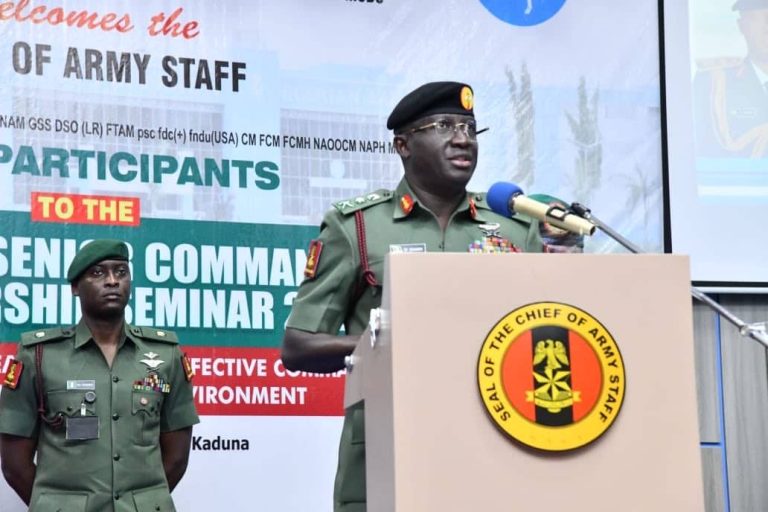
The Chief of Army Staff (COAS), Lt.-Gen. Waidi Shaibu, has explained that the creation of four additional divisions in the Nigerian Army was driven by the need to strengthen command capacity and respond more effectively to Nigeria’s increasingly complex security environment.

Shaibu spoke on Wednesday at the opening of the Second Senior Command and Leadership Seminar 2026 at Headquarters, 1 Division, Nigerian Army, Kaduna.

The seminar, themed, “Strategic Leadership for Effective Command in an Evolving Security Environment,” brought together senior commanders and resource persons to examine emerging security challenges and strengthen leadership capacity across the Army.

The COAS said the expansion of the Army from eight to 12 divisions should not be viewed merely as an increase in manpower or equipment, but as a strategic response to the changing nature and geographical spread of security threats across the country.

He said the new formations were intended to enhance command and control, improve the Army’s responsiveness and enable it to maintain a stronger operational presence in areas facing growing security challenges.

Shaibu, however, warned that creating new formations would only achieve its purpose if commanders were able to transform them into cohesive, credible and combat-ready fighting organisations.

“The expansion of the Army from eight to 12 divisions presents both an opportunity and a major leadership responsibility. It goes beyond increasing manpower and equipment. Our senior commanders have a decisive role in transforming these newly established formations into cohesive, credible and combat-ready fighting organisations,” he said.

He charged commanders to ensure that the values they promote, standards they enforce and leaders they develop would strengthen the effectiveness of the new formations for years to come.

The COAS said the contemporary operating environment had become increasingly complex, citing terrorism, insurgency, banditry, transnational organised crime, cyber threats, disruptive technologies and information warfare among the challenges confronting the military.
He urged commanders to develop strategic foresight, professional competence and the ability to make sound decisions under uncertainty.

Shaibu also drew attention to the growing battle for public perception, warning that adversaries were increasingly deploying misinformation, deliberate distortion and manipulation of public opinion to undermine the credibility of the military.

He said commanders must therefore integrate the information environment into campaign design, operational planning and military operations, while ensuring that official communication remained timely, accurate and credible.

According to him, the Nigerian Army’s credibility could not be sustained through communication alone if troops failed to maintain professional standards in the field.

He directed commanders to enforce strict compliance with the Rules of Engagement, respect for human rights, protection of civilians and accountability at all levels.

The COAS said the conduct of soldiers in the field could have consequences extending beyond individual operations, stressing that professionalism remained central to protecting the legitimacy and public confidence in the Army.

He urged the participants to convert lessons from the seminar into practical improvements in command, campaign planning, operational effectiveness and institutional performance.

Shaibu also charged commanders to build cohesive teams, mentor younger officers, develop successors, empower subordinates, encourage innovation and strengthen engagement with communities and legitimate stakeholders within their areas of responsibility.

He said the effectiveness of the Army’s expanded force structure would ultimately depend on the quality of leadership provided by its commanders and their ability to adapt to an evolving security and information environment.

NDDC, FG Move To Rescue Benin-Sapele-Warri, Benin-Agbor Highways

0

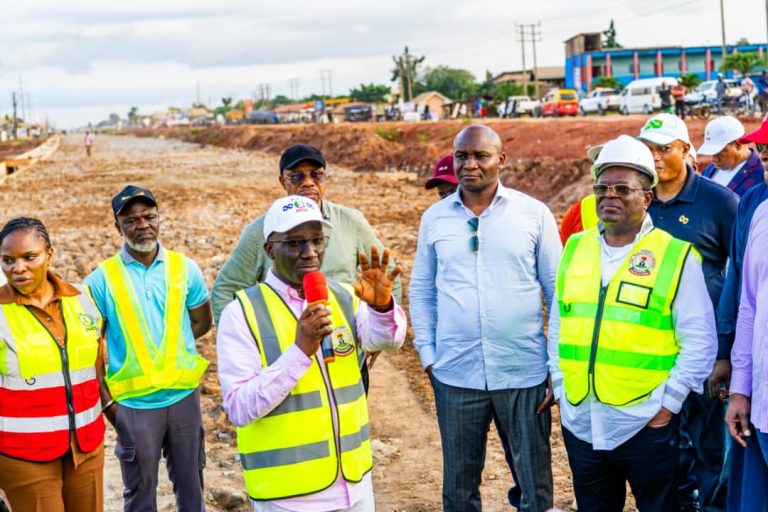
Edo State Governor, Senator Monday Okpebholo (3rd left), with the Minister of Works, Engr. David Umahi (1st right), and the NDDC Managing Director, Dr Samuel Ogbuku (2nd right), during the joint inspection of failed sections of the Benin-Sapele-Warri and Benin-Agbor roads.

The Federal Government has commenced an urgent intervention to rehabilitate failed sections of the Benin-Sapele-Warri and Benin-Agbor highways, following mounting concerns over the impact of the deteriorating roads on commuters, businesses and the wider economy.

The intervention followed a directive by President Bola Ahmed Tinubu, with the Minister of Works, Engr. David Umahi; Edo State Governor, Senator Monday Okpebholo; the Senate and House of Representatives Committees on Works; the Niger Delta Development Commission (NDDC), and other stakeholders embarking on a joint inspection of the affected portions.

Umahi, who led the inspection, said the Federal Government was committed to addressing the immediate challenges along the critical corridors while developing sustainable solutions to prevent further deterioration.

The Minister explained that the Ministry of Works, in collaboration with the Edo State Government, invited the NDDC, major construction companies operating along the Benin-Asaba axis and other stakeholders to assess the extent of the damage and agree on an intervention strategy.

Speaking during the inspection, NDDC Managing Director, Dr Samuel Ogbuku, said the commission had received numerous complaints over the hardship faced by motorists using the Benin-Sapele corridor.

Ogbuku said the NDDC had scoped about 15.4 kilometres between Benin, Ologbo Junction and Sapele, describing the stretch as a strategic economic corridor that had become increasingly difficult to navigate.

According to him, the condition of the road had resulted in prolonged gridlock, hardship for road users and significant disruption to economic activities in the area.

“We have received complaints about the suffering of motorists along this corridor and, as a responsive intervention agency, the NDDC has taken steps to intervene,” Ogbuku said.

He said the NDDC and the Ministry of Works had agreed to work together to ensure that the remedial works were carried out in accordance with the original design of the road and built to withstand future pressures.

Ogbuku stressed that the intervention was part of the NDDC’s broader commitment to complementing the Federal Government’s infrastructure development efforts across the Niger Delta.

“We are committed to supporting the Renewed Hope Agenda of President Bola Ahmed Tinubu by delivering strategic infrastructure interventions that improve connectivity, stimulate economic activity and enhance the quality of life of our people,” he said.

The NDDC boss said restoring the highway was particularly important because of its role in connecting communities and facilitating the movement of people and goods across the South-South and adjoining regions.

Falconets Arrive Poland Ahead Of 2026 FIFA U-20 Women’s World Cup

0

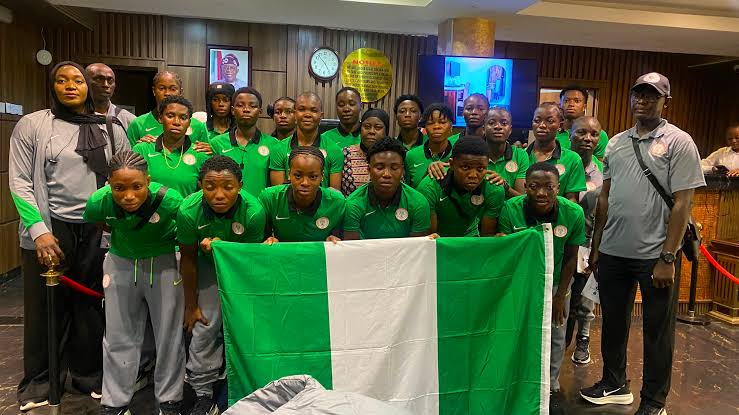
Nigeria’s Falconets have arrived in Poland ahead of the 2026 FIFA U-20 Women’s World Cup, with the team now focused on final training and tactical preparations for the tournament.

The squad completed an intensive preparation programme in Abuja, where they played a series of friendly matches as part of their build-up.

Now settled in Poland, the Falconets will face the host nation and the Korea Republic in additional friendly matches before the competition begins.

The games will provide coach and players with an opportunity to fine-tune their tactics, assess their readiness and build momentum ahead of the tournament.

The Falconets are expected to use the final phase of their preparations to sharpen their match fitness and ensure the squad is fully prepared for the challenges that await at the World Cup.

Which Of Europe’s Giants Will Lift UEFA Champions League Trophy This Season?

0

UEFA Champions League: 36 Clubs Discover League-phase Opponents In Monaco

The road to European football’s biggest prize enters a new phase on Thursday, August 27, as 36 clubs discover their opponents in the 2026/27 UEFA Champions League league-phase draw in Monaco.

Defending champions Paris Saint-Germain will be among the leading sides in the draw, alongside European heavyweights including Real Madrid, Bayern Munich, Liverpool, Manchester City, Arsenal, Barcelona and Atletico Madrid.

The new-look competition will see each club play eight league-phase matches against eight different opponents, with every team facing two clubs from each of the four pots. Each side will have four home and four away fixtures.

Rather than a traditional group-stage draw, a computerised system will determine each club’s eight opponents while ensuring that all competition rules are respected.

Pot 1 includes Paris Saint-Germain, Bayern Munich, Real Madrid, Liverpool, Inter Milan, Manchester City, Arsenal, Barcelona and Atletico Madrid.

Pot 2 features Aston Villa, Manchester United, Borussia Dortmund, Roma, Sporting, Porto, Club Brugge, PSV Eindhoven and Real Betis.

Feyenoord, Lille, Napoli, RB Leipzig, Villarreal, Shakhtar Donetsk and Galatasaray are among the clubs in Pot 3.

The remaining places in Pots 3 and 4 will be settled after the qualifying rounds. The clubs involved include Bodo/Glimt, LASK Linz, Sabah, Slavia Prague, Stuttgart, Como and Lens, as well as the winners of Fenerbahce v Lyon, Dinamo Zagreb v Viking, Slovan Bratislava v Celje and Levski Sofia v AEK Athens.

The top eight clubs in the league-phase table will advance automatically to the round of 16.

Those finishing ninth to 24th will enter a two-legged knockout play-off, while teams finishing 25th or lower will be eliminated from European competition.

The clubs finishing ninth to 16th will be seeded and drawn against teams placed 17th to 24th, with the seeded sides playing the second leg at home.

The eight play-off winners will then join the top eight teams in the round of 16.

The first of the eight league-phase matchdays is scheduled for September 8-10, with the competition continuing through the autumn and winter before the knockout stages begin.

With Europe’s biggest clubs once again assembled, the question is now being asked: which of your favourite teams will win the Champions League this season?

Will the defending champions retain their crown, or will one of Real Madrid, Bayern Munich, Liverpool, Manchester City, Arsenal, Barcelona or another European giant reclaim the trophy?

2027: Amaechi Urges Nigerians To Shun Ethnic Politics, Vote On Performance

0

The Vice-Presidential candidate of the African Democratic Congress (ADC), Rotimi Amaechi, has urged Nigerians to look beyond ethnic considerations and vote for candidates based on performance, competence and acceptability in the 2027 general elections.

Amaechi made the call on Monday during a panel session at the ongoing Nigerian Bar Association (NBA) 2026 Annual General Conference in Port Harcourt, Rivers State.

The former Rivers State governor and Minister of Transportation said voters should resist the temptation to support political candidates merely because they share the same ethnic or geographical background.

He argued that the country’s political future would be better served if Nigerians assessed candidates based on their records and capacity to deliver good governance.

“A coalition should be based on performance. Assess us by our last performance and choose; don’t just vote because you are from Ikwerre or Omoku and choose your candidate,” Amaechi said.

He also expressed concern over the inability of opposition parties to agree on a single presidential candidate ahead of the 2027 elections, attributing the challenge largely to the personal ambitions of political leaders.

According to him, the coalition project remains difficult because many politicians are unwilling to sacrifice their individual ambitions for a broader national interest.

“Coalition as it is today is difficult to achieve. If it is possible, I am sure that Vice President Atiku Abubakar would be willing to participate.

“But the difficulty in it is that everybody has ambition. Nobody wants to give up. There are very few politicians who are in love with Nigeria. What the politicians are doing is to just come in and milk the country dry,” he said.

Amaechi, who described the ADC as a fresh political alternative, urged Nigerians to give the party an opportunity to demonstrate its capacity to provide a different style of leadership.

“ADC provides a different kind of leadership completely. If we can’t perform, don’t vote for us,” he said.

NDDC: Why Niger Delta Must Break Oil Dependence, Invest In Agriculture, Digital Economy- Ogbuku

NDDC Managing Director, Dr Samuel Ogbuku (standing), speaking at the 2026 Nigerian Bar Association, NBA, Conference in Port Harcourt, Rivers State. First left is the Chairman of the NDDC Governing Board, Mr. Chiedu Ebie, while the NDDC Director, Legal Services, Mr. Victor Arenyeka is on the right.

The Niger Delta Development Commission (NDDC) has called for increased investment in agriculture and other sustainable sectors as part of efforts to diversify the economy of the oil-producing region and secure its future beyond crude oil.

The NDDC Managing Director, Dr Samuel Ogbuku, made the call while speaking on resource control at the Nigeria Bar Association’s 66th Annual General Conference in Port Harcourt, Rivers State.
Ogbuku said although oil had contributed significantly to Nigeria’s development, the Niger Delta could not continue to depend on petroleum resources indefinitely.

In a press statement signed by Seledi Thomspon-Wakama
Director, Corporate Affairs of the NDDC, Ogbuku challenged stakeholders to begin addressing fundamental questions about the region’s future, particularly by identifying areas where Niger Deltans could exercise greater control over their resources and economic destiny.

“Data remains a critical component of resource control. Without accurate information on what the Niger Delta produces, it would be difficult to determine what it is entitled to receive.

“If we do not control the data, we do not know what we produce; we do not know what is to come to us. We need to put the future into our own hands,” he said.

The NDDC managing director identified agriculture as one of the sectors within the region’s control, saying greater investment in the sector would strengthen food security, create jobs and provide sustainable livelihoods for women and young people.

The session also examined environmental remediation in the Niger Delta, with panellists raising questions about the criteria for determining areas and communities to be remediated, as well as mechanisms for independently verifying the effectiveness of remediation projects.

Speaking on the Commission’s institutional reforms, a member of the NDDC legal team, Paul Emerhana, said the agency had begun a deliberate transition from “transaction to transformation”, anchored on institutional reforms, digitalisation and sustainable development.

Emerhana cited the Commission’s solar street-lighting projects as an example of interventions designed to deliver environmental, social and developmental benefits.

According to him, the projects have reduced dependence on conventional energy sources while improving security in beneficiary communities.

He also highlighted the Commission’s digital transformation, particularly the automation of its contract management processes, describing the NDDC as the first agency to fully automate its contract processes.

He said the digitalisation drive had extended to youth development, with the Commission providing training in artificial intelligence and other digital skills for young people across the Niger Delta.

“The Commission is investing in youths because they represent the region’s future; equipping them with relevant digital skills would improve their ability to participate in the emerging digital economy,” he said.

Emerhana also disclosed that the NDDC had established a Corporate Governance Department to strengthen governance, accountability and the sustainability of its operations.

He stressed the importance of adopting Environmental, Social and Governance principles to ensure that NDDC projects delivered lasting value to host communities beyond the completion of construction works.

The conference featured awards to the NDDC Board Chairman, Mr Chiedu Ebie, and Ogbuku in recognition of the Commission’s contributions to the development of the Niger Delta region.

APC Reopens E-Registration Ahead Of 2027 Polls, Dismisses Campaign Council Review Report

0

The All Progressives Congress (APC) has announced the reopening of its electronic membership registration exercise nationwide from August 31, 2026, as the party begins preparations for the 2027 general elections.

The exercise, which will be conducted across all wards in the country, will enable existing members to validate their records while new and intending members will be given the opportunity to register.

The APC National Publicity Secretary, Felix Morka, disclosed this in a statement issued on Tuesday in Abuja, urging party members, stakeholders and supporters to participate actively in the exercise.

Morka said the e-registration was aimed at digitising the party’s membership register, strengthening the integrity of its records and providing efficient access to membership data for planning and management decisions.

According to him, the exercise would also promote internal democracy and reinforce the party’s commitment to democratic innovation.

“The E-Registration Exercise is designed to digitise the Party’s membership register, ensure the integrity of membership records, enhance efficient access to membership data for planning and management decisions, promote internal democracy, and strengthen the Party’s commitment to democratic innovation in Nigeria,” he said.

The party said applicants must be at least 18 years old and possess a valid National Identification Number to register.

Meanwhile, the APC has dismissed reports that it withdrew the list of members of its 2027 presidential campaign council for review.

Morka described the reports as rumours, insisting that any decision to amend the list would be formally communicated by the party.

He spoke on Tuesday morning against the backdrop of reports that the list had been withdrawn following concerns over the inclusion or omission of some names.

“Rumours are not news. When people are carrying rumours, that is not news. There is fake news, and there is real news.
“Nobody will give any list at the moment. But if there is any reason to update it, it would be announced properly,” Morka said.

The APC had unveiled its presidential campaign council on Saturday, with President Bola Tinubu as chairman, while Vice-President Kashim Shettima and the party’s National Chairman, Nentawe Yilwatda, were named vice-chairmen.

Former Zamfara State Governor, Abdulaziz Yari, was appointed Director-General, while Imo State Governor and Chairman of the Progressive Governors Forum, Hope Uzodimma, was named secretary.

The development comes as the ruling party intensifies its organisational preparations ahead of the 2027 elections, with the membership registration exercise expected to provide an updated digital database of its nationwide membership.

Fubara Defends LG Payroll Clean-up, Says No Politics In Ghost Workers’ Probe

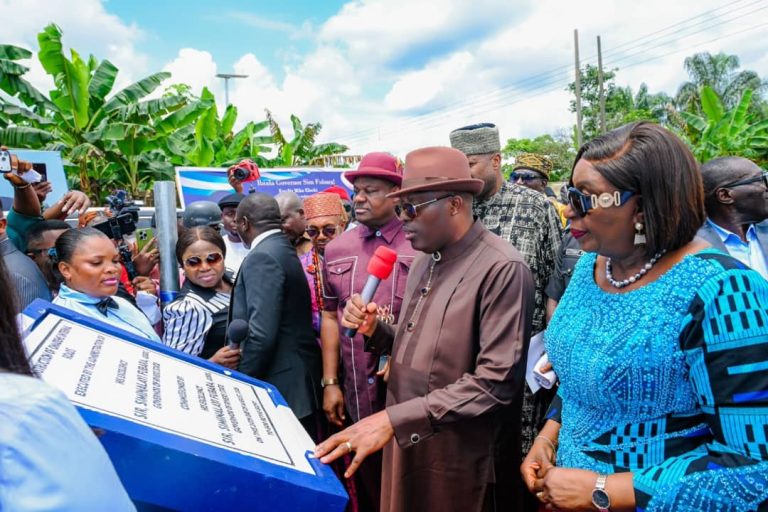
Governor of Rivers State, Sir Siminalayi Fubara (middle), Deputy Governor of Rivers State, Prof Ngozi Odu and former Deputy Governor of Rivers State, Engr Tele Ikuru, at the unveiling of the plaque to commemorate the commissioning of the internal roads in Omademe Community on Monday.

Rivers State Governor, Siminalayi Fubara, has defended his administration’s decision to implement a comprehensive payroll verification exercise across the state’s 23 local government areas, insisting that the exercise is aimed at eliminating ghost workers and enforcing fiscal discipline.

Fubara spoke on Monday while commissioning the Omademe Internal Roads Project in Ikwerre Local Government Area, where he said the clean-up was necessary to address longstanding irregularities in local government payrolls.

The governor said the problem of bloated salary records predated his administration, noting that the former Local Government Service Commission had begun working on it before the state’s emergency administration.

He said he remained committed to resolving the issue after his return from what he described as a “sabbatical leave” and the constitution of a new Local Government Service Commission.
Fubara, a former Treasury officer, said his experience in public finance informed his decision to deploy information and communication technology personnel to support the verification committee.

He stressed that the exercise was conducted to ensure objectivity and transparency, insisting that political considerations would not influence its outcome.

“It doesn’t matter whether the people are my supporters. It doesn’t matter whether they are people from the other side. Now there is no other side. We are all Rivers people,” the governor said.

He added: “I want to ensure that the right thing is done. I’m not against you being employed. But the issue is that if you have to be employed, you have to be employed through the proper channel.”

Fubara also warned against politicising the payroll exercise, saying his administration would not allow every government decision to be interpreted through the prism of political rivalry.

He said he had approved the implementation of the committee’s recommendations and remained firmly behind the decision.

The governor also described the Omademe road project as part of his administration’s efforts to open up rural communities, improve connectivity and stimulate economic activities.

He said his administration would continue to deliver projects that add value to the lives of residents until the end of its tenure.

“We want to say it publicly here that it’s not about the number of days, but what matters in the life of every administration is the value that is added,” he said.

Fubara also urged Rivers political leaders to sustain the prevailing peace in the state and abandon the political crisis of the past.

“Just think of where we are coming from. Think of what has happened before. For me, I am not interested in going down that road anymore. What is behind me is behind me. What I am looking at is what is ahead of me,” he said.

Earlier, Commissioner for Works, Prof. Temple Nwofor, said the Omademe internal roads contract was awarded to Setraco Construction Limited in February 2024, while construction commenced in November of the same year.

Nwofor said the project comprises 10 internal roads covering about 8.6 kilometres, with side drains and outfall discharge systems.
According to him, the project includes a 100mm asphaltic layer, 8.7 kilometres of concrete side drains and a three-kilometre outfall drainage system designed to reduce the risk of flooding.

The Chairman of Ikwerre Local Government Area, Charles Wobodo, thanked the governor for the project but called for additional road projects to further expand the council’s road network.