


Prof. Sunny Orike appointed to occupy chair as RICCEE emerges coordinating hub for six universities
Rivers State University (RSU) is set to strengthen its research capacity, expand its industrial partnerships and enhance its position as a centre for technological innovation following a $1.5 million professorial chair endowment secured from the Nigerian Liquefied Natural Gas Limited (NLNG) and the Nigerian Content Development and Monitoring Board (NCDMB).
The endowment, under a $9 million joint initiative involving six Nigerian universities, is expected to open new opportunities for the university in advanced research, postgraduate training, technology development and the commercialisation of academic discoveries.
Professor Sunny Orike has been appointed to occupy the RSU Professorial Chair, which will focus on digital engineering, intelligent energy systems, automation and asset integrity.
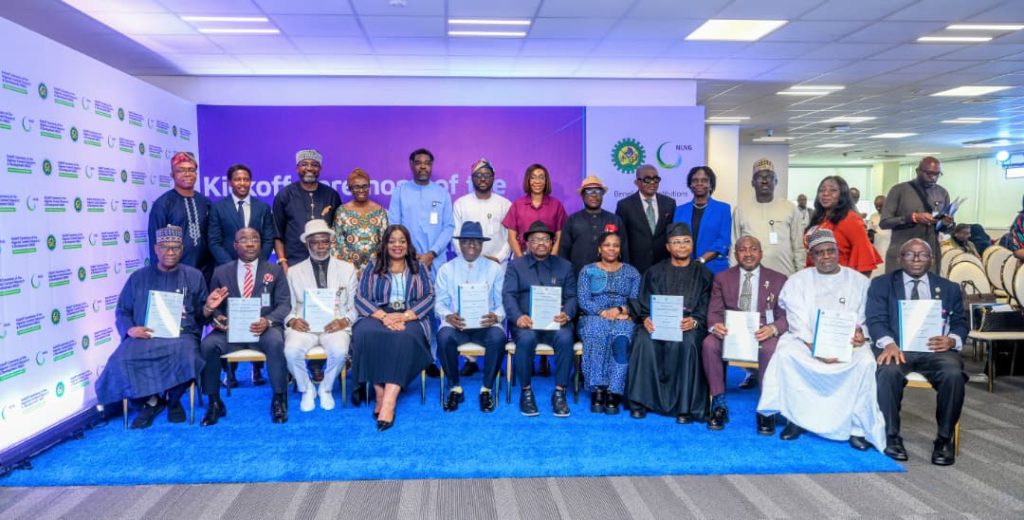
The agreement was formalised through a Memorandum of Understanding (MoU) signed on Tuesday, November 10, 2026, at the launch of the NLNG-NCDMB Professorial Chair Endowment Programme at the NLNG headquarters in Port Harcourt, Rivers State.
A major advantage for RSU is the designation of its NLNG Research and Innovation Centre for Computer and Electrical Engineering (RICCEE) as the coordinating hub for collaboration and knowledge exchange among the six beneficiary universities.
The responsibility is expected to place the university at the centre of a national research network, providing opportunities for its academics and researchers to collaborate with counterparts in other institutions, share expertise and participate in multidisciplinary research projects.
Each of the six universities will receive $1.5 million, bringing the total endowment to $9 million. The other beneficiaries are the University of Ibadan, Modibbo Adama University, Aliko Dangote University of Science and Technology, University of Nigeria, Nsukka, and Yakubu Gowon University, formerly known as the University of Abuja.
For RSU, the investment goes beyond the establishment of a professorial chair. It offers an opportunity to strengthen its research infrastructure, attract industry-backed research funding, improve the quality of postgraduate education and produce innovations that can address practical challenges in the energy and technology sectors.
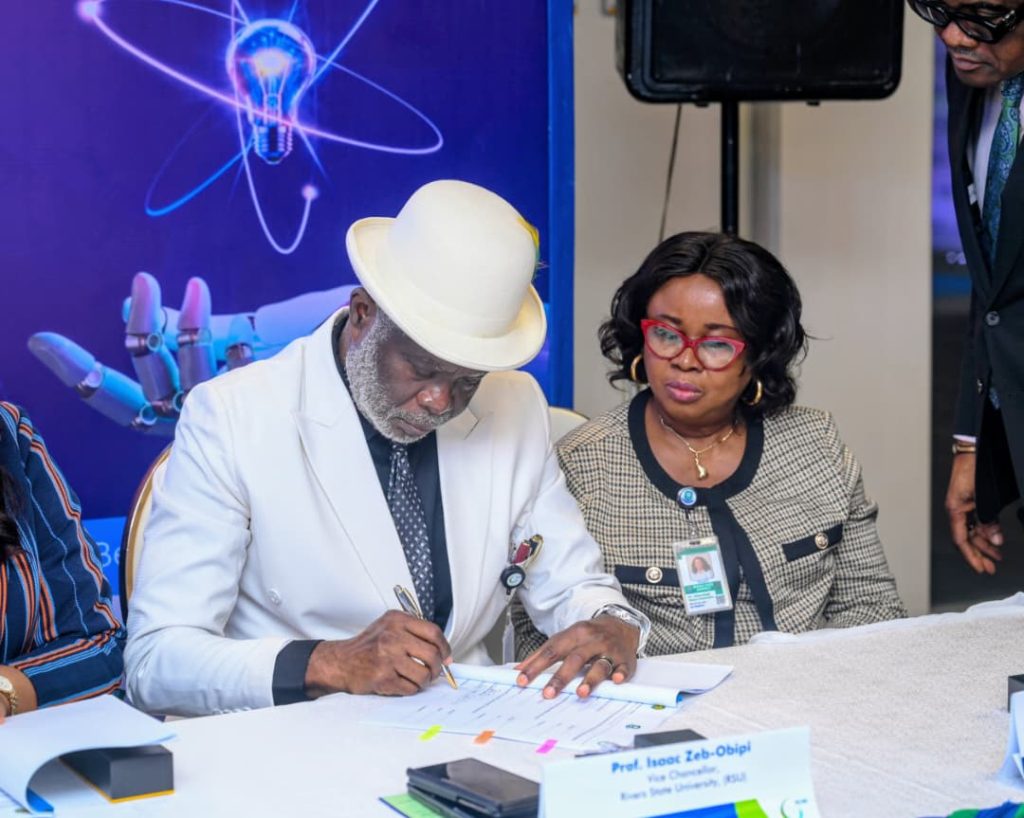
Vice-Chancellor of Rivers State University, Professor Isaac Zeb-Obipi signing the MoU.
It also provides a framework for closer engagement with NLNG and other industrial organisations, enabling the university to align its research priorities with the needs of businesses and industries, particularly in the Niger Delta.
Speaking at the ceremony, the Vice-Chancellor, Professor Isaac Zeb-Obipi, described the endowment as a significant contribution to Nigeria’s intellectual sovereignty and expressed appreciation to NLNG and NCDMB for their investment in the university.
He said the initiative presented an opportunity to transform industry-academia collaboration from the signing of Memoranda of Understanding into what he described as a “Memorandum of Action”, characterised by practical results in research, innovation and technological development.
According to him, the professorial chair would promote research that addresses Nigerian problems, supports local content development and provides practical solutions to industrial challenges.
He added that the initiative would strengthen the capacity of young researchers through mentorship, research funding and exposure to real-life industrial challenges.
Zeb-Obipi assured the partners of the university’s commitment to transparency and accountability in managing the endowment, pledging the necessary institutional support to ensure that the investment produces measurable results.
He identified research publications, patents, functional prototypes and graduates equipped with industry-relevant skills as key outcomes the university hopes to achieve.
The Vice-Chancellor further noted that RSU’s strategic location within Nigeria’s energy hub presented opportunities for expanded partnerships across the oil and gas, maritime, agricultural and technology sectors.
In his keynote address, the Managing Director and Chief Executive Officer of NLNG, Engr. Adeleye Falade, described the programme as an investment in Nigeria’s capacity to translate academic knowledge into practical solutions.
He emphasised the need for sustained collaboration among government, industry and academia, noting that the changing energy landscape required continuous research and technological advancement to address challenges relating to operational efficiency, emissions management, safety, infrastructure maintenance and sustainable industrial processes.
Falade said the initiative would create opportunities for specialised training, academic exchanges, industrial sabbaticals, practical research testing and the joint development of postgraduate curricula under the Triple Helix model of collaboration.
He disclosed that discussions were already underway with RSU on implementation arrangements and commended Professor Zeb-Obipi for his role in advancing the proposed partnership.
He also revealed that organisations such as Google, Cisco and MTN had indicated interest in supporting the initiative, raising prospects for additional technology partnerships and opportunities for the beneficiary universities.
Representing the Executive Secretary of NCDMB, Engr. Felix Omatsola Ogbe, the Board’s Senior Technical Adviser, Engr. Austin Uzoka, described the $9 million endowment as a strategic investment in Nigeria’s research and innovation ecosystem.
He said the programme complemented the Board’s investments in research infrastructure and would help bridge the gap between academic research and industrial application.
Uzoka urged the beneficiary universities to prioritise research that delivers measurable outcomes and addresses practical industry needs.
Beyond the financial support for the professorial chairs, the programme will provide opportunities for infrastructure upgrades, knowledge-sharing initiatives and the involvement of industry professionals in postgraduate training at master’s and doctoral levels.
For RSU, these provisions could translate into improved research facilities, stronger postgraduate programmes, greater exposure for students and researchers, and increased opportunities for its graduates to acquire skills relevant to the demands of modern industries.
The university also stands to benefit from the commercialisation prospects of research discoveries, particularly in digital engineering, intelligent energy systems and automation, where industry partnerships can help transform academic ideas into functional technologies and commercially viable products.
The coordinating role assigned to RICCEE is particularly significant as it could enhance the university’s national and international research profile, attract further institutional partnerships and establish RSU as a major centre for industry-driven research and technological development.
Ahead of the formal launch, Professor Zeb-Obipi had addressed guests at a welcome cocktail reception on Monday, November 9, where he delivered an address titled “Reflections on Industry-Academia Collaboration”.
He advocated a shift from the mere signing of Memoranda of Understanding to concrete actions capable of advancing research, innovation and industrial development.
He identified the Advisory Board of RICCEE and the NLNG Bridge Programme as existing models for strengthening the relationship between the university and NLNG.
The new endowment is therefore expected to consolidate RSU’s existing relationship with the gas company while opening wider opportunities for collaboration with other industries and research institutions.
Its ultimate value to the university will be measured not only by the $1.5 million investment but also by the research facilities strengthened, innovations developed, postgraduate researchers trained, industrial partnerships established and technologies successfully transferred from the university to the marketplace.
