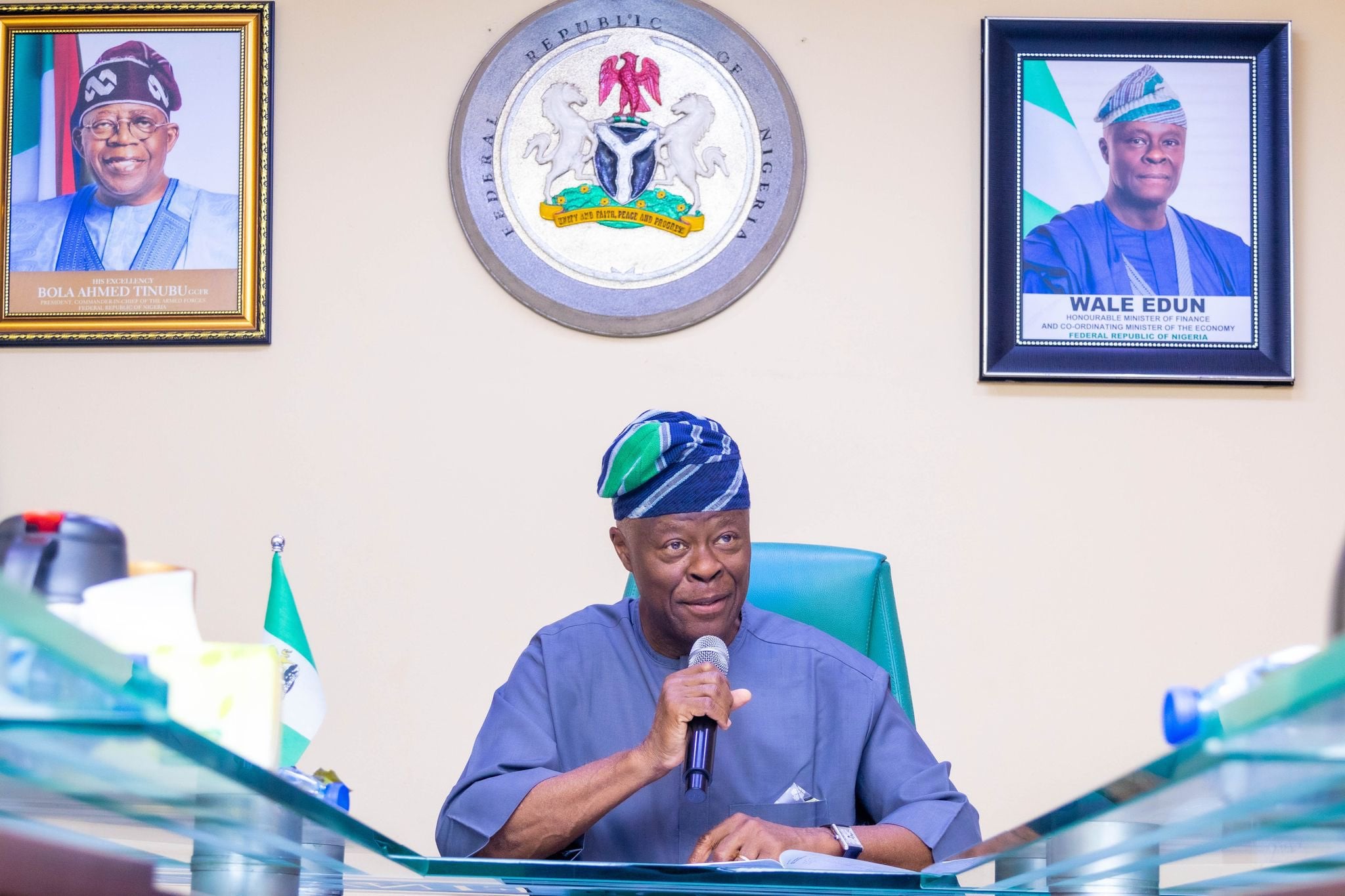
The Federal Government has said it is putting measures in place to shield Nigerians from the potential economic shocks arising from the ongoing Middle East conflict, particularly rising inflation and transportation costs.
Minister of Finance and Coordinating Minister of the Economy, Wale Edun, disclosed this during an appearance on Politics Today on Channels Television, warning that disruptions in global oil markets could affect petroleum prices, fertilisers and other key commodities in Nigeria.
Edun explained that while the crisis could trigger inflationary pressure and higher transport costs, the Federal Government was already implementing policies aimed at reducing energy expenses and protecting citizens from the worst effects.
“There will be a direct impact on the price of petroleum products, on the price of fertilisers and a few other things that will be impacted. Inflation will be impacted, transport costs will be impacted,” he said.
According to him, rising transport costs often have a ripple effect on the economy, increasing the cost of goods and services, which makes it necessary for the government to take proactive steps to mitigate the impact.
He revealed that President Bola Ahmed Tinubu had approved an expansion of the compressed natural gas conversion programme to reduce Nigerians’ dependence on petrol.
The minister said the government would provide 100,000 additional compressed natural gas conversion kits to enable more vehicles switch from petrol to the cheaper alternative.
“One of the ways in which the President immediately announced was 100,000 extra CNG conversion kits to enable vehicles convert to CNG fuel, which is maybe 25 to 30 per cent the cost of PMS,” Edun said.
“That is the way you decisively move to bring down an important cost, because transport costs permeate so many other areas.”
Edun, however, noted that the government would avoid direct interference in the pricing of petroleum products except under extreme circumstances.
“We will be looking for measures that we can immediately implement other than interfering with an orderly market price. Given the policies and the philosophy of this government, intervention in pricing will always have to be a last resort,” he said.
He added that Nigeria’s growing domestic refining capacity places the country in a relatively strong position to manage potential disruptions in global supply chains.
“Our demand is about 50 million litres per day and the refiners have said they can meet that demand. So we are in a relatively strong position if we can make that a reality on a consistent basis. We must say thank God for our refining capacity,” he said.
The minister also expressed concern over uncertainties surrounding global energy supply routes, particularly the Strait of Hormuz, a key international shipping channel for crude oil.
“We are not sure what will happen in places like the Strait of Hormuz or how much disruption there will be or how long supply chains will be affected,” Edun said.
He noted that although higher global oil prices could increase Nigeria’s revenue, the gains might be partly offset by higher freight and transportation costs.
“One we benefit from selling at a higher price, but then the costs are also higher. Freight costs and transportation costs also rise, so you have to see whether the gains are more than the losses,” he said.
Edun further warned that global inflationary pressures triggered by the conflict could force countries to raise interest rates.
“If inflation raises its head, the world will rise to fight it because it hurts the common man and the most vulnerable in society more than anybody else,” he added.
The minister, however, assured Nigerians that the government would continue to prioritise policies that protect recent gains in food prices and inflation while supporting domestic food production.
“Our intention is to keep food affordable, working with the farmers and ensuring a steady and adequate supply of food. We have achieved some progress to date and we will continue to take proactive steps to sustain it,” he said.