



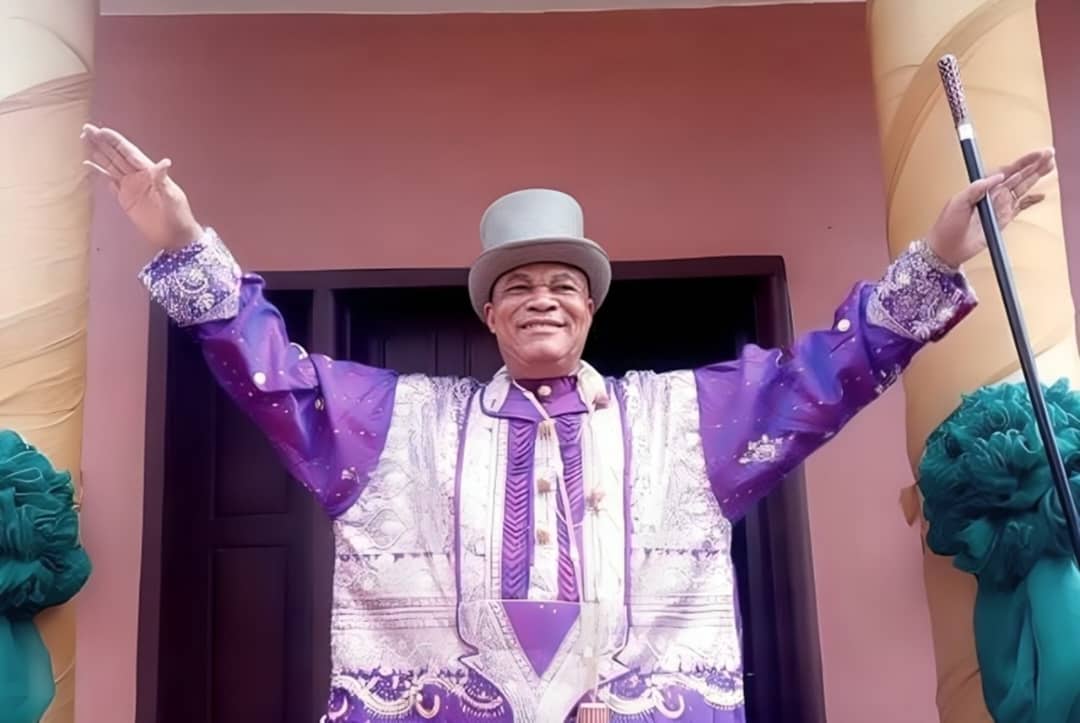
The emergence of King Charles Mac Pepple Jaja as the Amanyanabo-elect of Opobo Kingdom, following the transition of Dandeson Douglas Jaja, represents more than a royal succession; it is a profound reaffirmation of heritage, continuity, and enlightened leadership.
Rooted in the illustrious legacy of King Jaja of Opobo, the choice of the new monarch embodies a rare convergence of civility and culture, where tradition is preserved without resisting the demands of modern governance and social harmony.
Opobo Kingdom, long celebrated for its disciplined monarchical institutions and deep respect for ancestral customs, once again demonstrated its maturity through a seamless transition that balanced reverence for the past with clarity of purpose for the future.
King Charles Mac Pepple Jaja’s emergence reflects the strength of a system that prioritises order, consensus, and legitimacy, ensuring that royal authority remains a unifying force rather than a source of contention.
Hi emergence on December 31, 2025, truly underscores the depth, order and resilience of Opobo’s traditional governance system.
Alabo Charles Mac-Pepple Jaja, now proclaimed Amanyanabo-Elect, King Charles Douglas Mac Pepple Jaja, Jeki VI, Treaty King, Amanyanabo and Natural Ruler of Opobo Kingdom, ascended the throne following the passing of his elder brother, King (Dr.) Dandeson Douglas Jaja, Jeki V, whose death was formally announced by the Amanyanabo-in-Council at dawn the same day.
At 65, the new monarch brings to the throne a lineage deeply rooted in Opobo’s royal history. He is a son of a former Amanyanabo, King Douglas Jaja, and a member of the ruling Mac-Pepple War Canoe House, where he has served as head since January 10, 2010.
His emergence is, therefore, seen not only as a constitutional outcome but also as a continuation of a long-established royal tradition.
Educated and widely exposed, King Charles Mac-Pepple Jaja is a graduate of Political Science and Administration from the University of Port Harcourt.
He also attended Government Technical College, Abak, and the Rivers State School of Basic Studies, and holds a Diploma from the Sondore Institute of Management as well as a Postgraduate Certificate in Law from Rivers State University. His academic and administrative background is regarded as an asset as the kingdom navigates the intersection of tradition and modern governance.
Despite the grief that followed the death of the late monarch, Opobo’s traditional institutions acted with remarkable speed and discipline.
Guided by Ibani customs and under the authority of the Council of Alapu (Chiefs), a traditional election was convened by late afternoon to prevent any leadership vacuum.
Three princes contested the succession. Alabo Fredrick Sunday Jaja polled one vote, Alabo Reuben Saturday Jaja secured seven votes, while Alabo Charles Mac-Pepple Jaja emerged with nine votes, a clear majority that affirmed the council’s confidence in his leadership.
The process, completed within hours of the former king’s passing, reflected Opobo’s long-held belief that continuity and stability are essential to effective traditional governance. Founded in 1869 after its historic break from the Bonny Kingdom, Opobo has endured as a major cultural and commercial force in the Niger Delta, sustained by institutions built on consensus, defined authority and respect for tradition.
The new Amanyanabo is generally described as calm, measured, and approachable—qualities considered vital at a time when the kingdom is mourning a revered monarch while preparing for renewal under new leadership.
As Opobo Kingdom enters a formal period of mourning for the late King Dandeson Douglas Jaja, the emergence of King Charles Mac-Pepple Jaja has provided reassurance of continuity.
Official details and timelines for his coronation and formal installation are expected to be announced by the Opobo Council of Alapu (traditional rulers) in due course, marking the next chapter in a living tradition that continues to guide the kingdom through loss, renewal and the demands of modern leadership.
Beyond the ceremonial weight of the crown lies a responsibility to sustain the values that have defined Opobo for generations—dignity, unity, and cultural pride.
As custodian of this enduring legacy, the monarch stands at the intersection of history and progress, charged with preserving Opobo’s identity while guiding its people through evolving social and economic realities. In this balance lies the true essence of Opobo’s royal legacy.