



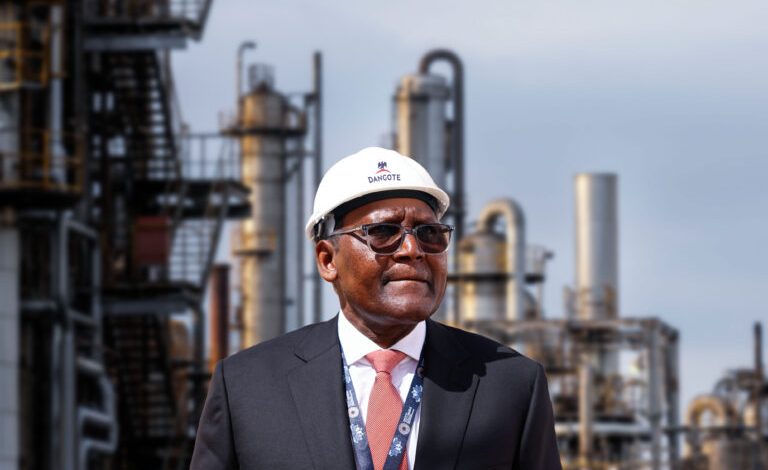
The Dangote Petroleum Refinery has reduced the ex-depot prices of petrol and diesel, offering marginal relief to marketers and bulk buyers after a series of sharp increases in recent days.
In a new pricing template issued on March 10, the refinery cut the gantry price of Premium Motor Spirit (PMS), also known as petrol, by ₦100 to ₦1,075 per litre, down from ₦1,175 per litre.
The refinery also announced that PMS supplied through coastal distribution channels will now sell at ₦1,050 per litre, reflecting a slight adjustment linked to maritime distribution costs.
Similarly, the price of Automotive Gas Oil (AGO), commonly known as diesel, was reduced to ₦1,430 per litre at the gantry, representing a ₦190 drop from the previous ₦1,620 per litre.
The refinery noted that the quoted gantry prices exclude statutory charges imposed by the Nigerian Midstream and Downstream Petroleum Regulatory Authority (NMDPRA).
The latest price cut comes barely a day after the refinery raised the ex-depot price of petrol to ₦1,175 per litre amid volatility in global crude oil prices and rising production costs.
Within the past week, the refinery had adjusted prices several times, pushing PMS from about ₦995 per litre to ₦1,175 per litre, while diesel rose to ₦1,620 per litre, reflecting shifts in international crude markets and replacement costs.
Industry analysts say the latest downward adjustment could ease cost pressures on petroleum marketers and depot operators who have struggled with fluctuating loading prices.
Market watchers, however, note that the extent to which the reduction will translate into lower retail pump prices across the country will depend on depot margins, transportation costs and distribution dynamics within Nigeria’s downstream petroleum sector.
The refinery, owned by the Dangote Group and operated by billionaire industrialist Aliko Dangote, began operations in 2024 with a capacity of about 650,000 barrels per day and is expected to significantly reduce Nigeria’s reliance on imported refined petroleum products.