



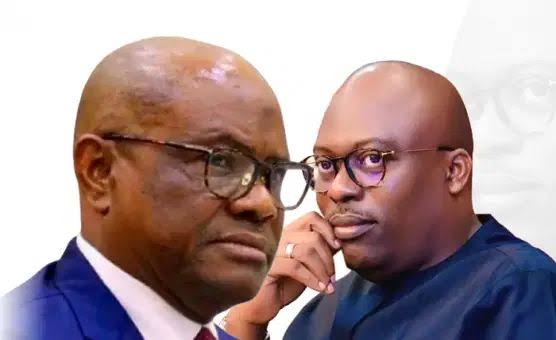
Once more the Governor of Rivers State Siminalayi Fubara, last Thursday dissolved the state’s Executive Council. This development was not due to any other publicly known reason other than to placate his traducers comprising some restive members of the Rivers State House of Assembly (RSHA), who are loyal to Nyesom Wike, his predecessor in office and now minister of the Federal Capital Territory (FCT).
It is easily recalled that some days ago, this situation was cited as one of the conditions demanded by the Wike camp during a peace meeting brokered by President Bola Tinubu between him and Fubara.
This development is coming as yet another concession to Wike by Fubara, but which has implications beyond whatever personal interests they may have.
Even in its most basic context, dissolution of state executive council constitutes a tacit decapitation of a governance dispensation, Hence it is not an exercise that is undertaken casually.
Among the Kalabari and other Ijaw ethnic nationalities, leadership in the traditional context is a serious dispensation involving rituals each of which on its own, conveys clearcut messages to the incumbent on expectations of him by the community.
One of such rituals that marks the emergence of a chief or king, is his moment of choice whereby he has to choose between a cannon ball which signifies his disposition towards war to defend his community if necessary, and a tuber of yam which also signifies his willingness to provide for his people.
It is understandable that in the statutory context all such obligations are rolled into the constitutional oath which is administered to the incumbent in the course of coming into office.
As the first democratically elected governor of Ijaw extraction in Rivers State since the days of Melford Okilo in 1979 and Rufus Ada George in 1990, Siminalayi Fubara remains seen by not a few Ijaw people from the prism of the obligations of an Ijaw chieftain, who by virtue of the oath of cannon ball and tuber of yam, is sworn to defend, protect and provide for his constituents.
It is also in the same context that not a few observers are watching the ongoing battle of wits, between him and Nyesom Wike, his immediate predecessor as governor of the state and an implacable traducer-in-chief, with the latest instance of dissolving his cabinet at the instance of his traducers, as one concession too many.
In their three-year-long running and daily convoluting contest for control of the political power structure as well as vast resources of the state, both Fubara and Wike have left the public guessing at every turn of the melee, on the next move by any of them in order to outsmart the other.
So far, Wike had been the implacable aggressor, fighting from ‘outside’ to dislodge the incumbent Fubara, including dangling the unsettling agenda of denying the latter the opportunity to contest for a second term in office come 2027.
Meanwhile, Fubara who has so far played the underdog, has survived through a cocktail of deft maneuvers, calm demeanor and capitalising on the slips by his traducer.
And by latest count, President Bola Tinubu had intervened for the third time ostensibly to foster peace between them and allow the state which had borne the burden of instability in governance, a deserved respite from the crisis.
Yet as far as the crisis is concerned, Fubara is the incumbent governor, and hence remains the man to watch as the political fortunes of the entire state rests on his shoulders.
With the crisis still more or less an affair that springs new surprises with each passing day, to the discomfort and despair of the innocent ordinary citizens in the state, the onus lies with Fubara to do the needful in order to resolve the crisis. This is where the options open to him and how he has deployed same, come into question.
Seen in retrospect however, it needs to be pointed out that his approach so far has been a closet affair, with the occasional resort to the intervention of President Bola Tinubu to rein in Wike. Just as well is the reality of the resort to Tinubu yielding less than optimal results, making it imperative for Fubara to deploy the full mobilisation of the wider cross sections of the people of the state, into more than salutary participation in the process of governance of the state.
Seen in context the various narratives on the Rivers State conundrum have so far featured erroneously as a two-way fight between Wike and Fubara. This false paradigm actually diminishes the realty that the conundrum is actually a three-way battle in which the citizens of the state have had their interests and voices swallowed up as inconsequential.
Considering that the issues under contest border on the common patrimony of the entire state, the tussle needs to involve a wider involvement by the people.
This is where and why Fubara needs to change strategy and bring in the ‘calvary’ which is so to say the massive deployment of ‘people power’. People power here refers to the collective action, influence, and willpower of ordinary citizens—rather than of potentates or institutions—to drive social, political, or economic change.
Historically, it represents non-violent, grassroots movements, where the ordinary folk are allowed to vent their inner feelings and convictions over matters that bother them. And for lasting so long with its twists and turns, the Rivers State conundrum qualifies for the involvement of the masses. Fubara needs to embark on statewide sensitization and meet the people tours to sell his persona beyond what the media offers them about him.
And the reasons for such a dispensation are not only numerous but also crystal clear.
Firstly, is that the people remain the core stakeholders in the political fortunes of the state. Hence their isolation so far remains a grave injustice, even as any twist or turn in the political leadership of the state affects them in one way or the other.
Secondly, the course of the conundrum has run with so much slant towards the proclivities of specific individuals who assume airs of superiority over the rest of the citizenry.
Thirdly, the situation has degenerated to a point where Wike has even been boasting of exclusively producing the next governor of Rivers State come 2027.
With the political tango between Wike and Tinubu along with the uncertainty surrounding the second term of Fubara, the situation offers the portends of manifest isolation and emasculation of the teeming voters in the Rivers State from the process of deciding who governs them. Do they deserve such humiliating experience is a valid question in the circumstances.
Fourthly, is the question of whether Fubara’s trust of President Bola Tinubu is justified.
Incidentally, not a few surviving aficionados of rock and roll music of the 1970s will easily forget the popular band Rare Earth and one of their runaway hit numbers ‘Big Brother’. Somewhere along the lyrics is the homily “Hey Big Brother as soon as you arrive, get all the people you meet, get them on your side, get them satisfied…”
In the final analysis, Fubara needs to listen to and reflect on that musical piece, in his own interest. For in times like these, people power – when properly deployed, easily trumps godfather proclivities.
Monima Daminabo, former Director, Press Affairs, NASS contributed this piece from Port Harcourt
Once more the Governor of Rivers State Siminalayi Fubara, last Thursday dissolved the state’s Executive Council. This development was not due to any other publicly known reason other than to placate his traducers comprising some restive members of the Rivers State House of Assembly (RSHA), who are loyal to Nyesom Wike, his predecessor in office and now minister of the Federal Capital Territory (FCT).
It is easily recalled that some days ago, this situation was cited as one of the conditions demanded by the Wike camp during a peace meeting brokered by President Bola Tinubu between him and Fubara.
This development is coming as yet another concession to Wike by Fubara, but which has implications beyond whatever personal interests they may have.
Even in its most basic context, dissolution of state executive council constitutes a tacit decapitation of a governance dispensation, Hence it is not an exercise that is undertaken casually.
Among the Kalabari and other Ijaw ethnic nationalities, leadership in the traditional context is a serious dispensation involving rituals each of which on its own, conveys clearcut messages to the incumbent on expectations of him by the community.
One of such rituals that marks the emergence of a chief or king, is his moment of choice whereby he has to choose between a cannon ball which signifies his disposition towards war to defend his community if necessary, and a tuber of yam which also signifies his willingness to provide for his people.
It is understandable that in the statutory context all such obligations are rolled into the constitutional oath which is administered to the incumbent in the course of coming into office.
As the first democratically elected governor of Ijaw extraction in Rivers State since the days of Melford Okilo in 1979 and Rufus Ada George in 1990, Siminalayi Fubara remains seen by not a few Ijaw people from the prism of the obligations of an Ijaw chieftain, who by virtue of the oath of cannon ball and tuber of yam, is sworn to defend, protect and provide for his constituents.
It is also in the same context that not a few observers are watching the ongoing battle of wits, between him and Nyesom Wike, his immediate predecessor as governor of the state and an implacable traducer-in-chief, with the latest instance of dissolving his cabinet at the instance of his traducers, as one concession too many.
In their three-year-long running and daily convoluting contest for control of the political power structure as well as vast resources of the state, both Fubara and Wike have left the public guessing at every turn of the melee, on the next move by any of them in order to outsmart the other.
So far, Wike had been the implacable aggressor, fighting from ‘outside’ to dislodge the incumbent Fubara, including dangling the unsettling agenda of denying the latter the opportunity to contest for a second term in office come 2027.
Meanwhile, Fubara who has so far played the underdog, has survived through a cocktail of deft maneuvers, calm demeanor and capitalising on the slips by his traducer.
And by latest count, President Bola Tinubu had intervened for the third time ostensibly to foster peace between them and allow the state which had borne the burden of instability in governance, a deserved respite from the crisis.
Yet as far as the crisis is concerned, Fubara is the incumbent governor, and hence remains the man to watch as the political fortunes of the entire state rests on his shoulders.
With the crisis still more or less an affair that springs new surprises with each passing day, to the discomfort and despair of the innocent ordinary citizens in the state, the onus lies with Fubara to do the needful in order to resolve the crisis. This is where the options open to him and how he has deployed same, come into question.
Seen in retrospect however, it needs to be pointed out that his approach so far has been a closet affair, with the occasional resort to the intervention of President Bola Tinubu to rein in Wike. Just as well is the reality of the resort to Tinubu yielding less than optimal results, making it imperative for Fubara to deploy the full mobilisation of the wider cross sections of the people of the state, into more than salutary participation in the process of governance of the state.
Seen in context the various narratives on the Rivers State conundrum have so far featured erroneously as a two-way fight between Wike and Fubara. This false paradigm actually diminishes the realty that the conundrum is actually a three-way battle in which the citizens of the state have had their interests and voices swallowed up as inconsequential.
Considering that the issues under contest border on the common patrimony of the entire state, the tussle needs to involve a wider involvement by the people.
This is where and why Fubara needs to change strategy and bring in the ‘calvary’ which is so to say the massive deployment of ‘people power’. People power here refers to the collective action, influence, and willpower of ordinary citizens—rather than of potentates or institutions—to drive social, political, or economic change.
Historically, it represents non-violent, grassroots movements, where the ordinary folk are allowed to vent their inner feelings and convictions over matters that bother them. And for lasting so long with its twists and turns, the Rivers State conundrum qualifies for the involvement of the masses. Fubara needs to embark on statewide sensitization and meet the people tours to sell his persona beyond what the media offers them about him.
And the reasons for such a dispensation are not only numerous but also crystal clear.
Firstly, is that the people remain the core stakeholders in the political fortunes of the state. Hence their isolation so far remains a grave injustice, even as any twist or turn in the political leadership of the state affects them in one way or the other.
Secondly, the course of the conundrum has run with so much slant towards the proclivities of specific individuals who assume airs of superiority over the rest of the citizenry.
Thirdly, the situation has degenerated to a point where Wike has even been boasting of exclusively producing the next governor of Rivers State come 2027.
With the political tango between Wike and Tinubu along with the uncertainty surrounding the second term of Fubara, the situation offers the portends of manifest isolation and emasculation of the teeming voters in the Rivers State from the process of deciding who governs them. Do they deserve such humiliating experience is a valid question in the circumstances.
Fourthly, is the question of whether Fubara’s trust of President Bola Tinubu is justified.
Incidentally, not a few surviving aficionados of rock and roll music of the 1970s will easily forget the popular band Rare Earth and one of their runaway hit numbers ‘Big Brother’. Somewhere along the lyrics is the homily “Hey Big Brother as soon as you arrive, get all the people you meet, get them on your side, get them satisfied…”
In the final analysis, Fubara needs to listen to and reflect on that musical piece, in his own interest. For in times like these, people power – when properly deployed, easily trumps godfather proclivities.
By Monima Daminabo
Monima Daminabo, former Director, Press Affairs, NASS contributed this piece from Port Harcourt