



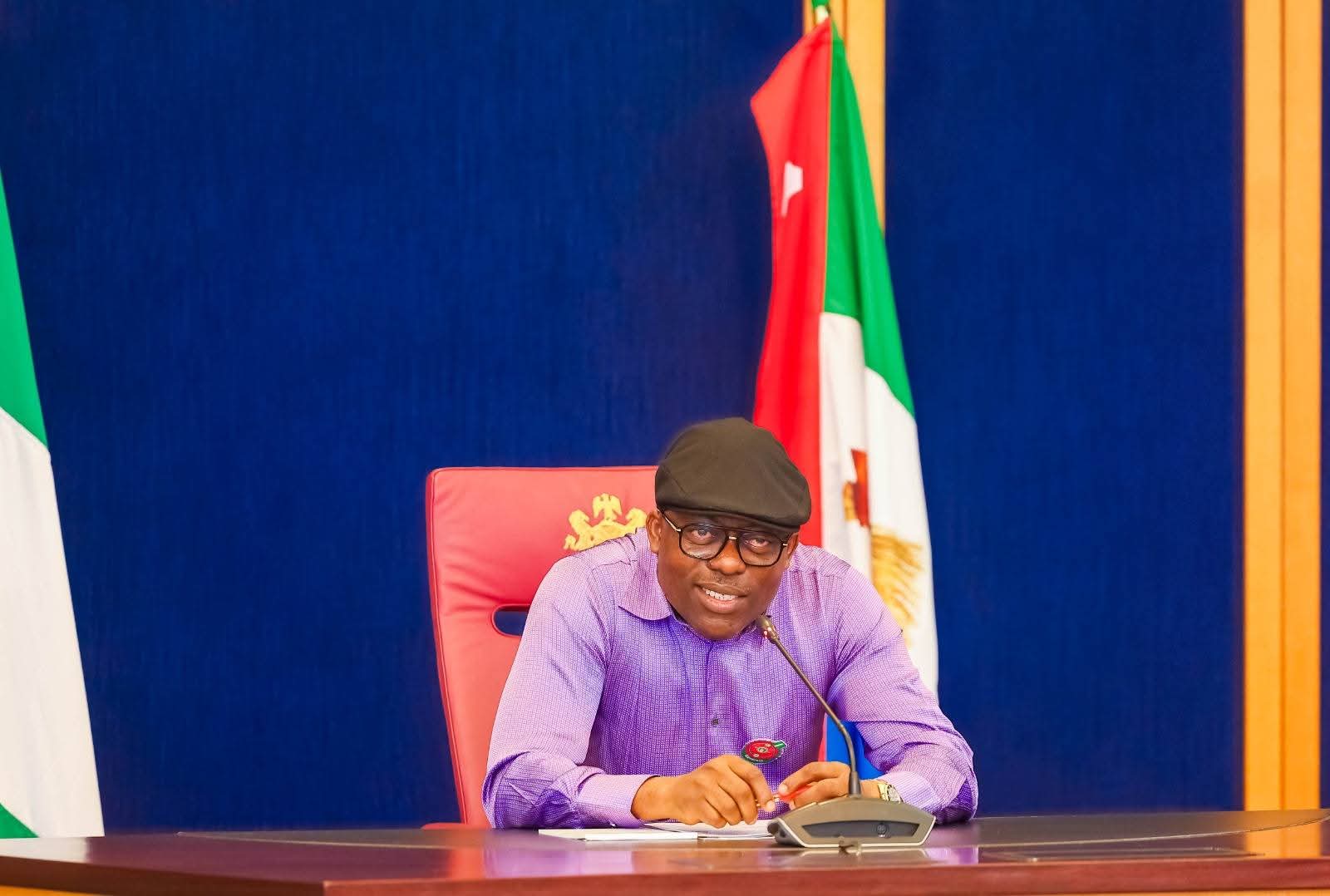
Rivers State Governor, Sir Siminalayi Fubara, yesterday dissolved the State Executive Council, in what observers describe as a decisive step toward consolidating the recent political rapprochement between him and his estranged political benefactor, Minister of the Federal Capital Territory (FCT), Nyesom Wike.
In a government special announcement signed by the Chief Press Secretary to the Governor, Onwuka Nzeshi, the Governor directed all Commissioners and Special Advisers to hand over immediately to Permanent Secretaries or the most senior officers in their respective ministries.
Fubara also expressed “deepest appreciation” to the outgoing members of the Executive Council, wishing them success in their future endeavours.
The sweeping dissolution comes weeks after a high-level peace intervention reportedly brokered by President Bola Tinubu, which paved the way for a thaw in the prolonged political feud that had polarised the state’s political structure, destabilised governance, and sharply divided the Rivers State House of Assembly.
For nearly two years, Rivers politics had been defined by an intense power struggle between Fubara and Wike, his predecessor and former political ally.
The crisis fractured the State Assembly, triggered parallel legislative sittings, and led to a protracted battle over party structures and control of the political machinery of the state.
The impasse reached a critical stage in 2025, drawing national attention and prompting federal intervention amid fears of escalating instability in the oil-rich Niger Delta state.
However, recent signals from both camps indicated a softening of positions, with party leaders and presidential emissaries working behind the scenes to broker reconciliation.
Political stakeholders say the dissolution of the cabinet is widely interpreted as part of the broader realignment expected to produce a more inclusive executive council reflecting the new political understanding.
Analysts suggest the move may open the door for the reconstitution of the cabinet to accommodate loyalists from both political blocs, thereby stabilising governance and restoring cohesion within the state’s political leadership.
While details of the reconciliation terms have not been made public, the development is being seen as a strategic reset aimed at ending months of acrimony and restoring administrative focus.
With the executive council now dissolved, attention turns to the Governor’s next move — particularly the composition of a new cabinet and whether it will cement the fragile peace forged at the highest level of the Presidency.
For Rivers residents, weary of prolonged political turbulence, the expectation is that the truce — and the cabinet shake-up — will translate into renewed policy drive and improved service delivery.