



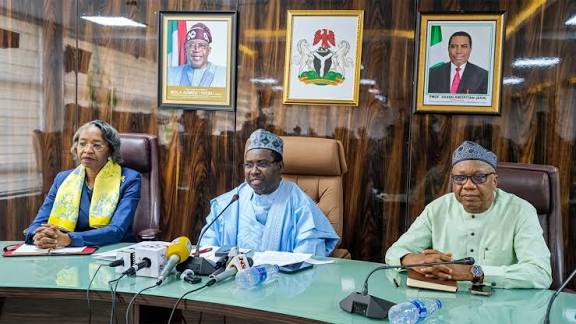
Chairman of the Independent National Electoral Commission (INEC), Prof. Joash Amupitan, has charged the Nigeria Police, the Economic and Financial Crimes Commission (EFCC) and the Independent Corrupt Practices and Other Related Offences Commission (ICPC) to intensify efforts to curb vote buying and vote trading ahead of the February 21, 2026, Federal Capital Territory (FCT) Area Council elections.
Amupitan gave the charge when a delegation of the National Peace Committee visited the Commission, reaffirming INEC’s resolve to confront electoral malpractice and warning that relevant law enforcement and anti-corruption agencies have been placed on alert.
“We specifically charged the Nigeria Police, the EFCC and also the ICPC to be on guard so that we can arrest the menace of vote buying and what some people call ‘vote trading’,” he said.
The INEC chairman disclosed that the Commission would act swiftly on security intelligence and risk assessments presented by the National Peace Committee, describing the information shared as timely and invaluable.
“You have presented to us a very great piece of information. We are not going to take it for granted. We are going to share this with our security department so that we can take the necessary steps that we are supposed to take,” he said.
Amupitan noted that the Abuja Municipal Area Council (AMAC) would receive “special scrutiny and attention,” alongside Bwari and Kuje Area Councils, based on concerns raised in the Committee’s report.
He described the Peace Accord signed by political parties before elections as a social contract binding political actors to peaceful conduct and acceptance of election outcomes, stressing that electoral activities in 2026 are critical to the Commission’s broader preparations for the 2027 general election.
“It regards 2026 as our preparatory year for the 2027 general election,” he added.
Leader of the delegation, Rev. Fr. Atta Barkindo, apologised for the delay in formally engaging with the new INEC leadership and pledged the Committee’s continued collaboration and strategic support.
“We want to assure the new INEC Chairman that the National Peace Committee is available, open and accessible to working with the Commission—ensuring that the Area Council elections, governorship elections and future state elections ahead of the 2027 general elections are conducted peacefully. We are fully behind the Commission to give it all the necessary support and strategic guidance required,” he said.
Barkindo disclosed that the Committee’s Election Security and Information Hub, launched last year, has established networks and field agents across states to gather data on insecurity, violence and conflict trends, noting that its interventions are evidence-based and guided strictly by verified data rather than partisan considerations.
The Committee identified AMAC, Gwagwalada, Bwari and Kuje Area Councils as potential hotspots requiring heightened vigilance.
According to its findings, AMAC recorded high tendencies for vote buying and threats among political actors, while Gwagwalada was flagged over indigene-settler tensions and a history of political thuggery, particularly in the Jiwa community.
Bwari was described as sensitive due to farmer-herder conflicts, kidnapping incidents and limited security presence in some areas, while Kwali was identified as vulnerable owing to security challenges in adjoining states.
The Committee explained that its data collection framework tracks incidents of election-related violence that may occur before Election Day but could affect the electoral process, as well as electoral offences in line with the provisions of the Peace Accord.