



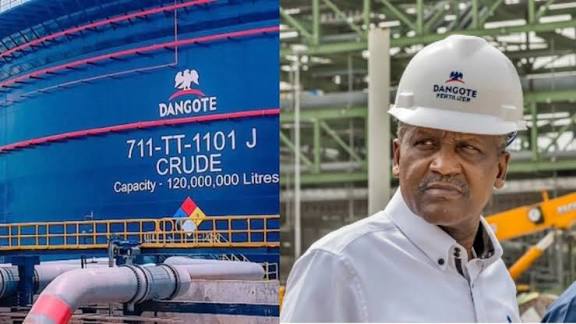
Barely days after petrol pump prices were adjusted upward across the country, Nigerians may be bracing for another round of increases as global crude oil prices continue their upward march, underscoring the tension between international market forces and the promise of domestic refining capacity led by the Dangote Petroleum Refinery.
Nigeria’s Bonny Light crude climbed to about $70.30 per barrel from $64 a week earlier, its highest level this year and a rise of roughly 10 per cent. Brent crude, the global benchmark, rose to about $70.15 per barrel, while Murban crude advanced to $68.01 per barrel. The rally has been driven largely by geopolitical tensions and tightening supply, rather than a surge in global demand.
The crude price spike has already filtered into the downstream market.
Earlier this week, petrol stations raised pump prices to an average of about N850 per litre from N750, an increase of 14.3 per cent. Marketers attributed the hike to higher crude costs, arguing that crude oil remains the dominant determinant of refining and import costs.
At the Dangote Refinery, the gantry price of petrol rose by a similar margin, from N699 per litre to about N799 per litre. Retail outlets in Lagos, Abuja and other major cities followed suit. NNPC Retail outlets adjusted prices to about N835 per litre from N815, while some independent marketers implemented steeper increases, with pump prices hitting as high as N900 per litre in some locations.
However, the speed and scale of the local price adjustments have raised questions. While global crude prices rose by just over six per cent during the period, petrol prices at the retail end jumped by more than double that rate, reinforcing concerns that domestic pricing dynamics are amplifying international shocks.
The Independent Marketers Association of Nigeria (IPMAN) defended the increases, insisting that refiners and marketers were merely responding to higher input costs. Its National Public Relations Officer, Chinedu Ukadike, said once buying prices rise, pump prices must follow, even if marketers are still selling existing stock purchased at lower prices.
Meanwhile, diesel prices also edged higher at major depots, reflecting the broader impact of rising crude prices on refined products, though petrol prices were relatively stable at some outlets yesterday.
The global crude rally has been fuelled by a sharp drawdown in United States crude inventories, which fell by 2.3 million barrels in the week ended January 24, according to the U.S. Energy Information Administration. Stockpiles are now about three per cent below the five-year average.
Prices have also been buoyed by fears of supply disruption following renewed tensions between Washington and Tehran, after U.S. President Donald Trump issued fresh military threats against Iran, OPEC’s fourth-largest producer.
For Nigeria, the implications are mixed.
Petroleum economists warn that higher crude prices will almost inevitably translate into higher domestic fuel costs in a deregulated market, intensifying pressure on households through higher transport fares, rising food prices and increased production costs for businesses.
Prof. Wumi Iledare, a petroleum economist, said the current price surge is driven by geopolitical risk rather than demand fundamentals, making its impact particularly painful for import-dependent economies like Nigeria.
“The immediate effect is higher prices for petrol and diesel, with knock-on effects on inflation and household welfare,” he said.
At the same time, higher crude prices offer potential fiscal relief. Dr. Muda Yusuf, Chief Executive Officer of the Centre for the Promotion of Private Enterprise, described the situation as a double-edged sword. While prices above the $64 benchmark could boost government revenue, foreign reserves and exchange rate stability, they also raise energy costs in a fully deregulated downstream sector.
Against this backdrop of rising global prices, the Dangote Petroleum Refinery has sought to reassure the market of supply stability.
The refinery says it can supply up to 75 million litres of Premium Motor Spirit daily, well above Nigeria’s estimated daily consumption of about 50 million litres. It also pledged capacity to deliver 25 million litres of diesel and 20 million litres of aviation fuel daily, far exceeding domestic demand.
According to the company, this surplus capacity provides a critical buffer against supply disruptions, reduces reliance on imports and strengthens downstream resilience, even during periods of heightened global volatility.
The refinery reaffirmed its commitment to regulatory compliance and close engagement with the Nigerian Midstream and Downstream Petroleum Regulatory Authority, stressing that expanded domestic refining should, over time, moderate the country’s exposure to foreign exchange shocks.
Industry analysts note the irony: while Nigeria now has a refinery capable of meeting and exceeding local demand, domestic fuel prices remain tightly tethered to international crude movements, foreign exchange volatility and market competition.
Until these structural pressures ease, they warn, the promise of local refining may coexist uneasily with rising pump prices — leaving consumers caught between global oil politics and local market realities.