



Nigeria’s banking industry has entered the most critical stretch of its recapitalisation exercise, with lenders deploying last-minute, multi-layered strategies to beat the Central Bank of Nigeria’s (CBN) March 31 deadline and avoid regulatory sanctions.
With barely 52 working days left, banks yet to meet the new capital thresholds are narrowing their options, turning increasingly to private equity placements and licence downgrades along the banking categorisation spectrum as viable escape routes.
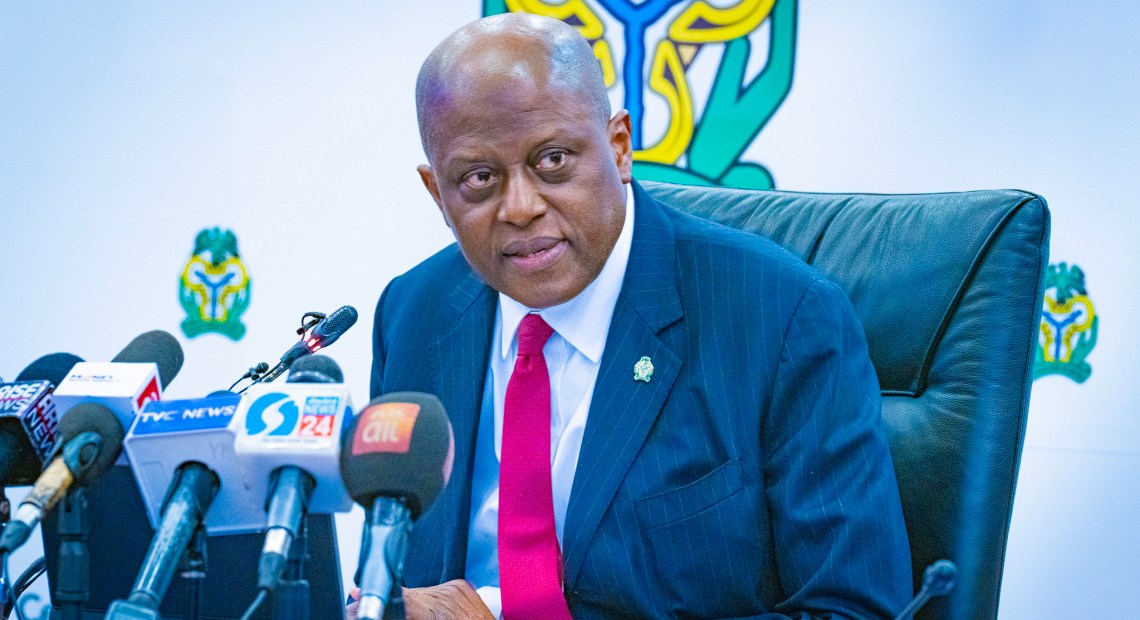
CBN Governor, Olayemi Cardoso, in his most recent public update on the programme, disclosed that 16 banks had already met the new capital requirements, while 27 others were actively raising funds. That figure was later revised upward by the Deputy Governor, Economic Policy, Dr Muhammad Abdullahi, who confirmed that no fewer than 20 banks had now complied.
Abdullahi’s remarks followed recent disclosures by United Bank for Africa (UBA), Fidelity Bank and First Bank of Nigeria, all of which announced final regulatory clearance for their latest capital raisings.
Nigeria currently has 44 deposit-taking banks operating under various licence categories.
Sources familiar with the process said that the apex bank is weighing the least disruptive and most feasible options to conclude the exercise, including the resolution of at least three banks currently under its management.
According to a senior source, one lender with deep roots in the South-West and a strong Lagos footprint may be considered for a downgrade from national to regional banking status. At least seven other banks are said to be evaluating similar licence reductions, citing the geographic concentration of their operations and the growing ubiquity of digital banking, which has reduced the strategic advantage of nationwide branch networks.
Another bank holding an international licence has reportedly indicated plans to scale down to a national licence ahead of the deadline, while pursuing additional capital raising to rebuild its capital base and eventually regain international authorisation.
Regulatory sources said the CBN has approved a flexible, two-way movement across banking licence categories, allowing institutions to scale down or scale up, provided they submit verified evidence of meeting the applicable minimum capital thresholds.
The apex bank classifies commercial banks into three broad categories—international, national and regional—based on capital strength and operational scope.
Investment banking sources disclosed that several lenders are still exploring the shrinking window for special placements, with negotiations ongoing with high-net-worth individuals and institutional investors. Market analysts expect a clustering of such transactions within the next seven weeks.
Beyond fund raising, banks are required to subject all new equity to a stringent capital verification process before allotment approval and release of funds.
The process is overseen by a tripartite committee comprising the CBN, the Securities and Exchange Commission (SEC) and the Nigeria Deposit Insurance Corporation (NDIC), with the CBN as final signatory.
Market insiders noted that the narrow definition of qualifying capital—limited largely to paid-up share capital and share premium—and the rigorous verification process have constrained banks’ ability to raise funds swiftly.
Even so, analysts remain largely optimistic.
“More than 20 banks have already met the recapitalisation requirements, which shows significant progress,” said the team lead of a respected think-tank. “Given where we are, it is unlikely there will be a major disruption.”
Comparing the current exercise with the 2004–2005 consolidation, which forced widespread mergers, acquisitions and liquidations, the analyst described the present process as “far more orderly and reassuring.”
The recapitalisation drive was formally launched in March 2024, when the CBN issued a circular reviewing minimum capital requirements for commercial, merchant and non-interest banks. Under the new regime, commercial banks with international authorisation must hold a minimum capital of N500 billion; national banks, N200 billion; and regional banks, N50 billion. Merchant banks are required to hold N50 billion, while non-interest banks must hold N20 billion (national) or N10 billion (regional).
The 24-month compliance window closes on March 31.
Unlike previous frameworks, the CBN’s new capital definition is restricted to paid-up share capital and share premium, rather than total shareholders’ funds.
Although the apex bank has yet to publish an official list of compliant institutions, filings at the Nigerian Exchange (NGX), audited financial statements and public disclosures indicate that most tier-one banks—controlling roughly three-quarters of industry assets—have met the new thresholds.
These include Access Bank, Zenith Bank, Guaranty Trust Bank, UBA, First Bank, Fidelity Bank, as well as Jaiz Bank, Wema Bank, Ecobank Nigeria, Stanbic IBTC Bank, Citibank and Standard Chartered Bank.
As the deadline approaches, attention now turns to whether the remaining lenders can finalise their strategies in time—or face the full weight of the CBN’s regulatory hammer.