



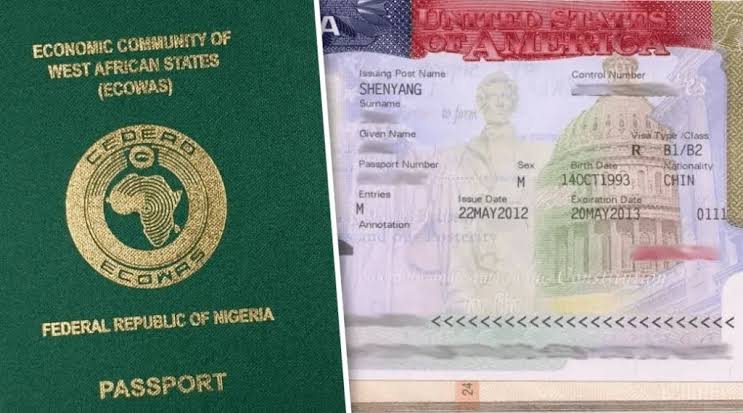
Visa applicants from Nigeria, Somalia, and Russia will now face fresh uncertainty as the United States has suspended visa processing for 75 nations pending a comprehensive review of its immigration screening rules.
The move, announced by the US State Department, has caused significant concern among prospective travellers from these countries, as the halt directly affects the processing of various visa categories, including tourist, student, and work visas.
The suspension is linked to the enforcement of stricter provisions under the US immigration law, specifically the “public charge” rule. This provision allows consular officers to deny visa applications if they believe an applicant is likely to become dependent on public welfare programs.
The directive was contained in an internal memo first reported by Fox News.
Under the instruction, visa officers are to refuse applications using existing provisions of US immigration law while the review is ongoing.
The pause applies across multiple visa categories and will remain in force indefinitely until the reassessment is completed.
The countries affected span Africa, the Middle East, Asia, Europe and Latin America, and include Nigeria, Somalia, Egypt, Iran, Iraq, Yemen, Afghanistan, Russia, Brazil and Thailand.
The policy shift is linked to the “public charge” rule, a long-standing element of US immigration law that allows authorities to deny visas to individuals considered likely to rely on public benefits.
In November 2025, the State Department issued guidance to embassies worldwide directing stricter enforcement of the rule.
That guidance expanded the factors consular officers must consider when assessing applicants, including age, health status, English proficiency, financial capacity, employment prospects and the potential need for long-term medical care.
Applicants deemed at risk of becoming dependent on public assistance can be denied entry.
Somalia has attracted particular attention from US authorities following a major fraud investigation in Minnesota, where prosecutors uncovered widespread abuse of taxpayer-funded welfare programmes.
Federal officials said many of those implicated were Somali nationals or Somali-Americans, a development that heightened scrutiny of visa applications linked to the country.
While Nigeria was not singled out in the memo, its inclusion places it among countries now subject to tougher migration controls at a time when many Nigerians apply annually for student, work, tourist and family-based visas to the US.
The State Department has not provided a timeline for completing the review or clarified whether humanitarian exemptions will apply.
The move is expected to deepen uncertainty for prospective travellers, students and families, particularly from developing countries, and could further strain diplomatic and people-to-people ties with affected nations.