



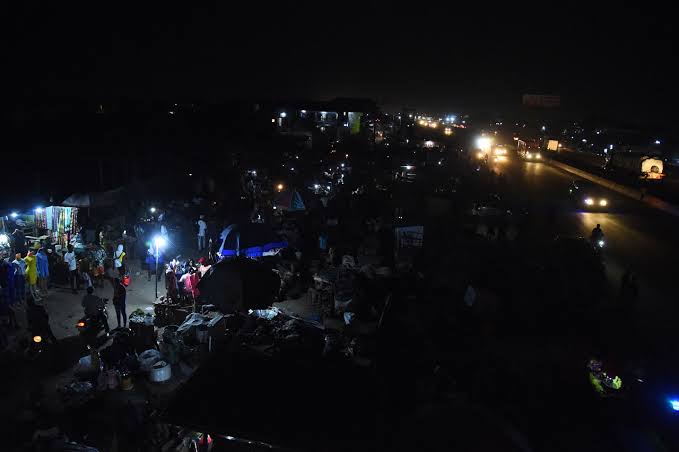
Nigerians were once again plunged into frustration and hardship on Monday afternoon as the national electricity grid collapsed, throwing homes, businesses and public services across the country into darkness.
The sudden outage, which occurred around 3:12 p.m. on December 29, 2025, brought economic activities to a near standstill in many cities, compounding the daily struggles of millions already burdened by rising living costs. For households, the blackout meant sweltering heat, disrupted domestic routines and renewed dependence on candles, lanterns and costly generators. For small businesses—barbershops, welders, tailors, cold-room operators and cybercafés—it translated into lost income and wasted goods, particularly perishable items.
Figures released by the Distribution Companies (DisCos) painted a grim picture of the collapse. Only two DisCos received any power at all: Ibadan Electricity Distribution Company got 30 megawatts (MW), while Abuja Electricity Distribution Company received just 20 MW. Every other DisCo—including Benin, Eko, Enugu, Ikeja, Jos, Kaduna, Kano, Port Harcourt and Yola—recorded zero allocation, underscoring the nationwide scale of the outage.
With total electricity distributed at a paltry 50 MW, far below what is required to power a country of over 200 million people, hospitals, water facilities and telecoms operators were forced to rely heavily on generators, further driving up operational costs and straining limited resources.
For many Nigerians, the latest grid collapse is not just a technical failure but a painful reminder of years of unreliable power supply and unfulfilled promises. The repeated blackouts have continued to erode public confidence in the nation’s power sector and deepen social and economic suffering.
While the Nigerian National Grid said restoration efforts were ongoing, there was no official explanation from the Transmission Company of Nigeria or the Federal Ministry of Power on what caused the collapse or when normal supply would be restored—leaving Nigerians once again in the dark, both literally and figuratively.