



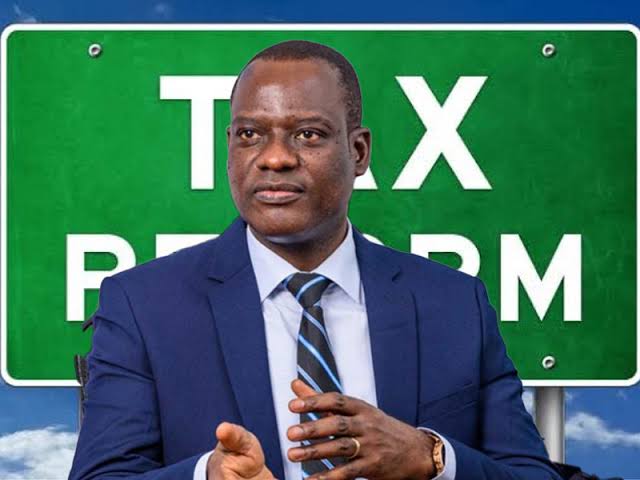
The Federal Government has reaffirmed its resolve to commence full implementation of the new tax reform laws on January 1, 2026, insisting that the reforms are designed to drive inclusive economic growth and shared prosperity for Nigerians.
Chairman of the Presidential Committee on Fiscal Policy and Tax Reforms, Taiwo Oyedele, disclosed this on Friday in Lagos after presenting an update on the reforms to President Bola Tinubu.
Oyedele, who was accompanied by the Chairman of the Federal Inland Revenue Service (FIRS), Zacchaeus Adedeji, and the Chairman of the National Tax Policy Implementation Committee, Joseph Tegbe, said the government remains committed to the reform timeline despite ongoing engagements with the National Assembly.
Addressing journalists after the meeting, Oyedele noted that four tax reform laws were enacted, two of which—the Nigerian Revenue Service Establishment Act and the Joint Revenue Service Establishment Act—came into effect in June 2025. He said the remaining two—the Nigerian Tax Act and the Nigerian Tax Administration Act—are scheduled to commence on January 1, 2026.
He welcomed the House of Representatives’ ongoing work on allegations of alterations to the laws, stressing that the Federal Government is open to collaborating with the National Assembly should any corrective action be required.
“The plan to commence the new laws on January 1, 2026 will go ahead as scheduled, because these reforms are designed to provide relief to the Nigerian people,” Oyedele said.
According to him, the tax reform bills spent nine months at the National Assembly between October 2024 and June 2025, while preparations for implementation began immediately and have continued over the past six months through capacity building, system upgrades and stakeholder sensitisation.
He described the reforms as a work in progress, noting that institutional readiness was a key reason some of the laws took effect earlier. He cited the establishment of new structures such as the Tax Ombuds Office, which requires time to become fully operational.
Oyedele emphasised that the reforms are not aimed at immediate revenue generation but at expanding the tax base through economic growth, improved compliance and fairness.
“Revenue will come from growth, not from higher tax rates. When more people participate in the economy and comply with tax obligations, you get fairness and sustainable revenue,” he said.
He added that the reforms would eliminate wasteful and distortionary incentives, strengthen tax culture and enhance compliance over time, expressing optimism that the country is well positioned for the January 2026 rollout.