



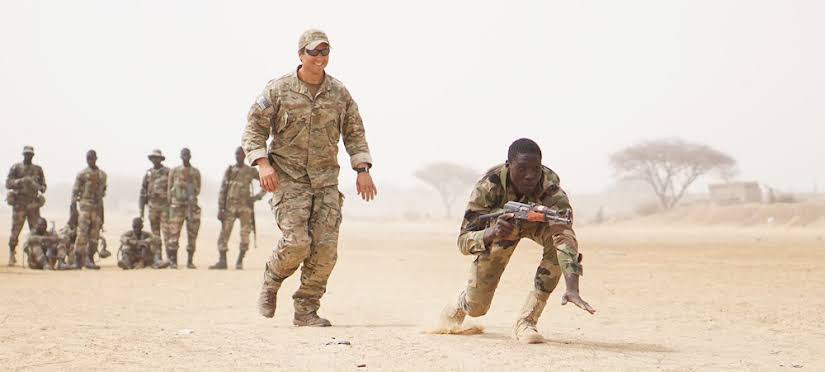
The United States has ruled out the deployment of its troops to Nigeria despite mounting concerns over insecurity and religious freedom in parts of the country, American lawmakers have said.
A bipartisan delegation of the United States Congress, which visited Nigeria on Monday, December 22, 2025, explained that Washington’s approach is anchored on diplomacy, dialogue and cooperation rather than military intervention.
The lawmakers said Nigeria’s designation as a Country of Particular Concern (CPC) is intended to encourage reforms, accountability and improved protection of citizens through sustained engagement, while fully respecting Nigeria’s sovereignty.
Led by Representative Bill Huizenga, the delegation included Representatives Michael Baumgartner, Keith Self and Jefferson Shreve. They met with government officials and other stakeholders in Abuja as part of efforts to gain firsthand insight into Nigeria’s security challenges and the impact of violence linked to religious freedom.
According to the delegation, although Nigeria faces serious security problems, the United States is not considering troop deployment as part of its response. Instead, emphasis is being placed on partnership, information sharing and long-term diplomatic engagement aimed at addressing the root causes of violence.
The lawmakers noted that their mission was to listen, observe and report their findings to the US Congress, rather than prescribe solutions or impose external measures on Nigeria.
They said the CPC designation was informed by persistent violence affecting civilians across religious lines, with particular concern about repeated attacks in the Middle Belt that have disrupted lives and livelihoods.
Huizenga stressed that the violence is unacceptable, regardless of faith, saying: “It is unacceptable that anyone—Muslim or Christian—is experiencing this level of violence. Protecting citizens of all faiths is a responsibility of the Nigerian government.”
The delegation reiterated that Washington’s preference remains constructive engagement to support reforms and stability, rather than military involvement.