



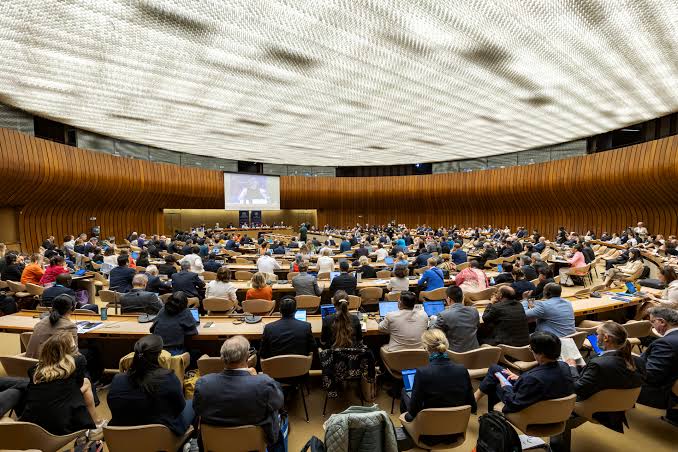
World leaders at the 80th United Nations General Assembly have adopted a landmark political declaration committing governments to tackle noncommunicable diseases (NCDs) and mental health challenges through a fully integrated, equity-driven approach.
The declaration, adopted ahead of the fourth UN high-level meeting on NCD prevention and mental health promotion held on 25 September 2025, is the first global agreement to address both issues together. Titled “Equity and integration: transforming lives and livelihoods through leadership and action on noncommunicable diseases and the promotion of mental health and well-being,” it sets out a new roadmap for accelerating progress by 2030.
NCDs—such as heart disease, cancer, diabetes and chronic respiratory illnesses—remain the world’s leading causes of death, claiming an estimated 18 million lives prematurely each year. At the same time, mental health conditions affect more than one billion people globally. Both are rising in every region, fuelled by preventable risk factors including unhealthy diets, tobacco and alcohol use, physical inactivity and air pollution—many of which also harm mental well-being.
First-ever global fast-track targets
In a major shift from previous commitments, the declaration introduces three global “fast-track” outcome targets to be achieved by 2030:
150 million fewer tobacco users worldwide;
150 million more people with hypertension under control; and
150 million more people with access to mental health care.
To support these goals, governments also agreed to measurable system-level targets, including ensuring that by 2030 at least 80% of countries have strong NCD and mental health policies in place, the majority of primary healthcare facilities can provide affordable essential medicines, and most countries operate robust surveillance and monitoring systems.
“The adoption of these bold targets is a testament to the commitment of Member States to protect the health of their people,” said WHO Director-General Dr Tedros Adhanom Ghebreyesus. “Together, we can change the trajectory of NCDs and mental health, and deliver health, well-being and opportunity for all.”
Broader scope, tougher regulation
Described as the most far-reaching declaration to date, the agreement incorporates lessons from the COVID-19 pandemic and responds to emerging global risks. For the first time, it explicitly includes oral health, lung health, childhood cancer, liver and kidney diseases, rare diseases, and environmental threats such as air pollution, lead exposure and hazardous chemicals.
It also sharpens regulatory commitments around e-cigarettes, novel tobacco products, unhealthy food marketing to children, front-of-pack labelling and the elimination of trans fats, while addressing growing concerns over digital harms, including excessive screen time, harmful online content and misinformation.
Financing, equity and accountability
Against a backdrop of tightening global health budgets, the declaration calls for stronger and more predictable financing through domestic investment, international cooperation and coordinated multilateral action. It frames NCDs and mental health not only as health issues, but as central to economic productivity, sustainable development and social justice.
Emphasising a “whole-of-government” and “whole-of-society” approach, the text highlights the role of civil society, young people, persons with disabilities and those with lived experience, as well as the needs of climate-vulnerable populations, Small Island Developing States and communities in humanitarian settings.
Progress towards the 2030 targets will be reviewed through regular accountability mechanisms, with the UN Secretary-General mandated to report ahead of the next high-level meeting. WHO and other UN agencies will support countries in translating the commitments into national action—marking what many see as a decisive moment in the global fight against NCDs and the growing mental health crisis.