



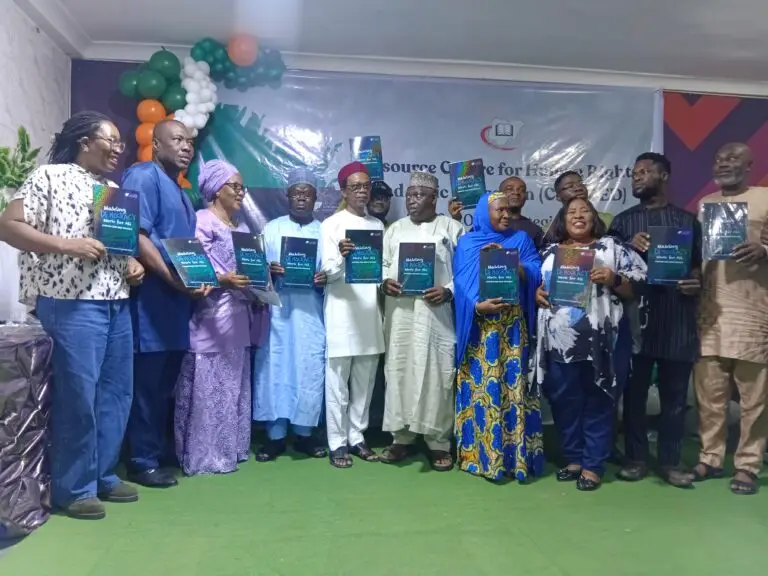
The Resource Centre for Human Rights and Civic Education (CHRICED) has unveiled a new five-year strategic plan, signalling a renewed push for indigenous rights, democratic accountability and environmental justice.
Launching the 2026–2030 plan in Abuja on Saturday, CHRICED’s Executive Director, Dr. Ibrahim Zikirullahi, described the document as a “roadmap for transformative civic engagement” and a reaffirmation of the organisation’s long-standing commitment to justice, inclusion and good governance.
Zikirullahi said the strategy is anchored on six core pillars that reflect Nigeria’s shifting socio-political landscape, including the escalating impacts of climate change, insecurity and the rise of digital repression.
“The challenges before us are daunting, but they are not insurmountable. They demand courage, clarity, and collective action,” he said. According to him, climate change is already reshaping livelihoods, particularly in northern Nigeria, where desertification and recurrent flooding are eroding food security and displacing families.
On indigenous rights, the CHRICED chief insisted that no democracy can claim legitimacy while excluding its original inhabitants. He said the organisation will intensify advocacy for the recognition and full inclusion of FCT indigenous communities, whose rights have remained a contentious issue.
Zikirullahi also highlighted CHRICED’s commitment to improving maternal and child health, lamenting what he described as the country’s “unacceptably high” mortality rates. The organisation, he said, will further expand work on digital freedom, strengthen civic platforms, and push back against tools of repression limiting citizens’ voices online.
On democratic governance, he emphasised that accountability remains the “heartbeat of democracy,” promising increased support for grassroots leaders, activists and the media in their efforts to hold public officials to account. Safeguarding electoral integrity, he noted, will remain a key priority because “without credible elections, democracy cannot thrive.”
He stressed that the new plan is rooted in a rights-based framework driven by data, community inputs and a commitment to equity and transparency. Zikirullahi also acknowledged the MacArthur Foundation for supporting the development of the strategy, and commended CHRICED’s board, staff and partners for their role in shaping the document.
In his remarks, Oladayo Olaide, Chair of the organisation’s Strategy Committee, said the plan also seeks to address the root causes of street children and the rising population of out-of-school children. He said social protection, gender inclusion and equipping young Nigerians with the skills required to thrive will be central to CHRICED’s interventions over the next five years.
Olaide added that the organisation will intensify engagements with government at all levels to tackle the out-of-school children crisis within the lifespan of the new strategic plan.