

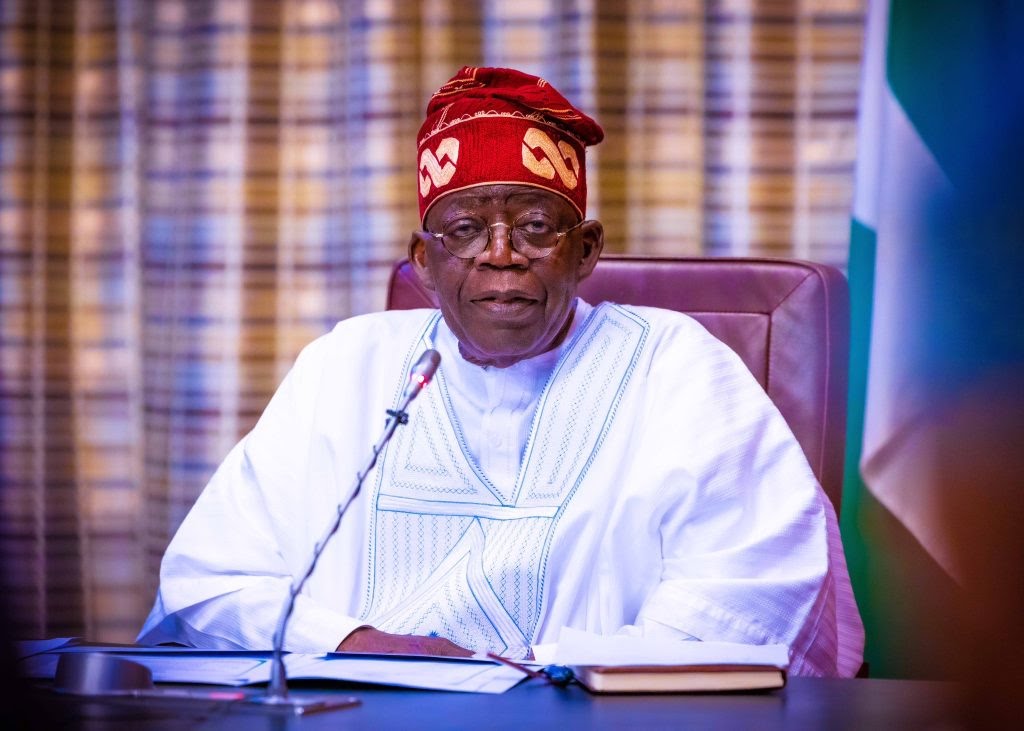
President Bola Tinubu has urged editors across Nigeria not to relent in upholding the highest standards of journalism and to continue to report boldly and truthfully.
The President stated this while speaking at the opening of the Nigerian Guild of Editors’ Annual Conference held at the State House, Abuja, on Wednesday.
The conference, themed “Democratic Governance and National Cohesion: The Role of Editors,” brought together editors, senior journalists, and policymakers to reflect on how the media can strengthen unity amid national challenges.
Tinubu tasked the media to continue to act as a stabilising force in a rapidly changing information environment.
“I urge you, therefore, to continue upholding the highest standards of journalism. Report boldly, but do so truthfully. Critique government policy but do so with knowledge and fairness. Your aim must never be to tear down, but to help build a better society,” the President stated.
He urged editors in Nigeria to uphold integrity and fairness in their reportage, noting that responsible journalism remains essential to sustaining democracy and national cohesion.
“The freedom secured through struggle is not self-sustaining. It requires constant vigilance and responsible exercise.
“A democracy is sustained not only by elections and laws, but also by the integrity of public conversation,” he stated.
The president commended the Nigerian press for its historical role in advancing justice and democracy, recalling how journalists “endured intimidation, detention, and personal hardship in defence of the public good.”
He, however, cautioned that the digital age has amplified misinformation, making the editorial function more critical than ever.
The president urged editors to be constructive in their criticism of government policies while maintaining fairness and accuracy.
He urged, “As editors and managers of the national information space, you shape narratives. You influence public understanding. You decide what becomes national focus and how our collective challenges are interpreted. The weight of that responsibility is significant. It must be exercised with wisdom, fairness, and a strong sense of national duty.
“Nigeria is a large and diverse country. Debate and differences are part of our reality. However, disagreement must never translate into the erosion of national cohesion. Criticism, when informed and constructive, is a service to the nation. But cynicism that breeds mistrust and despair can weaken the very foundations of the society we all seek to improve. The national interest must always remain paramount.
“We live in a time when information travels rapidly and widely. Social media has made every citizen a potential publisher. This has benefits, but it also increases the speed and scale of misinformation.
“Falsehood can take root before truth has time to speak. In such an environment, the editorial function is more important than ever. Verification must be your anchor; balance must be your principle, and professional judgement must be your guide.
Tinubu also reaffirmed his administration’s commitment to economic reforms aimed at long-term stability and prosperity.
“On our part, this administration remains committed to securing our nation, sustaining economic stability, and widening the circle of opportunity for all citizens.
“The reforms we have undertaken have been challenging, but they are designed to place our economy on a strong and enduring footing.
“We have taken steps to restore macroeconomic balance, encourage investment, and rebuild confidence. The signs of progress are visible in several sectors of the economy. Still, we know there is more work to do, and we remain focused on ensuring that growth translates into real improvements in the daily lives of Nigerians,” he said.
He called for collaboration among the government, the private sector, civil society, and the media to advance national unity.
“However, economic reforms and institutional improvements alone can not build the Nigeria we seek. Nation-building requires cooperation.
” It requires trust. It requires a shared understanding that our future is tied together. The government has its role. The private sector has its role. Civil society has its role. And the media has a distinct responsibility to help shape a climate of reason and unity,” he urged.
He, however, reminded the editors that their influence extends beyond headlines.
He added, “Distinguished Editors, your work matters. The tone you set in your newsrooms, the standards you enforce, and the courage with which you defend the truth will all help shape the direction of our national journey. Let us carry this responsibility with purpose.”
Meanwhile, the President of the Nigerian Guild of Editors(NGE), Eze Anaba, has tabled a five-point rescue package to the president and lawmakers to adopt fiscal and legal measures to keep the country’s media houses alive.
The NGE president cautioned that a weak media imperils Nigeria’s democracy and national cohesion.
Anaba, made the appeal during his opening address at the 2025 All Nigeria Editors Conference held at the Presidential Villa, Abuja, on Wednesday.
Anaba said editors carry a constitutional duty to inform citizens, deepen accountability, and hold power to account, “as constructive partners, not adversaries,” but can only do so if their overcome mounting challenges.
The rescue package include corporate tax reliefs for 5–10 years to help media houses stabilise and meet operating costs; and VAT exemption on essential inputs, such as newsprint, plates and broadcast equipment, “in line with practices in countries like Canada, India and South Africa.”
The Guild also sought tax credits to incentivise large corporations to advertise in credible Nigerian outlets, boosting investigative reporting and reducing reliance on foreign grants, low-interest loans through the Bank of Industry or the Development Bank of Nigeria to modernise equipment and create jobs.
Anaba also called for a media development fund for digital transition, managed by an independent board, to support data journalism and multimedia storytelling while insulating newsrooms from political interference.
“The media today is distressed,” the NGE President said, disclosing that a ton of newsprint now costs roughly N1.3m–N1.4m and lasts “just a day or two” in a typical press cycle.
“If the media can not keep jobs by paying salaries, it can not help our democracy,” he stated.
He called for the repeal of laws that inhibit free expression, submission of the Guild’s review to the Minister of Information and House leadership, and the creation of a Media Freedom and Safety Charter endorsed by the Executive, Legislature and Judiciary to protect journalists from arbitrary arrests and ensure access to information.
Framing the conference theme ‘Democratic Governance and National Cohesion: The Role of Editors’ and sub-theme ‘Electoral Integrity and Trust Deficit: What Nigerians Expect in 2027’, Anaba said editors must rise above division, reject hate speech, and centre underserved communities and conflict zones in daily coverage to rebalance “urban-centred” news agendas.